
Retail vs Hospital Pharmacy: Substitution Differences Explained
Discover how medication substitution works differently in retail vs. hospital pharmacies. Learn about legal authorities, clinical drivers, and patient impacts.
View More
Discover how medication substitution works differently in retail vs. hospital pharmacies. Learn about legal authorities, clinical drivers, and patient impacts.
View More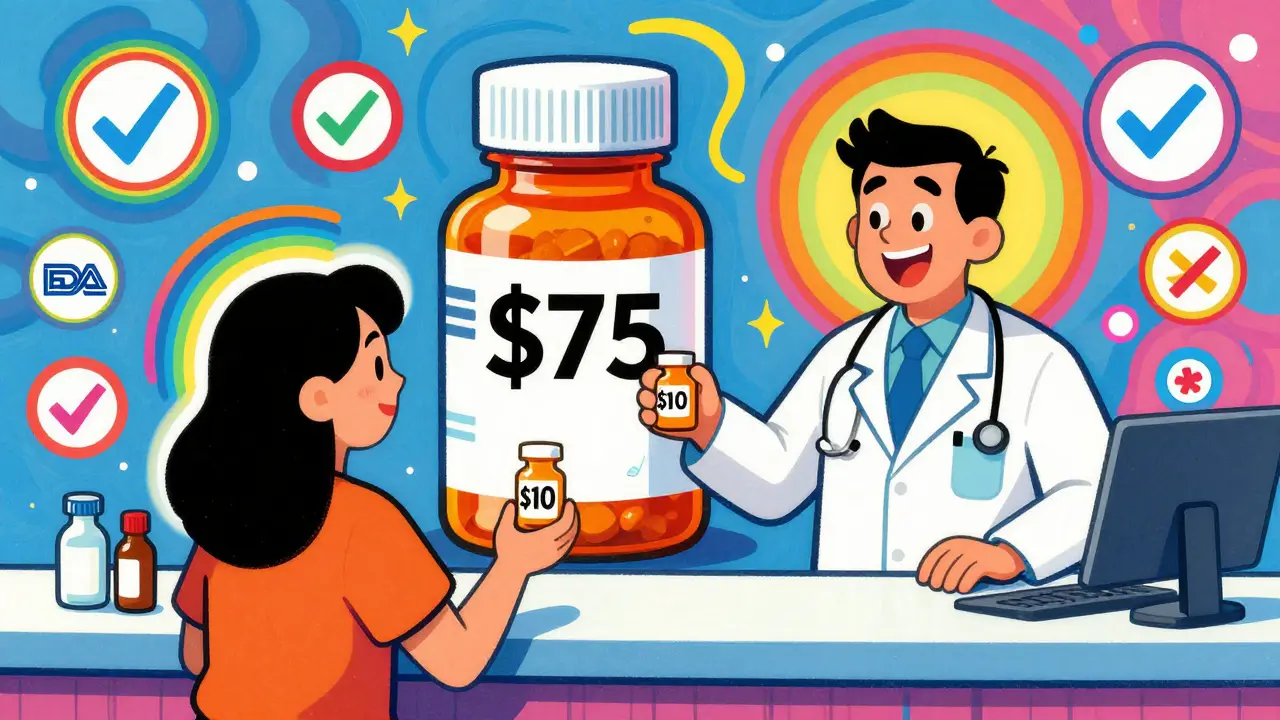
Employer health plans prioritize generic drugs to cut costs, using tiered formularies that make generics cheaper than brand-name options. Learn how these systems work, why your drug might disappear, and how to save on prescriptions.
View More
Switching from brand-name drugs to generics can save money, but it's not always straightforward. Learn what to expect - from cost savings to rare side effects - and when to ask your doctor to stop the switch.
View More
Discover how countries like the U.S., China, India, and Germany use wildly different policies to make generic drugs affordable. Learn what works, what fails, and why quality is at risk as prices plunge.
View More
Infographics about generics help patients understand that generic drugs are just as safe and effective as brand-name versions. See how visual tools are reducing myths, cutting costs, and improving medication adherence.
View More
Generic drugs save patients billions annually, yet many still overpay due to opaque pricing. Learn how generics cut costs by up to 90% and how to get the lowest price-even with insurance.
View More
Authorized generics are identical to brand-name drugs, while traditional generics may have different inactive ingredients. Learn the key differences, when it matters, and how to get the right version for your needs.
View More
Generic drugs are chemically identical to brand-name versions, but many people feel they don’t work as well. The real issue? Psychology. Learn how expectations shape your body’s response-and what you can do about it.
View More
Generic and brand-name drugs have the same active ingredients and carry the same risk for drug interactions. The FDA requires strict bioequivalence testing, and studies show no meaningful difference in safety or effectiveness between the two.
View More
Narrow therapeutic index drugs require stricter bioequivalence standards to ensure patient safety. Learn how FDA, EMA, and Health Canada regulate generics like warfarin and levothyroxine, why costs are higher, and what this means for your treatment.
View More