Authorized Generics vs Traditional Generics: What You Need to Know
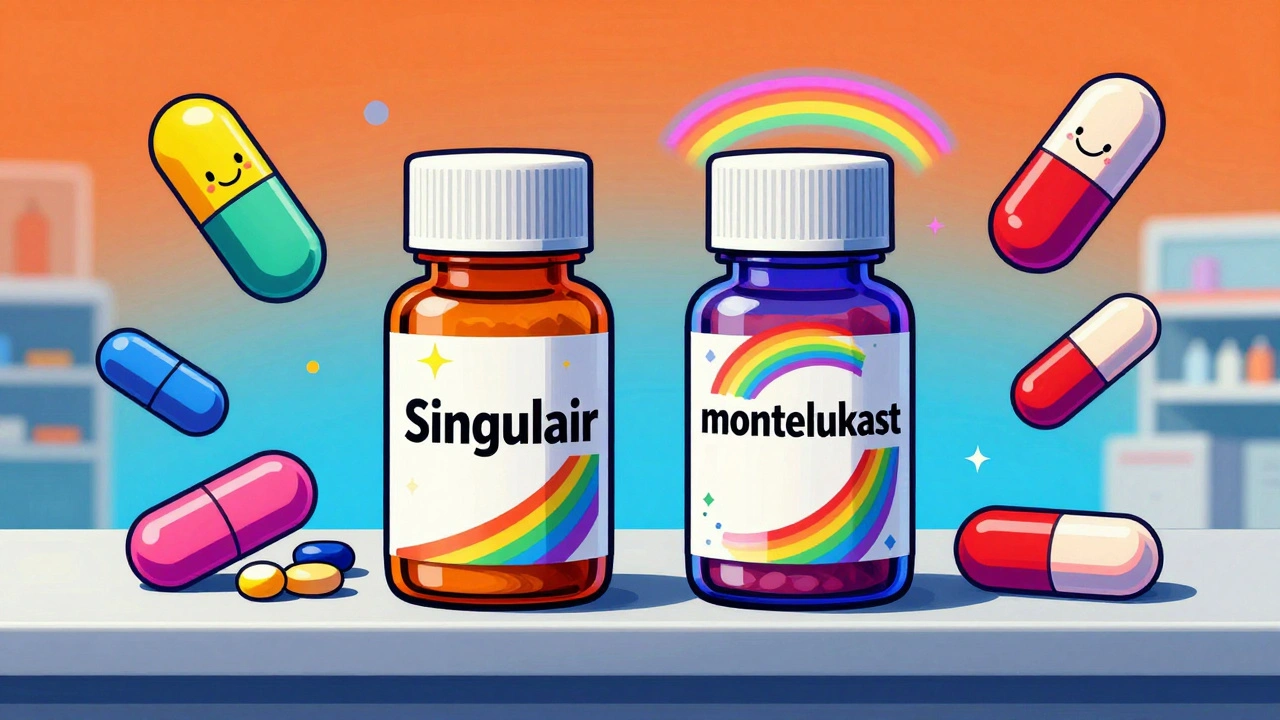
When you pick up a prescription, you might see a label that says "montelukast" instead of "Singulair" and assume it’s just another generic. But not all generics are the same. There’s a big difference between an authorized generic and a traditional generic - and it matters more than most people realize.
What Is an Authorized Generic?
An authorized generic is the exact same drug as the brand-name version, down to every ingredient, color, and shape. The only difference? It doesn’t have the brand name on the bottle. It’s made by the same company that makes the original drug, using the same factory, same equipment, same formula. Think of it like a branded cereal sold under a store label - same box, same contents, just no logo. The FDA calls it an "approved brand name drug that is marketed without the brand name on its label." That’s it. No changes. No shortcuts. No compromises. It’s the same product, just cheaper. Authorized generics enter the market under the original brand’s New Drug Application (NDA). That means they don’t need separate FDA approval. The brand company just has to notify the FDA they’re selling it under a different label. This makes the process faster and simpler than traditional generics. You’ll find authorized generics for popular drugs like Singulair (montelukast), Lipitor (atorvastatin), and Propecia (finasteride). Patients who’ve switched often say they notice no difference - not in how it works, not in side effects, not even in how the pill looks.What Is a Traditional Generic?
Traditional generics, sometimes called "typical generics," are made by different companies. They contain the same active ingredient as the brand-name drug - say, lisinopril for high blood pressure - but the inactive ingredients can be different. That means the filler, dye, binder, or coating might not match the original. These generics go through the Abbreviated New Drug Application (ANDA) process. The manufacturer must prove their version is bioequivalent - meaning it gets into your bloodstream at the same rate and amount as the brand. But they don’t have to prove it’s identical in every other way. For most drugs, this works fine. Your body absorbs the medicine the same way. But for drugs with a narrow therapeutic index - where even tiny changes can affect safety or effectiveness - those inactive ingredients can matter. Think epilepsy meds, thyroid hormones, blood thinners, or asthma inhalers. Some patients report differences when switching between traditional generics. One person might feel fine on one version, then get headaches or nausea when switched to another. It’s not always the drug itself - it’s the formulation.Key Differences at a Glance
| Feature | Authorized Generic | Traditional Generic |
|---|---|---|
| Manufacturer | Same as brand-name drug | Separate company |
| Active Ingredients | Identical | Identical |
| Inactive Ingredients | Identical | May differ |
| Regulatory Path | Under brand’s NDA | ANDA approval required |
| FDA Approval Needed? | No - just notification | Yes |
| Listed in Orange Book? | No | Yes |
| When Can It Launch? | Before or after patent expires | After patent expires |
| Therapeutic Equivalence | Exact match to brand | Bioequivalent, but not identical |
Why Authorized Generics Are Often Better for Sensitive Medications
For drugs where consistency is critical - like asthma inhalers, seizure meds, or insulin - the smallest change in inactive ingredients can throw off absorption or delivery. A study in Health Affairs found that authorized generics were far more common in oral solid drugs like pills and capsules, precisely because those are the most stable and predictable formulations. Patients with asthma often report better control when using the authorized generic of Advair or Singulair compared to traditional generics. Why? Because the powder blend, propellant, or coating in an inhaler or pill can affect how much medicine actually reaches the lungs. If the inactive ingredients change, even slightly, the drug may not work as well. Pharmacists on Reddit’s r/pharmacy community say they’ve seen patients switch from a traditional generic to an authorized generic and suddenly feel better - no dose change, no new symptoms, just a different version of the same drug.
How to Tell Which One You’re Getting
Here’s the tricky part: you won’t always know. Authorized generics aren’t listed in the FDA’s Orange Book, which is what most pharmacy systems use to identify generics. So your pharmacist might just see "montelukast" and assume it’s a traditional generic. The pill might look identical to the brand, or it might look completely different - because the brand company can change the color or marking on authorized generics. Ask your pharmacist: "Is this an authorized generic?" If they’re unsure, ask if it’s made by the same company as the brand. For example, if you’re on Lipitor, ask if it’s made by Pfizer. If yes, it’s likely an authorized generic. You can also check the FDA’s quarterly list of authorized generics. It’s not perfect, but it’s the only official source.Insurance and Cost: What You’ll Pay
Authorized generics are usually cheaper than the brand-name drug - sometimes by 50% or more. But they’re often priced higher than traditional generics because they’re made by the brand company and don’t face the same level of competition. Insurance plans sometimes prefer authorized generics over traditional ones because they’re more predictable. If you’ve had issues with a traditional generic before, your doctor can write "DAW" (dispense as written) or "do not substitute" on your prescription. That tells the pharmacy to give you exactly what’s prescribed - whether it’s brand, authorized generic, or a specific traditional generic. In some cases, you’ll pay less out-of-pocket for an authorized generic than a traditional one. That’s because some insurers have negotiated special deals with brand manufacturers to promote authorized generics as a cost-saving option.What You Should Do
If you’re on a medication where consistency matters - especially for chronic conditions like asthma, epilepsy, thyroid disease, or heart conditions - don’t assume all generics are equal. Ask your doctor: "Is there an authorized generic available for this drug?" If yes, request it. If your pharmacist gives you a traditional generic, ask if they can switch you to the authorized version. Keep a record of which version you’re taking. If you notice changes in how you feel after switching - even small ones - tell your doctor. That feedback matters. Don’t panic if you’re on a traditional generic. For most people, they work just fine. But if you’ve had trouble with generics before, or if your condition is sensitive to small changes, the authorized version might be worth the extra effort to get.
What’s Changing in 2025
More brand companies are launching authorized generics - not just after patents expire, but before. Why? To block cheaper traditional generics from taking over the market. It’s a business move, but it also gives patients a more reliable option. The FDA has started publishing a public list of authorized generics, updated every quarter. That’s new. In 2023, only about 200 authorized generics were available. By 2025, that number has jumped to over 300. Specialty pharmacies are now tracking authorized generic usage more closely, especially for respiratory and neurological drugs. Some insurers are starting to require authorization for traditional generics in those categories, pushing patients toward the authorized version instead.Frequently Asked Questions
Are authorized generics safer than traditional generics?
Authorized generics are not inherently safer - both types must meet the same FDA quality standards. But because they’re identical to the brand-name drug in every ingredient, they eliminate the risk of formulation-related issues that can sometimes occur with traditional generics, especially for drugs with narrow therapeutic windows. For patients who’ve had bad reactions to traditional generics, authorized generics are often the better choice.
Can I switch between authorized and traditional generics?
Yes, but it’s not always a good idea. Switching back and forth between different versions - even if they’re both generics - can cause confusion or unintended side effects, especially with sensitive medications. If you’re doing well on one version, stay with it. Talk to your doctor before switching.
Why aren’t authorized generics listed in the Orange Book?
Because they’re not approved through the ANDA process. The Orange Book only lists drugs that went through the generic approval pathway. Authorized generics are marketed under the original brand’s NDA, so they’re not included. This makes them harder to track, which is why pharmacists sometimes don’t know they’re dispensing one.
Do authorized generics cost more than traditional generics?
Sometimes, yes. Because they’re made by the brand company, they often cost more than traditional generics - but still less than the brand-name version. In some cases, insurance plans cover them at the same price as traditional generics, making them a better value. Always compare your copay.
Can my doctor prescribe an authorized generic by name?
Not directly - because it doesn’t have a unique brand name. But your doctor can write "dispense as written" or specify the manufacturer (e.g., "Pfizer montelukast") to ensure you get the authorized version. You can also ask your pharmacist to check if the version they’re dispensing is authorized.
Billy Schimmel
December 7, 2025 AT 10:12So let me get this straight - the drug company makes the exact same pill, just removes the logo, and calls it a ‘generic’? And we’re supposed to be impressed? Classic capitalism. They’re not saving you money - they’re just rebranding their own product to suck less of your cash while still keeping the profit margin fat.
Meanwhile, the rest of us are stuck guessing if our asthma inhaler is the real deal or just a fancy knockoff with different chalk in it.
Also, why is no one talking about how this lets Big Pharma delay real generic competition? Genius move. Evil. But genius.
Shayne Smith
December 8, 2025 AT 16:57I switched my Singulair to the authorized generic last year and my kid’s allergies went from ‘can’t sleep’ to ‘can’t stop playing soccer.’ No joke. The pharmacy didn’t even tell me it was authorized - I had to ask. Now I always ask. Worth the 2 minutes.
Jackie Petersen
December 9, 2025 AT 16:40Authorized generics? More like corporate trickery. The FDA’s in the pocket of Big Pharma. You think they want you to know you’re getting the same pill? Nah. They want you to think you’re getting ‘cheaper’ when really you’re just being manipulated into paying more than you should for something that should be dirt cheap.
And don’t get me started on how they’re using this to block Chinese generics. America First? More like Pharma First.
Annie Gardiner
December 9, 2025 AT 18:06It’s not about the pill, it’s about the ritual. The shape, the color, the way it feels in your hand - that’s your body’s anchor. When that changes, even if the active ingredient is identical, your nervous system panics. It’s not science, it’s soul.
Why do you think people feel worse after switching? Because the universe knows. The universe remembers the brand. And when you break that covenant - even with a copy - you break something inside.
Maybe we’re not supposed to understand medicine. Maybe we’re just supposed to trust the symbols.
And now they’re taking away the symbols. What’s next? No more logo on your toothpaste?
Kumar Shubhranshu
December 11, 2025 AT 08:14Mayur Panchamia
December 12, 2025 AT 16:21STOP THE CHARADE! If it’s the same drug, why not call it what it is - a ripoff with a fancy label? This isn’t innovation - it’s greed dressed up as choice!
Karen Mitchell
December 13, 2025 AT 21:11It is imperative to underscore that the distinction between authorized and traditional generics is not merely a semantic nuance - it is, in fact, a matter of clinical fidelity and pharmacological integrity.
One cannot, with any degree of scientific rigor, conflate bioequivalence with identity. The former is a statistical construct; the latter is a physical reality.
Therefore, to suggest that all generics are functionally interchangeable is not only inaccurate - it is, frankly, irresponsible.
One must also consider the regulatory architecture underpinning the NDA versus the ANDA - the former being a direct extension of the originator’s clinical dataset, the latter reliant upon surrogate endpoints.
It is, therefore, a moral imperative for prescribers and patients alike to demand transparency - not merely for cost-efficiency, but for the sanctity of therapeutic outcomes.
Geraldine Trainer-Cooper
December 15, 2025 AT 03:00Kenny Pakade
December 15, 2025 AT 18:14Authorized generics? More like authorized scams. They’re letting the brand companies keep control so they can charge more and still pretend they’re helping. Meanwhile, real generics from India and China are cheaper, better, and just as safe - but you can’t buy them here because the FDA and Big Pharma are in bed together.
It’s not about safety. It’s about control. And you’re being played.
brenda olvera
December 16, 2025 AT 15:55My abuela takes the authorized generic for her blood pressure and she says it feels like the brand - same size, same taste (yes, she licks them). She doesn’t know what NDA means but she knows her body. That’s all that matters.
Also, if you’re in the US and you’re not asking your pharmacist if it’s authorized, you’re leaving money on the table and your health to chance. Just ask. No shame.
Brooke Evers
December 18, 2025 AT 03:34I want to say thank you for writing this - I’ve been on the same asthma medication for 12 years and I’ve switched generics so many times I’ve lost count. Some made me jittery, some made me sleepy, one made me feel like I was underwater. I didn’t realize it was the filler until I read this.
Now I ask every time. My doctor was surprised I knew the difference. I told her I just wanted to feel normal. Turns out, that’s not too much to ask.
If you’ve ever felt ‘off’ after a refill and no one could explain why - this is why. It’s not in your head. It’s in the coating. And now you know.
Don’t be afraid to speak up. Your body is trying to tell you something. Listen.
And if you’re a pharmacist - please, just tell people when it’s authorized. It’s not that hard.
Chris Park
December 20, 2025 AT 01:35And the fact that you’re even asking if it’s authorized? That’s the trap. They want you to think you have control. You don’t. You’re a data point.
Saketh Sai Rachapudi
December 20, 2025 AT 09:32Katie O'Connell
December 22, 2025 AT 00:05One must acknowledge the epistemological dissonance inherent in the marketing of authorized generics as a consumer-friendly innovation, when in fact they constitute a strategic prolongation of market exclusivity under the guise of therapeutic equivalence.
The regulatory architecture, far from serving the public interest, functions as a mechanism of rent extraction - a legal fiction that permits the original manufacturer to retain de facto monopolistic control while ostensibly permitting generic competition.
It is not merely a question of pharmacology - it is a question of power, of capital, and of the commodification of health as a market good rather than a human right.
Clare Fox
December 23, 2025 AT 18:05