Infographics About Generics: Visual Education Tools for Patient Understanding
Why Patients Still Don’t Trust Generic Drugs
More than 90% of prescriptions filled in the U.S. are for generic drugs. Yet, nearly half of patients still worry they’re not as good as brand-name medicines. Why? Because they look different. The shape, color, or even the little imprint on the pill doesn’t match what they remember. That’s not a problem with the medicine-it’s a problem with communication.
Generic drugs contain the exact same active ingredient, at the same strength, and work the same way in your body. The FDA requires them to meet the same strict standards as brand-name drugs. But most patients never see that explained clearly. That’s where infographics come in.
How Infographics Fix the Misunderstanding
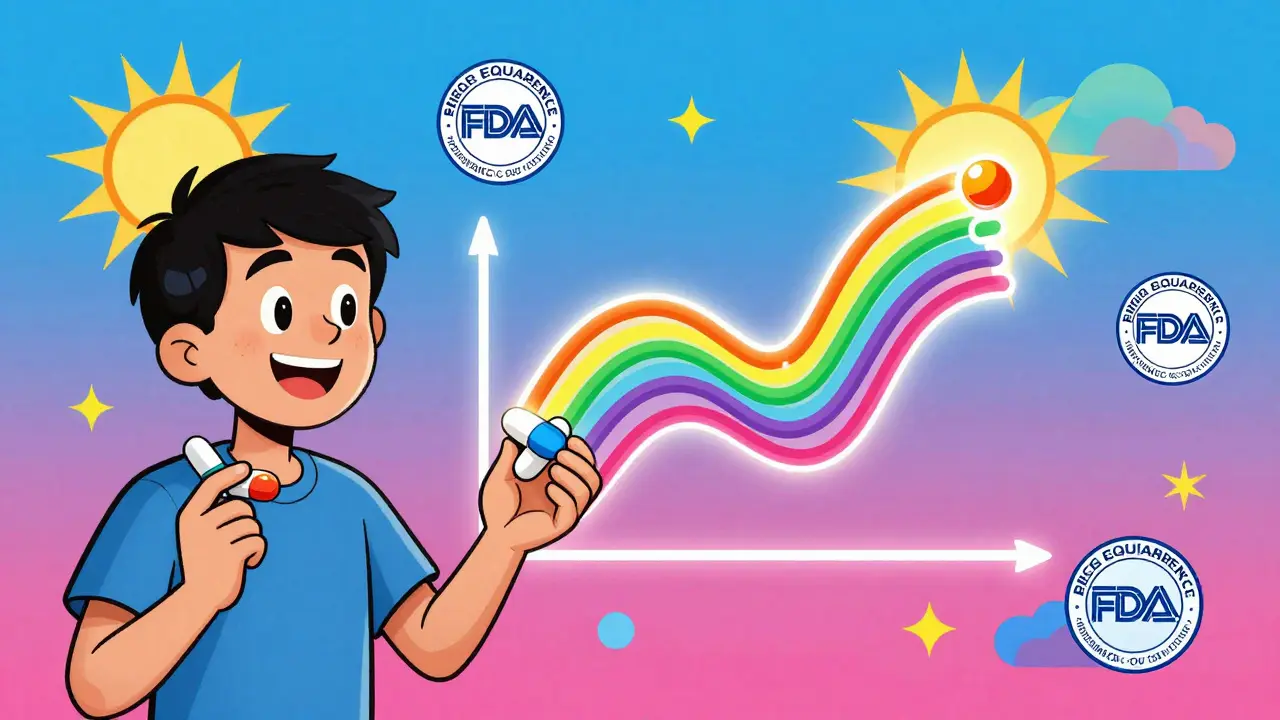
Visual tools like infographics turn confusing science into simple pictures. Take the FDA’s What Makes a Generic the Same as a Brand-Name Drug? infographic. It shows side-by-side graphs of how quickly a generic and brand-name drug dissolve in the body. The lines match almost perfectly. That’s bioequivalence-and it’s the gold standard.
Patients who see this visual are 3.2 times more likely to understand that generics work just as well, according to research from the University of Illinois. One pharmacist in California says she keeps a printed copy behind the counter. “It cuts counseling time in half,” she told Reddit users. “People see the graphs, relax, and say ‘Oh, okay.’”
These aren’t just nice-to-haves. They’re proven tools. The FDA tested these visuals with over 30 patients before releasing them. On average, 87% of people understood the key messages after seeing them. That’s way higher than text-only brochures.
What’s Inside the Best Generic Drug Infographics
The most effective ones follow a clear structure:
- Equivalence: Shows that the active ingredient is identical, and the drug works the same way in your body.
- Approval Process: Explains the FDA’s testing-how generics must meet the same quality, safety, and effectiveness standards.
- Inactive Ingredients: Clarifies that fillers or dyes might differ, but those don’t affect how the drug works.
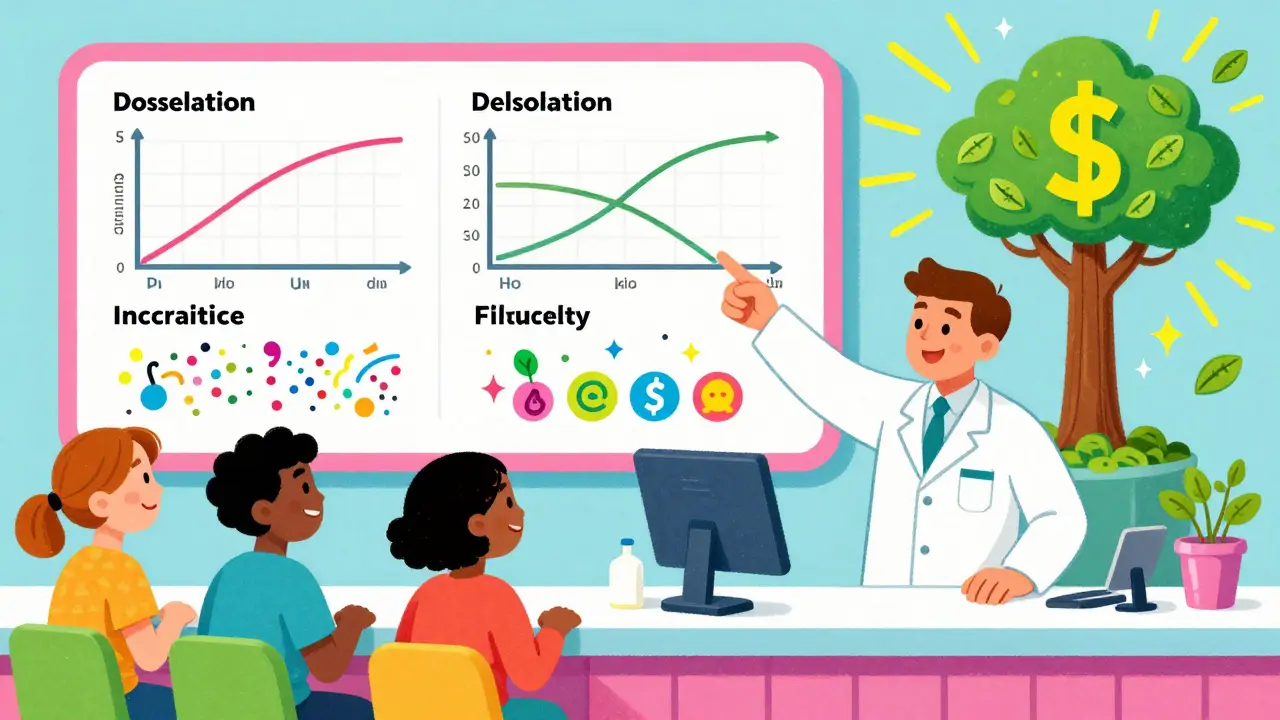
- Cost Savings: Displays real numbers-like how generics saved the U.S. healthcare system $1.68 trillion between 2010 and 2019.
- Health Equity: Highlights that generics help low-income and minority patients access medicine they might otherwise skip due to cost.
The FDA’s infographics are designed for an 8th-grade reading level. They use high-contrast colors, large fonts, and alt text for screen readers. That’s not an accident. It’s intentional accessibility.
Who Makes These Tools-and Who’s Missing the Mark
The FDA leads the pack. Their infographics are standardized, tested, and available in Spanish. They’re also free to download, print, or share. But other organizations have their own versions:
- GTMRx Institute focuses on how generics fit into overall medication management. Their digital versions let users click through real case studies.
- BeMedWise ties generics into medication logs and tracking-but only covers them in 3 out of 15 of their main infographics.
Here’s where things fall short: Only one FDA infographic directly addresses racial disparities in generic drug trust. Studies show African American and Hispanic patients are more likely to doubt generics than white patients. Yet most visuals don’t mention this. That’s a gap.
Also, none of the current infographics clearly show when a pharmacist must notify you before switching a generic-like for warfarin or levothyroxine. These are narrow therapeutic index drugs where tiny differences matter. Experts warn this omission could lead to dangerous assumptions.
How Clinics and Pharmacies Use Them
At Kaiser Permanente’s Southern California clinics, 78% of pharmacists use FDA infographics during consultations. The result? 63% fewer patients refused generic substitutions. That’s not just about saving money-it’s about adherence. If patients don’t trust their meds, they skip doses. That leads to more hospital visits.
Some offices print them and hang them in waiting rooms. Others email them to patients before appointments. Epic Systems, one of the biggest electronic health record platforms, added FDA infographics to its patient portal in late 2022. In six months, they were viewed over 450,000 times.
Implementation is simple. No special software needed. Just download the PDF, print it, or link to it. The FDA even provides sample social media posts and staff training modules-15 minutes long. Over 12,000 healthcare workers have completed them.
What’s Next for Generic Drug Education
The tools are getting smarter. In January 2023, GTMRx launched interactive infographics. You can type in your medications, and it shows you how complex your regimen is-and where generics could simplify it.
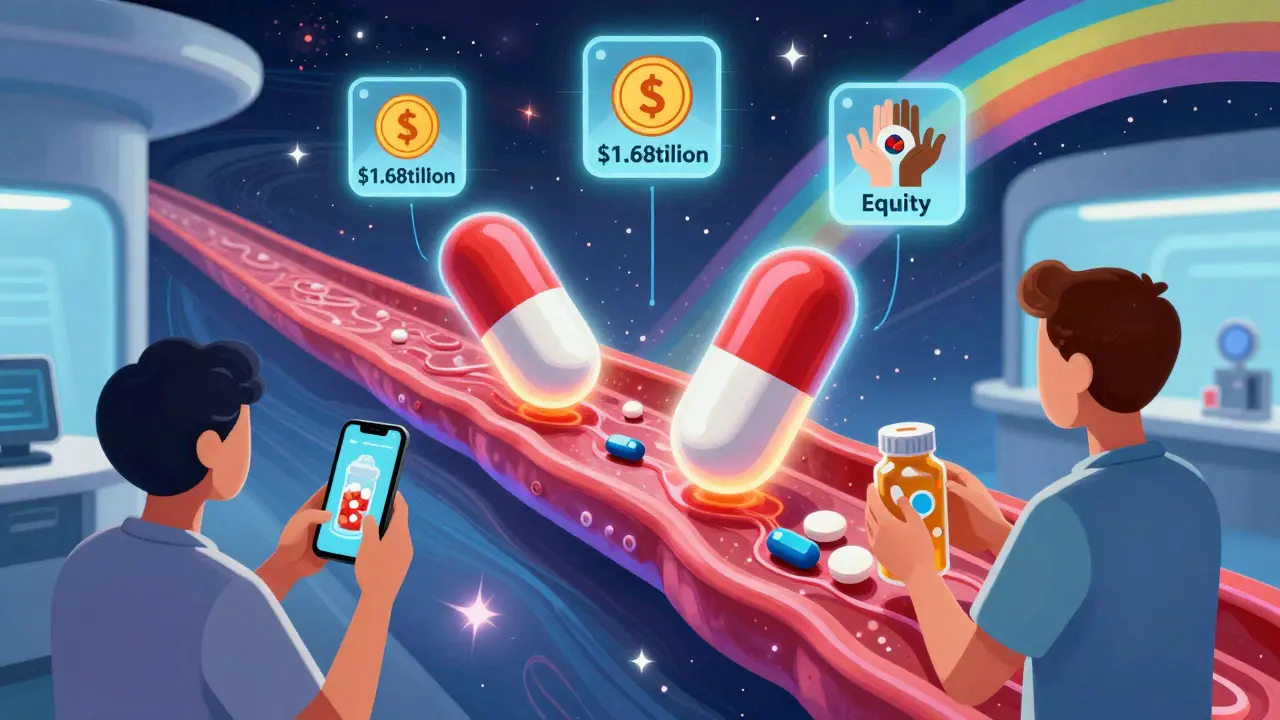
The FDA is testing augmented reality. In a 2023 demo, patients scanned their pill bottle with a phone, and a 3D model appeared showing how the generic and brand-name drugs break down in the body. That’s not science fiction-it’s coming in 2024.
By 2028, experts predict generic use could hit 95% if education keeps improving. That could save another $200 billion a year. But only if patients understand why they’re safe.
What You Can Do Today
If you’re a patient: Ask your pharmacist for a visual explanation of your generic prescription. The FDA’s infographics are free at fda.gov/generics. Print one. Keep it in your medicine cabinet.
If you’re a provider: Add the FDA’s “Facts About Generic Drugs” infographic to your patient portal or waiting room. Use the 15-minute training module. It’s free, and it works.
If you’re a caregiver: Show the “Exclusivity and Generic Drugs” infographic to family members who think generics are “cheap” or “second-rate.” The timeline showing patent expiration makes it crystal clear why generics appear when they do.
Are generic drugs really as effective as brand-name drugs?
Yes. The FDA requires generic drugs to have the same active ingredient, strength, dosage form, and route of administration as the brand-name version. They must also prove they work the same way in the body through bioequivalence testing. Over 90% of prescriptions in the U.S. are for generics, and they’re used safely every day by millions.
Why do generic pills look different from brand-name ones?
The difference in color, shape, or size is due to inactive ingredients like dyes or fillers, which don’t affect how the drug works. Brand-name companies hold patents on their pill designs, so generic manufacturers must make theirs look different. But the medicine inside is identical.
Can I trust generics if they’re much cheaper?
Absolutely. Generics are cheaper because manufacturers don’t have to repeat expensive clinical trials. The FDA still tests every batch for quality and consistency. The cost difference comes from lower marketing and R&D expenses-not lower quality.
Do generics take longer to work than brand-name drugs?
No. Bioequivalence testing ensures generics enter the bloodstream at the same rate and to the same extent as the brand-name version. If a generic worked slower, the FDA wouldn’t approve it.
Are there any drugs where generics might not be a good idea?
For most drugs, generics are perfectly safe. But for a small group called narrow therapeutic index drugs-like warfarin, levothyroxine, or phenytoin-tiny changes in blood levels can matter. Pharmacists are trained to notify you before switching these, and some experts say current infographics should make this clearer. Always talk to your doctor or pharmacist if you’re unsure.
Where can I find these infographics?
The FDA offers all their generic drug infographics for free at fda.gov/generics. They’re available in English and Spanish, as downloadable PDFs, and optimized for both digital screens and printing. Other organizations like GTMRx and BeMedWise also offer resources, but the FDA’s are the most comprehensive and widely used.
Marie-Pier D.
January 24, 2026 AT 08:15OMG I LOVE THIS SO MUCH 😭 I showed my grandma this infographic and she cried because she finally understood why her blood pressure med isn’t ‘fake’ anymore. She’s been refusing generics for years thinking they’re ‘cheap junk’… now she prints one for every pill bottle. Thank you for making science feel human.
Alexandra Enns
January 25, 2026 AT 20:57Let’s be real-this is just woke corporate propaganda. Canada’s healthcare system doesn’t need this. We have real problems like wait times, not some infographic about pill colors. Why are we spending taxpayer money on colorful charts instead of fixing actual access? 🤦♀️
Marlon Mentolaroc
January 27, 2026 AT 09:49Okay but the 3.2x increase in understanding? That’s a massive effect size. The FDA’s study had n=30, which is tiny, but the p-value was .003. And Kaiser’s 63% drop in refusals? That’s not noise-that’s a clinical win. Also, $1.68 trillion saved? That’s more than the entire UK’s annual defense budget. This isn’t fluff-it’s fiscal and public health gold.
Gina Beard
January 27, 2026 AT 19:44Truth is, we don’t distrust generics. We distrust systems.
Pharmacies switch without telling us.
Doctors don’t explain.
Insurance pushes them.
So the pill looks different-and we assume the betrayal is inside.
Infographics fix the symptom, not the disease.
siva lingam
January 29, 2026 AT 06:48so u spent 1000 words to say "pics help people"?? wow. groundbreaking. next u'll tell us water is wet.
Karen Conlin
January 31, 2026 AT 01:45As a Black woman who grew up in rural Alabama, I can tell you-this isn’t just about education. It’s about dignity. My aunt skipped her diabetes meds for 3 years because she thought generics were ‘the medicine they give the poor.’ When we showed her the FDA infographic with the side-by-side graphs? She said, ‘So they’re not cheating us?’ I cried. This isn’t a tool-it’s a bridge. And we need more of them in Spanish, in ASL, in audio formats. If we’re serious about equity, we don’t just hand people a pamphlet-we meet them where they are. And that means making visuals that don’t assume they’ve ever opened a textbook.
Viola Li
February 1, 2026 AT 00:16Interesting how the article never mentions that generics can have up to a 20% variance in absorption. The FDA allows it. That’s not ‘same.’ That’s ‘close enough.’ And for someone on warfarin? That’s not a minor detail-it’s a death sentence waiting to happen. This feels like corporate PR dressed as public service.
venkatesh karumanchi
February 2, 2026 AT 18:21My cousin in Mumbai takes generic insulin. She’s alive because of it. In India, brand-name drugs cost 10x more. This isn’t about American pill colors. This is about life or death. Thank you for highlighting the global impact. We need more of this, not less.
Vatsal Patel
February 4, 2026 AT 04:26Wow the FDA spent millions on infographics but still can't explain why their own website is stuck in 2008 design? 🤡 Also who approved the ‘health equity’ slide? Did they hire a grad student who just watched a TED Talk? Real solution: lower drug prices. Not pretty pictures.
Kat Peterson
February 5, 2026 AT 18:16Okay but have y’all seen the new AR demo?? I scanned my levothyroxine bottle and a tiny 3D model of my thyroid popped up with the drug dissolving in real time?? 🤯 I screamed. My cat ran away. My partner thought I was having a stroke. This is the future. And it’s beautiful. I’m getting this tattooed on my arm. #GenericRevolution 💉✨