Why Patients Skip or Forget Medications: Common Barriers to Adherence
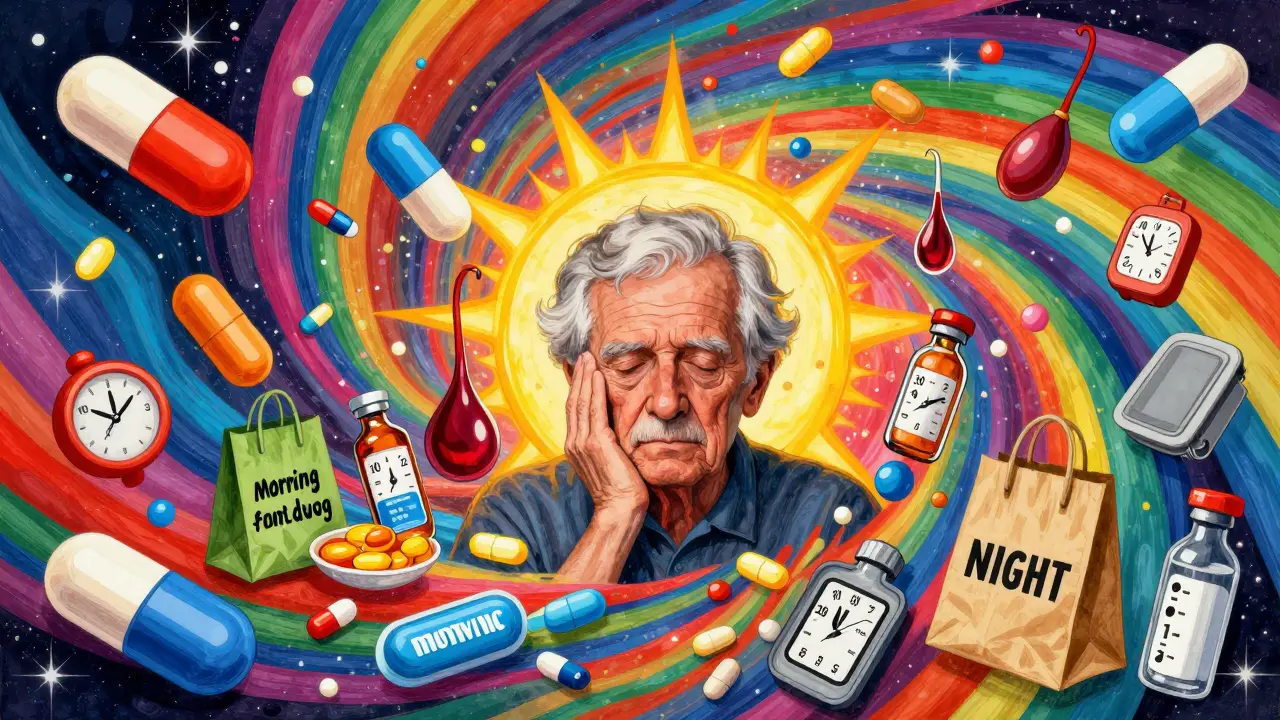
Why Do People Miss Their Medications? It’s Not Just Forgetting
Half of all people taking medicine for long-term conditions like high blood pressure, diabetes, or cholesterol don’t take it as prescribed. That’s not laziness. It’s not carelessness. It’s a complex mix of everyday problems, confusing instructions, and deep-seated doubts that no one ever talks about. You might think missing a pill once in a while doesn’t matter. But when it happens day after day, month after month, it leads to hospital visits, heart attacks, and even death. In the U.S. alone, nonadherence kills about 125,000 people every year and costs the system between $100 billion and $300 billion. The real question isn’t why patients don’t take their meds-it’s why the system keeps expecting them to figure it out on their own.
Forgetfulness Is the #1 Reason-And It’s Not About Memory
Forty-four percent of diabetic patients over 59 say they forget to take their meds. But calling it ‘forgetting’ misses the point. It’s not that their memory is failing. It’s that their schedule is impossible. Imagine you’re on five different medications. Three need to be taken at different times of day. One goes with food. Another must be taken on an empty stomach. One requires you to check your blood sugar first. Now add a job that shifts hours, kids to drop off, errands to run, and a body that’s tired by 3 p.m. When was the last time you had a moment to pause and think, ‘What did I take today?’
Studies show adherence drops sharply with dosing frequency. People taking one pill a day stick to it 79% of the time. Those taking four or more doses a day? Only 51%. That’s not a coincidence. It’s math. The more times you’re asked to remember something in a day, the more likely you are to miss it. And when you’re older, or tired, or stressed, your brain doesn’t have the bandwidth to juggle it all.
Cost Is a Silent Killer
One in five new prescriptions are never picked up because of price. That’s not a typo. Twenty percent. For people on fixed incomes, choosing between insulin and groceries isn’t a hypothetical-it’s real. A single month’s supply of some brand-name medications can cost $300 or more. Even with insurance, copays add up. A diabetic patient might pay $50 for insulin, $40 for metformin, $25 for a blood pressure pill, and $15 for a cholesterol drug. That’s $130 a month, just for pills. No wonder 50% of patients say cost is their biggest barrier, according to the American Medical Association.
Some skip doses to stretch their supply. Others cut pills in half. Some stop entirely. And when they end up in the ER with a stroke or heart failure, the bill is $50,000. The system punishes them for trying to survive.
Confusing Instructions and Bad Packaging
Ever tried reading the tiny print on an insulin pen? Or figured out how to use a pill organizer with 12 compartments and no labels? Many patients don’t understand what their meds are for, how they work, or when to take them. One patient on Reddit said she overdosed twice because she couldn’t read the dosage markings. Another said her doctor never explained why her blood pressure pill had to be taken at bedtime-not morning. She switched it herself. Her numbers got worse.
Pharmacies hand out bottles with instructions written in 6-point font. Pill organizers are sold with no clear labels. Apps that remind you to take meds require digital literacy most seniors don’t have. And if you’re low on health literacy-meaning you struggle to understand medical terms or instructions-you’re 2.5 times more likely to miss doses. This isn’t about intelligence. It’s about design. The system wasn’t built for people. It was built for efficiency.
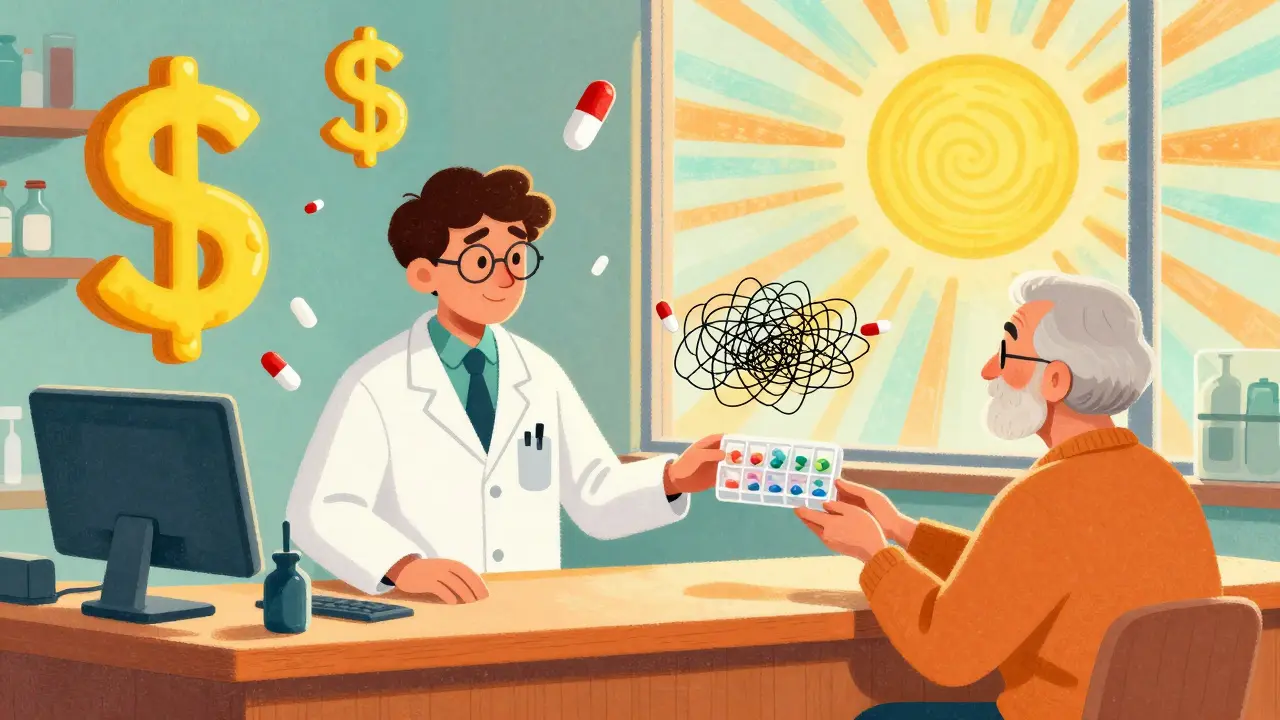
Polypharmacy: Too Many Pills, Too Little Time
When a patient takes three medications, their chance of missing a dose goes up by 16% compared to someone on two. With five? It’s even worse. This is called polypharmacy-and it’s the norm, not the exception, for older adults. A 70-year-old with heart disease, diabetes, arthritis, and depression might be on eight or nine pills a day. Each one has its own schedule, side effects, and food restrictions. No wonder they give up.
Doctors don’t always talk to each other. A cardiologist prescribes one thing. A rheumatologist prescribes another. The primary care doctor just tries to keep up. No one steps back and asks, ‘Can we combine these? Can we reduce the number?’ But when you simplify regimens-switching to combination pills or once-daily versions-adherence jumps. In one study, switching from three daily pills to one combined pill improved adherence by 30%.
It’s Not Just Physical-It’s Psychological
Many people don’t take their meds because they don’t believe they need them. If you feel fine, why take a pill? This is especially common with blood pressure and cholesterol drugs. You don’t feel sick. You don’t feel better. So you stop. Forty-seven percent of nonadherence cases come from doubts about whether the medicine is even necessary, according to research from University College London.
And then there’s fear. Thirty-eight percent of patients avoid meds because they’re scared of side effects. Maybe they heard about someone who had a bad reaction. Maybe they read a scary review online. Maybe they were never told what to expect. Without clear, honest conversations, fear fills the silence. And once fear takes root, no amount of data or statistics will convince them otherwise.
What Actually Works? Simple Fixes, Not Fancy Tech
There’s no magic app that fixes everything. But there are simple, proven fixes that work if you actually use them.
- Simplify the regimen. Switch to once-daily pills. Use combination drugs. Fewer pills = fewer chances to mess up.
- Automate refills. Get 90-day supplies through mail-order pharmacies. No more running out. No more trips to the store.
- Sync your refills. If all your meds are due on the same day, you only need to remember one date. This boosts adherence by 18%.
- Talk to your pharmacist. Pharmacists aren’t just pill dispensers. They’re trained to explain how to take meds, spot interactions, and help with cost. Ask them.
- Use a pill box. Not a fancy app. Just a simple plastic box with days and times labeled. Put it next to your toothbrush.
One study found that structured counseling-just 15 minutes with a nurse or pharmacist explaining why each med matters-improved adherence by 25%. That’s more than any app or wearable device.

Why Most Solutions Fail
Too many programs try to fix the wrong thing. They give patients apps, wearables, or text reminders. But if the patient can’t afford the medicine, doesn’t understand why they need it, or is overwhelmed by five different pills, none of that matters. Technology doesn’t solve cost. It doesn’t fix confusing labels. It doesn’t reduce the number of pills.
And it backfires with older adults. Forty-two percent of people over 65 say they’re uncomfortable with digital tools. They don’t want to learn another app. They want someone to sit down with them, explain it slowly, and help them set up a system that fits their life.
What’s Changing? And What’s Next
In January 2024, Medicare started paying doctors bonuses of up to $150 per patient for keeping adherence rates above 80%. That’s a big shift. It means providers now have a financial reason to care about whether you take your pills.
Drugmakers are also starting to make longer-acting versions. A once-a-week injection for schizophrenia has an 85% adherence rate. Oral pills? Only 45%. That’s a game-changer.
But the real progress will come when the system stops blaming patients and starts fixing the design. When pharmacies offer free pill organizers. When doctors ask, ‘How many pills are you taking each day?’ instead of just writing prescriptions. When cost is no longer a barrier.
Final Thought: This Isn’t About Willpower
People aren’t failing because they’re lazy. They’re failing because the system is broken. Medication adherence isn’t a personal responsibility-it’s a public health issue. And fixing it means changing how we prescribe, package, price, and talk about medicine. Until then, millions will keep skipping pills-not because they don’t care, but because they’re drowning in complexity.
Why do people skip their medications even when they know it’s important?
People skip meds not because they don’t care, but because the system makes it hard. Complex schedules, high costs, confusing instructions, fear of side effects, and lack of clear explanations all add up. Even if someone knows they should take their pills, daily life often makes it impossible to keep up.
Is forgetting to take medicine a sign of dementia?
Not necessarily. While cognitive decline can make it harder to remember meds, most people who forget are otherwise healthy. The real issue is complexity-too many pills, too many times to take them, no clear routine. Forgetfulness is common even in people with sharp minds when their regimen is overwhelming.
Can a pill organizer really help with adherence?
Yes, especially if it’s simple and used correctly. A basic plastic organizer with labeled compartments for morning, afternoon, evening, and night helps people see what they’ve taken and what’s left. Studies show it improves adherence by 20-30% when combined with clear instructions and consistent use. Fancy apps don’t work as well for older adults.
How can I afford my medications if they’re too expensive?
Ask your pharmacist about generic versions, patient assistance programs, or 90-day mail-order refills. Many drugmakers offer coupons or free samples. Some states have prescription assistance programs. Never stop taking a medicine because of cost-talk to your doctor or pharmacist first. They can often switch you to a cheaper option or help you apply for support.
Should I stop taking a medicine if I feel fine?
No. Many medications-like those for blood pressure, cholesterol, or diabetes-work silently. You won’t feel better, but they’re preventing damage. Stopping them increases your risk of heart attack, stroke, or kidney failure. Always talk to your doctor before making any changes.
What’s the best way to remember to take my meds?
Link your pills to a daily habit you already do-like brushing your teeth, eating breakfast, or turning off the lights at night. Use a pill box. Set one alarm on your phone, even if you don’t use apps. And ask your pharmacist to sync all your refills to the same day each month. Simple, consistent routines beat complicated tech.
Can my pharmacist help me with adherence?
Absolutely. Pharmacists are trained to review all your meds, spot duplicates or interactions, explain how to take them, and help you find cheaper options. Many offer free adherence counseling. Don’t wait until you run out-go in and ask for help. They’re one of your best resources.
Are combination pills better than taking separate ones?
Yes, if they’re right for you. Taking two or three pills in one reduces the number of daily doses, which makes it easier to remember. Studies show adherence improves by up to 30% when patients switch to combination pills. Talk to your doctor if you’re on multiple meds for the same condition-there may be a simpler option.
Gaurav Meena
January 31, 2026 AT 21:34Also, pharmacists are unsung heroes. My local one noticed he was skipping his blood pressure pill because he thought it made him dizzy. Turned out it was a drug interaction. She switched him to a cheaper, simpler combo pill. Saved his life and $80 a month.
Claire Wiltshire
February 2, 2026 AT 12:47Diana Dougan
February 3, 2026 AT 23:15Katie and Nathan Milburn
February 5, 2026 AT 08:20Kimberly Reker
February 7, 2026 AT 02:35Niamh Trihy
February 7, 2026 AT 06:10Holly Robin
February 7, 2026 AT 17:52Shubham Dixit
February 8, 2026 AT 05:14Sarah Blevins
February 8, 2026 AT 05:48Amy Insalaco
February 8, 2026 AT 20:39kate jones
February 9, 2026 AT 19:26KATHRYN JOHNSON
February 11, 2026 AT 04:17