When Pharmacists Should Flag Problematic Generic Drugs: A Safety Guide
Generic medications save the healthcare system billions of dollars every year. In fact, they make up more than 90% of all prescriptions filled in the United States. For most patients, switching from a brand-name drug to its generic equivalent is seamless and safe. The active ingredient is the same, the dosage matches, and the price drops by up to 85%. But behind the scenes, pharmacists face a complex challenge: identifying the rare instances where a generic substitution causes harm or treatment failure. You might wonder if generics are truly interchangeable with brand-name drugs. While regulatory standards ensure broad equivalence, specific clinical scenarios require vigilance. This guide explains exactly when and how pharmacists should flag issues to protect patient safety.
Understanding the Regulatory Baseline
To understand why some generics cause problems, we first need to look at how they are approved. The U.S. Food and Drug Administration (FDA) requires generic manufacturers to prove that their products are bioequivalent to the original brand-name drug, known as the Reference Listed Drug (RLD). Bioequivalence means the generic drug delivers the same amount of active ingredient into the bloodstream over the same period. Specifically, the FDA mandates that the 90% confidence intervals for two key metrics-the Area Under the Curve (AUC) and maximum concentration (Cmax)-must fall within an 80-125% range compared to the brand.
This standard works well for most medications. However, critics argue that allowing up to a 20% variation in drug exposure can be clinically significant for certain sensitive patients. Dr. Philip Alcabes, a public health professor, has pointed out that this margin of error leaves room for inconsistency. While the majority of generics perform identically to their brand counterparts, this statistical variance becomes critical when dealing with drugs that have very small windows between effective doses and toxic levels. Understanding this baseline helps pharmacists recognize that "therapeutic equivalence" is not always absolute in real-world physiology.
The High-Risk Category: Narrow Therapeutic Index Drugs
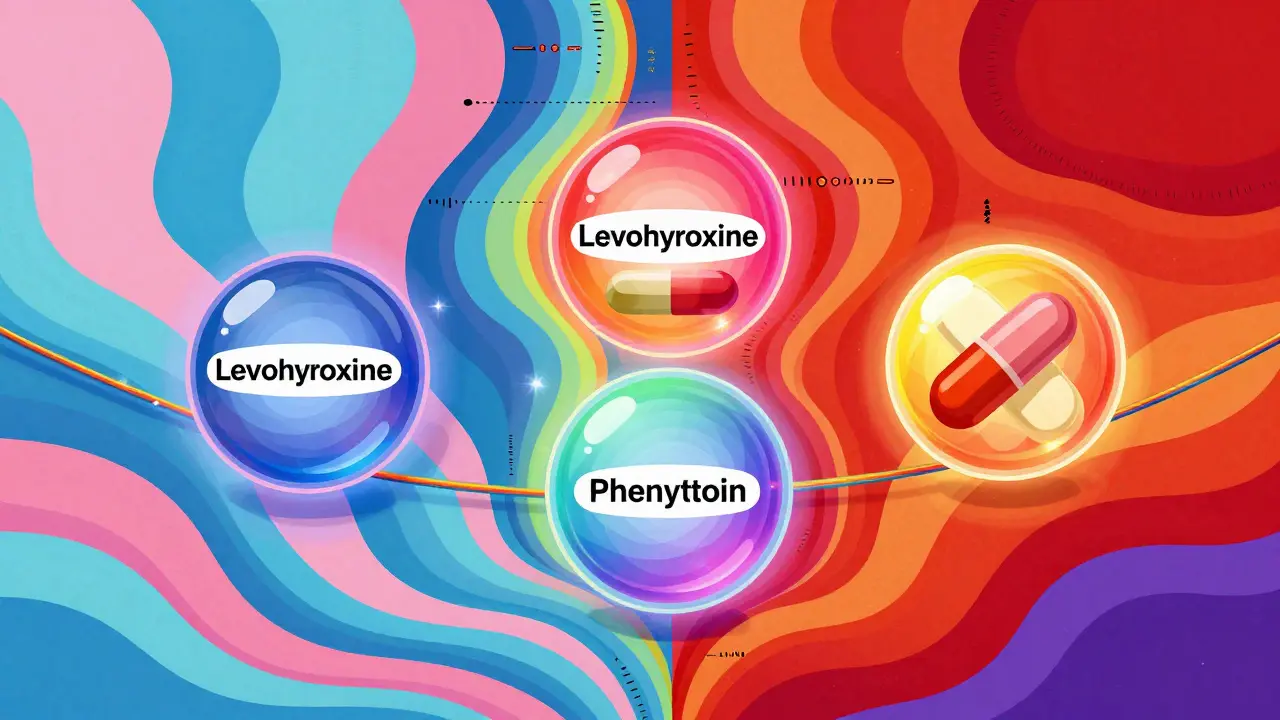
The most critical area where pharmacists must exercise caution involves Narrow Therapeutic Index (NTI) drugs. These are medications where a slight change in blood concentration can lead to serious adverse effects or treatment failure. The FDA has designated 18 specific drugs as NTIs, requiring special consideration during substitution. Common examples include levothyroxine, warfarin, phenytoin, and digoxin.
A study published in the Journal of the American Pharmacists Association found that NTI drugs demonstrated 2.3 times higher rates of therapeutic failure when patients switched between multiple generic manufacturers. For instance, digoxin showed the highest rate of adverse events-12.7 per 10,000 prescriptions-when switching manufacturers, compared to just 4.3 for non-NTI drugs. If a patient on warfarin switches from one generic manufacturer to another without monitoring, their INR levels could fluctuate dangerously, increasing the risk of bleeding or clotting. Pharmacists should flag any generic switch involving these drugs, especially if the patient has a history of unstable levels. In many cases, maintaining consistency with a single manufacturer is safer than assuming all generics are identical substitutes.
| Drug Class | Risk Level | Key Concern | Pharmacist Action |
|---|---|---|---|
| Narrow Therapeutic Index (e.g., Levothyroxine) | High | Small dose changes cause toxicity or failure | Verify manufacturer; monitor levels closely |
| Extended-Release Formulations | Moderate | Inconsistent dissolution profiles | Watch for breakthrough symptoms |
| Statins (e.g., Atorvastatin) | Low | Minimal clinical difference observed | Routine substitution acceptable |
| Look-Alike/Sound-Alike Names | Variable | Dispensing errors due to confusion | Double-check labels and counseling |
Complex Formulations and Dissolution Issues
Not all pills are created equal. While immediate-release tablets are relatively straightforward to replicate, complex formulations pose greater challenges. Extended-release (ER), sustained-release (SR), and controlled-delivery systems rely on specific manufacturing technologies to release the drug slowly over time. A 2020 FDA testing report revealed that 7.2% of generic extended-release opioids failed dissolution testing, compared to only 1.1% of immediate-release products. When a generic ER product fails to dissolve properly, it may not deliver the full dose, leading to therapeutic failure. Conversely, if it dissolves too quickly, it can cause a dangerous spike in blood concentration.
The FDA issued a Drug Safety Communication in 2023 regarding inconsistent dissolution profiles in certain generic versions of diltiazem CD. Between January 2021 and March 2022, there were 47 reported cases of therapeutic failure linked to these specific generics. Patients experienced uncontrolled heart rates or blood pressure because the medication was not releasing as intended. Pharmacists should remain alert to patient reports of "breakthrough" symptoms-such as pain returning earlier than expected or anxiety resurfacing-after switching to a new generic manufacturer of an extended-release drug. Documenting the manufacturer name is crucial for traceback analysis in these cases.
Look-Alike and Sound-Alike Confusion
Human error remains a significant factor in generic drug safety. The Institute for Safe Medication Practices (ISMP) reports that look-alike/sound-alike (LASA) name confusion accounts for 14.3% of all reported generic medication errors. This is particularly prevalent with combination drugs. For example, oxycodone/acetaminophen and hydrocodone/acetaminophen are frequently confused due to similar packaging and names. Both are used for pain, but they have different potency levels and addiction potentials. Dispensing the wrong one can lead to overdose or inadequate pain control.
Pharmacists play a vital role in catching these errors before the patient leaves the counter. Implementing strict verification protocols, such as scanning barcodes and visually inspecting pill appearance against reference images, can mitigate these risks. Additionally, counseling patients on what their medication looks like and warning them about potential confusions adds a layer of safety. If a patient reports side effects that don't match the prescribed drug's profile, consider whether a LASA error occurred during dispensing.
Recognizing Patient-Reported Problems
Sometimes, the data doesn't show a problem until patients speak up. Surveys indicate that 41.5% of community pharmacists have received complaints about generic drug efficacy. Patients may report unexpected side effects, such as gastrointestinal distress, headaches, or dizziness, after switching manufacturers. While 78.3% of patients are satisfied with generics due to cost savings, 22.4% report experiencing different side effects when switching brands. These subjective experiences are valid indicators of potential issues.
If a patient reports unexplained therapeutic failure or new side effects within 2-4 weeks of a generic switch, the pharmacist should investigate further. Ask specific questions: Did the symptom start immediately after the switch? Are you taking the medication at the same time each day? Has the manufacturer changed? Documenting these details helps distinguish between true formulation issues and other lifestyle factors. In cases involving NTI drugs, referring the patient back to their prescriber for lab work-such as TSH tests for thyroid medication or INR checks for warfarin-is essential. Do not dismiss patient concerns as "placebo nocebo" effects without proper evaluation.
Practical Protocols for Flagging Issues
To systematically identify problematic generics, pharmacists should adopt a structured approach. First, verify therapeutic equivalence using the FDA Orange Book. Look for products rated "AB," which indicates they are therapeutically equivalent to the brand. Be cautious with "BX" ratings, which mean the FDA has not established therapeutic equivalence due to unresolved bioequivalence concerns. Second, maintain records of the specific manufacturer for dispensed medications. The University of Florida College of Pharmacy notes that 68.4% of therapeutic failure investigations require manufacturer-specific data to determine the root cause.
Third, utilize reporting tools effectively. The FDA's MedWatcher app allows for rapid submission of adverse event reports, with an average submission time of under five minutes. Reporting trends helps regulators identify widespread quality issues faster. Finally, stay updated on state laws. Twenty-nine states have mandatory substitution laws, while others operate under presumed consent frameworks. Four states-Massachusetts, New York, Texas, and Virginia-have unique requirements for NTI drugs. Knowing your local regulations ensures you are acting within legal boundaries while prioritizing patient care. By combining regulatory knowledge with clinical vigilance, pharmacists can ensure that the benefits of generic medications outweigh the risks.
What is bioequivalence in generic drugs?
Bioequivalence means that a generic drug delivers the same amount of active ingredient into the bloodstream over the same period as the brand-name drug. The FDA requires that the 90% confidence intervals for absorption metrics (AUC and Cmax) fall within 80-125% of the reference listed drug.
Which drugs are considered high-risk for generic substitution?
Narrow Therapeutic Index (NTI) drugs are high-risk. These include levothyroxine, warfarin, phenytoin, and digoxin. Small variations in drug levels can lead to serious adverse effects or treatment failure, making manufacturer consistency crucial.
Why do some patients experience side effects with generics?
While the active ingredient is the same, inactive ingredients (fillers, binders, dyes) can differ between manufacturers. Some patients may be sensitive to these excipients. Additionally, variations in dissolution rates for extended-release formulations can alter how the drug is absorbed, potentially causing side effects.
How can pharmacists check if a generic is therapeutically equivalent?
Pharmacists should consult the FDA Orange Book. Products with an "AB" rating are considered therapeutically equivalent to the brand-name drug. "BX" ratings indicate that therapeutic equivalence has not been established, warranting caution.
What should a pharmacist do if a patient reports treatment failure after a generic switch?
The pharmacist should document the manufacturer of the generic, assess the timeline of symptoms, and consider contacting the prescriber. For NTI drugs, recommending laboratory monitoring (e.g., TSH or INR levels) is essential to determine if the issue is related to bioavailability.