Tolerance Development to Medications: Why Some Side Effects Fade While Others Stick Around
Side Effect Tolerance Estimator
How This Tool Works
Based on clinical patterns, side effects fade at different rates. This tool estimates when your side effect might improve based on: 1) Medication type, 2) Specific side effect, and 3) Known biological tolerance mechanisms.
Have you ever started a new medication and felt awful at first-nauseous, dizzy, exhausted-only to find those symptoms vanished after a week or two? Meanwhile, the side effect you really hate, like constipation or dry mouth, just won’t go away? You’re not imagining it. This isn’t bad luck or a fluke. It’s called tolerance development, and it’s one of the most common, yet poorly understood, reasons why some side effects disappear while others don’t.
What Exactly Is Tolerance?
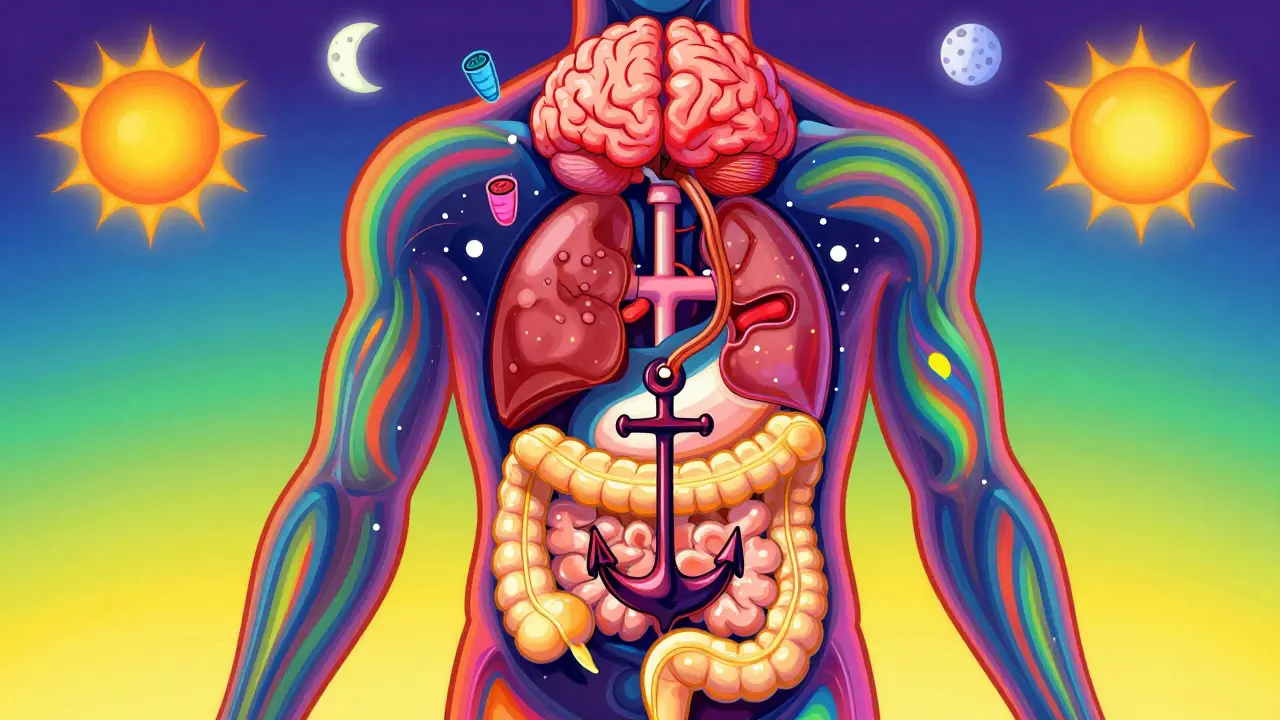
Tolerance isn’t just ‘getting used to’ a drug. It’s a biological rewiring. When you take a medication regularly, your body adapts. Cells change. Receptors shrink. Enzymes speed up. These aren’t minor tweaks-they’re major shifts in how your body handles the drug. The World Health Organization defines tolerance as a reduced response to a medication after repeated use. That means the same dose doesn’t hit the same way anymore. But here’s the twist: your body doesn’t adapt evenly. Some side effects fade fast. Others? They stick around like an uninvited guest. Why? Because different systems in your body respond to the drug in different ways, at different speeds.Three Ways Your Body Builds Tolerance
There are three main ways tolerance happens-and each one explains why some effects vanish while others don’t.- Metabolic Tolerance: Your liver gets smarter. Enzymes like CYP3A4 and CYP2E1 ramp up production, breaking down the drug faster. That’s why alcohol makes you less drunk over time-your liver processes it more efficiently. The same thing happens with barbiturates and some seizure meds. You don’t feel the same effect because less of the drug is hanging around.
- Pharmacodynamic Tolerance: This is where your brain and nerves change. Receptors (the spots where drugs bind) get fewer in number, or they change shape so the drug doesn’t fit as well. Opioids, for example, cause your brain to reduce opioid receptor numbers by 20-50% after just a few doses. That’s why the euphoria fades. But constipation? That’s caused by receptors in your gut. Those don’t downregulate nearly as much. So the side effect sticks.
- Cellular Adaptation: Your cells rewire themselves. Chronic alcohol use, for instance, changes the makeup of GABA and NMDA receptors. It increases certain protein subunits by 40-60%. This isn’t just about feeling less buzzed-it’s about your entire nervous system adjusting its baseline. That’s why withdrawal can be dangerous: your brain forgot how to function without the drug.
Why Some Side Effects Vanish-And Others Don’t
Let’s look at real examples. These aren’t guesses. These are patterns seen in thousands of patients and confirmed in clinical studies.- Opioids: Nausea and drowsiness drop by 70-80% within a week. But constipation? It stays at 90% of its original intensity. Why? The gut doesn’t adapt like the brain does. That’s why doctors prescribe laxatives from day one-tolerance won’t save you there.
- Benzodiazepines (like Xanax or Valium): The sedative effect fades fast. After two weeks, most people feel alert again. But the anxiety relief? Still there. That’s why these drugs can be used long-term for panic disorder without losing their core benefit.
- SSRIs (like sertraline or fluoxetine): Nausea and dizziness usually vanish in 2-3 weeks. But sexual side effects? For 58% of users, they stick around. The brain adapts to mood changes, but not to how serotonin affects sexual response pathways.
- Beta-blockers: Fatigue and lightheadedness fade after a few months. Blood pressure stays down. Your body adjusts to the reduced heart rate, but the vascular effect remains.
- Antipsychotics: Tremors and stiffness (extrapyramidal side effects) improve in 50-60% of patients after 4-6 weeks. The drug still blocks dopamine where it matters for psychosis-but not where it causes movement issues.
What Patients Are Saying
Real people describe this exact pattern over and over. - On Reddit, someone wrote: “Started oxycodone after surgery. Vomiting stopped after day 3. Constipation? Still there six months later.” - A Drugs.com reviewer said: “The dizziness made me fall the first week. Now it’s gone. But I can’t get an erection. That hasn’t changed.” - A multiple sclerosis patient on HealthUnlocked shared: “The fatigue from interferon faded after a month. The injection site burns? Always there.” These aren’t outliers. They’re the norm. Studies show 73% of SSRI users lose nausea within three weeks. But nearly 60% still deal with sexual side effects months later. The brain adapts to mood. It doesn’t adapt to libido.Why Doctors Don’t Always Warn You
Many patients feel blindsided when side effects linger. Why? Because doctors often assume tolerance applies to everything. A 2021 study found that 25-30% of doctors mistake a lack of therapeutic effect for tolerance-when it’s actually disease progression. Or they assume if nausea went away, constipation will too. It won’t. The truth? Tolerance is unpredictable. Genetics play a huge role. About 7-10% of Caucasians have a CYP2D6 gene variant that makes them poor metabolizers of codeine. For them, tolerance develops slower-or not at all. Meanwhile, someone else might build tolerance in days. No two people are the same.What You Can Do
If you’re dealing with a side effect that won’t quit, here’s what actually helps:- Don’t assume it’ll fade. If it’s something serious-constipation, sexual dysfunction, dry mouth-talk to your doctor early. Don’t wait.
- Ask about timing. “How long until this side effect usually improves?” Some, like nausea from SSRIs, resolve fast. Others, like weight gain from antipsychotics, rarely do.
- Consider a drug holiday. For some meds-like nitroglycerin or certain antidepressants-taking a short break (5-10 days) can reset tolerance. This isn’t safe for all drugs, so never do it without medical advice.
- Look for alternatives. If sexual side effects from an SSRI are unbearable, switching to bupropion (Wellbutrin) can help. It’s less likely to cause them.
- Track your symptoms. Write down when side effects started, how bad they are, and if they change. This helps your doctor spot patterns.

The Future: Personalized Tolerance Management
Pharma companies are catching on. In 2023, the FDA approved a new combo drug-naltrexone-bupropion-that specifically reduces opioid-induced nausea without dulling pain relief. Clinical trials showed a 45% drop in persistent nausea. Researchers are also mapping genetic markers. The OPRM1 gene, for example, influences how fast opioid tolerance develops. Soon, a simple blood test could tell you: “You’re likely to develop rapid tolerance to drowsiness but not constipation.” By 2030, most new CNS drugs will be designed with tolerance in mind. That means fewer side effects that stick around. But for now, the best tool you have is knowledge.When to Worry
Tolerance isn’t addiction. You can be tolerant without being dependent. But if you find yourself needing more of the drug just to feel normal-or you’re skipping doses because the side effects are unbearable-that’s a red flag. Talk to your doctor. Don’t self-adjust. Also, never stop a medication cold turkey if you’ve been on it for weeks. Withdrawal can be dangerous. Always taper under medical supervision.Bottom Line
Side effects don’t vanish because you’re “getting used to them.” They fade because your body rewired itself in specific ways. Some systems adapt quickly. Others? Not so much. Understanding this helps you manage expectations, avoid unnecessary suffering, and have smarter conversations with your doctor. You’re not broken. You’re biological. And biology is messy-but it’s predictable if you know the rules.Why do some side effects go away but others don’t?
Side effects fade or stick based on where in your body the drug acts and how quickly your cells adapt. For example, nausea from opioids or SSRIs disappears because brain receptors that cause vomiting downregulate fast. But constipation from opioids persists because gut receptors barely adapt. This is called differential tolerance-your body changes at different rates in different places.
Does tolerance mean the medication isn’t working anymore?
Not always. Tolerance often affects side effects more than the intended benefit. For instance, with benzodiazepines, sedation fades after two weeks, but anxiety relief stays strong. With beta-blockers, fatigue disappears, but blood pressure control remains. Always check with your doctor before assuming the drug has stopped working.
Can I speed up tolerance to side effects?
No, and you shouldn’t try. Increasing your dose to force tolerance can lead to dependence, worsen side effects, or cause overdose. Tolerance develops naturally over time through biological adaptation. The safest approach is to wait, track symptoms, and work with your doctor on management strategies like lifestyle changes or alternative medications.
Is tolerance the same as addiction?
No. Tolerance means your body needs more of the drug to get the same effect. Addiction involves compulsive use despite harm, cravings, and loss of control. You can be tolerant without being addicted. For example, someone on long-term pain medication may need higher doses but still take it as prescribed. That’s tolerance-not addiction.
How long does it take for side effects to fade?
It varies by drug and side effect. Nausea from SSRIs usually fades in 2-3 weeks. Dizziness from pregabalin often resolves by day 21. Sedation from benzodiazepines drops within 7-14 days. But constipation from opioids or sexual side effects from antidepressants can last months or longer. There’s no universal timeline-each side effect follows its own pattern.
Can I stop taking a medication if side effects don’t go away?
Don’t stop abruptly. Stopping suddenly can cause withdrawal, rebound symptoms, or worsen your condition. Instead, talk to your doctor. They may suggest lowering the dose slowly, switching to a different medication, or adding a treatment for the side effect (like a laxative for constipation). Your safety comes first.
sakshi nagpal
December 24, 2025 AT 22:54Interesting breakdown. I’ve been on SSRIs for anxiety and the sexual side effects are brutal-still there after 8 months. I didn’t realize it was biological, not just ‘me being broken.’ Glad to know it’s not just me.
Sumler Luu
December 25, 2025 AT 15:30This is the most accurate explanation I’ve ever read on tolerance. Too many doctors treat all side effects like they’re the same. Thanks for clarifying the science behind why some stick and others don’t.
roger dalomba
December 27, 2025 AT 13:59Wow. A medical post that doesn’t sound like it was written by a pharmaceutical rep. Who knew biology had nuance? I’m shocked.
Brittany Fuhs
December 29, 2025 AT 13:18People need to stop blaming drugs and start taking responsibility. If you can’t handle a little constipation or dry mouth, maybe you shouldn’t be on meds at all. This country is too soft.
Steven Destiny
December 30, 2025 AT 03:27You’re not alone. I was terrified when my nausea didn’t go away after 2 weeks-but then I learned it was my gut, not my brain, that didn’t adapt. Now I take a daily laxative and it’s fine. You got this.
Fabio Raphael
December 30, 2025 AT 11:41So if tolerance is differential, does that mean some people never develop it for certain side effects? Like, if I have a genetic variant that doesn’t downregulate gut receptors, am I stuck with opioid constipation forever?
Amy Lesleighter (Wales)
January 1, 2026 AT 07:57brain adapts. gut doesn't. that's it. no magic. just biology. if your body changes one part but not another, it's not your fault. it's just how it works. talk to your doc. don't suffer in silence.
Rajni Jain
January 2, 2026 AT 00:24my mom was on gabapentin for nerve pain-dizziness faded in a week but the dry mouth? 3 years later and she still chugs water like a camel. never knew why. this makes so much sense now.
Natasha Sandra
January 3, 2026 AT 20:09OMG YES 😭 I’ve been on sertraline for 2 years and the libido thing is REAL. I thought I was just ‘not sexy anymore’ but turns out my brain just doesn’t care about that part. Thanks for validating! 🫂
Erwin Asilom
January 5, 2026 AT 13:13While the distinction between metabolic and pharmacodynamic tolerance is scientifically sound, the practical implication remains: patients must advocate for themselves. Documentation, timing, and open dialogue with prescribers are non-negotiable.
Sandeep Jain
January 6, 2026 AT 10:54in india we dont even get proper info about side effects. i took antipsychotic for 6 months and no one told me tremors might stick around. i thought i was going crazy.
Sophia Daniels
January 6, 2026 AT 12:51Of course the side effects stick-because Big Pharma designs drugs to keep you hooked. They don’t care if you’re constipated, they care if you’re still buying. This isn’t science-it’s profit.
Nikki Brown
January 6, 2026 AT 22:18So you’re saying it’s okay to just live with sexual dysfunction because your brain ‘adapted’? That’s disgusting. You’re normalizing misery. People deserve better than this.