Thyroid Excess and Deficiency from Medication Misuse: Risks, Signs, and Real Stories

It’s easy to think of thyroid medication like a simple pill you take once a day - something that just fixes a broken gland. But when it’s misused, even a common drug like levothyroxine can turn dangerous. People aren’t just taking too much by accident. Some are deliberately abusing it for weight loss, athletic performance, or because they don’t understand how delicate thyroid balance really is. And the consequences? They’re not just annoying - they can be life-threatening.
What Happens When You Take Too Much Thyroid Medicine?
Thyroid hormone controls your metabolism, heart rate, body temperature, and even your mood. When you flood your system with extra hormone - usually by taking more levothyroxine than prescribed - your body goes into overdrive. This is called factitious hyperthyroidism. It’s not caused by your thyroid gland going wild. It’s caused by you taking too much medicine.
Symptoms show up fast. In 78% of cases, people feel the effects within 30 days. Weight loss? Check. Tremors? Yes. Heart racing at 140 beats per minute? That’s not normal. One Reddit user, 'FitLifeJunkie', took 200mcg daily for three months to lose weight. He ended up in the ER with chest pain and a dangerously high heart rate. Doctors told him he was lucky to be alive.
Other signs include nausea, diarrhea, excessive sweating, insomnia, and feeling hot all the time. Hair starts falling out. Anxiety spikes. Some people develop a movement disorder called choreoathetosis - involuntary twitching and writhing that makes walking or holding a cup impossible. It sounds extreme, but it’s real. And it goes away within a week after stopping the drug.
But here’s the scary part: your heart doesn’t care if you meant to do it. Chronic misuse raises your risk of atrial fibrillation, heart failure, and even sudden cardiac death. Bone density drops 2-4% per year, making osteoporosis far more likely. The American Thyroid Association says 20% of all hyperthyroidism cases are caused by medication misuse. And 5-10% of those are intentional abuse.
What About Taking Too Little - Or Stopping Altogether?
On the flip side, skipping doses or quitting thyroid meds cold turkey can trigger hypothyroidism. Even if you were on the right dose before, stopping suddenly throws your system into chaos. Your body doesn’t get the signal to make its own hormone. And without it, everything slows down.
Common symptoms: crushing fatigue (89% of cases), feeling cold when others are fine, unexplained weight gain, depression, dry skin, and brain fog. One woman on HealthUnlocked said her doctor kept increasing her dose because she kept losing weight - but she was secretly taking extra pills. When she finally admitted it, it took six months to stabilize. That’s six months of unnecessary stress on her body.
Some people skip doses because they feel fine. Others forget. Some think, ‘I don’t need it today.’ But thyroid hormone levels don’t adjust overnight. It takes 6 weeks for TSH to reflect a dose change. So if you miss a dose and get tested the next day, your numbers might look normal - but you’re still not stable. That’s why 15-20% of noncompliant patients get misdiagnosed.
It’s Not Just Levothyroxine
Most people think thyroid problems only come from taking too much or too little levothyroxine. But other drugs can mess with your thyroid too - even if they’re not meant to.
Amiodarone, a heart rhythm drug, contains 37.3% iodine by weight. That’s a ton. It can cause both hyperthyroidism and hypothyroidism. Type 1 amiodarone-induced thyrotoxicosis happens when the iodine overstimulates the thyroid. Type 2 is when the gland gets inflamed and leaks hormone. Both are tricky to treat.
Iodinated contrast dye - used in CT scans - can cause thyrotoxicosis 2-12 weeks later. This is called the Jod-Basedow effect. It’s rare, but real. And if you have an underlying thyroid issue, you’re at higher risk.
Then there are cancer drugs: immune checkpoint inhibitors. These help the body fight tumors, but they can trigger thyroid inflammation. Up to 8% of patients on combined PD-1 and anti-CTLA-4 therapy develop thyroid dysfunction. Symptoms are subtle at first - fatigue, slight weight gain - but they can spiral fast. That’s why doctors now recommend thyroid tests every 4-6 weeks during treatment.
Lithium, used for bipolar disorder, causes hypothyroidism in 15-20% of long-term users. Unlike Hashimoto’s, this often reverses once you stop the drug.

Why Are People Doing This?
Why would someone risk their heart just to lose a few pounds?
Because they think it works. And in the short term, it does. Levothyroxine speeds up metabolism. You burn calories faster. You lose weight. But it’s not fat loss - it’s muscle loss, fluid loss, and stress on your organs.
A 2021 study found 12% of people presenting with hyperthyroid symptoms were misusing thyroid meds. 68% were women, average age 34.7. Fitness influencers, gym-goers, and people on social media promote it as a ‘hack.’ One study found 8.7% of gym members admitted to using thyroid medication without a prescription.
And it’s not just pills. Online stores sell unregulated thyroid supplements. The FDA tracked 217 websites selling thyroid hormone without a prescription in 2022 - up 43% since 2020. These aren’t tested. Doses vary. Some contain T3, which is much stronger than T4. One wrong pill can send you to the hospital.
How Doctors Spot the Difference
It’s hard to tell if hyperthyroidism is from Graves’ disease (an autoimmune condition) or from taking too much medicine. But there’s a key test: radioactive iodine uptake.
In Graves’ disease, your thyroid is overactive and soaks up iodine like a sponge. The scan lights up. In factitious hyperthyroidism? Your thyroid is shut down because it’s being flooded with external hormone. The scan shows almost no uptake. Thyroglobulin levels are also low - another clue.
Doctors also look at your history. Did you just start taking more pills? Did you recently get a CT scan? Are you on cancer meds? Are you skipping doses and then taking a double dose before your appointment? That’s called ‘doctor shopping’ with your meds - and it fools blood tests.
That’s why the Endocrine Society warns: taking a missed dose right before your lab visit will raise your T4 but won’t fix your TSH. The lag effect means your body hasn’t had time to respond. You’ll get false reassurance - and your doctor might keep increasing your dose.
What Should You Do If You’re Worried?
If you’re on thyroid medication and you’re not feeling right - too tired, too wired, losing hair, heart racing - talk to your doctor. Don’t adjust your dose yourself. Don’t Google it. Don’t ask a friend who ‘took it for weight loss.’
Get your TSH and free T4 tested every 6-8 weeks when starting or changing your dose. That’s the standard. Most people need adjustments in the first 6 months. After that, testing every 6-12 months is usually enough - unless something changes.
Take your pill on an empty stomach, at least 30-60 minutes before food or coffee. Calcium, iron, and antacids block absorption. If you take them together, your body gets only half the dose. That’s why 42% of people who don’t respond to treatment are taking it wrong.
And if you’re using thyroid meds to lose weight? Stop. Talk to a doctor about safe, sustainable ways to manage your weight. The risks aren’t worth it.
What’s Changing to Help?
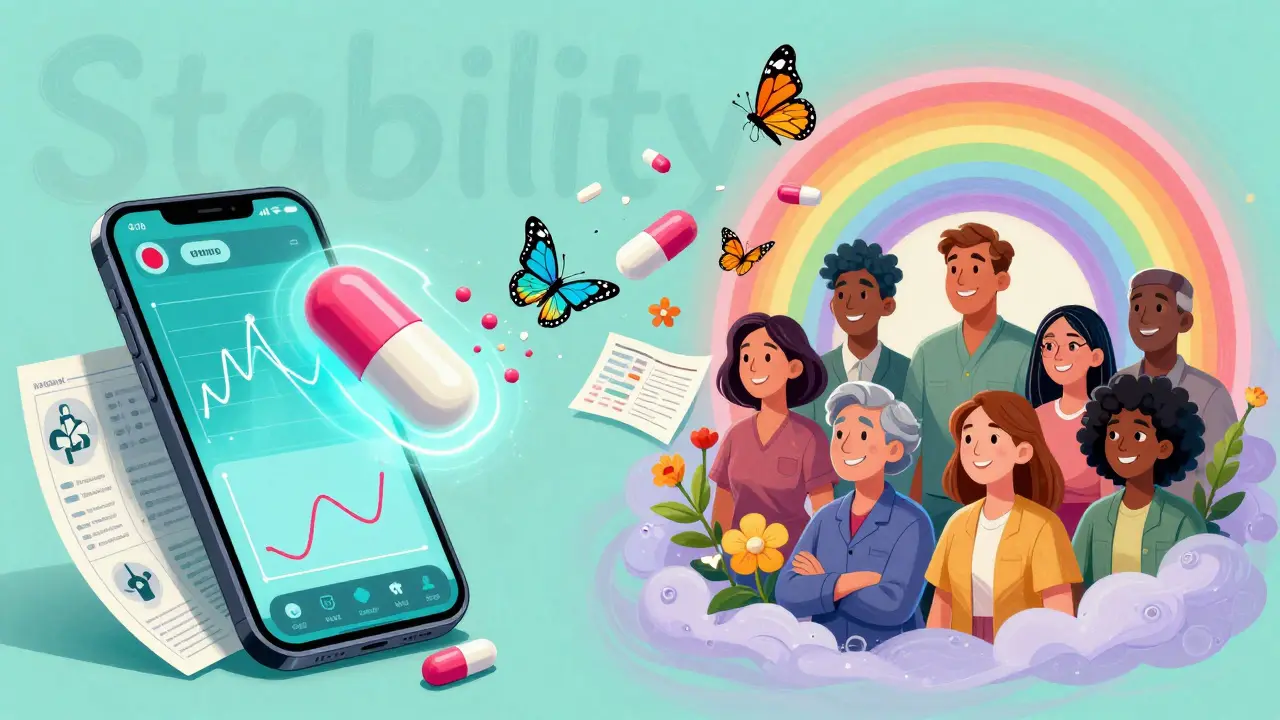
There’s hope. The FDA approved the first digital pill version of levothyroxine in June 2023. It has a tiny sensor that tells your phone when you took it. Early studies show a 52% drop in dosing errors.
Point-of-care TSH testing is now being rolled out in clinics. You get results in minutes, not days. That means faster adjustments and fewer mistakes.
Telemedicine programs for thyroid care are growing. They help patients stay on track with reminders, virtual check-ins, and easy lab access. One study predicts these programs could cut misuse by 28% by 2026.
But the biggest fix? Education. Patients who get clear, detailed counseling about their meds have a 63% lower chance of noncompliance. That’s huge. It’s not about being blamed. It’s about being informed.
One Reddit user, 'ThyroidWarrior87', said: 'After my doctor adjusted my dose based on proper testing, my energy returned and I stopped losing hair within 2 months.' That’s what thyroid care should look like - not a dangerous experiment, but a partnership.
Final Thought: Thyroid Medicine Isn’t a Shortcut
Thyroid hormone isn’t a weight-loss drug. It’s a life-sustaining hormone. When you misuse it, you’re not hacking your body - you’re breaking it.
Every pill matters. Every dose counts. And every time you ignore your doctor’s advice, you’re playing Russian roulette with your heart.
There’s no quick fix. But there is a right way: regular testing, honest communication, and patience. Your thyroid doesn’t need to be perfect. It just needs to be stable. And that takes care - not shortcuts.
Theo Newbold
December 22, 2025 AT 09:55Factitious hyperthyroidism isn’t even the tip of the iceberg. I’ve seen three patients in the last year with TSH suppressed below 0.01 and free T4 through the roof-all from people buying levothyroxine off Instagram influencers. No one’s checking their cardiac function before they start. It’s not just dangerous, it’s negligent marketing disguised as wellness.
Jay lawch
December 23, 2025 AT 13:07Let me tell you something the pharmaceutical lobby doesn’t want you to know-thyroid meds are being weaponized by globalist elites to control the population’s metabolism. Why do you think they push these pills so hard? It’s not about health-it’s about depopulation. The WHO, Big Pharma, and the FDA are all in bed together. They don’t want you to have natural energy. They want you dependent. And the iodine in CT scans? That’s not for imaging-it’s a slow-acting thyroid disruptor. Look at the numbers: 43% increase in unregulated online sales since 2020? Coincidence? Or engineered chaos?
Christina Weber
December 24, 2025 AT 19:58There is a critical distinction between ‘misuse’ and ‘abuse’ that this article glosses over. Misuse implies accidental deviation from prescription; abuse implies intentional, recreational, or non-medical intent. The data cited-12% of hyperthyroid presentations linked to misuse-should be reclassified as abuse in nearly all cases. Furthermore, the phrase ‘you’re playing Russian roulette with your heart’ is hyperbolic and medically imprecise. Atrial fibrillation is a quantifiable risk, not a gamble. Precision in language matters, especially when public health is at stake.
Cara C
December 25, 2025 AT 17:27I’ve been on levothyroxine for 12 years. I used to skip doses when I felt ‘fine’-until I ended up in a depressive spiral that lasted months. My doctor didn’t judge me when I admitted it. We just adjusted. It’s not about being perfect. It’s about showing up. If you’re taking this stuff for weight loss, please talk to someone who actually cares about your health-not some guy selling ‘thyroid burn’ on YouTube. You’re not lazy. You’re just scared. And you deserve better than a shortcut.
Michael Ochieng
December 26, 2025 AT 01:14Coming from Kenya, I’ve seen how thyroid care is treated as a luxury. In the U.S., people are abusing pills. In my hometown, people die because they can’t get the basic dose. This isn’t just about individual choices-it’s about global inequity. We need access, not just warnings. The digital pill? Brilliant. But only if it’s affordable everywhere. Education and access go hand in hand. You can’t lecture someone into compliance when they’re choosing between medicine and rent.
Ben Warren
December 27, 2025 AT 03:41It is patently irresponsible to suggest that thyroid hormone replacement therapy can be safely manipulated for non-therapeutic purposes. The physiological consequences are not merely inconvenient-they are irreversible in many cases. The Endocrine Society’s position is unequivocal: thyroid hormone is not a metabolic enhancer, nor is it a performance-enhancing substance. Its administration must be governed by rigorous endocrinological protocols, not social media trends. The normalization of this behavior reflects a broader cultural decay in medical literacy and personal accountability. One cannot outsource biological regulation to pharmaceutical convenience without profound cost.
Teya Derksen Friesen
December 27, 2025 AT 23:18It’s fascinating how the article cites Reddit users as anecdotal evidence, yet ignores the fact that the majority of thyroid misinformation originates from those same platforms. The ‘FitLifeJunkie’ case? That’s not a story-it’s a warning label. And the digital pill? It’s a Band-Aid on a gunshot wound. What we need is mandatory pre-prescription counseling with a certified endocrinologist-not a smartphone sensor. Technology doesn’t fix ignorance. Education does.
Sandy Crux
December 28, 2025 AT 01:21...and yet, no one mentions that the real epidemic is the over-testing... the TSH obsession... the reductionist view of thyroid function... the fact that TSH is a pituitary hormone, not a thyroid hormone... the fact that free T3 matters more than free T4 in symptom presentation... the fact that most ‘normal’ ranges are based on population averages that include hypothyroid individuals... the fact that doctors are trained to treat labs, not people... the fact that 42% of non-responders are taking it wrong... but what if the pill isn’t the problem? What if the protocol is? ...and no one dares ask that question...
Hannah Taylor
December 29, 2025 AT 20:30lol so amiodarone has iodine? no way. that’s why all the chemtrails are causing thyroid issues. also the 5g of salt you eat a day? that’s not sodium, it’s iodine poisoning. and the FDA? they’re just covering up the truth. i know a guy who took 100mcg and got super energy-no side effects. maybe the real problem is the government making us sick on purpose?
Jason Silva
December 31, 2025 AT 13:18Bro, I took 50mcg extra for a week and my abs popped out 🤯 but then my heart started doing the cha-cha and I panicked. Went to the ER, doc said I was one heartbeat away from atrial fibrillation. Now I’m on 75mcg and just chillin’. Don’t be a hero. Thyroid isn’t a gym supplement. 🚫💊
mukesh matav
December 31, 2025 AT 22:01My cousin in Delhi was diagnosed with hypothyroidism after she stopped her meds for three months because she thought she was cured. She didn’t know it takes weeks for TSH to adjust. She just felt tired and thought it was stress. We need better awareness in places like this. Not everyone has access to a doctor who explains things. A simple pamphlet in local languages could save lives.
Peggy Adams
January 1, 2026 AT 17:39Ugh. Another ‘thyroid is fragile’ article. I’ve been on it for 8 years. I take it when I remember. Sometimes I don’t. I’m fine. Why are you all so obsessed? Just let people live.
John Hay
January 2, 2026 AT 06:41My mom took levothyroxine for 20 years. She never missed a dose. She never abused it. She just took it like a vitamin. And she’s 78 and still hikes every weekend. It’s not magic. It’s medicine. Treat it like it matters.
Jerry Peterson
January 4, 2026 AT 02:09Just had my first digital pill experience. Took it at 7am. Got a text at 7:03 saying ‘Dose logged.’ My doctor saw it and adjusted my dose down by 12.5mcg the next week. No guesswork. No lying about missed pills. It’s weird at first, but it works. If you’re struggling with compliance, try it. It’s not surveillance-it’s support.