Statins in Women: What You Need to Know About Sex-Specific Side Effects
Statin Side Effect Risk Calculator
Assess Your Risk
This tool estimates your risk of statin side effects based on key factors from medical studies. Results are for informational purposes only.
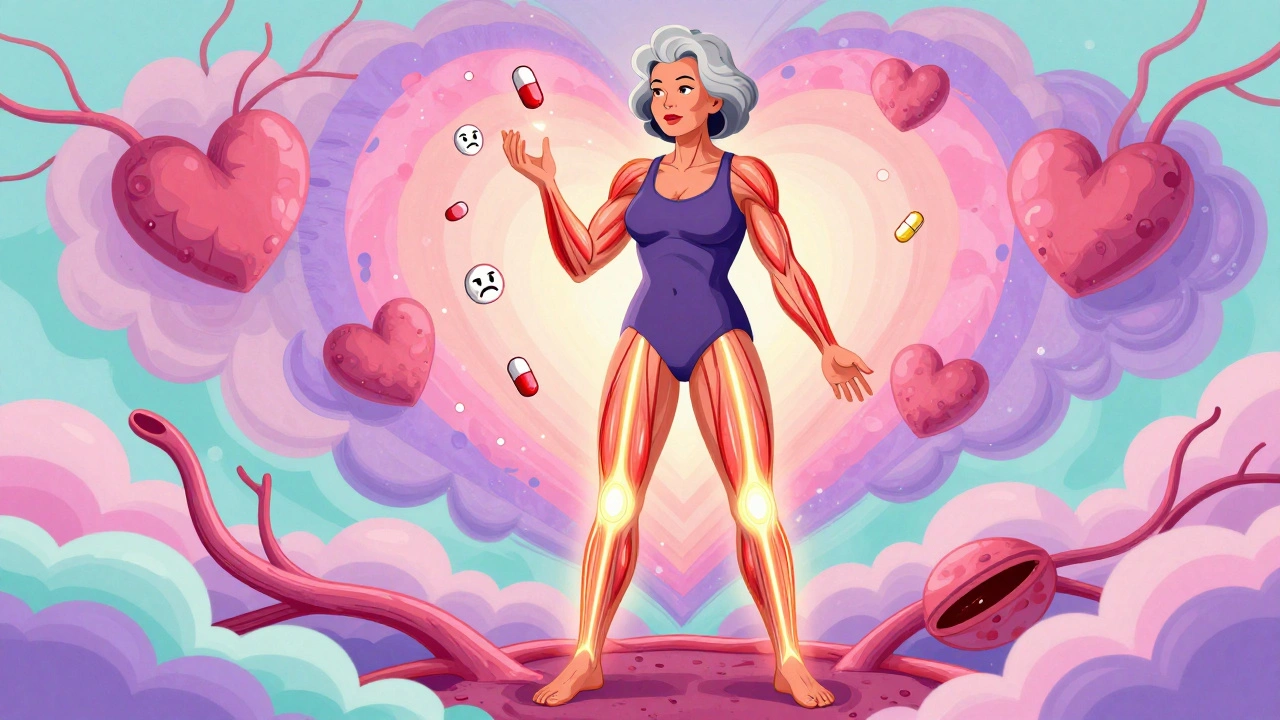
Women take statins just like men-but their bodies react differently. While statins lower heart disease risk for everyone, women are more likely to stop taking them because of side effects. Muscle pain, increased diabetes risk, and poor communication from doctors are just a few of the reasons. If you're a woman on statins-or thinking about starting them-here’s what you need to know that most guides leave out.
Why Women Get Different Side Effects
Statins work by blocking HMG-CoA reductase, the enzyme your liver uses to make cholesterol. That’s true for everyone. But how your body handles the drug? That’s where sex differences kick in. Women generally have less muscle mass, more body fat, and slower kidney clearance than men. These aren’t small differences-they change how statins move through your body and how long they stick around. After age 65, women are 1.5 to 2 times more likely to develop statin-induced muscle pain than men their age. Why? Lower kidney function means the drug isn’t cleared as fast. Higher body fat means the medication gets stored longer in fatty tissue, leading to higher exposure over time. And if you’re taking other meds-like blood pressure pills or blood thinners-your risk goes up even more.Muscle Pain Is the Biggest Issue
The most common reason women quit statins? Muscle pain. Not just soreness. Real, persistent aches that make walking, climbing stairs, or lifting groceries painful. The USAGE survey found that 31% of women reported new or worsening muscle symptoms compared to 26% of men. That difference might seem small, but it adds up. Nearly 29% of women stopped or switched statins because of it, versus 22% of men. This isn’t just in your head. Studies show women are more likely to have elevated creatine kinase (CK) levels-a marker of muscle damage-when taking statins. And when doctors dismiss it as "normal aging" or "just being sensitive," women lose trust. That’s dangerous. Stopping statins without a plan increases heart attack risk by up to 40% in high-risk women.Statins and Diabetes Risk: A Real Trade-Off
All statins slightly raise blood sugar. The FDA added this warning in 2012 after multiple studies confirmed it. But for women, especially after menopause, the risk is more pronounced. A 2013 study in the Journal of the American College of Cardiology found that any statin, at any dose, increased diabetes risk in post-menopausal women after three years of use. That’s not about taking too much-it’s about biology. The JUPITER trial showed rosuvastatin raised diabetes risk by 27% over two years. A 2015 meta-analysis of 95,700 people found a 9% overall increase after four years. For women, the increase is estimated at 12%, compared to 8% in men. That doesn’t mean you shouldn’t take them. It means you need to monitor. If you’re on a statin, get your fasting blood sugar checked every 3 to 6 months, especially if you’re overweight, have prediabetes, or are over 50. Catching early changes lets you adjust diet, activity, or even switch meds before full-blown diabetes develops.Doctors Don’t Always Talk to Women About Risk
Here’s something most women don’t realize: your doctor might not be telling you the whole story. A 2019 study of over 5,600 patients found that 42% of women said their doctor never explained how high cholesterol leads to heart disease. Only 31% of men said the same. That gap isn’t just about communication-it’s about bias. Women’s reports of side effects are more often dismissed as "anxiety" or "overreaction." But the data doesn’t lie. Women are 2.3 times more likely to try three or more different statins before finding one they can tolerate. And when they do, they’re 37% less likely to be offered alternatives like ezetimibe or PCSK9 inhibitors. You deserve to know your options. If you’re struggling with side effects, ask: "What else can lower my LDL if statins don’t work?" There are non-statin options. They’re not first-line, but they’re effective-and they might be the right fit for you.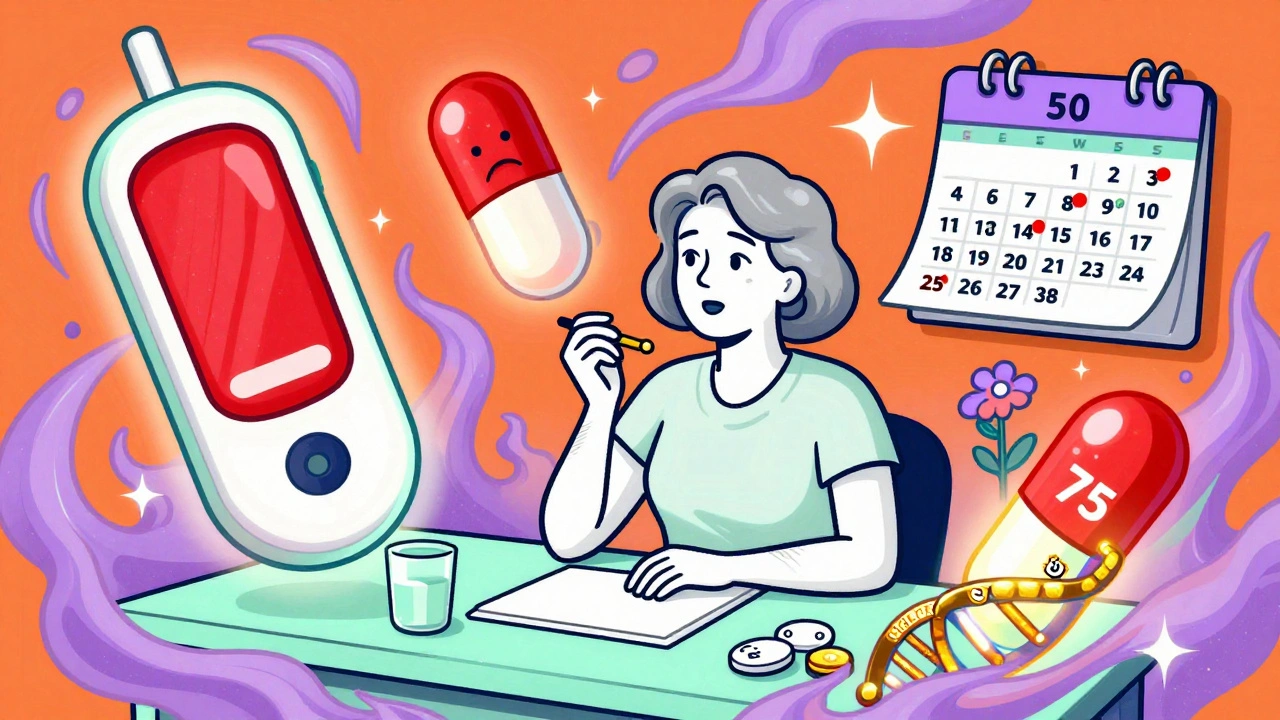
Age Matters-Especially After 65
For women over 65, statins become trickier. The body changes. Kidneys slow down. Liver metabolism shifts. And you’re more likely to be on five or more other medications. That’s a recipe for dangerous interactions. A 2021 study of Medicare patients found women over 75 on statins had more than double the risk of hospitalization from side effects compared to men. Why? Common drugs like calcium channel blockers (used for high blood pressure) can increase simvastatin toxicity by 300%. Blood thinners like warfarin can raise bleeding risk by 25% when mixed with certain statins. If you’re in this age group, your doctor should review all your meds every 6 months. Don’t assume they’re doing it. Bring your own list-prescriptions, supplements, even over-the-counter painkillers. Ask: "Could any of these be making my statin side effects worse?"Menopause Changes Everything
When estrogen drops during menopause, your arteries start to stiffen faster. That’s why heart disease risk spikes after 50. Statins help-but so do the side effects. The Women’s Health Initiative found that 41% of post-menopausal women reported muscle pain, compared to 33% of pre-menopausal women. Hormone replacement therapy doesn’t fix this. In fact, some studies suggest it might make muscle symptoms worse when combined with statins. The solution isn’t to stop statins-it’s to adjust them. Start low. Go slow. Atorvastatin 10 mg instead of 20 mg. Rosuvastatin 5 mg instead of 10 mg. That’s the new standard for women, especially if you’re older or have a smaller frame.What You Can Do Right Now
- Start low, go slow. Most women do better on half the starting dose men get. Ask for 10 mg of atorvastatin or 5 mg of rosuvastatin as your first dose.
- Track your symptoms. Keep a simple log: muscle pain? Fatigue? Mood changes? Note when they started and what you were doing. Bring it to your next appointment.
- Ask about alternatives. If you can’t tolerate statins, ask about ezetimibe, bempedoic acid, or PCSK9 inhibitors. They’re not as cheap, but they work-and they’re safer for women with side effects.
- Get your blood sugar checked. Every 3 to 6 months if you’re on statins long-term. Early detection saves years of complications.
- Review all your meds. Especially if you’re over 65. Bring your full list to every doctor visit.

Genetics Might Be the Missing Piece
A 2023 study in Clinical Pharmacology & Therapeutics found that 23% of women carry a gene variant called SLCO1B1 that makes them much more likely to develop muscle damage from statins. That’s higher than in men (18%). This gene controls how your liver absorbs statins. If it’s faulty, the drug builds up in your muscles. Genetic testing isn’t routine yet-but it’s becoming more accessible. If you’ve had bad reactions to statins before, ask your doctor: "Can I get tested for SLCO1B1?" It might save you years of trial and error.It’s Not Just About Pills
Statins are powerful-but they’re not magic. Lifestyle still matters. For women, especially after menopause, walking 30 minutes a day cuts heart disease risk more than any pill. Eating more fiber, cutting added sugar, and managing stress can lower LDL by 10-20% on their own. Don’t let statins become an excuse to ignore the rest. They’re a tool, not a replacement for a healthy life.Final Thought: You’re Not Overreacting
If you’ve stopped a statin because of side effects, you’re not weak. You’re not exaggerating. Your body is telling you something. The system has failed women for decades by assuming what works for men works for us too. The good news? We’re starting to change that. New guidelines now recommend lower starting doses for women. New tools help doctors talk about risk in ways women understand. And more research is finally focusing on female biology-not just as an afterthought, but as the rule. You deserve care that matches your body-not a one-size-fits-all approach built for men. Speak up. Ask questions. Push for better. Your heart will thank you.Do statins cause more muscle pain in women than in men?
Yes. Studies show 31% of women report muscle pain or weakness on statins, compared to 26% of men. This leads to higher discontinuation rates in women, especially after age 65. Biological factors like lower kidney function and higher body fat make statins stay longer in women’s systems, increasing the chance of muscle-related side effects.
Can statins cause diabetes in women?
Yes. Statins slightly raise blood sugar, and women-especially post-menopausal women-are at higher risk. Research shows a 12% increased chance of developing type 2 diabetes after three years of use, compared to 8% in men. This risk is not dose-dependent; it happens with any statin. Regular blood sugar checks every 3-6 months are recommended for women on long-term therapy.
Should women start statins at a lower dose?
Yes. Current guidelines recommend starting women on lower doses than men-like 10 mg of atorvastatin or 5 mg of rosuvastatin-instead of the standard 20 mg or 10 mg often given to men. Starting low and increasing slowly reduces side effects and improves adherence. The Dutch STATINWISE trial showed this approach improved 12-month adherence in women by 32%.
Are statins safe for women during menopause?
Statins are still recommended for most post-menopausal women because heart disease risk rises sharply after menopause. However, muscle side effects are more common during this time-41% of post-menopausal women report them, versus 33% of pre-menopausal women. Starting with a low dose and monitoring symptoms closely is key. Hormone therapy does not reduce statin side effects and may even worsen them.
What should I do if I can’t tolerate statins?
Don’t stop treatment without a plan. Ask your doctor about non-statin options like ezetimibe, bempedoic acid, or PCSK9 inhibitors. These drugs lower LDL cholesterol without the same muscle side effect profile. Some are injectable, others are pills. While more expensive, they’re proven effective and safer for women who can’t take statins. Lifestyle changes like walking daily and reducing sugar also help significantly.
Can genetic testing help me choose a safer statin?
Yes. About 23% of women carry a gene variant called SLCO1B1 that increases the risk of statin-induced muscle damage. Testing for this variant can help avoid drugs like simvastatin that are more likely to cause problems. While not yet standard, genetic testing is becoming more available and can prevent years of trial-and-error with side effects.
Why do doctors sometimes dismiss women’s statin side effects?
Historically, cardiovascular research focused on men, so doctors were trained to see side effects through a male lens. Women’s symptoms-especially muscle pain or fatigue-are often labeled as "normal aging," "anxiety," or "non-specific." But data proves these are real biological differences. Women’s lower kidney function, higher body fat, and different drug metabolism mean side effects aren’t imagined-they’re expected. Advocating for yourself and bringing symptom logs to appointments helps.
John Biesecker
December 1, 2025 AT 21:32Genesis Rubi
December 3, 2025 AT 19:47Doug Hawk
December 5, 2025 AT 15:38John Morrow
December 7, 2025 AT 14:55Kristen Yates
December 8, 2025 AT 12:05Saurabh Tiwari
December 10, 2025 AT 11:59Michael Campbell
December 11, 2025 AT 20:07Victoria Graci
December 12, 2025 AT 06:22Saravanan Sathyanandha
December 13, 2025 AT 19:01alaa ismail
December 14, 2025 AT 19:10