Safe Topical Medications and Creams During Pregnancy: What You Can and Can’t Use
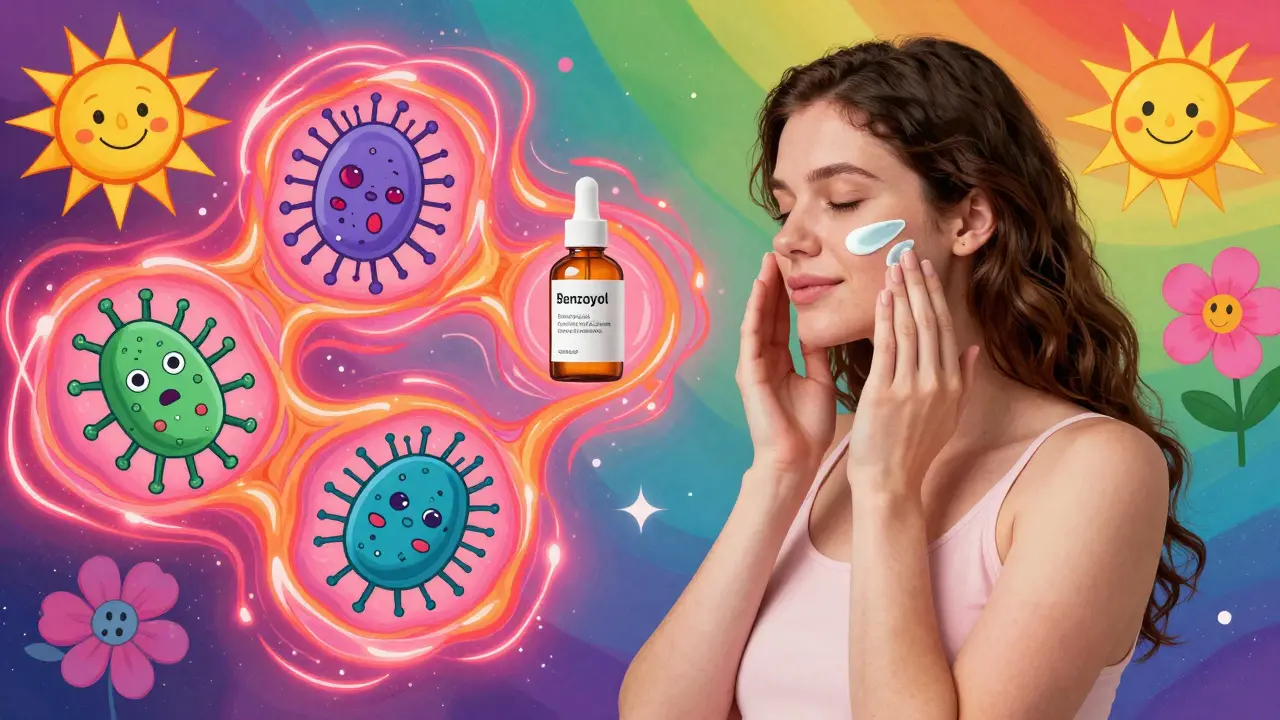
When you’re pregnant, even the simplest skin issue can feel overwhelming. That itchy rash, sudden breakout, or stubborn fungal infection doesn’t just disappear because you’re expecting. But reaching for your usual cream or lotion? Now you’re terrified. What if it harms your baby? You’re not alone. Millions of pregnant women face the same question: what topical medications are actually safe during pregnancy?
The good news? Most creams and ointments you apply to your skin don’t get far into your bloodstream. Unlike pills or injections, topical treatments usually absorb less than 10%-sometimes as little as 1%. That’s why dermatologists and OB-GYNs often recommend them first. But “low absorption” doesn’t mean “no risk.” Some ingredients still carry warnings. Others? They’re perfectly fine. Let’s cut through the noise.
Acne Treatments: Skip the Retinoids, Try These Instead
Acne flares up in pregnancy because of hormones. It’s common, but frustrating. You might be tempted to grab your old tube of tretinoin or adapalene-common acne creams sold under brand names like Retin-A or Differin. Don’t. These are topical retinoids, derivatives of vitamin A. Even though they’re applied to the skin, case reports link them to rare birth defects when used in early pregnancy. The American College of Obstetricians and Gynecologists (ACOG) advises stopping these before trying to conceive. If you’re already pregnant and used them unknowingly, don’t panic-most studies show low actual risk-but stop immediately and talk to your doctor.
So what can you use? Three safe, effective options:
- Benzoyl peroxide (5-10%): Kills acne-causing bacteria. Absorbs minimally. Studies show no increased risk of birth defects. Found in products like Clean & Clear or Neutrogena On-the-Spot.
- Clindamycin (1-5%): An antibiotic gel or lotion. Only about 4-5% absorbs through the skin. No evidence of harm in pregnancy. Often combined with benzoyl peroxide for better results.
- Erythromycin: Another topical antibiotic. Classified as Category B-no risk found in animal studies, and no controlled human studies show harm.
Azelaic acid (15-20%) is another solid choice. It’s great for both acne and melasma (the “pregnancy mask” that darkens skin on the face). One user on WhatToExpect.com said, “Azelaic acid cleared my pregnancy mask with zero side effects.” It’s safe, non-irritating, and even helps with redness.
Eczema and Itchy Skin: Corticosteroids Are Okay-If Used Right
Itchy, dry, flaky skin? You’re not alone. Up to 30% of pregnant women deal with eczema flare-ups. Hydrocortisone cream (1%) is the go-to for mild cases. It’s a low-potency corticosteroid. Studies show it’s safe when used sparingly on small areas. You’ll find it in over-the-counter brands like Cortizone-10.
But potency matters. Stronger steroids-like clobetasol or betamethasone-are not off-limits, but they should be used only if absolutely necessary and for the shortest time possible. Why? High doses, especially over large areas or long periods, have been linked to slightly lower birth weights in rare cases. Apply them only where needed. Avoid using them on your face, armpits, or groin unless your doctor says so-those areas absorb more.
Here’s a simple rule: If your skin is red, itchy, and flaking, start with 1% hydrocortisone. If it doesn’t help in 5-7 days, call your OB or dermatologist. Don’t upgrade to stronger creams on your own.
Fungal Infections: Yeast and Athlete’s Foot Are Common-And Treatable
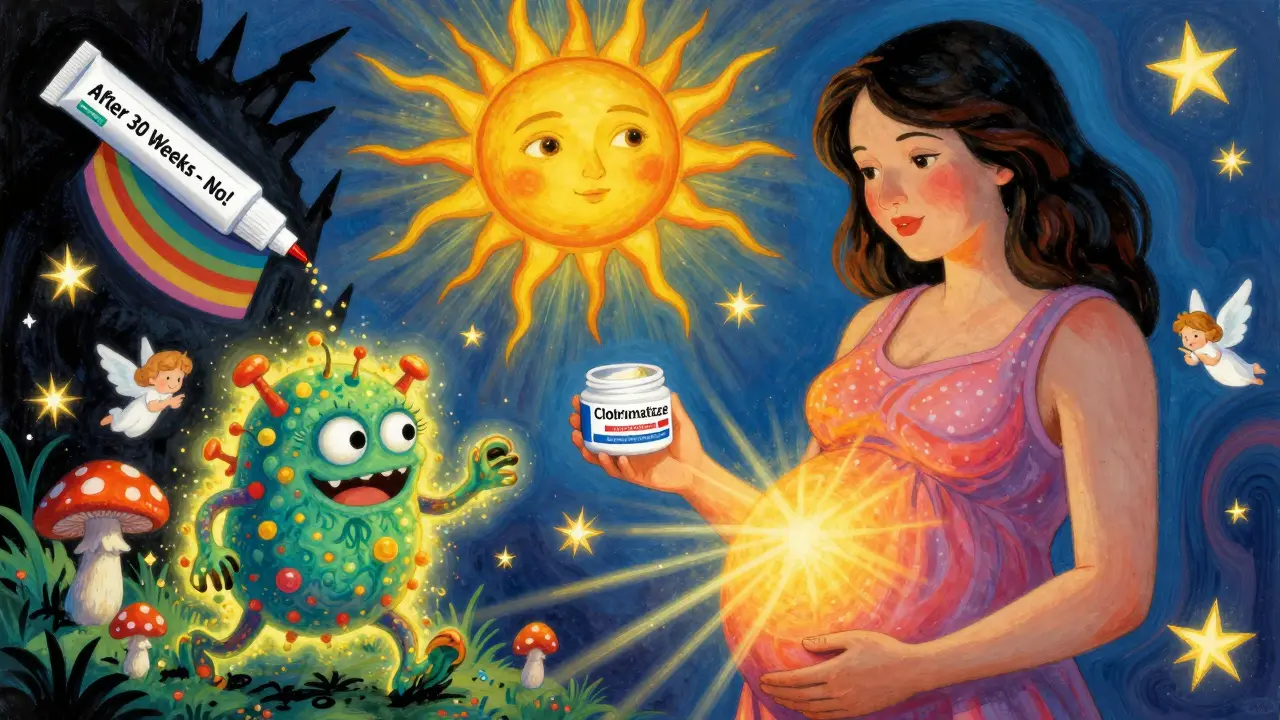
Yeast infections skyrocket during pregnancy. About 75% of women get at least one in their lifetime, and pregnancy makes you more prone. You might feel burning, itching, or notice thick white discharge. Over-the-counter antifungal creams like clotrimazole (Lotrimin) and miconazole (Monistat) are first-line treatments. Both are safe. They don’t absorb into your bloodstream enough to reach the baby.
Same goes for athlete’s foot or jock itch. Nystatin, clotrimazole, and miconazole are all safe. Avoid econazole during the first trimester, and use it sparingly later on. Terbinafine (Lamisil) and naftifine are okay as second-line options, but stick with the first three unless your doctor recommends otherwise.
One quick tip: Always use the full course-even if symptoms disappear after a day or two. Stopping early means the fungus comes back.

Topical Pain Relief: NSAIDs Are Risky After 30 Weeks
Back pain? Muscle soreness? You might think of a topical NSAID like diclofenac gel (Voltaren) or ibuprofen cream. They feel soothing. But here’s the catch: even though they’re applied to the skin, they still enter your bloodstream. And after 30 weeks of pregnancy, NSAIDs can cause a serious problem: premature closure of the ductus arteriosus. That’s a blood vessel your baby needs to survive in the womb. Closing it too early can lead to heart complications.
The American Academy of Family Physicians recommends avoiding topical NSAIDs after 30 weeks. Before then? Use them only if absolutely necessary and for the shortest time possible. For pain relief earlier in pregnancy, try acetaminophen (Tylenol) orally-it’s the safest painkiller during pregnancy. For localized pain, cold packs or gentle massage are better alternatives.
Viral Skin Issues: Cold Sores and Warts
Herpes outbreaks (cold sores) can flare during pregnancy due to stress or immune changes. Acyclovir cream (Zovirax) is safe. It’s absorbed in tiny amounts and has been used safely for decades in pregnant women. If you get frequent outbreaks, your doctor might even prescribe oral acyclovir to prevent them.
Warts? Common during pregnancy because of hormonal shifts. Safe options include salicylic acid (used carefully) and cryotherapy (freezing). Avoid podofilox and podophyllin resin-they’re plant-based and can be toxic to the fetus. Salicylic acid is okay in small amounts on the hands or feet, but avoid using it on large areas or for long periods.
What to Avoid: The Big No-Nos
Some ingredients are absolute no-gos during pregnancy:
- Topical retinoids (tretinoin, adapalene, tazarotene)
- Hydroquinone (for skin lightening-linked to fetal toxicity in animal studies)
- Topical NSAIDs after 30 weeks (diclofenac, ketoprofen, ibuprofen gels)
- Econazole in the first trimester
- Podofilox and podophyllin resin (for warts)
- High-potency corticosteroids used long-term on large areas
And remember: “Natural” doesn’t mean safe. Essential oils like tea tree, lavender, or rosemary in high concentrations can be absorbed and may affect hormones. Avoid them unless approved by your provider.
How to Use Topical Medications Safely
Even safe products can cause issues if misused. Follow these simple rules:
- Use the smallest amount possible. A pea-sized dab is enough for a palm-sized area.
- Apply only where needed. Don’t spread it all over your body.
- Avoid broken skin. Cuts, scrapes, or open sores absorb more medication.
- Wash your hands after applying. Prevent accidental transfer to your eyes or mouth.
- Check the label. Look for ingredients you recognize. If you’re unsure, call your pharmacist or OB.
- Don’t use old products. Expired creams lose effectiveness and can harbor bacteria.
Also, keep a log. Write down what you used, when, and why. This helps your doctor track exposure if any questions come up later.
When to Call Your Doctor
Not every skin issue needs a prescription. But call your OB or dermatologist if:
- Your rash spreads quickly or blisters
- You develop itching all over, especially on your hands and feet (could be PUPPP or cholestasis of pregnancy)
- Over-the-counter treatments don’t help after 7 days
- You accidentally used a contraindicated product
For example, if you used tretinoin before realizing you were pregnant, don’t panic. Most women who did this had healthy babies. But you should still tell your provider so they can monitor your pregnancy more closely.
Bottom Line: You’re Not Alone, and You’re Not Risking Your Baby
Topical medications are one of the safest ways to treat skin problems during pregnancy. The vast majority of creams, lotions, and ointments you can buy at the drugstore won’t hurt your baby-if you avoid the big no-nos. Benzoyl peroxide, clindamycin, hydrocortisone (1%), clotrimazole, and azelaic acid are all well-studied and safe. Retinoids, strong steroids used long-term, and NSAIDs after 30 weeks are the real risks.
When in doubt, ask. The InfantRisk Center handles over 1,200 pregnancy-related medication questions every month. Many OBs now consult dermatologists before prescribing anything topical. You don’t have to guess. There’s help available.
Your skin matters. Your baby matters. And with the right info, you can care for both-without fear.
Is hydrocortisone cream safe during pregnancy?
Yes, 1% hydrocortisone cream is safe for short-term use during pregnancy for mild eczema or rashes. It’s a low-potency steroid with minimal absorption. Avoid using it on large areas, the face, or for more than a week without checking with your doctor. Stronger steroids like clobetasol should only be used if absolutely necessary and under medical supervision.
Can I use acne cream while pregnant?
Yes-but not all acne creams. Avoid retinoids like tretinoin, adapalene, or tazarotene. Safe options include benzoyl peroxide, clindamycin, erythromycin, and azelaic acid. These have been studied in pregnant women and show no increased risk of birth defects. Always start with the lowest effective concentration.
Is clotrimazole safe for yeast infections during pregnancy?
Yes, clotrimazole is considered a first-line treatment for vaginal yeast infections during pregnancy. It’s a topical antifungal that doesn’t absorb into the bloodstream in significant amounts. The same applies to miconazole and nystatin. Avoid econazole in the first trimester unless your doctor says it’s necessary.
Can I use topical NSAIDs like Voltaren gel while pregnant?
Avoid topical NSAIDs like diclofenac (Voltaren) after 30 weeks of pregnancy. Even though they’re applied to the skin, they can still enter your bloodstream and cause the baby’s ductus arteriosus to close too early, leading to heart problems. Before 30 weeks, use them only if absolutely necessary and for the shortest time possible. Acetaminophen or cold packs are safer alternatives.
What should I do if I used a risky cream before knowing I was pregnant?
Stop using the product immediately. Don’t panic-most cases of accidental use don’t lead to birth defects. For example, studies show that even women who used topical tretinoin early in pregnancy had healthy babies in the vast majority of cases. Call your OB or midwife. They may recommend an early ultrasound to check for any signs of concern, but in most cases, no further action is needed. The key is to avoid further exposure.
Are natural or essential oil creams safe during pregnancy?
Not necessarily. Many essential oils-like tea tree, lavender, rosemary, and clary sage-can be absorbed through the skin and may affect hormones or uterine contractions, especially in early pregnancy. Even products labeled “natural” or “organic” can contain concentrated oils that aren’t safe. Stick to fragrance-free, hypoallergenic products unless your provider approves the ingredients. When in doubt, skip it.
Robert Cardoso
January 27, 2026 AT 10:34Let’s be real-most of this is just rehashing what every OB-GYN says at the 8-week visit. The real issue isn’t the creams, it’s the fear-mongering. Topical benzoyl peroxide? Safe. Hydrocortisone? Fine. Retinoids? Avoid. That’s it. The rest is noise engineered to sell you $40 ‘pregnancy-safe’ skincare lines that are just regular products with new labels.
James Dwyer
January 27, 2026 AT 13:18This is the kind of post I wish I’d found when I was pregnant. I was terrified to use anything-even plain moisturizer-until I learned the truth: your skin isn’t a magic portal to your baby’s bloodstream. Benzoyl peroxide and hydrocortisone saved my sanity. You’re not endangering your baby by treating a rash. You’re taking care of yourself, and that matters too.
jonathan soba
January 28, 2026 AT 02:36Interesting how the article casually dismisses hydroquinone as ‘linked to fetal toxicity in animal studies’ without mentioning that those studies used doses 100x higher than topical application. The fear of ‘what ifs’ is more dangerous than the actual substances. This isn’t science-it’s precautionary theater.
matthew martin
January 29, 2026 AT 20:25Man, I wish I’d had this guide when my wife was pregnant. We went full panic mode over every lotion, every cream, every weird itch. Turns out, the body’s got layers of protection-skin, placenta, amniotic fluid-and most topicals just don’t make it past the first gate. Azelaic acid? That stuff was a godsend for her melasma. No drama, no burns, just clear skin. And honestly? The biggest takeaway isn’t the ingredients-it’s the permission to stop feeling guilty for wanting to feel normal again.
Also, ‘natural’ doesn’t mean ‘safe.’ I’ve seen women rub lavender oil all over their bellies because it’s ‘calming.’ Meanwhile, the placenta’s doing backflips trying to filter out endocrine disruptors. Stick to the science, not the Instagram influencers.
And for the love of all that’s holy, stop using expired creams. That jar of ‘pregnancy-safe’ moisturizer from 2020? It’s probably growing a small ecosystem by now. Wash your hands after applying. Don’t let your face become a petri dish.
Bottom line: you’re not a walking hazard. You’re a human being with a skin condition. Treat it like one.
And if you accidentally used tretinoin before you knew? Breathe. Your baby’s not a lab rat. Most pregnancies where this happened ended in healthy, screaming, beautiful babies. The system’s built to handle small exposures. Don’t let anxiety become the worst part of your pregnancy.
Also, cold packs for back pain. No NSAIDs after 30 weeks. Seriously. That ductus arteriosus isn’t a suggestion. It’s a lifeline. Treat it like one.
And for the love of god, stop googling ‘pregnancy skincare’ at 3 a.m. You’ll find 17 conflicting articles and a Reddit thread that says tea tree oil is a miracle. It’s not. It’s a hormonal grenade.
Just use the stuff your doctor recommends. Simple. Clean. Safe.
And if you’re still scared? Call the InfantRisk Center. They’ve heard every fear. They’ll tell you the truth. No fluff. No fearmongering. Just facts.
You’ve got this.
Mel MJPS
January 30, 2026 AT 04:09I used clotrimazole for my yeast infection and was so nervous-I kept thinking I was hurting my baby. But reading this made me feel so much better. Thank you for breaking it down so clearly. I wish more doctors explained it like this instead of just saying ‘avoid this’ without context.
Katie Mccreary
January 30, 2026 AT 10:46You used tretinoin and didn’t panic? That’s just irresponsible.
SRI GUNTORO
January 31, 2026 AT 12:57Why are we even discussing Western medicine like it’s the only option? In my village, we use neem leaves, turmeric paste, and coconut oil. No chemicals. No fear. No panic. Your body knows how to heal. You just have to trust it.
Kevin Kennett
February 1, 2026 AT 00:31Look, I get the fear. But you’re not a radioactive waste container. Your skin isn’t a portal to your baby’s DNA. Benzoyl peroxide doesn’t turn into a monster when it touches your face. Hydrocortisone doesn’t turn your child into a lizard. Stop treating your body like a ticking bomb and start treating it like the miracle it is. You’re not doing your baby any favors by living in terror. Use the safe stuff. Wash your hands. Don’t smear cream on your entire belly like it’s lotion day at the spa. And if you used something you shouldn’t have? You’re not a monster. You’re a person. Call your doctor. Move on. Breathe.
Jess Bevis
February 1, 2026 AT 03:05Clotrimazole works. No drama. Just apply and forget.
fiona vaz
February 1, 2026 AT 05:48Thank you for including the ‘when to call your doctor’ section. I had that itchy rash on my belly and thought it was just dry skin. Turns out it was PUPPP. I waited too long to get help because I didn’t want to bother anyone. This post saved me from unnecessary stress.
Chris Urdilas
February 1, 2026 AT 18:30So we’re supposed to believe that topical NSAIDs are fine before 30 weeks but not after? That’s like saying ‘it’s okay to drink one beer before midnight but not after.’ If it’s risky at 31 weeks, it’s risky at 29. The science doesn’t work like a countdown clock. This feels like a loophole for lazy doctors who don’t want to explain real risk.
Jeffrey Carroll
February 2, 2026 AT 02:02While the information presented is largely accurate, I would encourage readers to consult with their obstetrician prior to initiating any topical treatment, as individual risk profiles may vary based on comorbidities, gestational age, and prior medical history. The generalizations provided, while helpful, should not supplant personalized clinical guidance.
Phil Davis
February 3, 2026 AT 08:20‘Natural’ doesn’t mean safe? Funny. I guess that’s why your ‘science-backed’ hydrocortisone is just a synthetic version of what your body already makes. Meanwhile, people in 90% of the world use plant-based remedies without a single birth defect. Coincidence? Or just inconvenient data?
Irebami Soyinka
February 4, 2026 AT 05:17Y’all in the West are so obsessed with chemicals you forget your ancestors healed with leaves and fire. Tea tree oil? It’s been used for 5,000 years. Your ‘science’ is just a new religion with lab coats. Stop being afraid of your own skin. Your body knows what to do.