Remission in Type 2 Diabetes: How Weight Loss Can Lead to Medication De-escalation
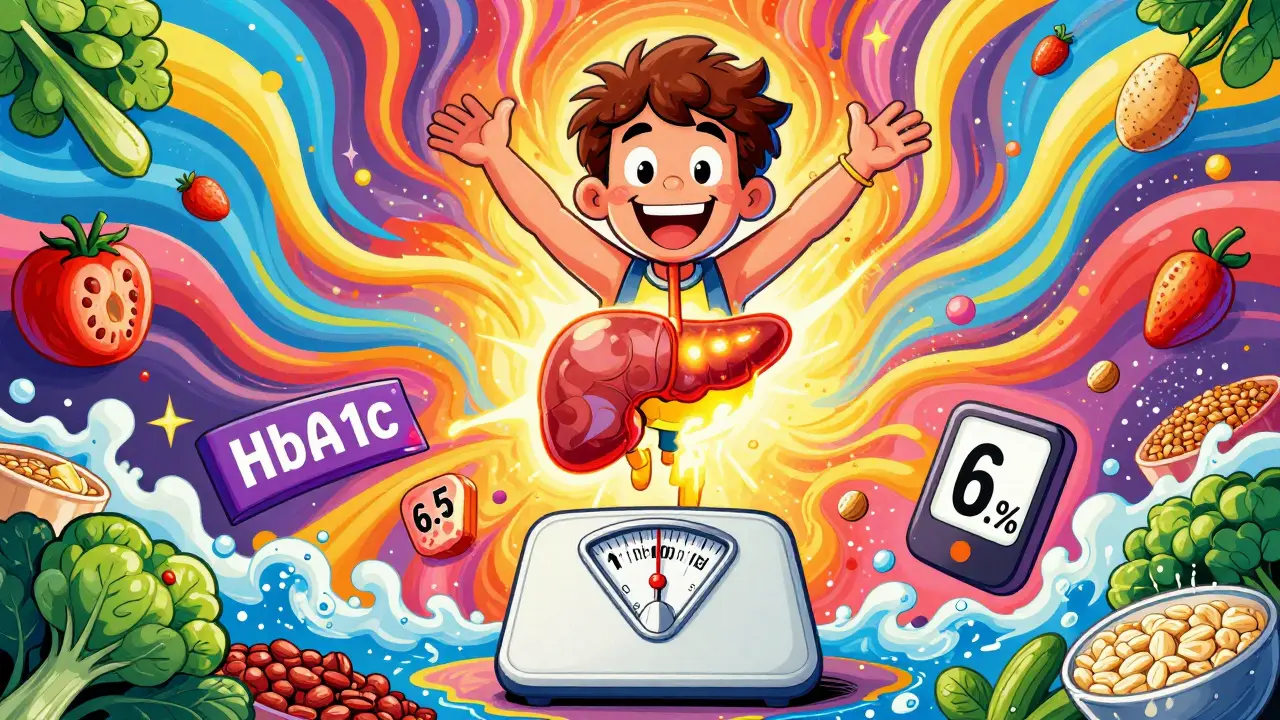
For millions living with type 2 diabetes, the idea of stopping medication isn’t just a dream-it’s a real possibility. But it’s not magic. It’s not a miracle drug. It’s weight loss-and the science behind it is clearer than ever.
Remission in type 2 diabetes means your blood sugar levels stay below the diabetes threshold for at least three months without taking any glucose-lowering medications. That’s not just better control. That’s your body regaining its ability to manage sugar on its own. And it’s happening more often than you think.
What Does Remission Actually Mean?
Before 2021, doctors didn’t have one clear definition of remission. Some called it remission if your HbA1c dropped below 6.5% even if you were still on pills. Others waited for longer periods. That confusion made it hard for patients to know where they stood.
The American Diabetes Association, the European Association for the Study of Diabetes, Diabetes UK, and the Endocrine Society came together in 2021 and set the standard: HbA1c below 48 mmol/mol (6.5%) for at least three months, with no diabetes medications. That’s it. No shortcuts. No exceptions.
Why three months? Because blood sugar can dip temporarily after a diet change or a short burst of exercise. Three months gives your body time to stabilize. It also lets your hemoglobin-your red blood cells-fully renew themselves, giving a true picture of long-term control.
And if HbA1c isn’t reliable? You can use fasting blood glucose under 7.0 mmol/L, or estimated HbA1c from continuous glucose monitoring. The goal isn’t perfection. It’s proof your pancreas is working again.
How Much Weight Loss Do You Need?
The answer isn’t "lose 10% of your body weight." It’s "lose at least 10 kilograms." That’s the number that shows up again and again in the best studies.
In the DiRECT trial, people who lost 10 kg or more had a 46% chance of remission after one year. That’s nearly half. And it wasn’t because they went on a fad diet. They followed a structured program: total diet replacement for 8-12 weeks, then a slow reintroduction of food, followed by ongoing support.
The DiRECT-Aus study, done here in Australia, confirmed it works across different cultures and lifestyles. Whether you’re in Perth, Sydney, or a rural town, the same rule applies: more weight loss = higher chance of remission.
But here’s the catch: remission drops over time. After two years, the remission rate in DiRECT fell to 36%. Why? Because keeping weight off is harder than losing it. Your body fights to regain the lost pounds. That’s biology, not laziness.
That’s why remission isn’t a finish line. It’s a new starting point.
Who Has the Best Chance?
Not everyone gets remission. But some people have a much better shot.
- Shorter diabetes duration: If you were diagnosed less than five years ago, your pancreas still has some insulin-producing beta cells left. They’re tired, not dead. Give them a break, and they can recover.
- Lower baseline HbA1c: If your HbA1c was 7.5% instead of 9.5% when you started, your chances are higher. You didn’t wait as long for damage to set in.
- No insulin therapy: People who’ve never needed insulin have a much better chance. Insulin use often means the pancreas is further along in decline.
That doesn’t mean if you’ve had diabetes for 10 years or take insulin, remission is impossible. It just means it’s harder. And harder doesn’t mean impossible.
What About Medication De-escalation?
This is where things get tricky. Some people start losing weight and their doctor says, "Let’s cut your metformin in half." Others stop their pills entirely.
The guidelines say: Don’t rush. HbA1c should be checked before you start a weight loss program, and not sooner than three months after you’ve stopped medication. Why? Because if you lower your dose too soon and your sugar spikes again, you might think the remission failed-when really, you just didn’t give it time.
And here’s a hard truth: remission doesn’t mean you’re cured. Your body still carries the same risk for heart disease, nerve damage, and kidney problems as someone with diabetes. The damage from years of high blood sugar doesn’t vanish overnight.
That’s why the RACGP guidelines are clear: "Remission does not mean type 2 diabetes is cured." Your pancreas might be working again, but the underlying tendency for insulin resistance is still there. One bad stretch of eating, one year of inactivity, and your blood sugar can creep back up.
What Happens After Remission?
Many people think once they’re off medication, they can go back to old habits. That’s a dangerous mistake.
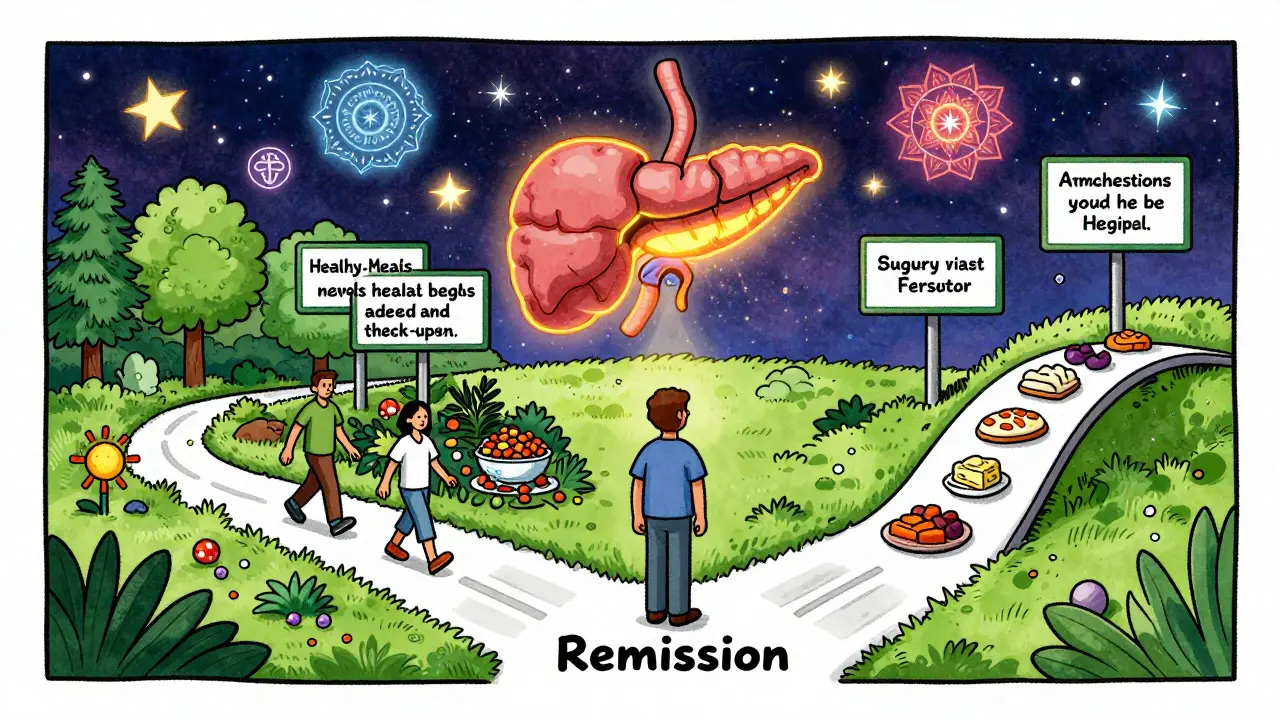
The NHS Scotland platform "Right Decisions" says it plainly: "Remission needs to be maintained." That means:
- Keep seeing your doctor for annual HbA1c checks-even if you feel fine.
- Stick with healthy eating. Not a "diet." A way of living.
- Move your body most days. You don’t need a gym. Walking 30 minutes after dinner counts.
- Watch your weight. A 3-5 kg gain can be enough to push your HbA1c back into diabetes range.
And here’s the quiet win: even if your blood sugar rises again, the time you spent in remission matters. Studies suggest that longer periods of normal blood sugar reduce your risk of complications later. It’s like giving your body a reset button. You don’t get to keep it forever, but you do get to use it.
Why Isn’t This More Common?
If the science is this strong, why aren’t more doctors offering this path?
One reason: time. A weight loss program that leads to remission needs regular support-counselling, nutrition coaching, follow-up visits. Most GP clinics don’t have the resources for that.
Another reason: fear. Doctors worry that if they suggest remission, patients will stop taking meds too soon, or think they’re "cured," or give up on healthy habits.
But the bigger problem? We still don’t know enough about what keeps remission going. We don’t know why some people stay in remission for five years and others bounce back in six months. We don’t know if genetics, gut health, or sleep play a role.
Dr. Roy Taylor from Newcastle University put it bluntly: the current definition isn’t the final word. "It can be challenged in future studies." That means the rules might change. Maybe the three-month mark will become two. Maybe the HbA1c threshold will drop to 6.0%.
But right now? The path is clear. Lose weight. Stay consistent. Monitor your numbers. And don’t assume remission means you’re done.
What’s Next?
If you’re living with type 2 diabetes and you’re ready to explore remission, here’s what to do:
- Ask your doctor for a baseline HbA1c test.
- Find a program that supports structured weight loss. Look for ones that use total diet replacement or low-calorie meal plans with ongoing support.
- Don’t stop your meds without medical supervision. Your doctor should guide the de-escalation process.
- Track your weight weekly. A slow, steady drop is better than a crash.
- Plan for life after remission. Your health routine doesn’t end when you stop pills.
Remission isn’t about perfection. It’s about progress. It’s about giving your body a real chance to heal-not just mask the problem with pills.
And if you’ve tried everything and still can’t lose weight? That’s okay too. Medications like GLP-1 agonists aren’t just for blood sugar-they help with weight loss too. The goal isn’t to stop meds at all costs. The goal is to live longer, healthier, and with fewer complications.
Remission is possible. But it’s not a one-time fix. It’s a lifelong commitment to taking care of yourself.
Nishan Basnet
March 23, 2026 AT 08:48Just read this through twice. The science here is undeniable-weight loss isn’t just about aesthetics, it’s about reclaiming your pancreas. I’ve seen it in my own family: uncle lost 14kg, stopped metformin, HbA1c dropped from 8.2 to 5.9 in 10 months. No miracle pills. Just consistency. It’s not easy, but it’s possible. And honestly? More people need to hear this. Not as a last resort, but as a first-line strategy.
Also, the DiRECT trial data? That’s the gold standard. Not some TikTok trend. Real, peer-reviewed, replicated. We need to stop treating diabetes like a moral failure and start treating it like a metabolic reset.
Also, the part about not rushing medication de-escalation? Spot on. Too many docs panic and pull pills too fast. Then the patient thinks, "Oh, it didn’t work," when really, they just didn’t give their body time to adapt. Patience is the secret ingredient.
And yes, remission isn’t a cure. But it’s the closest thing we’ve got. That’s worth fighting for.
Timothy Olcott
March 23, 2026 AT 19:41Nicole James
March 24, 2026 AT 22:33Let me guess… this is part of the Big Pharma-Obesity-Industrial Complex… they want you to believe you can "fix" diabetes with weight loss… but what if it’s all a distraction? What if the real cause is glyphosate in our food supply? Or 5G disrupting insulin signaling? Or the government secretly adding sucralose to tap water to keep us docile?
I’ve read Dr. Mercola. I’ve watched the videos. The HbA1c standard? A lie. The three-month window? A trap. They don’t want you to know that beta cells can regenerate naturally with fasting and sunlight exposure… but they’ve buried the studies.
And don’t get me started on "structured weight loss programs"-they’re just gateways to more supplements, more apps, more subscriptions… all while the real cure-viral detox protocols-is being censored.
Wake up. This isn’t medicine. It’s marketing dressed as science.
Casey Tenney
March 25, 2026 AT 11:01Stop taking meds? You’re risking your life.
You think this is a game?
People die from this.
Don’t be stupid.
Bryan Woody
March 27, 2026 AT 07:16Oh wow, a 46% remission rate? That’s wild-especially since most docs still treat T2D like it’s a death sentence you pay for with insulin injections. Honestly? This whole thing is embarrassing. We’ve got a solution that works, is cheap, and doesn’t require a pharmacy run… but we’re too lazy, too bureaucratic, and too invested in the status quo to roll it out.
Meanwhile, people are on GLP-1s because it’s easier than changing how they eat. And guess what? Those drugs cost $1,000 a month. Meanwhile, a 10kg weight loss? Costs $0. Just time, effort, and a little discipline. And yet, we’d rather pay for a pill than fix the damn root cause.
It’s not a medical problem. It’s a societal one. We’ve turned health into a product. And remission? It’s not profitable. So it’s not promoted.
But hey-congrats to the people who actually did it. You’re the ones rewriting the rules. The rest of us? We’re just scrolling through TikTok while our pancreas cries.
Shaun Wakashige
March 29, 2026 AT 04:15Johny Prayogi
March 30, 2026 AT 17:12THIS. This is the most important thing I’ve read all year. I’ve been on metformin for 6 years. Lost 18kg over 14 months with a low-carb, high-protein, no-sugar routine. HbA1c went from 7.8 to 5.4. No meds. No supplements. Just food, movement, and sleep.
My doctor was skeptical. Said I’d "relapse." But I didn’t. I’m still going strong. And yeah, I still get checked yearly. Still watch my weight. Still walk after dinner.
It’s not about perfection. It’s about showing up. Every day.
If you’re reading this and you’re stuck? Start small. One less soda. One extra walk. One less hour on the couch. You don’t need a revolution. Just consistency.
You’ve got this.
Natali Shevchenko
March 31, 2026 AT 00:11I’ve been thinking about this a lot lately-not as a medical issue, but as a philosophical one. We treat diabetes like a flaw to be corrected, a problem to be solved with pills, but what if it’s actually a signal? A body saying: "I can’t keep up with this pace. I can’t process this much stress, this much sugar, this much noise."
Remission isn’t just about weight. It’s about slowing down. About listening. About choosing quiet over constant stimulation. About food as nourishment, not reward.
And maybe that’s the real cure-not the number on the scale, but the space we create inside ourselves to heal.
It’s not a diet. It’s a recalibration. A return to rhythm.
I wonder if the reason remission fades is because we go back to living like we’re running a marathon… when what we needed was to learn how to walk again.
Jackie Tucker
April 1, 2026 AT 18:05How quaint. You think losing weight is some sort of moral triumph? As if the body is a machine that just needs polishing. How… Victorian.
Let’s be honest: this is just neoliberalism in a lab coat. "Fix yourself" becomes the new "fix the system."
And yet, the same people who preach this "personal responsibility" narrative will never mention that food deserts exist, that insulin is $300 a vial, that healthcare access is a lottery, and that the average person doesn’t have the luxury of 12 weeks of total diet replacement.
So yes, remission is possible-for those with time, money, privilege, and a supportive medical system.
For the rest of us? Keep taking your pills. And feel guilty about it.
Thomas Jensen
April 2, 2026 AT 05:02Okay, so let me get this straight-you’re telling me that if I just lose weight, my body will magically undo 15 years of damage? That the pancreas just… remembers how to work? Like a muscle? That’s cute.
But what if it’s not about weight? What if it’s about toxins? What if the real culprit is glyphosate? Or mold? Or EMFs? Or the fact that Big Pharma doesn’t want you to know you can cure yourself?
I’ve been on a 30-day lemon water cleanse. I’ve been doing cold showers. I’ve been sleeping in a Faraday cage. My HbA1c hasn’t budged-but I feel *spiritually* lighter.
Maybe remission isn’t about the body. Maybe it’s about letting go of attachment to disease. Maybe we need to forgive our pancreas.
Or maybe… we just need to stop trusting doctors.
They’re paid to keep us sick. You think they want you to stop taking meds? They’d lose millions.
Wake up. This is all a scam. I’ve read the documents.
And I’m not alone.