Red Flags: When to Call Your Doctor About a Medication Problem
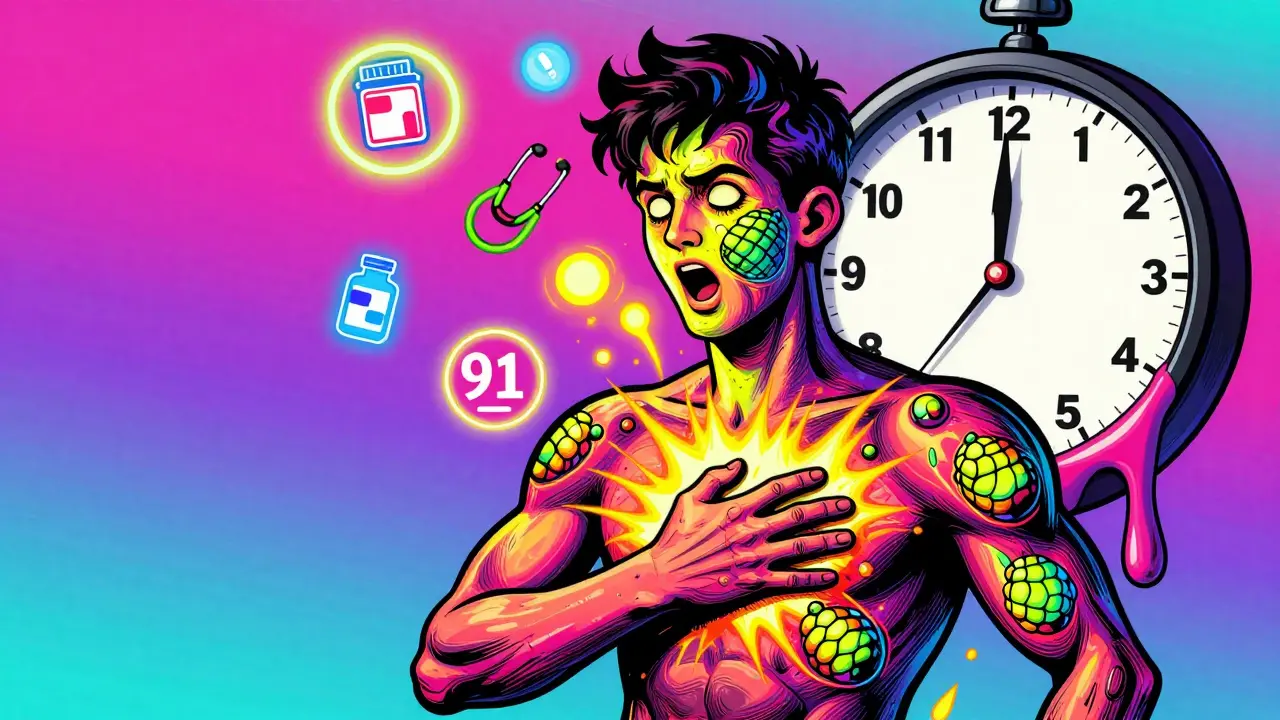
You take your medicine like clockwork. But now you feel strange. Maybe your skin is itching, your throat feels tight, or you’re dizzy every time you stand up. Is this normal? Or is it something dangerous? Many people wait too long to call their doctor-sometimes until it’s too late. The truth is, not all side effects are harmless. Some are red flags that mean you need help now.
What Counts as a Red Flag?
Not every weird feeling means your medicine is killing you. Nausea after antibiotics? Common. Dry mouth from antihistamines? Normal. Headaches? Happens to a lot of people. But if you’re feeling something sudden, severe, or worsening, that’s different.Here’s what you should never ignore:
- Difficulty breathing or wheezing
- Hives, rash, or blisters-especially if they spread fast
- Swelling of your face, lips, tongue, or throat
- Fainting, dizziness so bad you can’t stand, or feeling like you’re about to pass out
- Severe nosebleeds or bleeding that won’t stop
- Unexplained bruising or blood in your stool or urine
- High fever with chills, confusion, or extreme fatigue
- Severe stomach pain, vomiting, or yellowing of the skin or eyes
These aren’t just uncomfortable-they can be life-threatening. Anaphylaxis, for example, can kill in minutes. It happens in about 1 to 15 out of every 10,000 prescriptions, but when it does, it’s fast. Hives and swelling show up within 30 minutes in 78% of cases. If you have any of these symptoms, don’t wait. Call 911 or go to the nearest emergency room.
When a Side Effect Isn’t an Emergency-But Still Needs Attention
You might feel off for a few days after starting a new pill. That’s not always dangerous. But if it sticks around, it’s a problem. The American Academy of Allergy, Asthma & Immunology says if a side effect lasts more than 72 hours-or if it’s making it hard to do normal things like work, sleep, or walk-you should call your doctor.For example:
- Constipation from painkillers? Common. But if you haven’t had a bowel movement in five days and you’re bloated and nauseous, that’s not normal.
- Dizziness on blood pressure meds? Happens. But if you’re falling or bumping into things, your dose might be too high.
- Diarrhea after antibiotics? Often temporary. But if it’s watery, bloody, or lasts longer than three days, it could be C. diff-a serious infection.
One study found that patients who kept a simple side effect diary-writing down what they felt, when, and how bad-improved diagnostic accuracy by 65%. You don’t need a fancy app. Just a notebook. Note: "Dizziness started 2 hours after taking lisinopril, lasted 3 hours, felt like 7/10." That kind of detail helps your doctor spot patterns.
Don’t Stop Your Medicine-Unless It’s an Emergency
This is where people make the biggest mistake. They feel bad, so they quit. But stopping your medicine without talking to your doctor can be just as dangerous as the side effect.According to the National Institute on Aging, half of all treatment failures for chronic conditions like high blood pressure, diabetes, or depression happen because people stop taking their pills. If you’re on a blood thinner and skip a dose, you could clot. If you stop your antidepressant cold turkey, you could get withdrawal seizures. Even if you’re feeling awful, keep taking it-unless you’re having an allergic reaction.
So when should you stop? Only in these cases:
- You have trouble breathing or your throat is closing
- You develop blisters on your skin or inside your mouth
- You get a high fever with a rash that spreads fast
These could be signs of Stevens-Johnson Syndrome or toxic epidermal necrolysis-rare but deadly skin reactions. If you suspect either, stop the medicine immediately and get to a hospital. For everything else? Call your doctor first. They might adjust your dose, switch your drug, or give you something to ease the side effect.
What to Do When You’re Not Sure
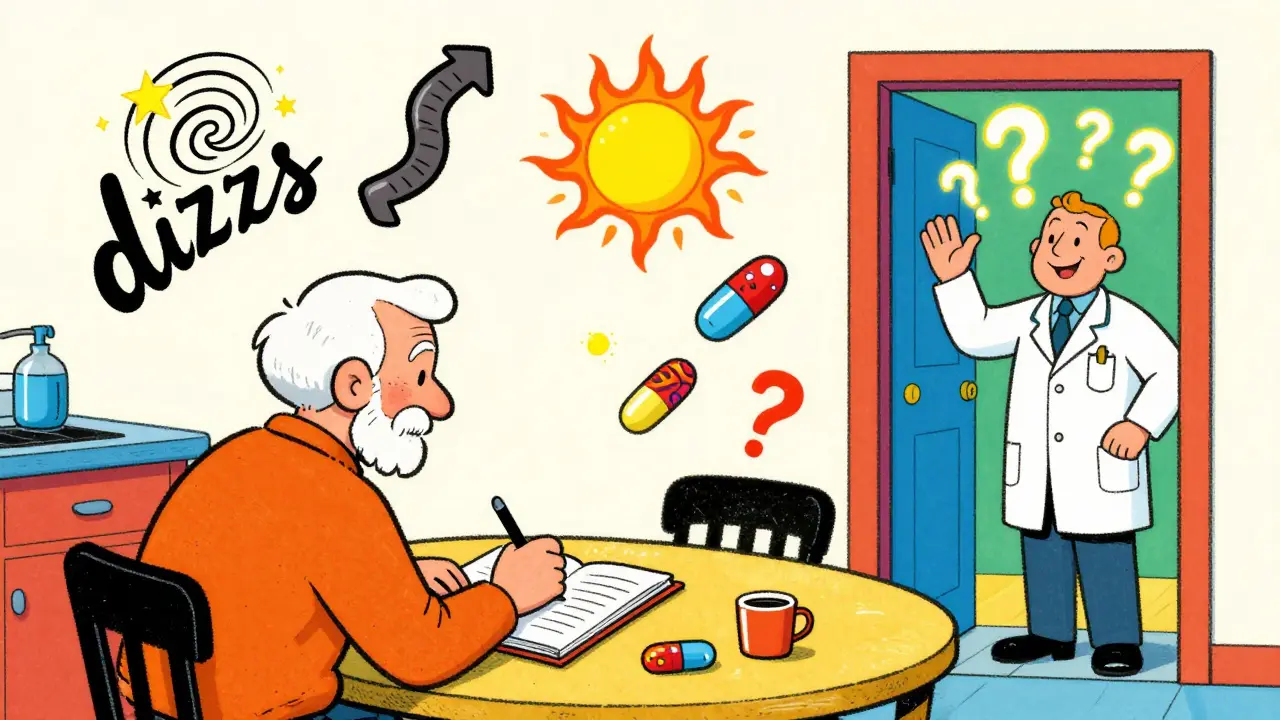
You’re not a doctor. You shouldn’t have to guess. But you’re the one who feels the symptoms. That’s why you’re the most important part of the safety system.Here’s what to do step by step:
- Write it down. What happened? When? How bad? Use a 1-to-10 scale. Did it start after you took your pill? Did it get worse over time?
- Check the patient guide. Every prescription comes with a Medication Guide. It lists common and serious side effects. If your symptom is in there, pay attention.
- Call your pharmacy. Pharmacists are trained to spot red flags. They see hundreds of patients every day. They’ll know if your symptom matches a known reaction.
- Call your doctor. Don’t wait for your next appointment. Call today. If you can’t reach them, go to an urgent care center. Better safe than sorry.
- Report it. The FDA’s MedWatch program lets you report side effects online or by phone (1-800-332-1088). Your report helps protect others. In 2023, patient reports led to 200+ label changes and 15-20 drug recalls.
Why This Matters More Than You Think
Medication errors are one of the leading causes of hospital admissions in the U.S.-and that includes Australia, too. A 2023 study in the Journal of the American Medical Association found that catching serious reactions early can cut death rates by 35%. That’s not a small number. That’s lives.And it’s not just about big reactions. Even small, ignored side effects can spiral. Dizziness leads to falls. Falls lead to broken hips. Broken hips lead to long hospital stays-and sometimes death, especially in older adults. The British Heart Foundation says dizziness from meds increases fall risk by 200% in people over 65.
Meanwhile, the FDA’s Sentinel Initiative now tracks 300 million patient records in real time. It caught a diabetes drug increasing heart failure risk in just six months-something that used to take years. That’s because patients spoke up.
What You Can Do Today
You don’t need to be an expert to keep yourself safe. Here’s your simple action plan:- Keep a one-page side effect log next to your pill bottle.
- Know your meds-name, purpose, and common side effects.
- Never stop a chronic medicine without talking to your doctor.
- If you have trouble breathing, swelling, or blisters-call 911.
- If you’re unsure, call your doctor or pharmacist. No question is too small.
Medicines save lives. But they can hurt too-if you don’t know the signs. Your body talks to you. Listen. And don’t wait for permission to speak up. Your doctor needs to hear from you-before it’s too late.
Should I stop my medication if I have a rash?
Not always. A mild, itchy rash that shows up a few days after starting a new drug is often harmless and may go away on its own. But if the rash spreads quickly, turns into blisters, or is accompanied by fever, mouth sores, or peeling skin, stop the medication immediately and seek emergency care. These could be signs of Stevens-Johnson Syndrome, a life-threatening reaction.
How long should I wait before calling my doctor about a side effect?
If a side effect lasts more than 72 hours, gets worse, or interferes with daily life-like making it hard to sleep, work, or walk-call your doctor. Don’t wait until it’s unbearable. Early intervention can prevent complications. For example, persistent dizziness might mean your blood pressure medicine dose needs adjusting.
Can over-the-counter meds cause serious reactions?
Yes. Many people assume OTC drugs are safe, but they can cause serious problems. For example, NSAIDs like ibuprofen can cause stomach bleeding, especially in older adults or those on blood thinners. Acetaminophen overdose can lead to liver failure. Even allergy pills like diphenhydramine can cause dangerous dizziness or confusion in seniors. Always read labels and check with your pharmacist if you’re taking multiple medications.
What if I don’t know which medicine caused the reaction?
Write down everything you’ve taken in the last 7 days-including vitamins, supplements, and herbal products. Some reactions happen days after taking a drug. Your doctor or pharmacist can help trace the cause by comparing your list with known side effect profiles. Don’t guess-just give them the facts.
Is it safe to report side effects to the FDA?
Yes. Reporting side effects to the FDA’s MedWatch program is anonymous and helps improve drug safety for everyone. In 2023, over 1.3 million reports were filed, leading to dozens of drug recalls and label updates. Your report could prevent someone else from having a bad reaction. You’re not causing trouble-you’re helping.
ellen adamina
January 15, 2026 AT 05:38Nishant Garg
January 16, 2026 AT 16:54Diane Hendriks
January 18, 2026 AT 13:11Tom Doan
January 18, 2026 AT 21:11Sohan Jindal
January 20, 2026 AT 09:05Frank Geurts
January 20, 2026 AT 17:39Annie Choi
January 22, 2026 AT 03:19Arjun Seth
January 22, 2026 AT 07:09Mike Berrange
January 23, 2026 AT 03:41Amy Vickberg
January 25, 2026 AT 01:56Ayush Pareek
January 26, 2026 AT 23:00Jaspreet Kaur Chana
January 27, 2026 AT 18:34Nilesh Khedekar
January 28, 2026 AT 10:28Iona Jane
January 28, 2026 AT 21:05