Portal Hypertension: Managing Varices, Ascites, and Complications
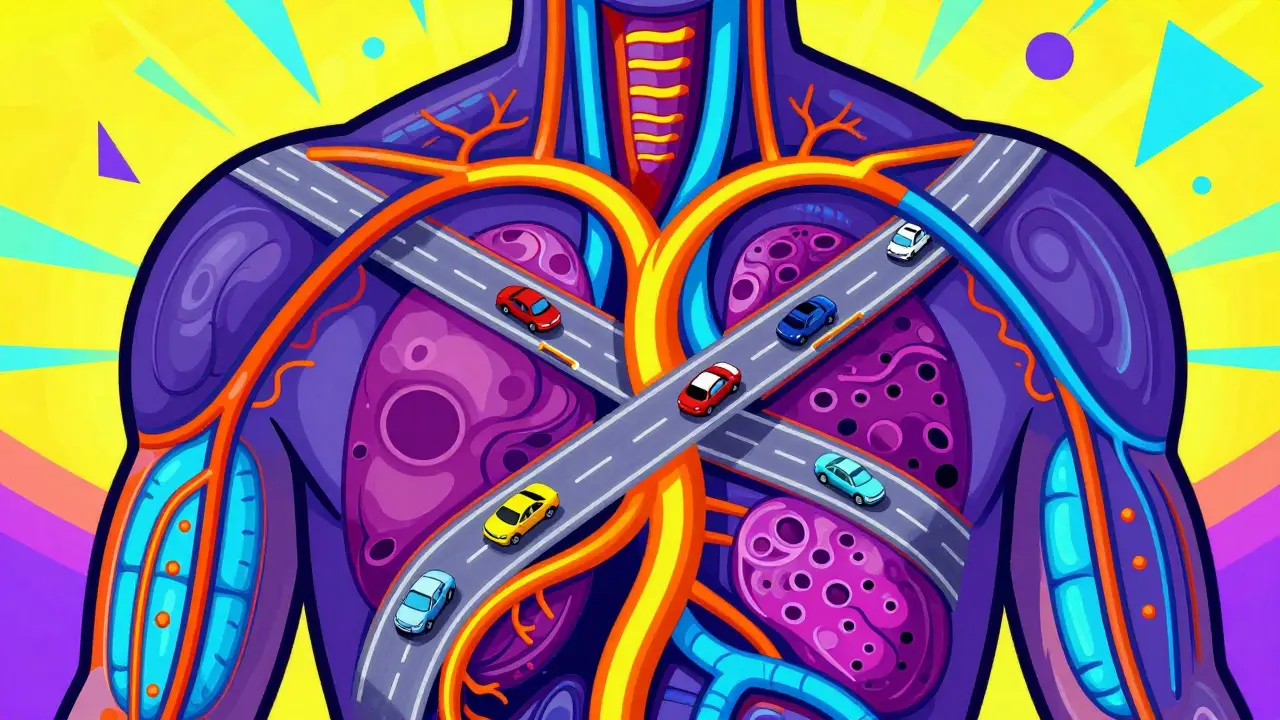
Imagine your liver as a busy highway interchange. Blood flows in from the gut through a major road called the portal vein, gets processed by the liver, and then exits to the rest of the body. Now, imagine that interchange is blocked by traffic-scar tissue, inflammation, or clots. The pressure builds up behind the blockage. This is portal hypertension, defined medically as increased pressure within the portal venous system. It’s not just a number on a chart; it’s a dangerous shift in your body’s plumbing that can lead to life-threatening complications if left unchecked.
You might be reading this because you or a loved one has been diagnosed with cirrhosis or another liver condition. You’ve heard terms like "varices" or "ascites" and they sound scary. That’s because they are serious. But understanding what is happening inside the body is the first step to managing it. We’re going to break down exactly what portal hypertension is, why it happens, and how modern medicine manages the two biggest risks: bleeding from swollen veins and fluid buildup in the abdomen.
What Is Portal Hypertension and Why Does It Happen?
To understand the treatment, you have to understand the mechanics. Normally, blood flows easily through the liver. The pressure in the portal vein is low, typically between 5 and 10 mmHg. Doctors measure this using a hepatic venous pressure gradient (HVPG). If that gradient exceeds 5 mmHg, you have portal hypertension. If it hits 10 mmHg or higher, it’s considered "clinically significant," meaning complications are likely to appear.
The root cause is almost always resistance. Think of trying to push water through a straw that’s half-crushed. The harder you push, the more pressure builds up behind the crush. In the liver, this "crush" is usually scar tissue from cirrhosis. According to the American Association for the Study of Liver Diseases (AASLD), cirrhosis accounts for about 90% of all portal hypertension cases globally. The remaining 10% involves non-cirrhotic causes like blood clots in the portal vein or certain genetic conditions.
Here’s the tricky part: as pressure builds, your body tries to compensate. It releases chemicals like nitric oxide that widen blood vessels in the gut (splanchnic vasodilation). This actually increases the volume of blood rushing toward the already-blocked liver, making the pressure problem even worse. It’s a vicious cycle. About 70% of people with cirrhosis will develop clinically significant portal hypertension within five years of their diagnosis. That’s why early monitoring is critical.
Varices: The Silent Ticking Time Bomb
When blood can’t get through the liver easily, it looks for detours. It finds smaller, thinner veins that weren’t designed to handle high-pressure flow. These veins swell up, becoming tortuous and fragile. We call these esophageal varices when they are in the esophagus, or gastric varices if they are in the stomach.
Why is this dangerous? Because these veins are like overfilled balloons. They can burst without warning. Roughly 50% of patients with cirrhosis develop varices within ten years. Once medium-to-large varices form, there is a 5-15% annual risk of them bleeding. A variceal bleed is a medical emergency. Patients often vomit large amounts of blood, which can lead to shock and death if not treated immediately.
The good news? We have effective ways to prevent this. Prevention starts with screening. Endoscopy allows doctors to see these veins before they rupture. If small varices are found, we monitor them. If they are medium or large, we start prophylactic treatment. This usually involves non-selective beta-blockers (NSBBs) like propranolol or nadolol. These drugs don’t lower blood pressure everywhere; they specifically reduce blood flow to the gut, lowering the pressure in those fragile veins. Studies show NSBBs can reduce the risk of first-time bleeding by 45%. For some patients, endoscopic band ligation (tying off the veins with tiny rubber bands) is used instead or in combination.
Ascites: When Fluid Takes Over
If varices are the ticking bomb, ascites is the slow suffocation. Ascites is the accumulation of fluid in the abdominal cavity. It occurs in about 60% of cirrhosis patients within ten years of diagnosis. You’ll notice it as rapid weight gain, a distended belly, shortness of breath, and discomfort.
Why does fluid leak out? High portal pressure forces fluid out of the veins into the abdomen. At the same time, the kidneys sense low blood volume (because blood is pooling in the gut) and hold onto salt and water aggressively. The result is a massive fluid retention cycle.
Managing ascites is largely about lifestyle and medication. The cornerstone is sodium restriction. You need to keep salt intake under 2,000 mg per day. No, you don’t need to give up flavor entirely, but you do need to stop adding salt at the table and avoid processed foods. Alongside diet, diuretics are prescribed. The standard combo is spironolactone and furosemide. Spironolactone blocks aldosterone (a hormone that retains salt), while furosemide helps flush out the excess water. For most patients, this works. But for about 10% of people, ascites becomes "refractory," meaning it doesn’t respond to meds. In those cases, repeated paracentesis (draining the fluid with a needle) or a shunt procedure may be necessary.
| Complication | Primary Goal | First-Line Treatment | Success Rate / Outcome |
|---|---|---|---|
| Variceal Bleeding | Prevent rupture & rebleeding | Non-selective beta-blockers (NSBBs) or Band Ligation | Reduces first bleed risk by 45%; Rebleeding drops to 20-30% with proper care |
| Ascites | Remove fluid & prevent recurrence | Sodium restriction (<2g/day) + Diuretics (Spironolactone/Furosemide) | Adequate control in 95% of uncomplicated cases |
| Hepatic Encephalopathy | Reduce ammonia levels | Lactulose and Rifaximin | Significant improvement in mental status in majority of patients |
When Medication Isn’t Enough: TIPS and Transplant
Sometimes, pills and diet aren’t enough. If you have refractory ascites or recurrent variceal bleeding despite maximum medical therapy, doctors consider a Transjugular Intrahepatic Portosystemic Shunt (TIPS). This is a radiological procedure where a stent is placed inside the liver to create a new channel for blood to bypass the scarred areas. It effectively decompresses the portal system.
TIPS is highly effective at stopping bleeding and draining ascites, with technical success rates of 90-95%. However, it comes with a trade-off. By bypassing the liver, toxic substances like ammonia aren’t filtered out as well. This can worsen or trigger hepatic encephalopathy, a condition causing confusion, sleepiness, and brain fog. About 20-30% of patients experience worsening encephalopathy after TIPS. Therefore, it’s reserved for those who have failed other treatments.
The ultimate solution for end-stage liver disease with portal hypertension is liver transplantation. It cures the underlying cause. However, supply is limited. In the US, the median wait time is around 14 months. During that wait, managing complications becomes a game of survival, keeping the patient stable until an organ becomes available.

New Horizons: Non-Invasive Monitoring and Drugs
We are entering a new era in portal hypertension management. For decades, measuring HVPG required an invasive catheter procedure done during an endoscopy. It was accurate but risky and expensive. Today, non-invasive tools are changing the game. Elastography devices, like FibroScan, measure liver stiffness and spleen stiffness. Recent consensus guidelines suggest that if liver stiffness is below 20 kPa AND spleen stiffness is below 40 kPa, you can safely rule out clinically significant portal hypertension without invasive testing. This spares many patients unnecessary procedures.
Pharmaceutical innovation is also accelerating. Researchers are developing drugs that target the specific pathways causing vascular resistance without causing systemic hypotension (low blood pressure elsewhere). For example, simtuzumab, a monoclonal antibody targeting LOXL2, has shown promise in reducing portal pressure in non-cirrhotic cases. While still in trials, these developments offer hope for treating the root cause rather than just the symptoms.
Living with Portal Hypertension: Practical Tips
Living with this condition requires vigilance. Here is what you can do right now:
- Track your weight daily. A sudden gain of 2-3 pounds in a day or 5 pounds in a week usually means fluid retention. Call your doctor.
- Watch for red flags. Black, tarry stools (melena) or vomiting coffee-ground material indicates bleeding. Go to the ER immediately.
- Limit alcohol completely. Even small amounts can accelerate liver damage and increase pressure.
- Be careful with painkillers. Avoid NSAIDs (like ibuprofen or naproxen) as they can worsen kidney function and cause bleeding. Acetaminophen is generally safer but must be kept under 2 grams per day unless your doctor says otherwise.
- Stay connected with your hepatologist. Regular endoscopies and blood work are non-negotiable for preventing catastrophic events.
Portal hypertension is serious, but it is manageable. By understanding the mechanics of pressure, adhering to strict dietary limits, and utilizing modern diagnostic tools, you can significantly reduce the risk of variceal bleeding and ascites. The goal is stability. With the right team and the right habits, many people live active, fulfilling lives despite this diagnosis.
What is the normal range for portal vein pressure?
Normal portal vein pressure ranges from 5 to 10 mmHg. Portal hypertension is diagnosed when the hepatic venous pressure gradient (HVPG) exceeds 5 mmHg. Clinically significant portal hypertension, which carries a high risk of complications, is defined as an HVPG of 10 mmHg or greater.
Can portal hypertension be cured without a liver transplant?
In most cases caused by cirrhosis, portal hypertension cannot be fully cured without a liver transplant because the scar tissue is permanent. However, the condition can be managed effectively to prevent complications. In rare non-cirrhotic cases, such as those caused by blood clots, treating the underlying cause (e.g., with anticoagulants) may resolve the hypertension.
What are the first signs of variceal bleeding?
The most common sign is vomiting bright red blood or material that looks like coffee grounds. Another sign is black, tarry, foul-smelling stools (melena). Other symptoms include dizziness, fainting, pale skin, and rapid heartbeat due to blood loss. This is a medical emergency requiring immediate hospitalization.
How much salt should I eat if I have ascites?
Patients with ascites should restrict sodium intake to less than 2,000 mg (2 grams) per day. This requires avoiding added table salt, processed meats, canned soups, and fast food. Reading nutrition labels is essential, as sodium hides in many packaged goods.
What is the difference between TIPS and a liver transplant?
TIPS (Transjugular Intrahepatic Portosystemic Shunt) is a minimally invasive procedure that creates a bypass channel within the liver to reduce pressure. It treats the symptoms (bleeding/ascites) but does not cure the liver disease. A liver transplant replaces the diseased liver with a healthy one, curing both the liver failure and the portal hypertension, but it is a major surgery with a long recovery and waiting period.