Pollen Forecasting: Plan Outdoor Activities Around Peak Allergen Days
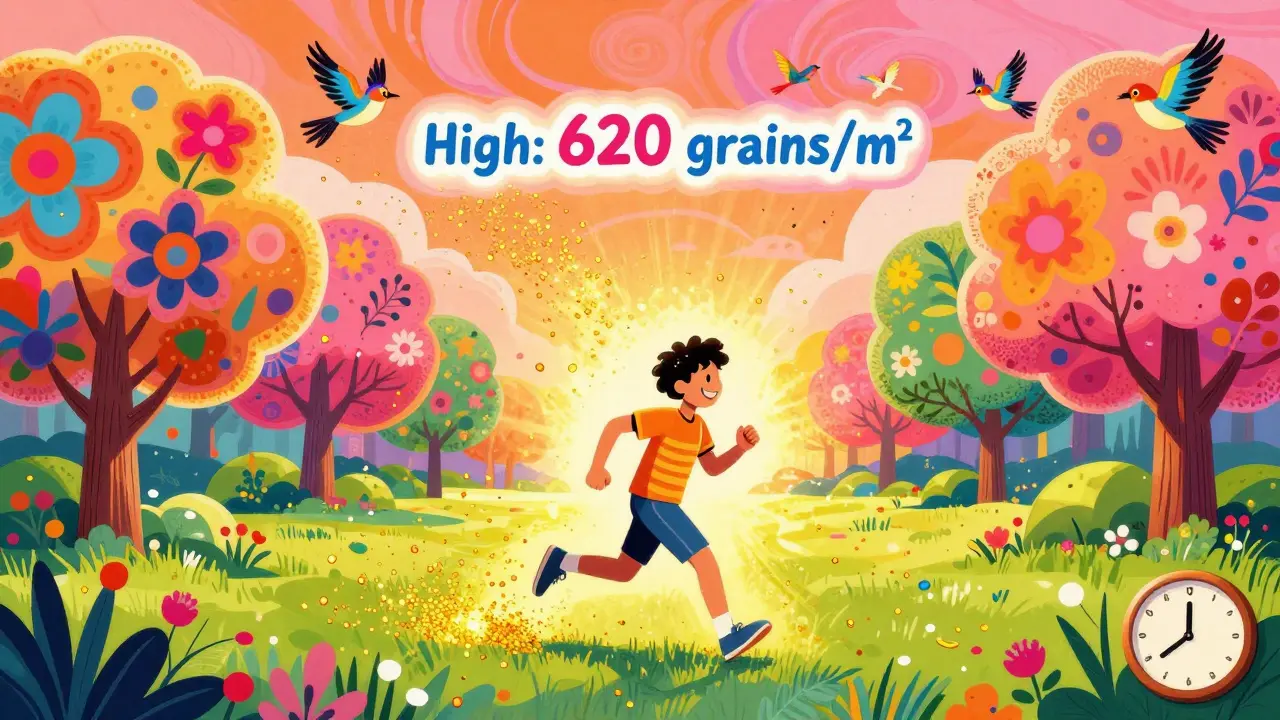
Why Your Allergy Symptoms Are Worse on Some Days
Ever had a perfect spring day-sun out, birds singing-and then spent the next three hours sneezing, coughing, and rubbing your eyes? It’s not just bad luck. It’s pollen. And if you’re one of the 50 million Americans or 150 million Europeans with seasonal allergies, your symptoms aren’t random. They’re predictable. That’s where pollen forecasting comes in.
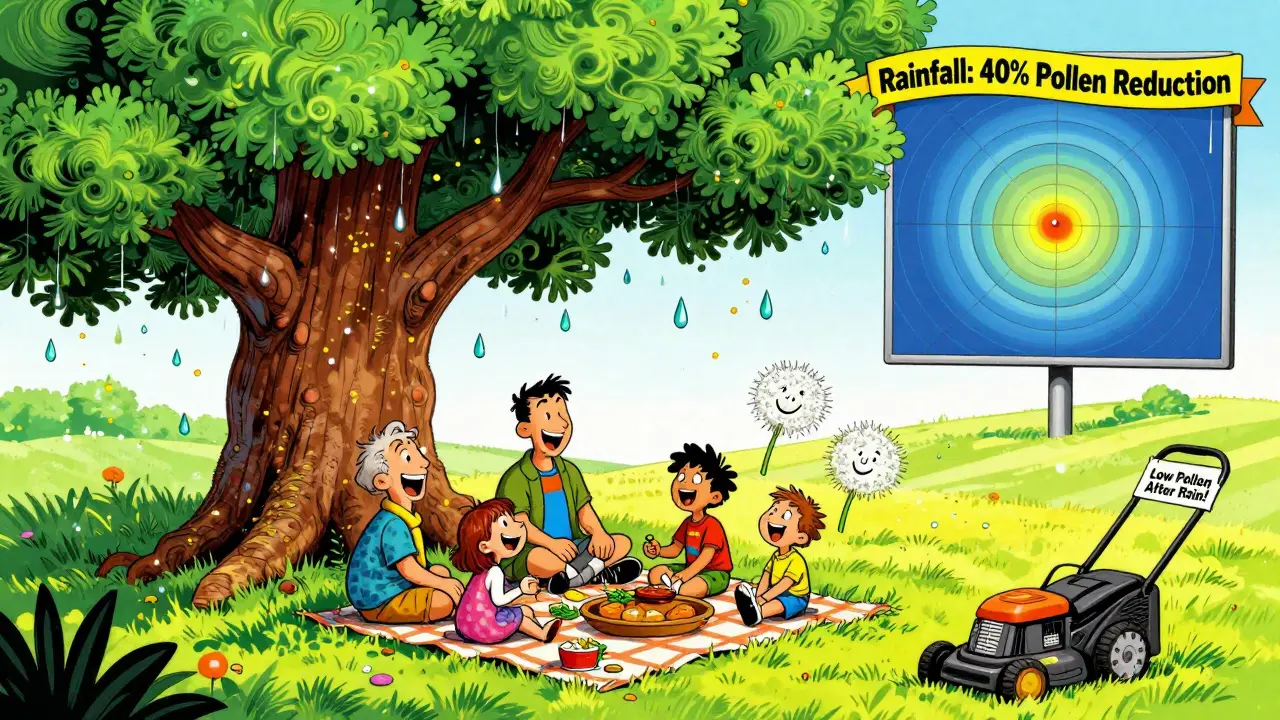
Pollen isn’t just floating around randomly. It follows patterns. Trees release pollen in early spring, grasses in late spring, and weeds like ragweed in late summer. Each type peaks at different times of day, too. Tree pollen hits hardest between 5 and 10 a.m., grass pollen climbs through midday, and ragweed spikes in the late afternoon. Rain can knock counts down by 30-50% for a few hours. Wind? It can send pollen flying for miles. And dry, breezy days? Those are the worst.
What Pollen Counts Actually Mean
Pollen count isn’t a guess. It’s measured in grains per cubic meter of air. Most services use the same scale:
- Low: 50 or fewer grains/m³
- Moderate: 51-149 grains/m³
- High: 150-499 grains/m³
- Very High: 500+ grains/m³
For ragweed, though, even 20 grains/m³ is considered high. That’s why checking your local forecast matters. A “moderate” day in New York might be fine for you, but if you’re allergic to oak pollen and oak is spiking in your neighborhood, you’re still in trouble.
Real-time monitoring stations use rotorod devices-greased rods that spin and collect pollen over 24 hours. But modern forecasts don’t just rely on those. They combine weather data, satellite images, land use maps, and even traffic patterns to predict where pollen will go and when. Some systems now predict with 82-89% accuracy, down to 1.5 kilometers.
How to Use a Pollen Forecast Like a Pro
Checking a forecast isn’t enough. You need to act on it. Here’s how:
- Check two sources daily. Don’t trust just one app. Compare BreezoMeter, Pollen.com, and your local weather service. They all use different data and models.
- Time your outdoor time. If you’re allergic to grass, avoid mowing the lawn or running at noon. Go early morning (5-7 a.m.) or after 7 p.m. when counts drop 40%.
- Use rain as your ally. If rain is coming, plan your walk, gardening, or kids’ playtime for right after. Pollen gets washed out of the air. But don’t go out right before-it’s when pollen gets stirred up.
- Track your symptoms. If your nose runs every Tuesday at 3 p.m., check the forecast for that day. You’ll start seeing patterns. People who log symptoms and match them to forecasts reduce medication use by up to 63%.
- Know your enemy. Are you allergic to birch? Oak? Ragweed? Most free apps only track 5-10 types. If you’ve had skin tests, use a service that lets you filter by your specific allergens.
One Reddit user, u/AllergyWarrior89, cut their antihistamine use in half by switching their daily run from 6 p.m. to 7 a.m. Another in Austin avoided a three-day sinus flare-up after getting a cedar pollen alert from their app. These aren’t anecdotes-they’re data-backed wins.
Best Tools for Pollen Forecasts in 2026
Not all apps are equal. Here’s what’s working right now:
| Service | Accuracy | Resolution | Forecast Range | Cost | Best For |
|---|---|---|---|---|---|
| BreezoMeter | 82% | 1.5 km | 5 days | $0.0005/call | Hyperlocal accuracy, athletes, parents |
| Pollen.com | 75% | 10 km | 5 days | Free | General users, basic planning |
| Copernicus CAMS (Europe) | 87% | Regional | 5 days | Free | Europeans, scientific accuracy |
| WeatherBug | 78% | 5 km | 3 days | Free with app | Urban areas, microclimate tracking |
BreezoMeter leads in precision and integrates with Apple Health to correlate pollen exposure with heart rate and sleep data. But if you just want a free, simple view, Pollen.com still works fine. For Europeans, CAMS is the gold standard-validated by 150 monitoring stations.
Big sports teams like Manchester United and the New England Patriots now use these tools to schedule outdoor training. Schools in 22 U.S. districts delay recess on high-pollen days. This isn’t niche anymore-it’s public health.
When Forecasts Fail (And What to Do)
Pollen forecasts aren’t perfect. They struggle with:
- Thunderstorm asthma. In Melbourne in 2016, a storm caused pollen grains to burst open, sending tiny particles deep into lungs. Cases spiked 300% in 30 minutes. No forecast saw it coming.
- Localized stirring. Mowing your lawn, raking leaves, or even walking through tall grass can kick up pollen-even if the forecast says “low.”
- Urban microclimates. Pollen counts can be 300% higher in your backyard than two blocks away. Only a few services account for this.
- Weak weed tracking. Only 12% of models accurately predict ragweed. If you’re allergic to it, assume it’s high from August to frost.
When forecasts miss the mark, fall back on real-time clues: if your eyes itch as soon as you step outside, go back in. Keep antihistamines handy. And never assume a “low” forecast means zero risk.
What’s Next for Pollen Forecasting
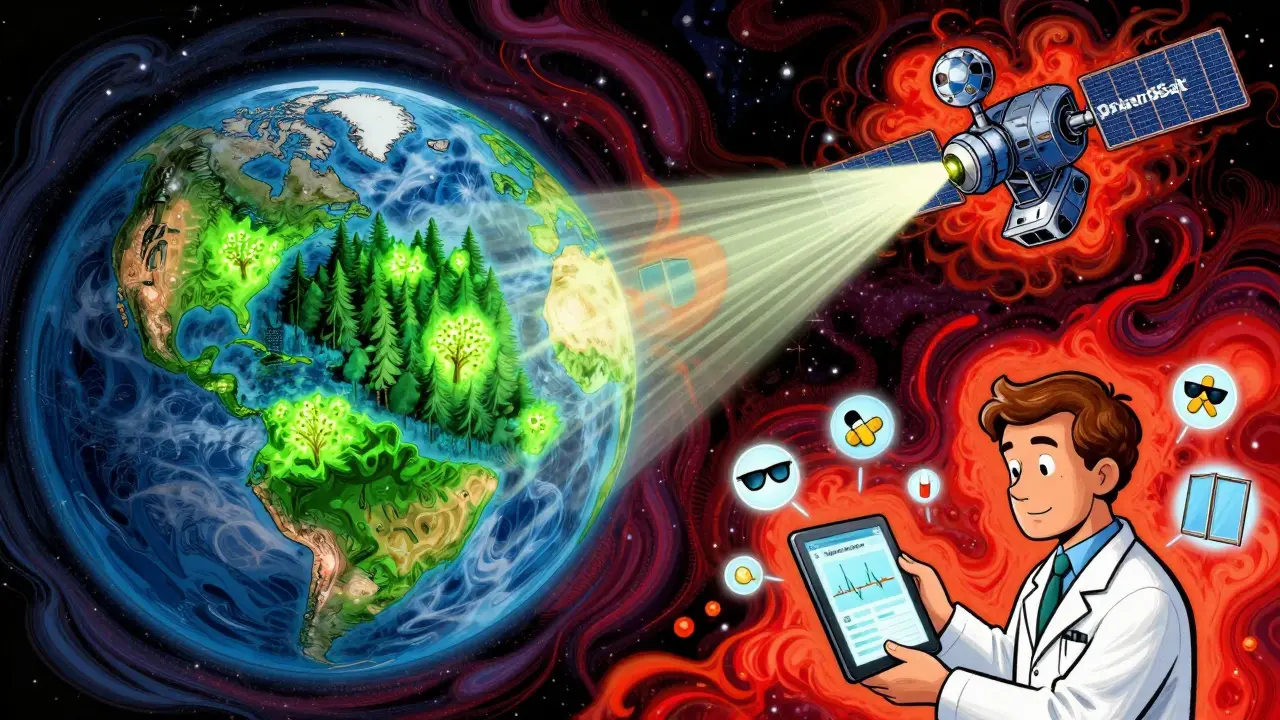
Things are getting better. In 2025, the European Space Agency is launching PollenSat-a satellite designed to detect pollen types from space. That means global coverage for the first time. The NIH just funded $2.4 million to build AI models that predict thunderstorm asthma. And Apple, BreezoMeter, and others are now linking pollen data to your personal health metrics: sleep quality, breathing rate, symptom logs.
Climate change is making this more urgent. Since 1990, the U.S. pollen season has grown by over 20 days, and concentrations are up 21%. That means more days with high counts, more days where you need to plan ahead.
Final Tip: Don’t Wait for Symptoms
Waiting until you’re sneezing to check the forecast is like waiting for a storm to hit before you grab an umbrella. Start early. Check the forecast every morning during allergy season. Adjust your plans. Wear sunglasses. Shower after being outside. Keep windows closed on high-count days.
People who use forecasts consistently report 40-65% fewer allergy days. That’s not magic. That’s science. And it’s available to you right now-for free or for less than the cost of a coffee.
How to Start Today
- Download one free pollen app (Pollen.com or WeatherBug).
- Check it every morning before you leave the house.
- For one week, write down your symptoms and compare them to the forecast.
- After that, try shifting your outdoor time to early morning or evening.
- Next season, upgrade to a more precise service if you’re still struggling.
You don’t need to give up the outdoors. You just need to know when to be there.
kabir das
January 29, 2026 AT 15:28Laura Arnal
January 30, 2026 AT 19:14Eli In
January 31, 2026 AT 10:27Ryan Pagan
February 1, 2026 AT 14:28Paul Adler
February 2, 2026 AT 02:34DHARMAN CHELLANI
February 3, 2026 AT 02:15Kacey Yates
February 3, 2026 AT 08:26ryan Sifontes
February 3, 2026 AT 13:48Jasneet Minhas
February 4, 2026 AT 19:51Megan Brooks
February 5, 2026 AT 21:21Doug Gray
February 7, 2026 AT 03:59Kristie Horst
February 8, 2026 AT 07:26LOUIS YOUANES
February 8, 2026 AT 18:59Andy Steenberge
February 9, 2026 AT 01:21Alex Flores Gomez
February 11, 2026 AT 01:00