Photophobia: Understanding Light Sensitivity Causes and Practical Solutions

Light hurts your eyes. Not just when you step outside on a sunny day, but even under office fluorescent lights, or worse - when you’re just trying to read on your phone. If this sounds familiar, you’re not alone. About photophobia affects 35% of people at some point in their lives. It’s not a fear of light - despite the name - it’s a neurological and physiological reaction that turns normal brightness into pain. And it’s often a warning sign something deeper is going on.
What’s Really Happening When Light Hurts?
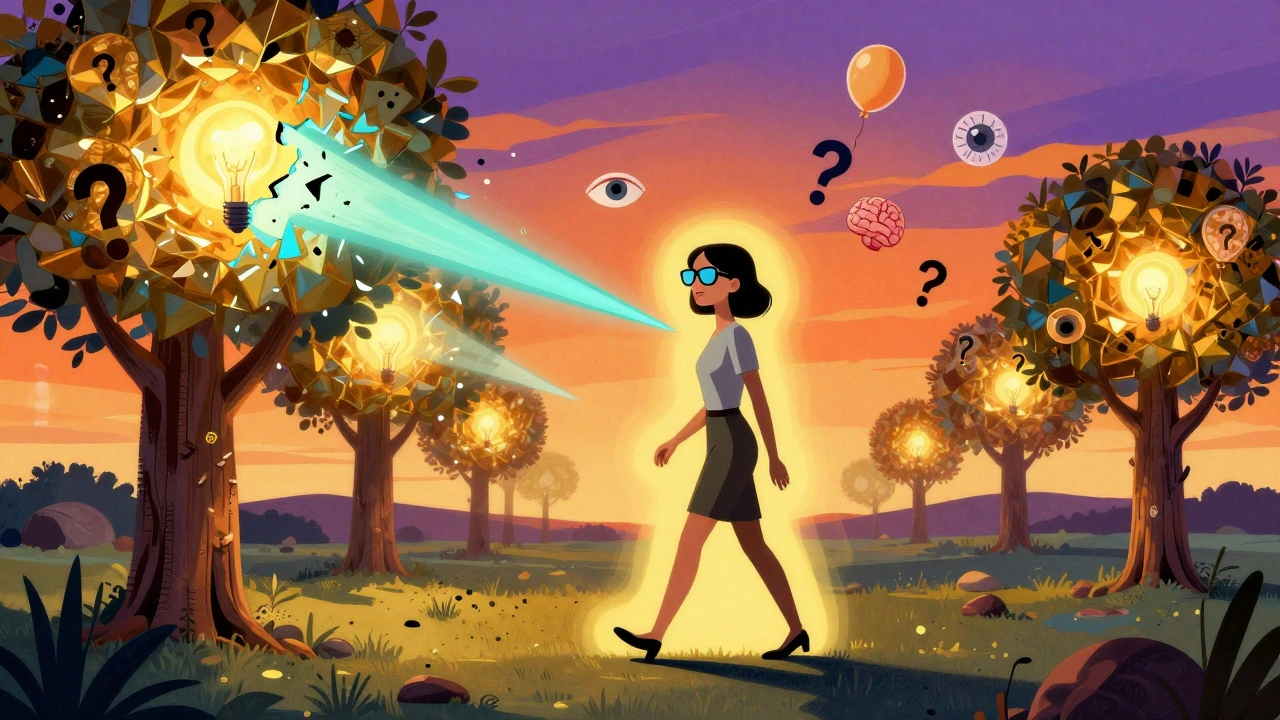
Photophobia isn’t about your eyes being too sensitive to brightness. It’s about how your brain and nerves react to it. In people without light sensitivity, light triggers a smooth signal from the eye to the brain, and your pupils naturally shrink to protect your retina. In photophobia, that system misfires. Your pupils don’t react properly - they stay too wide, even in bright light. At the same time, nerves in your trigeminal system (the main pain pathway in your face and head) go into overdrive. This is why light doesn’t just feel uncomfortable - it can feel sharp, burning, or even trigger nausea and headaches.
Studies using fMRI scans show that people with photophobia have 3.2 times more brain activity in the thalamus - the brain’s relay center - when exposed to normal office lighting (500 lux). That’s the same brightness as a typical computer screen in a well-lit room. For someone with photophobia, that’s like a siren going off in their nervous system.
The Three Main Causes of Photophobia
Photophobia doesn’t come out of nowhere. It’s almost always a symptom. And it falls into three clear buckets:
- Eye-related conditions (45% of cases): This includes uveitis (inflammation inside the eye), corneal abrasions, albinism, and even dry eye. Uveitis is especially sneaky - 92% of people with it report light sensitivity before they notice redness or blurred vision.
- Neurological conditions (40% of cases): Migraines are the big one here. Between 76% and 80% of migraine sufferers experience photophobia during an attack. But it’s also linked to traumatic brain injuries, concussions, and even conditions like meningitis. In fact, doctors at Mount Sinai say photophobia is a critical red flag in emergency rooms - it often shows up 48 to 72 hours before a formal diagnosis of something serious.
- Medication-induced (15% of cases): Some drugs - like certain antibiotics, antihistamines, and even antidepressants - can make your eyes more reactive to light. If you started a new medication and suddenly can’t stand the sun, talk to your doctor.
Women between 25 and 55 are most affected, making up 65% of cases. And while it can happen at any age, it’s most common in adulthood.
How Bad Is Your Photophobia?
Not all light sensitivity is the same. It’s measured on a scale called the Photophobia Severity Scale (PSS-10), where scores above 25 mean severe disability. Most people fall into one of three categories:
- Mild (48%): Only painful in direct sunlight. You can handle indoor lighting fine.
- Moderate (37%): You need sunglasses indoors under fluorescent or LED lights. Office work becomes a struggle.
- Severe (15%): Even dim lighting - around 50 lux, like a softly lit living room - causes pain. You might avoid going out entirely.
Severe cases often come with reduced visual acuity. About 68% of people with severe photophobia see at 20/40 or worse in bright light - meaning they’d need glasses just to read a street sign, even if their eyes are otherwise healthy.
The FL-41 Lens Solution: Why Most Sunglasses Don’t Work
If you’ve tried regular sunglasses, tinted glasses, or blue-light blockers and they didn’t help - you’re not doing anything wrong. You just picked the wrong tool.
Standard sunglasses block UV and reduce overall brightness, but they don’t target the specific wavelengths that trigger photophobia. Research shows the worst offenders are in the blue-green range - between 500 and 550 nanometers. That’s the exact light emitted by LED screens, fluorescent bulbs, and even sunlight.
That’s where FL-41 tinted lenses come in. Developed in the 1990s and now backed by over a decade of clinical trials, these lenses filter out 70% of that problematic light while letting through other wavelengths. The result? A 43% reduction in symptoms in controlled studies. People using them report fewer migraine attacks, less eye strain, and better sleep.
On Amazon, FL-41 glasses like TheraSpecs have an average rating of 4.2 out of 5 across more than 1,200 reviews. One user wrote: “They cut my migraine frequency from 18 a month to 5 in three weeks.”
But here’s the catch: Not all tinted glasses are FL-41. Many cheap “blue light” glasses on Amazon filter the wrong wavelengths - the ones around 450nm, which aren’t the main problem. Using the wrong ones can make things worse. That’s why professional optical consultation matters.
What to Do When Light Sensitivity Starts
Don’t just reach for sunglasses. Start with a three-phase plan:
- Immediate relief: Wear 100% UV-blocking sunglasses outdoors. Indoors, dim lights to 100-200 lux. Use warm-colored bulbs (2700K) instead of cool white LEDs. Turn off overhead fluorescents if you can. Use a desk lamp instead.
- Diagnosis: See an ophthalmologist. Get a full eye exam - including pupil response tests and retinal checks. If your eyes are fine, ask for a neurological referral. You might need an MRI or blood tests to rule out autoimmune conditions like lupus, which causes 46% of non-eye-related photophobia cases.
- Treatment: This depends on the cause. For migraines, CGRP inhibitors like Aimovig can help - but they cost around $690 a month. For eye inflammation, steroid eye drops are often prescribed. For most people, FL-41 lenses are the first-line, low-cost, non-drug solution. They cost between $149 and $200 per pair.
It takes 2-3 weeks to adjust to FL-41 lenses. Many people say the world looks “yellowish” at first. That’s normal. Your brain adapts. After a month, most say the color distortion disappears and they barely notice they’re wearing them.
Why Ignoring Photophobia Is Dangerous
Too many people are told, “It’s just sensitivity - get used to it.” That’s dangerous advice.
Doctors miss diagnoses all the time. One patient survey found that 82% of people with uveitis were first told they just had migraines. Another 63% had delayed treatment because their doctor dismissed their symptoms as “normal.”
And the risks aren’t just about pain. People with chronic photophobia are 27% more likely to develop vitamin D deficiency because they avoid sunlight. Workplace productivity drops by 52% in severe cases. And in emergency settings, photophobia can be the first sign of meningitis, encephalitis, or a brain tumor - conditions that need immediate treatment.
The American Academy of Neurology warns that over-relying on tinted lenses without diagnosis misses treatable conditions in 22% of cases.
What’s Next for Photophobia Treatment
The field is moving fast. In May 2023, the FDA approved the first diagnostic device for photophobia - the Photosensitivity Assessment Device (PAD-2000). It measures how your pupils react to light with 94% accuracy. No more guessing.
Up next? A topical eye drop targeting TRPM8 receptors - the same ones that make you feel cold when you eat mint. Early trials show it can reduce light sensitivity by 60%. FDA submission is expected in mid-2025.
Companies are also adapting. Twenty-eight percent of Fortune 500 companies now use “migraine-friendly” lighting in offices - adjustable LEDs that stay between 300-500 lux. Harvard Business Review found this cut sick days by 17%.
By 2030, experts predict a 22% drop in photophobia-related disability thanks to better diagnosis and combined treatments.
Final Thoughts: Don’t Suffer in Silence
Photophobia is not something you have to live with. It’s not a personality quirk or a sign you’re “too sensitive.” It’s a biological signal that something needs attention. Whether it’s a treatable eye condition, a migraine disorder, or a neurological issue - the right diagnosis can change your life.
If you’re avoiding sunlight, squinting under LED lights, or skipping work because your eyes hurt - take action. Start with FL-41 lenses. Then get checked. Don’t let someone tell you it’s normal. It’s not. And you don’t have to be in pain just to see the world.
Is photophobia the same as being sensitive to bright light?
No. Everyone finds bright light uncomfortable sometimes. Photophobia is a medical condition where even normal lighting causes pain, headaches, or nausea. It’s linked to neurological or eye disorders, not just personal preference. People with photophobia react to light at 0.5-2.0 lux, while most people only feel discomfort above 5-10 lux.
Can blue-light blocking glasses help with photophobia?
Most blue-light blockers target wavelengths around 450nm, which aren’t the main trigger for photophobia. The real problem is in the 500-550nm range - blue-green light. FL-41 lenses are specifically designed to filter those wavelengths. Generic blue-light glasses may not help, and in some cases, they can make symptoms worse by altering color perception without addressing the root cause.
How do I know if my photophobia is serious?
If you experience photophobia along with headaches, nausea, neck stiffness, vision changes, fever, or confusion, seek medical help immediately. These can be signs of meningitis, encephalitis, or a brain injury. Even without those symptoms, if your photophobia is affecting your work, sleep, or daily life, it’s serious enough to get evaluated. A score above 25 on the Photophobia Severity Scale means you have severe disability.
Are FL-41 lenses covered by insurance?
Usually not as a standalone item. But if your photophobia is linked to a diagnosed condition like uveitis or migraine, your eye doctor may prescribe them as medical equipment. Some insurance plans cover them under vision benefits or durable medical equipment. Always ask for a prescription and itemized receipt - you might be able to submit for reimbursement.
Can children have photophobia?
Yes. Children with autism, migraines, or eye conditions like albinism or uveitis often show photophobia. They may squint, cry, or cover their eyes in normal lighting. Parents sometimes mistake this for behavioral issues. If a child consistently avoids bright rooms or sunlight, get their eyes checked. Early diagnosis of conditions like uveitis in kids can prevent permanent vision loss.
Will photophobia go away on its own?
Sometimes - if it’s caused by a temporary issue like a corneal abrasion or a migraine attack. But if it’s linked to a chronic condition like migraines, lupus, or uveitis, it won’t disappear without treatment. Left untreated, photophobia can lead to social isolation, depression, and worsening of the underlying disease. The good news? With proper diagnosis and management, 78% of cases improve significantly within six months.
Desmond Khoo
December 9, 2025 AT 07:30OMG YES. I’ve been wearing FL-41 lenses for 6 months and my migraines dropped from daily to maybe once a month. 🥹 I used to quit my job just to avoid the office lights. Now I can actually sit in a coffee shop without crying. Thank you for this post - I finally feel seen. 🌞🫶
Louis Llaine
December 9, 2025 AT 23:03So let me get this straight - we’re paying $200 for yellow-tinted glasses because the world is too bright? Next you’ll tell me we need special socks for ‘floor sensitivity.’ 😴
Jane Quitain
December 11, 2025 AT 15:43Y’all this is SO IMPORTANT!! I didn’t know I had photophobia until I read this - I thought I was just ‘dramatic’ 😭 But now I’m ordering FL-41 lenses TODAY. You’re not weak, you’re just wired differently. Go get your light armor!! 💪✨
Kyle Oksten
December 13, 2025 AT 11:50There’s a deeper layer here that rarely gets discussed: photophobia isn’t just a symptom - it’s a sensory override. Our modern environments are engineered for efficiency, not biological compatibility. The fact that 28% of Fortune 500s are adapting lighting speaks volumes. We’ve normalized suffering because convenience came first. This isn’t about glasses - it’s about rethinking how we design space for human neurology. We’re not broken. The world is.
Ted Rosenwasser
December 14, 2025 AT 17:52FL-41 lenses? Please. The real breakthrough is the 2023 FDA-approved PAD-2000. Anyone using non-validated diagnostic tools is just guessing. I’ve read every paper on TRPM8 receptor modulation since 2021 - the upcoming eye drops are the future. Also, don’t waste money on Amazon knockoffs. The TheraSpecs patent expired in 2022, so now you can get OEM-grade lenses from OptiShield for $89. I’ve got the lab reports if anyone cares.
Kurt Russell
December 15, 2025 AT 03:32I’m an ER nurse. Last month, a 19-year-old girl came in with vomiting, neck stiffness, and said, ‘The lights are stabbing me.’ We ran the LP - meningitis. She wouldn’t have come in if she’d been told ‘it’s just light sensitivity.’ This isn’t hype. This is life-or-death. Get checked. Don’t wait. Your eyes are screaming. Listen.
Stacy here
December 15, 2025 AT 19:31They don’t want you to know this, but photophobia is linked to 5G radiation and the hidden fluoride in your water. The FDA approved the PAD-2000 because they’re trying to distract you from the real truth - Big Pharma doesn’t want you to fix this naturally. FL-41 lenses? They’re just a Band-Aid. The real solution is red light therapy, grounding mats, and avoiding LED screens after 6 PM. I’ve been doing it for 3 years. My vision is 20/15 now. They’ll never tell you this on CNN.
Kyle Flores
December 17, 2025 AT 13:07Hey, just wanted to say thank you to everyone sharing their stories here. I’ve had this since I was 12 and felt so alone. My mom thought I was just being dramatic. I didn’t know kids could have it too. If you’re reading this and you’re scared or confused - you’re not weird. You’re not broken. And you’re definitely not alone. I got my FL-41s last year. Took 3 weeks to adjust. Now I can watch movies with my family again. You’ve got this. 💙