Pharmacist Substitution Authority: What You Need to Know About Scope of Practice in the U.S.
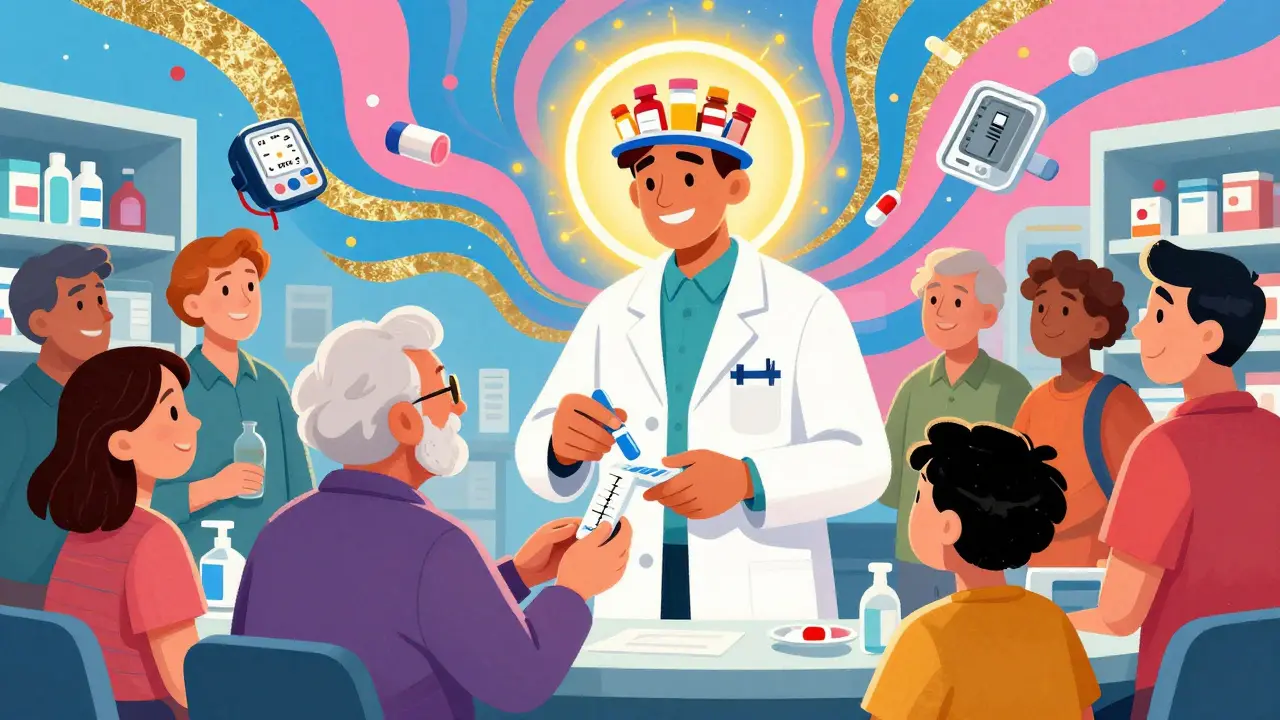
For decades, pharmacists were seen as the people who handed out pills - counted tablets, checked labels, and answered quick questions about side effects. But that’s not the whole story anymore. Across the United States, pharmacists are now legally allowed to do much more. They can switch your medication, start a new treatment, or even test you for flu or strep - all without needing to see a doctor first. This shift isn’t just a trend. It’s a response to real problems: rural towns without doctors, long wait times, and millions of people who can’t afford or access regular care. Understanding pharmacist substitution authority isn’t just for pharmacists. It’s for anyone who takes medication, lives in a underserved area, or wants to know how healthcare is changing on the ground.
What Exactly Is Pharmacist Substitution Authority?
Pharmacist substitution authority means the legal right for pharmacists to change or replace a prescribed medication under specific rules. It’s not about guessing or making up decisions. It’s a structured, regulated process that varies by state. At its most basic level, it includes generic substitution - swapping a brand-name drug for a cheaper, chemically identical generic version. That’s allowed in every state. But it goes far beyond that.
Some states let pharmacists do therapeutic interchange - switching to a different drug in the same class, like swapping one blood pressure pill for another, even if they’re not chemically the same. This isn’t random. It’s based on clinical guidelines, patient history, and cost. In Arkansas, Idaho, and Kentucky, doctors must write “therapeutic substitution allowed” on the prescription. If they don’t, the pharmacist can’t make the change. And even when they can, they have to tell the patient what’s changing and get their okay. In Idaho, the law says the patient may refuse the substitution - plain and simple.
Prescription Adaptation and Collaborative Agreements
Then there’s prescription adaptation. This lets pharmacists tweak an existing prescription - change the dose, adjust the timing, or renew it - without going back to the doctor. It’s a lifeline for people in rural areas who drive 90 minutes just to refill a chronic condition med. Instead of making that trip again for a small change, the pharmacist can handle it. States like Colorado and New Mexico allow this under statewide protocols. No need for a new law every time a new drug is added. The state board of pharmacy updates the list as needed.
Collaborative Practice Agreements (CPAs) are another big piece. These are formal, written agreements between a pharmacist and one or more doctors. They outline exactly what the pharmacist can do: prescribe certain drugs, order lab tests, manage diabetes or high blood pressure. CPAs exist in all 50 states and D.C., but how they work varies wildly. In some places, the doctor still signs off on every decision. In others, the pharmacist runs the show as long as they follow the protocol. The trend? More autonomy for pharmacists. Less micromanagement from physicians.
State-by-State Differences Matter
You can’t talk about pharmacist substitution authority without talking about state laws. It’s a patchwork. Maryland lets pharmacists prescribe birth control to adults. Maine lets them hand out nicotine patches without a prescription. California uses the word “furnish” instead of “prescribe” to avoid legal pushback from doctors. In Illinois, the law says pharmacy practice directly affects public health and safety - putting pharmacists on the same level as other licensed health professionals.
Some states let pharmacists prescribe for specific conditions only - like travel vaccines, emergency contraception, or opioid overdose reversal. Others allow full independent prescribing for a list of approved drugs. The key difference? Whether the pharmacist needs a doctor’s signature or not. In states with standing orders - like Washington and Oregon - pharmacists can start treatments based on statewide guidelines, no doctor involved. That’s huge for people who can’t find a provider or don’t have insurance.
But here’s the catch: just because a state allows it doesn’t mean it’s easy to do. Many pharmacists still can’t get paid for these services. Insurance companies don’t always recognize them as providers. Medicare still doesn’t cover most pharmacist-led care - except in very limited cases. That’s why the federal ECAPS bill, pending in 2025, is such a big deal. If it passes, Medicare would have to pay pharmacists for services like testing, vaccination, and chronic disease management. That could unlock similar changes in private insurance.
Why This Is Happening Now
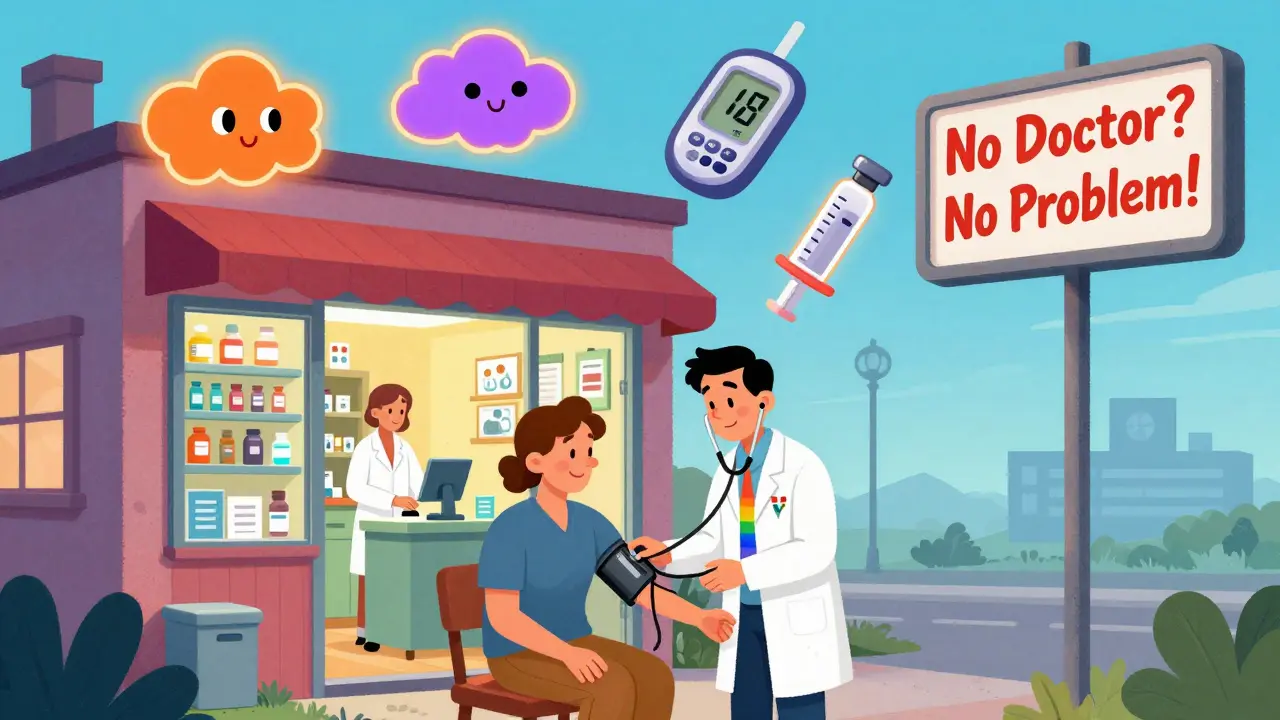
It’s not magic. It’s necessity. The U.S. is facing a doctor shortage. By 2034, the Association of American Medical Colleges predicts a gap of 124,000 physicians. Rural areas are hit hardest - 60 million Americans live in places with too few doctors. Pharmacies, on the other hand, are everywhere. There are over 68,000 community pharmacies in the U.S. More than most grocery stores. They’re open evenings and weekends. No appointment needed.
Pharmacists are trained to understand drug interactions, side effects, dosing, and adherence. They’re the most accessible medication experts in the system. When someone forgets to take their statin, or their blood sugar keeps spiking, the pharmacist often sees it first. Giving them the authority to act - not just advise - makes sense. Studies show pharmacist-led care improves outcomes for diabetes, hypertension, and asthma. It cuts hospital visits. It saves money.
Corporate pharmacies like CVS and Walgreens have pushed hard for these changes. They see it as growth. But traditional medical groups like the American Medical Association still resist. They argue pharmacists aren’t trained like doctors. That’s true - but they don’t need to be. They’re not replacing physicians. They’re filling gaps where physicians can’t reach.
Challenges and Controversies
Expanding authority doesn’t mean it’s smooth sailing. Reimbursement is the biggest roadblock. A pharmacist can prescribe birth control in Maryland - but if Medicaid won’t pay for it, the pharmacy loses money. Many small pharmacies can’t afford to offer these services without payment.
Documentation is another hurdle. Every change, every test, every new prescription must be recorded and shared with the patient’s primary care provider. That means electronic health records need to talk to each other. In many places, they still don’t. Pharmacists end up calling doctors, faxing forms, or sending emails - all while managing 200 prescriptions a day.
And there’s the question of patient safety. Who’s responsible if something goes wrong? The pharmacist? The doctor? The state? Legal clarity is still catching up. That’s why protocols matter so much. Every state that allows substitution requires clear rules: what drugs can be changed, who qualifies, what tests must be done, when to refer out. In Kentucky, if a patient has kidney disease, the pharmacist can’t switch their blood pressure med without checking lab results. These aren’t suggestions - they’re legal requirements.
What This Means for You
If you’re on a long-term medication, this affects you. Next time you refill your prescription, ask if a generic or alternative is available. If your doctor didn’t say “dispense as written,” the pharmacist can swap it - and you might save $50 a month.
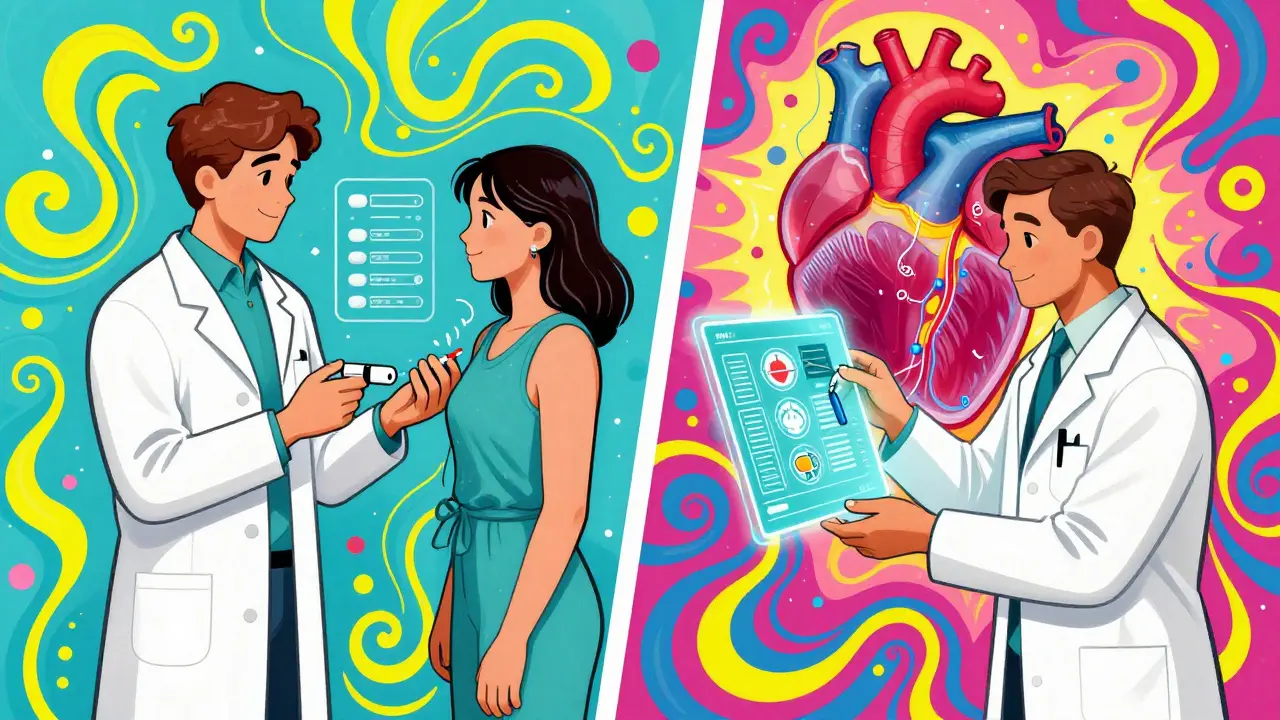
If you live in a town without a clinic, you might be able to walk into your local pharmacy and get tested for strep, start a course of antibiotics, or get your cholesterol checked - all in 20 minutes. No waiting room. No co-pay. Just a pharmacist with a stethoscope and a laptop.
If you need birth control and can’t see a gynecologist, in some states you can walk in and get it the same day. No script from a doctor needed. In others, you still need one. Know your state’s rules.
And if you’re a caregiver for an elderly parent or someone with chronic illness, know that pharmacists can now help manage multiple meds, spot dangerous interactions, and even adjust doses based on how the patient is doing. You don’t have to wait weeks for an appointment. The pharmacist is already there.
The Future Is Already Here
In 2025, 211 bills were introduced across 44 states to expand pharmacist scope. Sixteen of them passed. That’s not slow progress - that’s a revolution. The role of the pharmacist is no longer just to dispense. It’s to manage. To prevent. To treat. To be a frontline provider.
Will every state adopt full independent prescribing? Not yet. But the direction is clear. With physician shortages worsening, aging populations needing more care, and pharmacists ready to step up, the system is changing - fast. The question isn’t whether pharmacists should have more authority. It’s how quickly we’ll make sure they’re paid, supported, and integrated into the broader healthcare team.
For patients, that means better access. For the system, that means lower costs. For pharmacists, that means finally being recognized for the clinical experts they’ve always been.
Can a pharmacist change my prescription without telling my doctor?
No - not without following strict rules. In states that allow therapeutic interchange or prescription adaptation, pharmacists must notify the original prescriber after making any change. Some states require written documentation in the patient’s health record. Others require a phone call or electronic message. The goal is to keep everyone on the same page, not to bypass the doctor. Pharmacists don’t replace providers - they support them.
Do I have to accept a substitution made by my pharmacist?
Absolutely not. You always have the right to refuse. In states like Idaho, the law requires pharmacists to clearly explain the difference between the original and substituted drug and confirm you understand and agree. If you want the brand-name drug, even if it costs more, the pharmacist must fill it. Your choice matters.
Can pharmacists prescribe any medication they want?
No. Even in states with full prescribing authority, pharmacists can only prescribe for specific conditions - like allergies, contraception, smoking cessation, or minor infections. They can’t prescribe opioids for chronic pain or antibiotics for complex infections without a protocol. The list of approved drugs and conditions is set by state law or board regulations. It’s not open-ended.
Why don’t insurance companies pay pharmacists for these services?
Because most insurance plans still classify pharmacists as dispensers, not providers. They pay for the drug, not the service. That’s changing slowly. Medicare doesn’t cover most pharmacist services yet - except for flu shots and some diabetes screenings. The federal ECAPS bill aims to fix that by requiring Medicare to pay for clinical services. Private insurers will likely follow if it passes.
Are pharmacists trained enough to make these decisions?
Yes. Today’s pharmacists earn a Doctor of Pharmacy (Pharm.D.) degree, which takes six years after high school. Their training includes pharmacology, disease management, patient counseling, and clinical rotations in hospitals and clinics. Many also complete extra certifications in areas like diabetes care, anticoagulation, or immunization. They’re experts in how drugs work - not just how to count them.
What Comes Next?
The next few years will decide whether pharmacist substitution authority becomes a standard part of care - or stays a patchwork of exceptions. The federal ECAPS bill could be the turning point. If Medicare starts paying, private insurers will follow. Pharmacies will hire more clinical pharmacists. Hospitals will integrate them into care teams. Patients will get faster, cheaper care.
But it won’t happen overnight. It needs policy changes, better tech systems, and trust between professions. The work is already happening - in pharmacies in rural Kansas, urban Chicago, and suburban Atlanta. The question is whether the system will catch up.
For now, the message is simple: your pharmacist is more than a dispenser. They’re a clinical partner. And if you’re not using them for more than refills, you’re missing out.
Ryan W
January 25, 2026 AT 06:56Let’s be real - this isn’t ‘expansion of scope,’ it’s credential inflation dressed up as healthcare innovation. Pharmacists got a Pharm.D. because the profession needed to justify higher pay, not because they’re now qualified to diagnose strep throat. You don’t need six years of schooling to count pills. Now we’ve got med techs with white coats writing scripts while real physicians are burned out trying to keep up with EHRs. This is how you turn healthcare into a Walmart drive-thru.
And don’t give me that ‘access’ nonsense. If you’re in rural Kansas and can’t get a doctor, the problem isn’t the pharmacist’s authority - it’s the complete collapse of primary care infrastructure. Fix the system, don’t let pharmacy chains become de facto clinics.
Also, ‘therapeutic interchange’? That’s just code for ‘let’s swap your $400 brand-name drug for a $2 generic and call it clinical decision-making.’ Where’s the data proving outcomes aren’t worse? Nowhere. Because the corporate pharmacy lobby wrote the guidelines.
ECAPS bill? More like E-CAPSULE - a pill to swallow corporate greed wrapped in a ‘patient care’ bow.
And don’t get me started on the legal liability. If a pharmacist misjudges a renal dose and you end up in dialysis, who gets sued? The pharmacist? The pharmacy chain? The state board that greenlit this? Nobody. They’ll all hide behind ‘protocols.’
This isn’t progress. It’s liability outsourcing with a smiley face.
Karen Droege
January 26, 2026 AT 15:07OH MY GOD, I’M SO EXCITED!! 🎉
My grandma in Vancouver got her blood pressure meds adjusted by her pharmacist last month - no doctor’s visit, no 3-week wait, no $150 co-pay. Just a 15-minute chat, a quick BP check, and boom - her script was updated. She cried. I cried. The pharmacist? Just shrugged like it was Tuesday.
This is what healthcare SHOULD look like. Not a bureaucratic obstacle course. Not a game of ‘who signed what form.’ Pharmacists are the unsung heroes of the medical world - they know your meds better than your doctor does, because they’re the ones reading the interaction alerts, catching the duplicate scripts, reminding you not to take that with grapefruit juice.
And yes, they’re trained. A Pharm.D. is a clinical doctorate. They do rotations in ICUs. They interpret labs. They manage anticoagulation. They’re not ‘just counting pills’ - they’re the last line of defense before a bad reaction turns into an ER trip.
Insurance won’t pay? Then change the insurance. Medicare won’t cover it? Then burn the old rules and build new ones. This isn’t a ‘controversy’ - it’s a moral imperative. We have 68,000 pharmacies. We have a doctor shortage. We have people dying because they can’t get a refill. Do the math. Do the right thing.
Pharmacists aren’t replacing doctors. They’re saving lives while the system catches up. And I’m so damn proud of them.
Also - if you’re still mad because ‘they’re not doctors,’ maybe ask yourself why you’re mad. Is it about training? Or is it about ego?
Napoleon Huere
January 28, 2026 AT 00:34What is authority, really? Is it the power to act? Or is it the permission granted by a system that fears change?
We’ve spent centuries putting physicians on pedestals - not because they’re inherently superior, but because we needed someone to blame when things went wrong. The pharmacist? The dispenser. The technician. The servant of the prescription.
But now, the system is breaking. The doctor-patient ratio is collapsing. The cost of care is astronomical. And the pharmacist - trained, licensed, embedded in every neighborhood - is the only one left standing who can actually touch the patient without a 6-week wait.
This isn’t about expanding scope. It’s about recognizing that expertise is distributed. That knowledge isn’t monopolized by MDs. That clinical judgment can exist outside the hospital walls.
And yet… we still call it ‘substitution.’ As if the pharmacist’s decision is somehow less valid than the doctor’s. As if a dose adjustment by a Pharm.D. is a ‘swap,’ but a dose adjustment by an MD is ‘clinical management.’
Language reveals power. We call it ‘substitution’ because we’re afraid to call it what it is: prescribing.
So let’s stop pretending this is about ‘scope.’ It’s about hierarchy. And hierarchy is dying. The question isn’t whether pharmacists deserve this authority.
The question is - why did we ever deny it?
Uche Okoro
January 29, 2026 AT 01:54This is a textbook case of neoliberal healthcare privatization masquerading as ‘innovation.’
Corporate pharmacies - CVS, Walgreens - are lobbying aggressively because they’ve realized that dispensing is a low-margin business. But clinical services? That’s recurring revenue. Billing for ‘medication therapy management’? That’s a goldmine. They don’t care about patient outcomes - they care about reimbursement codes.
Meanwhile, pharmacists are being turned into unpaid frontline clinicians while corporate HQ rakes in profits. You think the pharmacist in rural Alabama gets a bonus for managing 50 diabetic patients? No. They get yelled at for taking too long at the counter.
And let’s not forget: in Nigeria, we don’t have this problem because pharmacists aren’t allowed to prescribe. Why? Because the system is too broken to trust anyone with authority. Here, you give authority to people who are already overworked, underpaid, and legally exposed - and then wonder why burnout is at 80%?
This isn’t progress. It’s exploitation dressed in scrubs.
And don’t tell me about ‘protocols.’ Protocols are written by lawyers, not clinicians. They’re designed to protect corporations, not patients.
Real healthcare reform means paying doctors more so they can stay in rural areas - not turning pharmacists into emergency fill-ins for a broken system.
shivam utkresth
January 29, 2026 AT 23:42As someone from India where pharmacists have been doing dose adjustments and chronic care follow-ups for decades - this feels like a slow-motion revelation.
Here, we don’t have ‘prescription adaptation’ laws - we have cultural norms. You walk into a pharmacy, describe your symptoms, and the pharmacist - usually a guy with 20 years of experience - says, ‘Take half a tablet of this, skip the sugar, and come back in 3 days.’ No paperwork. No EHR. Just trust.
And guess what? It works.
So when I read about U.S. pharmacists needing 17 forms to adjust a statin dose, I laugh. And cry.
The real issue isn’t training. It’s bureaucracy. We’ve turned healthcare into a legal contract instead of a human relationship.
Pharmacists in the U.S. are being held back not by lack of skill - but by fear. Fear of lawsuits. Fear of doctors. Fear of insurance companies.
What we need isn’t more laws. We need less red tape and more respect.
And yes - I’ve had my blood pressure checked at a pharmacy in Delhi while waiting for my chai. No appointment. No ID. Just a handshake and a number on a slip.
That’s healthcare. Not a corporate compliance checklist.
Joanna Domżalska
January 31, 2026 AT 19:46So let me get this straight. You want pharmacists to prescribe because doctors are in short supply? That’s like saying, ‘I don’t have a chef, so I’ll let the waiter cook the steak.’
Pharmacists don’t diagnose. They don’t do physicals. They don’t interpret EKGs. They don’t know if your chest pain is GERD or a heart attack.
And now you want them to ‘manage diabetes’? Great. Let’s also let baristas prescribe insulin. At least they know how to steam milk.
This isn’t innovation. It’s desperation. And it’s dangerous.
Every time you remove a gatekeeper, you don’t make access easier - you make mistakes more likely.
And the ‘studies show improved outcomes’? Which studies? The ones funded by CVS? The ones where the only outcome measured is ‘patient satisfaction’? Not hospitalizations. Not mortality. Not adverse events.
Also, why are we letting corporations dictate healthcare policy? Because they have lobbyists. Not because it’s good medicine.
Next up: nurses prescribing opioids. Then, Walmart greeters giving flu shots. And finally, your dog diagnosing your anxiety.
Just say no.
eric fert
February 1, 2026 AT 11:30Let’s talk about the elephant in the room that nobody wants to name: this whole movement is a direct result of the American medical system being a $4.5 trillion dumpster fire.
We have a doctor shortage? Yeah - because 70% of med students graduate with $300K in debt and choose dermatology over rural family practice because they’d rather not go broke while treating a diabetic with no insurance.
So we turn to pharmacists - the only healthcare professionals who are actually *in* the community, who see patients every day, who know their meds better than their spouses - and we say, ‘Hey, you wanna save lives? Great. Do it for free, while we make you fill 200 scripts an hour and call you a ‘clinical expert’ in a LinkedIn post.’
And then we act surprised when burnout hits 85%.
Meanwhile, the same people who scream ‘pharmacists aren’t doctors’ are the same ones who won’t pay $50 for a 15-minute telehealth visit with a real physician.
So let’s be honest: we don’t want better care.
We want cheaper care.
And we want someone else to take the blame when it goes wrong.
So we give pharmacists the authority - but not the pay.
We give them the responsibility - but not the support.
We give them the risk - but not the recognition.
And then we sit back and watch the whole thing implode like a poorly compounded pill.
It’s not a revolution.
It’s a hostage situation.
And the pharmacist? They’re the one holding the gun… and the meds… and the EHR login… and the insurance denial letter.
God bless them.
They’re doing the job of five people while we all scroll TikTok.
Curtis Younker
February 1, 2026 AT 16:50Y’ALL. I just got my flu shot, my shingles vaccine, AND my cholesterol panel done at my local CVS - all in 20 minutes. No appointment. No waiting room. Just me, the pharmacist, and a friendly ‘Hey, how’s your knee holding up?’
That’s the future. And it’s already here.
My mom’s on five meds. Last month, her pharmacist noticed a dangerous interaction between her blood thinner and a new OTC supplement she was taking. Called her doctor. Got it changed. Saved her from a bleed. No ER. No ambulance. Just a pharmacist who actually listens.
And you know what? She didn’t even know she could do that. She thought pharmacists just handed out pills.
That’s the problem - not the system. The awareness.
So if you’re still mad because ‘they’re not doctors,’ ask yourself: when was the last time your doctor asked you how you’re sleeping? Or if you’re taking your meds? Or if you can afford them?
Pharmacists do that every day.
They’re not replacing anyone.
They’re finally being allowed to DO THEIR JOB.
And honestly? I’m so tired of people who think healthcare should be complicated.
It shouldn’t be. It should be simple. Accessible. Human.
And if that means a pharmacist adjusts your BP med instead of you driving 45 minutes to a clinic… then YES. YES. YES.
Let’s make this the new normal. Not the exception.
And if you’re still resisting? Come to my local pharmacy. I’ll introduce you to my pharmacist. She’s got a PhD in pharmacology and a heart bigger than your skepticism.
Shawn Raja
February 2, 2026 AT 13:55Oh wow. So now pharmacists are doctors? Next up: baristas are surgeons, and Uber drivers are psychiatrists?
Let’s not pretend this is about ‘access.’ It’s about profit.
CVS and Walgreens didn’t spend millions lobbying because they care about your blood pressure.
They care about your insurance dollars.
And now they’ve got you convinced that a pharmacist with a stethoscope is the solution to a broken system - when the real solution is universal healthcare, better pay for primary care doctors, and funding rural clinics.
Instead, we’re turning pharmacies into mini-clinics so corporations can charge for ‘clinical services’ while still paying pharmacists $15/hour.
It’s capitalism with a white coat.
And the worst part? You’re all applauding.
You think this is empowerment?
No. It’s exploitation with a smile.
And don’t even get me started on the ‘studies show improved outcomes’ - outcomes for whom? The patient? Or the shareholder?
Meanwhile, real doctors are quitting. Real clinics are closing. And the only thing expanding is the corporate bottom line.
So yeah. Go ahead. Let the pharmacist prescribe.
But don’t be surprised when the next ‘innovation’ is an AI chatbot writing your prescriptions after you swipe your card at the kiosk.
At least the pharmacist still has a soul.
What comes after that? I’m not sure I want to know.