NTI Substitution Laws: Which States Restrict Generic Drug Swaps
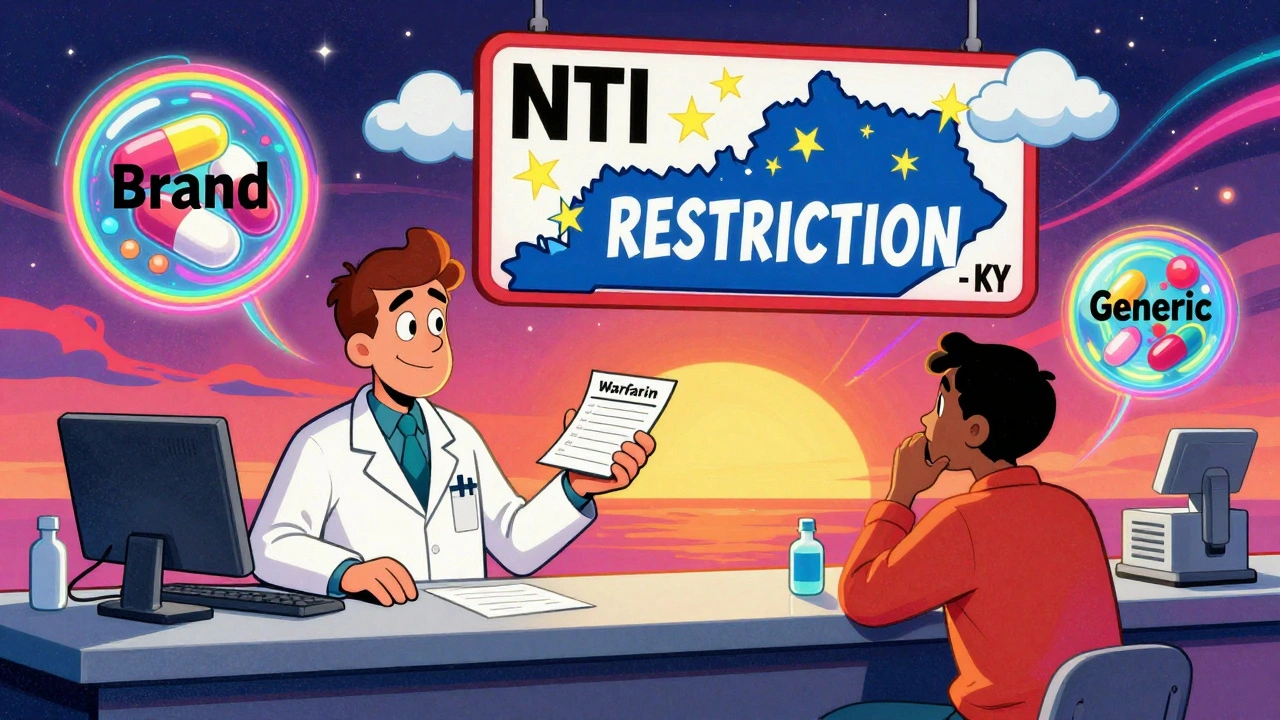
When you pick up a prescription for a drug like warfarin, levothyroxine, or phenytoin, you might assume the pharmacy can swap the brand name for a cheaper generic version. But in many states, that’s not allowed - not because the generic doesn’t work, but because of state laws designed to prevent even tiny changes in dosage. These are called NTI substitution laws, and they create a confusing patchwork across the U.S.
What Exactly Is an NTI Drug?
NTI stands for Narrow Therapeutic Index. These are medications where the difference between a safe, effective dose and a harmful or ineffective one is razor-thin. A 10% change in blood levels can mean the difference between controlling a seizure and triggering one, or between preventing a clot and causing a stroke. Examples include:- Warfarin sodium (blood thinner)
- Levothyroxine (thyroid hormone)
- Digoxin (heart medication)
- Lithium carbonate (mood stabilizer)
- Phenytoin, carbamazepine, valproate (anti-seizure drugs)
How States Differ: Three Main Rules
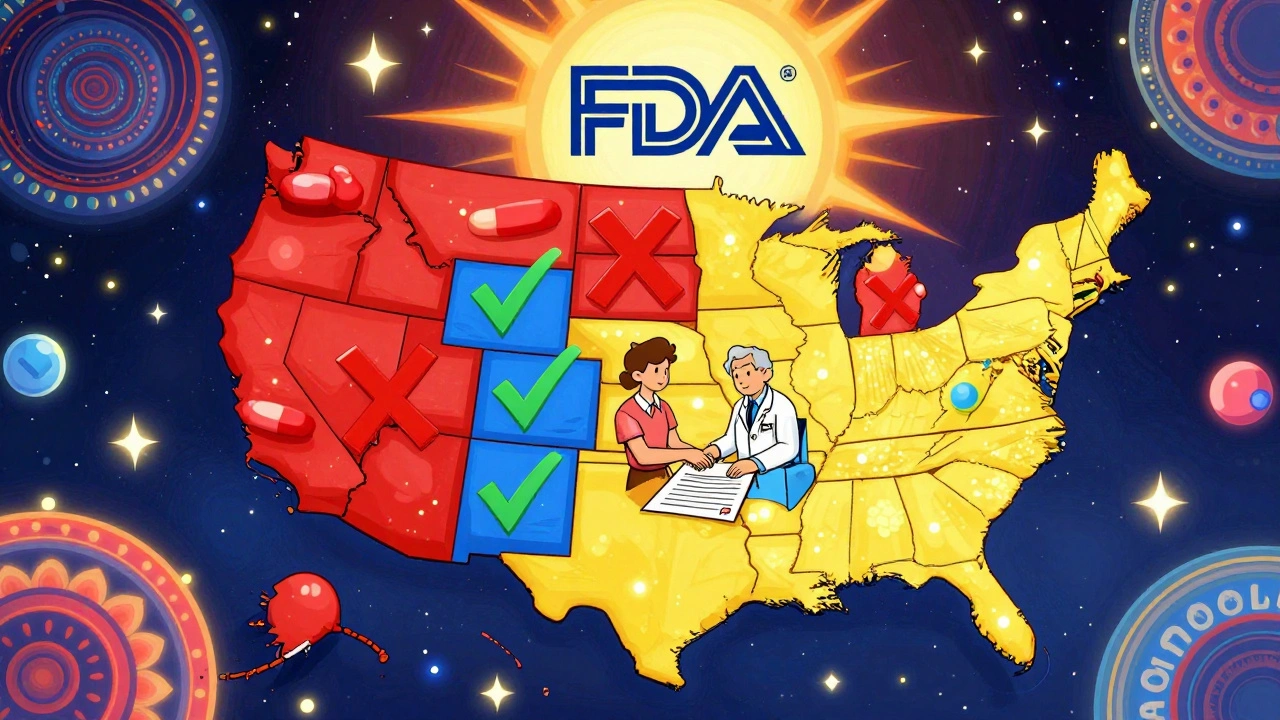
There’s no national standard. Instead, states use one of three approaches:- Carve-out bans: The drug is off-limits for substitution. Kentucky, Pennsylvania, and North Carolina maintain official lists of NTI drugs that can’t be swapped without explicit permission from the doctor.
- Dual consent: Both the prescriber and patient must give written approval before a swap. North Carolina and Connecticut require this for refills. In Connecticut, if either person objects within 14 days, the substitution is canceled.
- Notification-only: The pharmacist can substitute but must notify the doctor and patient within 72 hours. States like Maryland and Illinois use this model.
States With the Strictest Rules
Kentucky has one of the most detailed and restrictive lists. It explicitly bans substitution for:- Digoxin tablets (0.125 mg, 0.25 mg)
- Levothyroxine sodium (all strengths)
- Lithium carbonate (all strengths)
- Warfarin sodium tablets (all strengths)
States With the Loosest Rules
In California, Texas, Virginia, and a handful of others, pharmacists follow the same rules for NTI drugs as they do for antibiotics or blood pressure meds. If the generic is FDA-approved as therapeutically equivalent, it can be swapped unless the doctor writes “do not substitute.” A 2022 study found that in states like these, generic substitution rates for NTI drugs are 12.4% higher than in states with bans. That’s billions of dollars in savings - but also more work for pharmacists to track outcomes. One chain pharmacy manager in Virginia said patient complaints about generic NTI drugs were under 0.5%. That’s lower than the complaint rate for many common medications.Why the Conflict?
The FDA says all approved generics meet the same standards. But doctors and pharmacists point to real-world cases. A 2020 study of 12,345 Medicare patients found no difference in INR stability between brand and generic warfarin. But other studies show spikes in hospitalizations after switching anti-seizure drugs in elderly patients. The American College of Clinical Pharmacy supports state-level rules, saying NTI drugs have “steep dose-response curves” - small changes matter. The Generic Pharmaceutical Association argues many drugs on state lists aren’t even true NTIs. They say only 12 of the 47 drugs on state lists have solid clinical proof of a narrow therapeutic index. The result? Pharmacists spend 8.7 extra hours a month just managing NTI rules in restrictive states. That’s time not spent counseling patients or checking for drug interactions.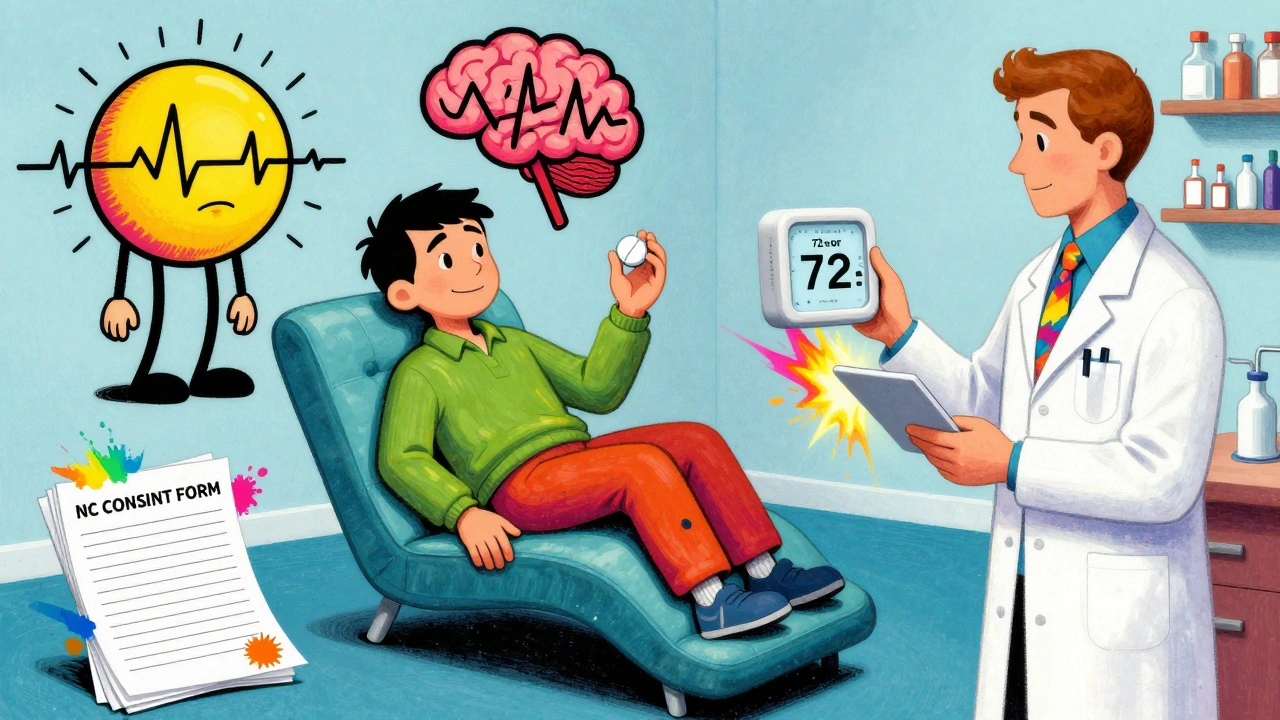
What’s Changing in 2025?
The FDA released draft guidance in 2023 suggesting a new way to define NTI drugs - based on the ratio of toxic dose to effective dose. If this becomes official, it could force states to rewrite their lists. Nine states, including New York and Ohio, are already reviewing their NTI lists using the FDA’s proposed criteria. New York’s proposed law would limit NTI designation only to drugs where the toxic-to-effective dose ratio is 2.0 or less. California passed a law in 2022 requiring its pharmacy board to base NTI designations on peer-reviewed science - not tradition. That’s a big shift. Other states may follow. Meanwhile, the Association for Accessible Medicines sued Kentucky in 2023, claiming its NTI list violates interstate commerce laws by forcing out-of-state manufacturers to comply with unique rules.What This Means for You
If you take a drug like warfarin or levothyroxine:- Check your state’s rules. Ask your pharmacist if substitution is allowed.
- If your doctor prescribes a brand-name NTI drug, ask if they’ve written “dispense as written” - that blocks automatic substitution even in permissive states.
- If you switch to a generic and feel different - fatigue, dizziness, new symptoms - tell your doctor immediately. Even if your state allows substitution, your body might not adapt.
- Keep a list of your NTI medications. If you move states, your rules change.
Bottom Line
NTI substitution laws aren’t about whether generics work. They’re about fear - fear of small changes causing big harm. Some states act on that fear. Others trust the FDA’s data. Neither side is wrong. But the inconsistency creates confusion, delays, and extra costs. The trend is moving toward science-based lists, not historical ones. But until all 50 states align, your medication safety depends on where you live.Are generic NTI drugs really as safe as brand names?
The FDA says yes - all approved generics must meet the same bioequivalence standards as brand drugs. But real-world outcomes vary. Studies show no difference in INR levels for warfarin, but some patients report seizures or mood shifts after switching anti-seizure generics. For most people, generics are fine. For a small group, even tiny differences matter. That’s why some states require extra steps.
Can my pharmacist substitute my NTI drug without telling me?
In 23 states, pharmacists can substitute without telling you - unless your doctor wrote "do not substitute." In 17 states, substitution is blocked entirely for certain drugs. In 9 states, they must get your written consent. In 11 others, they must notify you and your doctor within 72 hours. Always ask your pharmacist what the rules are in your state.
Which NTI drugs are most commonly restricted?
Warfarin, levothyroxine, lithium, digoxin, and anti-seizure drugs like phenytoin and carbamazepine are on almost every state’s restricted list. These are the drugs with the narrowest margins between safe and dangerous levels. Some states also include cyclosporine and tacrolimus - immunosuppressants used after transplants.
What should I do if I switch to a generic and feel worse?
Contact your doctor right away. Don’t assume it’s just a side effect. Even if your state allows substitution, your body might react differently to a new formulation. Your doctor can order a blood test (like an INR for warfarin or a serum level for lithium) to check if your drug levels changed. If they did, you may need to go back to the original brand.
Do insurance companies push for NTI substitutions?
Yes - generics are cheaper. Many insurers require you to try the generic first, unless your doctor opts out. But if your state bans substitution, the insurer must cover the brand name. If you’re denied coverage for a brand, ask your pharmacist to submit a prior authorization citing your state’s NTI law. Most insurers will approve it.
Francine Phillips
December 2, 2025 AT 19:59Why do we even have these laws if the FDA says generics are fine? Just let pharmacists do their job.
Katherine Gianelli
December 4, 2025 AT 18:03I get it, safety first-but when your monthly prescription jumps from $12 to $120 because of a paperwork hurdle, you start to wonder who’s really being protected. My grandma switched to generic levothyroxine and never missed a beat. She’s 82, walks 3 miles a day, and her TSH is perfect. Let’s stop treating patients like lab rats.
Albert Essel
December 5, 2025 AT 00:22The FDA's bioequivalence standards for NTI drugs are statistically robust and clinically validated. The real issue is not pharmacological equivalence but institutional inertia and liability aversion among state boards. The 12.4% higher substitution rate in permissive states correlates directly with reduced patient financial toxicity, not increased adverse events. This is a policy failure, not a clinical one.
Rashi Taliyan
December 6, 2025 AT 02:16In India, we don’t have these rules-and we use generics for everything, even for heart and epilepsy meds. My uncle takes generic phenytoin for 15 years, no issues. Why does America need so much red tape? Is it fear or profit?
Rashmin Patel
December 7, 2025 AT 09:17Let me tell you something-this whole NTI debate is being manipulated by big pharma lobbyists who want to keep brand-name drugs on the shelf. The FDA’s data is crystal clear: generics are just as safe. The fact that states like Kentucky still list levothyroxine as ‘too dangerous’ to swap? That’s not science-it’s corporate greed dressed up as caution. And guess who pays? The elderly. The uninsured. The working class. We need federal intervention, not state-by-state chaos. Also, can we PLEASE stop pretending that a 5-minute delay at the pharmacy is ‘patient safety’? That’s just bureaucratic theater. 🙄
Ignacio Pacheco
December 8, 2025 AT 16:21So let me get this straight-states ban generic swaps because of fear… but they don’t ban generic toilet paper? Interesting.
Jim Schultz
December 10, 2025 AT 12:08Wow. Just… wow. You people are so naive. You think the FDA’s approval means anything? The bioequivalence threshold for NTI drugs is 80-125%-that’s a 45% swing in blood concentration! One guy’s ‘fine’ is another guy’s ICU admission. And you wanna trust a $0.12 pill made in a factory in Mumbai with no oversight? Please. I’ve seen the reports. The lawsuits. The deaths. This isn’t about money-it’s about not killing people because someone got lazy. 🚨
Vincent Soldja
December 11, 2025 AT 09:47State laws vary. Federal guidance exists. Pharmacists are trained. Patients are informed. No further action required.
Makenzie Keely
December 13, 2025 AT 03:16As someone who grew up in rural Texas and now lives in New York, I’ve seen both sides. In Texas, my mom got her levothyroxine for $4 and never had a problem. In New York? She had to get a signed form from her doctor every time, and the pharmacist kept the paper copy for three years. Three years! For a pill. Meanwhile, the pharmacy tech was spending 20 minutes a day filing paperwork instead of answering questions. This isn’t safety-it’s a system that rewards bureaucracy over care. Let’s fix it with science, not tradition.
Joykrishna Banerjee
December 13, 2025 AT 16:26Let’s be honest-most of these state laws are relics of pre-2000 pharmacopeia. The FDA’s current standards are based on AUC and Cmax metrics derived from randomized controlled trials with >95% power. To claim that levothyroxine generics are ‘clinically distinct’ is a fallacy rooted in anecdotal cognitive bias and confirmation bias among geriatric prescribers. Furthermore, the pharmacokinetic variance between brand and generic is statistically insignificant when compared to inter-individual pharmacodynamic variability. The real problem? Physicians who refuse to update their knowledge. And yes, I’ve read the Cochrane reviews. You haven’t.
Myson Jones
December 15, 2025 AT 08:11It’s kind of beautiful, really. We’ve got a system where the science says one thing, the patients say another, the pharmacists are caught in the middle, and the politicians are too scared to change anything. Maybe the real answer isn’t more laws-but more trust. Trust in science. Trust in pharmacists. Trust in patients. We don’t need more paperwork. We need more humanity.