Medication Considerations for Vegans and Vegetarians: Hidden Animal Ingredients
Vegan Medication Checker
Check Your Medication for Animal Ingredients
Learn if your medication contains hidden animal products like gelatin, lanolin, or animal-derived hormones.
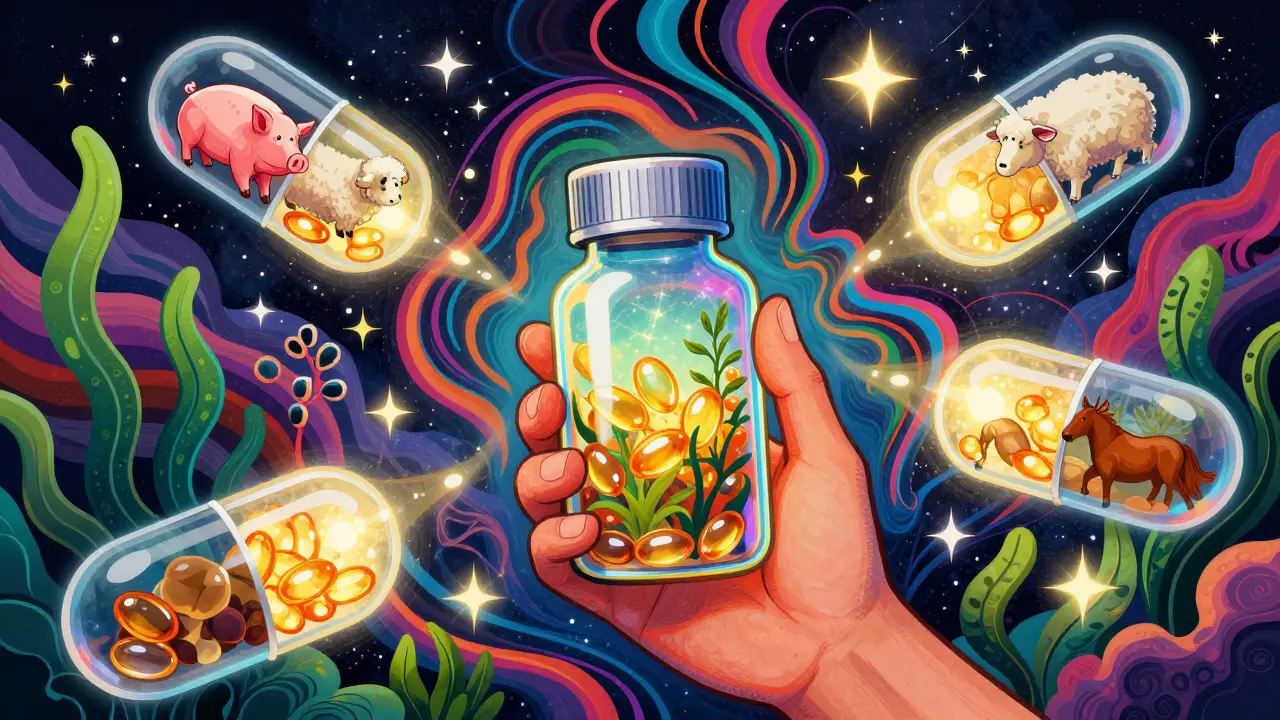
Many vegans and vegetarians assume their dietary choices extend cleanly to their medications - but that’s often not true. You might be eating plant-based, avoiding dairy, and skipping honey - yet still swallowing capsules made from pig fat, taking a vitamin D3 derived from sheep wool, or using a hormone treatment made from horse urine. The truth is, hidden animal ingredients are everywhere in pharmaceuticals, and most people have no idea.
What’s Actually in Your Pills?
It’s not just about gelatin. While gelatin - used in about 90% of capsules - is the most well-known animal-derived ingredient, it’s only the tip of the iceberg. Gelatin comes from the bones, skin, and tendons of pigs, cows, and chickens. But other common ingredients are just as surprising.Magnesium stearate, a lubricant in tablets and capsules, is made from animal fat in about 65% of cases. It’s not listed as “pig fat” on the label - it’s just “magnesium stearate.” Same with stearic acid (E570), a common additive in pills and supplements. It’s often sourced from cows, sheep, or pigs. Even glycerin, used to keep medicines moist, can come from animal fat - though plant-based versions exist.
The biggest hidden culprit? Vitamin D3. Most supplements use lanolin, which is waxy substance extracted from sheep’s wool. That’s not vegan. But here’s the twist: plant-based D3 exists. It’s made from green algae - the same source that fish use to make D3 naturally. Algae-based D3 is just as effective, more sustainable, and completely animal-free. Yet, unless you check the label, you’re probably taking the sheep version.
Medications That Shock Even Longtime Vegans
Some medications don’t just contain animal byproducts - they’re made from animal tissue itself. These aren’t fillers or coatings. They’re the active ingredients.Armour Thyroid, a common treatment for hypothyroidism, is made from dried pig thyroid glands. If you’re on thyroid meds and you’re vegan, you might be taking a drug made from pig organs. The synthetic alternative, levothyroxine, is animal-free - but many doctors still prescribe Armour because it contains both T3 and T4 hormones, while levothyroxine is just T4.
Premarin, used for menopause symptoms, comes from the urine of pregnant mares. Yes, horse urine. There are synthetic estrogen pills available, but they’re not exact copies. Many women feel the difference.
Heparin, a blood thinner, is extracted from pig intestines. It’s critical for preventing clots after surgery. No plant-based version exists yet. Same with pancrelipase (brand name Creon), used for pancreatic insufficiency - it’s made from pig pancreas. And propofol, a common anesthetic, contains egg phospholipids. If you’re allergic to eggs or vegan, this matters.
Even icosapent ethyl (Vascepa), a fish oil-based heart medication, is derived from anchovies and sardines. There’s no vegan version of this one either.
Why Don’t Labels Say This?
Food labels in the U.S. must list major allergens - including milk, eggs, and fish. But pharmaceuticals? No such rule. The FDA doesn’t require manufacturers to disclose whether ingredients come from animals. That’s why you’ll see “magnesium stearate” on the bottle - not “derived from cow fat.”A 2022 report by the Transparent Label Campaign found that over half of all supplements on the U.S. market contain at least one animal-derived ingredient. And 50% of those ingredients aren’t labeled clearly. Most consumers assume “vegetarian” or “natural” means no animals were used. It doesn’t.
Pharmaceutical companies argue that animal-derived ingredients are necessary for stability, absorption, or manufacturing. Gelatin keeps capsules from falling apart. Magnesium stearate prevents pills from sticking to machines. But that doesn’t mean plant-based alternatives don’t exist - they just aren’t used as often.
What Can You Do?
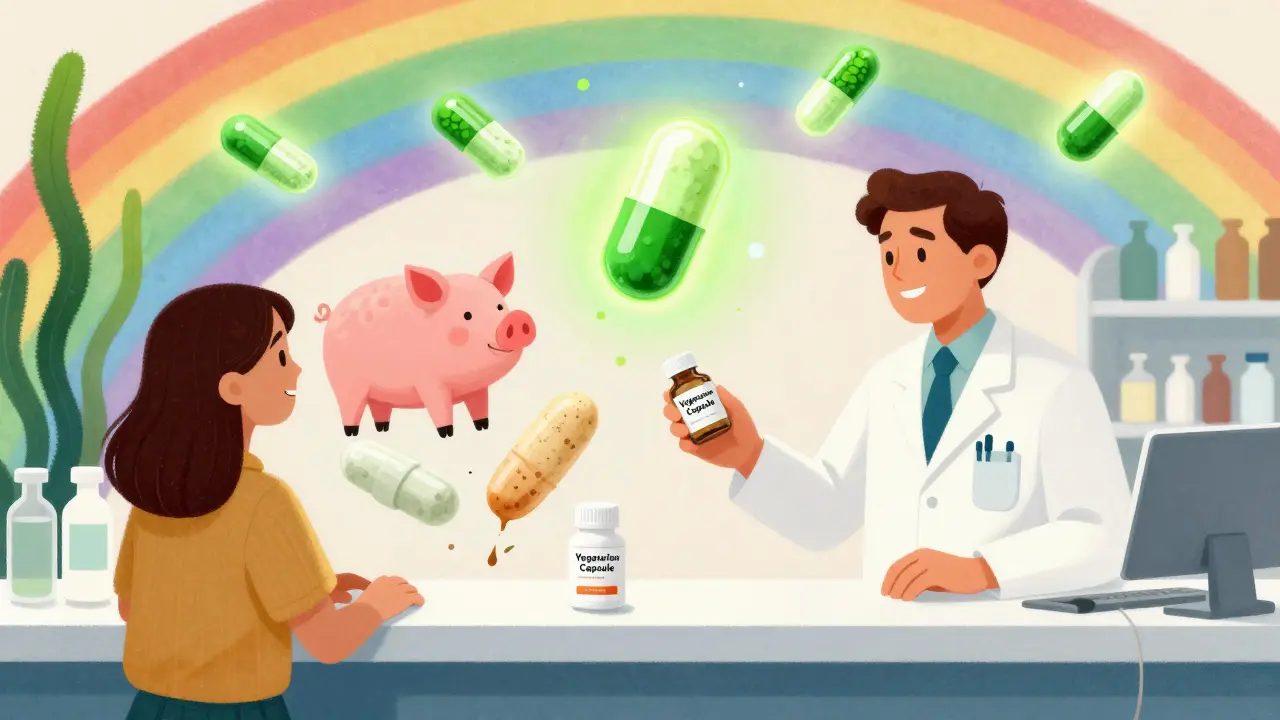
You don’t have to give up your ethics to stay healthy. Here’s how to take control:- Ask your pharmacist - not just your doctor. Pharmacists have access to ingredient databases. Ask: “Is this medication free from gelatin, magnesium stearate, lanolin, and glycerin from animal sources?”
- Check the capsule type. Hard capsules are usually gelatin. Softgels? Almost always gelatin too. Look for pills labeled “vegetarian capsule” - those are made from cellulose, not animal products.
- For Vitamin D3, look for “D3 from algae” on the label. Brands like Vitashine and Deva Nutrition offer algae-based D3. Avoid anything that says “lanolin” or “cholecalciferol from wool” - those are animal-derived.
- Use Pill Clarity. Formerly known as VeganMed, this platform now certifies medications as animal-free. Their database lists hundreds of verified options, from antibiotics to heart meds. You can search by drug name and get a clear “yes” or “no” on animal ingredients.
- Know your alternatives. For thyroid issues, ask about levothyroxine instead of Armour Thyroid. For menopause, consider synthetic estrogen or plant-based phytoestrogens from soy or palm-kernel oil. For blood thinning, ask if heparin is absolutely necessary - sometimes other anticoagulants like rivaroxaban are options.
When There’s No Vegan Option
Some medications have no plant-based substitute. Heparin, propofol, and pancrelipase are examples. In these cases, the choice isn’t black and white.For many, health comes first. If you need a medication to survive or manage a serious condition, using an animal-derived version doesn’t make you any less vegan. It’s a practical compromise - not a failure. The goal isn’t perfection. It’s awareness.
Dr. Vegan’s research shows that most people are shocked to learn what’s in their pills. Once they know, they can make informed decisions. Some switch medications. Some stick with what works. Either way, they’re no longer guessing.
What’s Changing?
The movement for transparency is growing. Pill Clarity, which rebranded from VeganMed in 2023, now serves not just vegans but anyone with allergies, religious restrictions, or ethical concerns. Pharmacists are starting to get training on this issue - the American Pharmacists Association is developing official guidelines for 2024.More companies are offering vegan alternatives. Algae-based D3 is now widely available. Cellulose capsules are becoming standard in higher-end supplements. Even some big brands are switching - slowly.
But until regulations change, the burden is on you. You can’t rely on labels. You have to ask. You have to research. You have to be your own advocate.
Final Thought: You’re Not Alone
Thousands of vegans and vegetarians contact Pill Clarity every month asking the same question: “Is this safe?” The answer isn’t always yes - but knowing the truth changes everything. You don’t have to choose between your values and your health. You just need to know what you’re taking.Are all gelatin capsules made from pigs?
Not all - but most are. Gelatin in capsules typically comes from pigs, cows, or chickens. Some brands use bovine (cow) gelatin, which is acceptable to some vegetarians but not vegans. Always check the source. Vegetarian capsules made from cellulose are a reliable vegan alternative.
Can I find vegan Vitamin D3?
Yes. Traditional Vitamin D3 comes from lanolin (sheep wool), but plant-based D3 is made from algae - the same source that fish use to produce D3 naturally. Brands like Vitashine, Deva Nutrition, and Whole Foods’ 365 brand offer algae-derived D3. Look for “D3 from algae” on the label.
Is levothyroxine vegan?
Yes. Levothyroxine (Synthroid, Tirosint, etc.) is a synthetic form of thyroid hormone and contains no animal products. It’s the go-to vegan alternative to Armour Thyroid, which is made from pig thyroid glands. While some people feel better on Armour, levothyroxine is effective for most and fully vegan.
Why don’t drug companies make more vegan options?
Cost and tradition. Animal-derived ingredients are cheaper and have been used for decades. Switching to plant-based alternatives requires reformulation, testing, and regulatory approval - which takes time and money. But as demand grows, more companies are making the change. The market for vegan medications is expanding fast.
Should I stop taking a medication if it has animal ingredients?
No - unless your doctor says it’s safe to switch. Health comes first. If a medication is essential - like heparin, propofol, or pancrelipase - using it doesn’t make you less vegan. The goal is awareness, not avoidance. Talk to your doctor about alternatives, but don’t stop a prescribed treatment without medical advice.
Srividhya Srinivasan
March 19, 2026 AT 03:03Oh. My. God. I just checked my multivitamin-yes, it’s gelatin. And my D3? Lanolin. From SHEEP WOOL. I’ve been vegan for 8 years, and I thought I was doing everything right. Turns out I’m just a walking, talking, pill-swallowing hypocrite with a side of cow fat. I’m redesigning my entire supplement regimen. This is a WAR. And I’m not backing down.
Prathamesh Ghodke
March 20, 2026 AT 02:06Hey, I get it-this stuff is wild. But don’t panic. I’m a pharmacist in Mumbai, and I’ve helped dozens of vegans switch to clean meds. Algae D3? Easy. Cellulose capsules? Available at most pharmacies. Even levothyroxine is totally vegan. You don’t need to suffer. Just ask. Pharmacists aren’t robots-they’re happy to help if you speak up.
Stephen Habegger
March 21, 2026 AT 10:54Good post. Really eye-opening. I never thought about gelatin in pills. I’ll start asking my pharmacist next time I refill. Small steps, right?
Justin Archuletta
March 21, 2026 AT 15:39Wait-so my heart med? Egg-based? That’s insane. I’m allergic to eggs. I’ve been taking this for years. I need to call my doctor. NOW. Thanks for the wake-up call!
Sanjana Rajan
March 21, 2026 AT 16:24Of course the FDA doesn’t label this. Capitalism. Big Pharma. They’re making billions off your ignorance. You think they care about your ethics? Please. They’re selling sheep grease like it’s gold. Wake up. This isn’t a health issue-it’s a corporate scam.
Kyle Young
March 22, 2026 AT 10:20It’s fascinating how deeply embedded animal-derived substances are in systems designed for human health. We’ve normalized extraction without consent-not just of animals, but of transparency from consumers. Is this not a philosophical dilemma? If we claim moral autonomy over our bodies, shouldn’t we demand autonomy over what enters them? The silence of regulation speaks volumes.
Aileen Nasywa Shabira
March 23, 2026 AT 07:55Oh wow, so now vegans are supposed to be pharmacists too? Let me guess-next you’ll tell us to check the dye in our aspirin for cochineal beetles. And what about the cow-derived lactose in your antidepressants? Oh wait-you didn’t mention that. Because this article is just fear-mongering dressed up as ‘awareness.’
Ayan Khan
March 25, 2026 AT 01:49As someone raised in a household where medicine was seen as sacred and separate from diet, this hit differently. In India, we often rely on Ayurvedic or traditional remedies-but even those sometimes use ghee or animal bones. The real issue isn’t just labels-it’s cultural blind spots. We need education, not just databases. Let’s start with pharmacy schools.
Kal Lambert
March 25, 2026 AT 01:52Just switched to Vitashine D3 last month. No issues. My doctor didn’t even blink. Ask. It’s easier than you think.
cara s
March 25, 2026 AT 11:03It is, indeed, a rather disconcerting revelation, one that, upon reflection, underscores the profound dissonance between contemporary ethical paradigms and the entrenched, often archaic, manufacturing protocols of the pharmaceutical industry. One is left to ponder not merely the presence of animal-derived excipients, but the epistemological vacuum wherein such information is systematically obscured from the lay consumer, despite the fact that the very notion of informed consent is foundational to medical ethics. One must, therefore, conclude that the current regulatory framework is not merely inadequate-it is ethically indefensible.
Amadi Kenneth
March 25, 2026 AT 22:14Wait… so is this all a CIA plot? They’ve been using animal ingredients to control our energy levels and keep us docile. You think they don’t know about algae D3? They DO. And they’re suppressing it. Same with vegan heparin. They don’t want you healthy-they want you dependent. Check the batch numbers. I bet they all trace back to the same 3 corporations. Wake up, sheeple.
Shameer Ahammad
March 27, 2026 AT 04:26It is imperative that we acknowledge the fundamental contradiction inherent in the modern vegan movement: the pursuit of ethical purity is rendered null by the silent, unregulated inclusion of animal byproducts in pharmaceuticals. One cannot claim moral superiority while ingesting gelatin capsules derived from bovine and porcine tissues under the guise of ‘convenience.’ This is not hypocrisy-it is a systemic failure of ethical consistency. The onus lies not with the manufacturer, but with the consumer to demand reform.
Manish Singh
March 27, 2026 AT 18:35I’ve been vegan for 12 years. I take levothyroxine. I use algae D3. I check every capsule. It’s not hard. It just takes 2 minutes. You don’t need to be perfect. You just need to care enough to ask. And if you’re worried about cost-most vegan alternatives are cheaper than organic kale.
Nilesh Khedekar
March 28, 2026 AT 18:01lol i thought i was being vegan but turns out my pills are made from pig butt and sheep sweat. wow. i’m gonna start a petition. #veganmeds #noanimalsinmycapsules
Robin Hall
March 30, 2026 AT 00:41The FDA’s silence on animal-derived pharmaceutical ingredients is not an oversight-it is a calculated policy decision rooted in industrial lobbying, regulatory capture, and the commodification of human health. The absence of disclosure is not an accident. It is a feature. And until the public demands transparency through legislative action-not individual research-the system will remain intact. This is not a consumer issue. It is a civil rights issue.