Long-Term Follow-Up: Sustaining Health After Switching to Generics
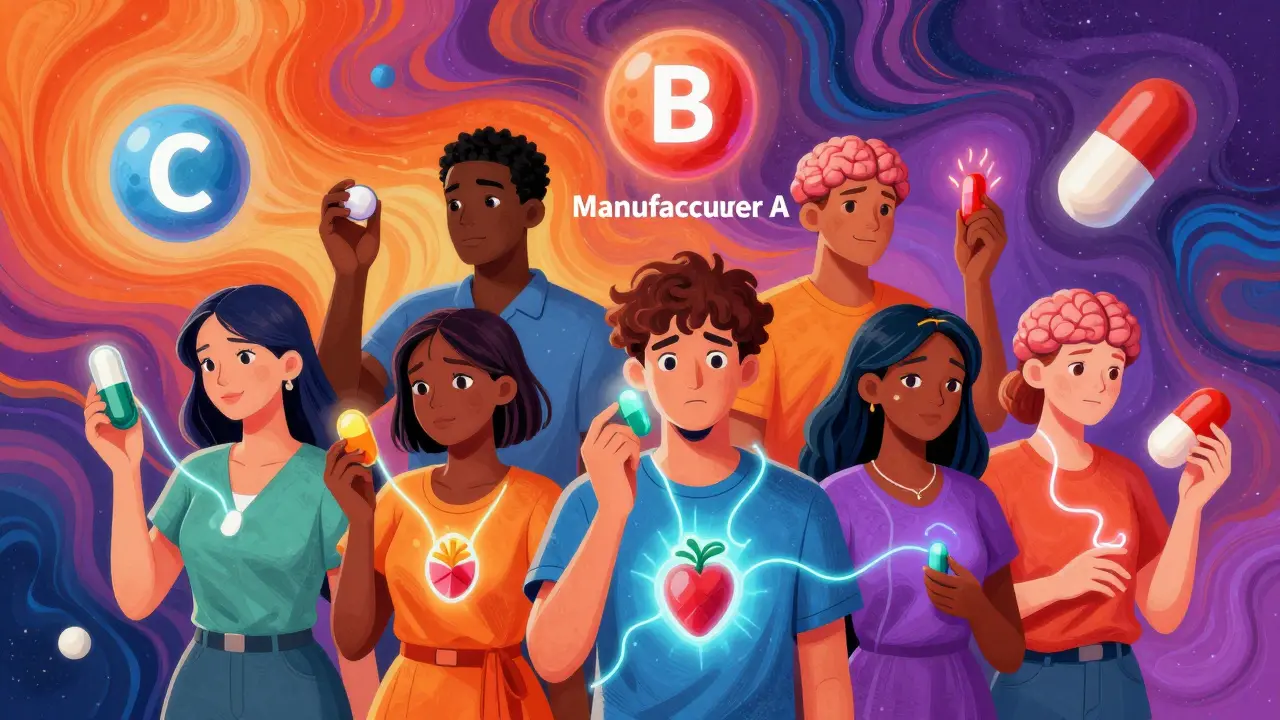
Switching from brand-name medications to generics seems like a simple win: lower costs, same active ingredients, same results. But what happens after six months? Or five years? For millions of people managing chronic conditions like high blood pressure, diabetes, or epilepsy, the story isn’t so straightforward. While generics save billions in healthcare spending, long-term health sustainability after switching isn’t guaranteed - and the risks are often hidden until it’s too late.
Why Bioequivalence Doesn’t Tell the Whole Story
The FDA requires generics to prove they’re bioequivalent to the brand-name drug. That means the amount of medicine absorbed into your bloodstream must fall between 80% and 125% of the original. Sounds precise, right? But here’s the catch: that range allows for a 45% difference in how much drug your body actually gets. For most people, that’s fine. For someone on warfarin, lithium, or levothyroxine - drugs with a narrow therapeutic index - even a small shift can mean the difference between control and crisis. A 2013 study in JAMA Internal Medicine found that changing the pill’s color or shape during a generic switch reduced patient persistence by 35% over 12 months. Why? Because people get confused. They think the new pill is weaker. Or stronger. Or contaminated. And when they’re unsure, they skip doses. That’s not a drug problem. It’s a perception problem. And perception directly impacts outcomes.The Manufacturer Matters More Than You Think
Not all generics are made the same. A 2021 study from Ohio State University published in JAMA Internal Medicine found that generics manufactured in India had 27% higher rates of severe adverse events - including hospitalizations and deaths - compared to those made in the U.S. The active ingredient? Identical. The excipients? Different. The production environment? Less regulated. The long-term impact? Unmeasured in most studies. This isn’t about quality control failures. It’s about systemic gaps. Most bioequivalence studies last 2-4 weeks. They don’t track what happens after 3, 5, or 10 years of daily use. Meanwhile, contaminants like NDMA (a probable carcinogen) have been found in some generic versions of blood pressure and diabetes drugs. These aren’t acute toxins. They’re slow burners. And their effects may only show up after years of exposure.Adherence Is the Hidden Cost of Switching
Cost savings mean nothing if you stop taking the medicine. A 2011 Health Affairs study showed that people who stuck with their brand-name statins had lower overall healthcare costs - despite paying more for the pill - because they stayed healthier. Switching to a cheaper generic might save $100 a month… but if it leads to a heart attack, the hospital bill wipes out the savings tenfold. Surveys reveal a pattern: 43% of chronic disease patients report worsening symptoms after switching to generics. 28% stop taking their meds within six months. Why? Because they feel different. Their skin breaks out. Their headaches return. Their heart races. Their doctor says, “It’s the same drug.” But the body doesn’t always believe that. One patient on PatientsLikeMe, ‘HeartWarrior42’, documented a slow decline in heart rate control after switching to generic metoprolol. After two hospitalizations, switching back to the brand-name version restored stability. The generic met the FDA’s bioequivalence standards. But it didn’t meet her standard for safety.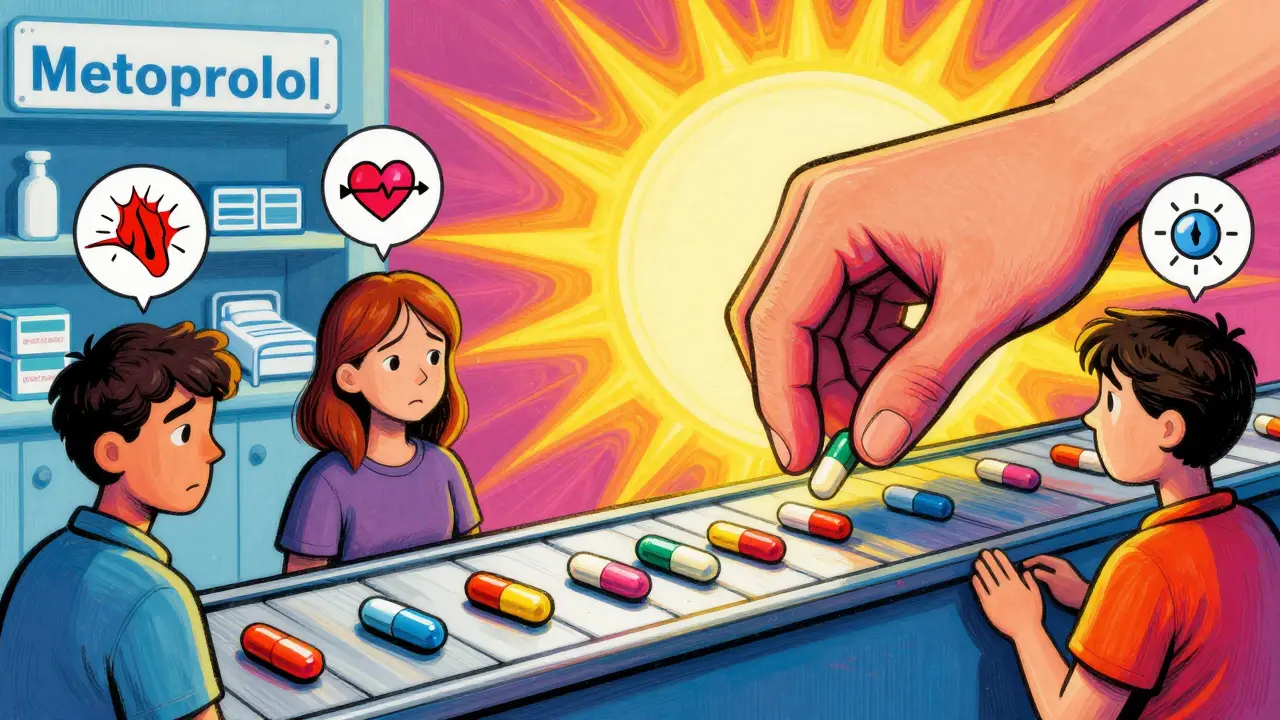
Who Gets Left Behind?
The biggest risks aren’t for healthy, young adults. They’re for older patients on multiple medications, people with limited health literacy, and those without consistent access to care. Automatic substitutions by pharmacy benefit managers (PBMs) - who change preferred generics every year - create chaos. One year you’re on a generic from Manufacturer A. The next, your refill comes from Manufacturer B. Then C. Each switch means a new pill shape, color, and coating. Each one triggers uncertainty. Each one increases the chance you’ll stop taking it. A 2022 AHRQ report found that patients who had three or more generic switches in a year saw a 40% increase in adverse events. That’s not coincidence. That’s systemic risk.What You Can Do to Protect Your Health
If you’re on a long-term medication - especially for heart disease, epilepsy, thyroid issues, or mental health - here’s what actually works:- Ask your pharmacist: Which manufacturer makes your generic? Write it down. Stick with that one.
- Don’t accept automatic switches: If your pharmacy tries to change your generic without asking, say no. You have the right to request consistency.
- Track your symptoms: Keep a simple log: energy levels, sleep, heart rate, mood. Note changes within 30 days of any switch.
- Push for documentation: Ask your doctor to note the generic manufacturer in your medical record. Most systems don’t track this - but they should.
- Know your drug class: If you’re on a narrow therapeutic index drug (warfarin, levothyroxine, phenytoin, cyclosporine), avoid multiple switches at all costs. Your doctor can write a “Do Not Substitute” note.

The System Isn’t Broken - It’s Just Blind
Regulators focus on short-term absorption. Manufacturers focus on cost. Pharmacies focus on speed. Patients focus on survival. No one is looking at the long game. The FDA’s 2023 initiative requiring 36 months of stability data for generics used in chronic conditions is a step forward. The European Union already requires 24-month post-authorization safety studies for high-volume generics. But these changes are slow. And they’re not mandatory everywhere. Meanwhile, real people are living with the consequences. A pharmacist in Ohio told me: “I’ve had patients with epilepsy who were seizure-free for five years on a generic. Then we switched manufacturers. Two weeks later, they had their first seizure in years. They went back to the old one - and never had another.” Bioequivalence is a technical standard. But health is a human experience.When Generics Work - And When They Don’t
Let’s be clear: generics save lives. Statins are the clearest example. A 2006 study found 77% adherence to generic statins versus 71% for brand-name - and an 8% drop in heart attacks and strokes. That’s huge. For diabetes, a 2022 JAMA study of over 350,000 patients showed no difference in 5-year outcomes between generic and brand-name metformin. But those are exceptions. They’re the low-hanging fruit: drugs with wide therapeutic windows, stable chemistry, and simple dosing. For the rest? The evidence is thin. Or conflicting. Or missing entirely. The truth? Generics aren’t inherently risky. But the system around them is. Automatic switches. Untracked manufacturers. No long-term monitoring. No patient education. That’s where the danger lies.What Needs to Change
We need to stop treating all generics as interchangeable. We need:- Manufacturers to label their products with unique identifiers - not just lot numbers, but permanent codes.
- EHR systems to record which generic manufacturer you’re on - not just the drug name.
- Pharmacy benefit managers to stop forcing switches every year.
- Doctors to ask: “Have you been switched? How did you feel?”
- Patients to know: You have a right to consistency.
Are all generic drugs the same?
No. While generics must contain the same active ingredient as the brand-name drug, they can differ in inactive ingredients, manufacturing processes, and pill appearance. These differences can affect how the drug is absorbed over time - especially in sensitive patients. Studies show that switching between different generic manufacturers increases the risk of adverse events.
Can switching to a generic make me sicker?
Yes, for some people. Patients on narrow therapeutic index drugs - like those for epilepsy, thyroid disorders, or heart conditions - are at higher risk. Changes in pill formulation, even if within FDA guidelines, can lead to loss of symptom control, increased side effects, or hospitalization. Reports from patients and clinicians show this pattern repeatedly.
Should I avoid generics altogether?
No. For most people, generics are safe and effective - especially for conditions like high cholesterol or high blood pressure. The key is consistency. Once you find a generic that works for you, stick with the same manufacturer. Avoid switching unless your doctor advises it.
Why do pharmacies switch my generic without telling me?
Pharmacies and pharmacy benefit managers (PBMs) are often required by insurance plans to use the lowest-cost generic available. This can mean switching manufacturers every few months. While legal, it’s not always safe - especially for chronic conditions. You have the right to request the same generic each time.
How can I find out which manufacturer makes my generic?
Check the label on your pill bottle - the manufacturer’s name is usually printed there. You can also ask your pharmacist directly. Some states require pharmacists to disclose this information upon request. Write down the name and keep a note in your phone or health journal.
Randall Walker
March 11, 2026 AT 10:04Chris Bird
March 12, 2026 AT 04:12Mike Winter
March 13, 2026 AT 14:46David L. Thomas
March 14, 2026 AT 16:04Bridgette Pulliam
March 15, 2026 AT 20:04Shourya Tanay
March 16, 2026 AT 04:28LiV Beau
March 16, 2026 AT 13:46Adam Kleinberg
March 17, 2026 AT 12:43Denise Jordan
March 19, 2026 AT 08:20Gene Forte
March 20, 2026 AT 16:00Kenneth Zieden-Weber
March 21, 2026 AT 05:57Miranda Varn-Harper
March 21, 2026 AT 22:50