Kidney Function Tests: Creatinine, GFR, and Urinalysis Explained
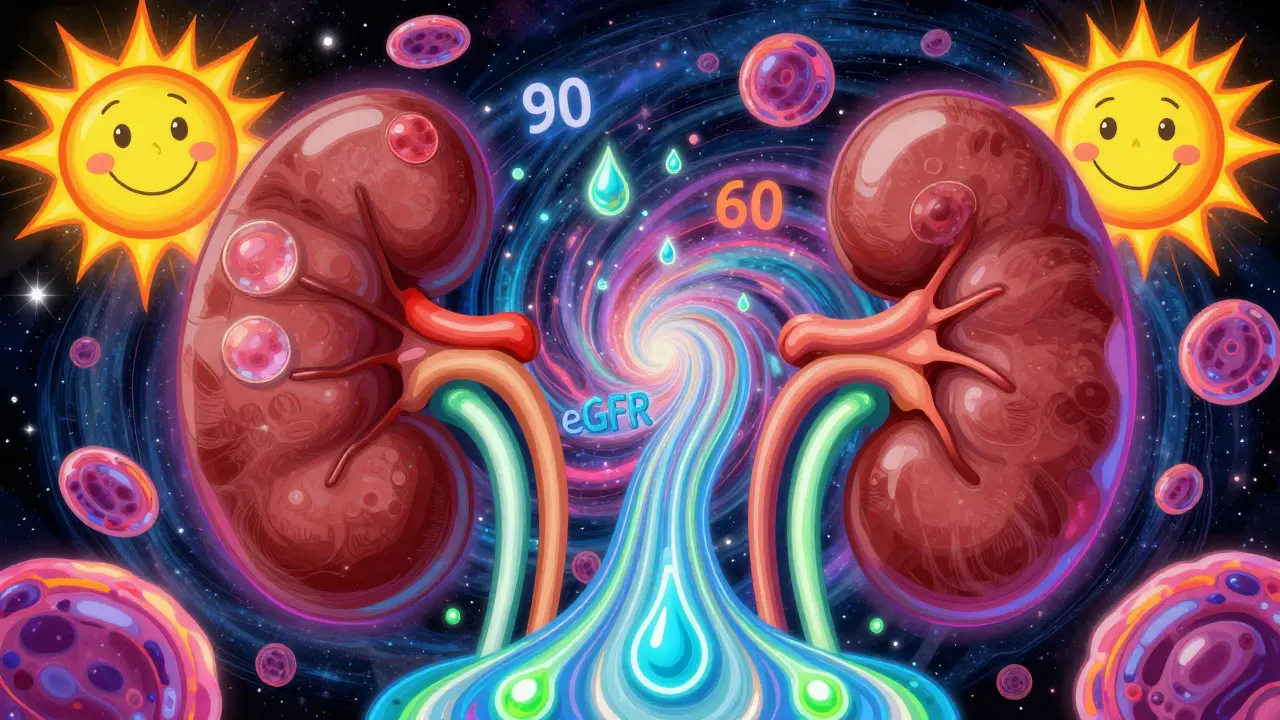
Most people don’t think about their kidneys until something goes wrong. But by then, it’s often too late. Your kidneys work nonstop-filtering about 120 to 150 quarts of blood every day to remove waste and extra fluid. When they start to slow down, you might not feel a thing. That’s why kidney function tests are so important. They’re not just for people with diabetes or high blood pressure. If you’re over 40, have a family history of kidney disease, or just want to know if your body is keeping up, these tests can give you real answers.
What Your Kidneys Are Really Doing
Your kidneys are like precision filters. They don’t just clean out toxins-they balance electrolytes, control blood pressure, make red blood cells, and keep your bones strong. When they’re working well, you don’t notice them. But if they start to fail, waste builds up slowly. That’s why early detection matters. The biggest red flags aren’t symptoms like swelling or fatigue-they’re changes in your blood and urine that show up long before you feel sick.
Three Key Tests You Need to Know
There are three main tests doctors use to check kidney health: serum creatinine, eGFR, and urinalysis. Together, they give a full picture. One alone isn’t enough.
Serum Creatinine: The Simple Blood Test
Creatinine is a waste product from your muscles. Your kidneys filter it out and send it into your urine. If your creatinine levels rise in your blood, it usually means your kidneys aren’t filtering as well as they should.
But here’s the catch: creatinine doesn’t rise until you’ve already lost about half your kidney function. That’s why it’s a late warning sign. A person with strong muscles-like an athlete or someone who lifts weights-might have naturally higher creatinine levels, even with healthy kidneys. That’s why doctors don’t look at creatinine alone. They use it to calculate something called eGFR.
eGFR: The Real Measure of Kidney Performance
eGFR stands for estimated Glomerular Filtration Rate. It’s not a direct measurement-it’s a calculation based on your creatinine level, age, sex, and sometimes race. Think of it as your kidney’s efficiency score. The higher the number, the better your kidneys are working.
The standard formula used today is called CKD-EPI. It replaced the older MDRD equation because it’s more accurate, especially for people with near-normal kidney function.
Here’s what your eGFR number means:
- 90 or above: Normal kidney function
- 60-89: Mildly reduced function-may need monitoring
- 45-59: Mild to moderate loss-talk to your doctor
- 30-44: Moderate to severe loss-likely needs treatment
- 15-29: Severe loss-high risk of complications
- Below 15: Kidney failure-dialysis or transplant may be needed
These numbers aren’t just labels. They guide treatment. If your eGFR drops below 60 for three months or more, you’re diagnosed with chronic kidney disease (CKD). That’s when lifestyle changes, medication, and regular checkups become critical.
Urinalysis: The Hidden Clue in Your Pee
One of the earliest signs of kidney damage isn’t seen in blood-it’s found in urine. When the filters in your kidneys get damaged, protein-especially albumin-leaks out. This is called proteinuria.
Doctors don’t use old-school dipstick tests anymore. They rely on the Albumin-to-Creatinine Ratio (ACR). It’s a simple urine test that measures how much albumin is in your urine compared to creatinine. This gives a precise number, not just a color change.
Here’s what ACR levels mean:
- Less than 3 mg/mmol: Normal
- 3-70 mg/mmol: Early kidney damage-needs follow-up
- Over 70 mg/mmol: Significant protein loss-requires action
If your ACR is in the 3-70 range, your doctor will ask you to repeat the test. One high result could be from dehydration, infection, or even a hard workout. Two or three high results over time confirm kidney damage.
Some people also get a 24-hour urine collection. This measures total protein, sodium, potassium, and other substances over a full day. It’s more accurate but harder to do at home. Most doctors start with ACR because it’s easier and just as effective.
Who Should Get Tested and How Often?
You don’t need to wait for symptoms. If you fall into any of these groups, get tested at least once a year:
- Diabetes (type 1 or type 2)
- High blood pressure
- Heart disease
- Obesity
- Family history of kidney failure
- Age over 60
- History of acute kidney injury
Even if you’re healthy, a basic metabolic panel (which includes creatinine and eGFR) should be part of your annual checkup. The CDC recommends it for everyone over 40. It’s quick, cheap, and could save your life.
When Creatinine Isn’t Enough
There are times when creatinine-based eGFR doesn’t tell the whole story. For example:
- Very muscular people
- Very thin or elderly people
- Pregnant women
- People on extreme diets
In these cases, doctors may order a cystatin C test. It’s another blood marker that’s less affected by muscle mass. Some labs now calculate eGFR using both creatinine and cystatin C together-this gives the most accurate result.
If you’ve been told your creatinine is normal but your doctor still suspects kidney issues, ask about cystatin C. It’s not always covered by insurance, but it’s worth it if you’re in a gray zone.
What Happens After the Test?
Getting the results is just the first step. What you do next matters more.
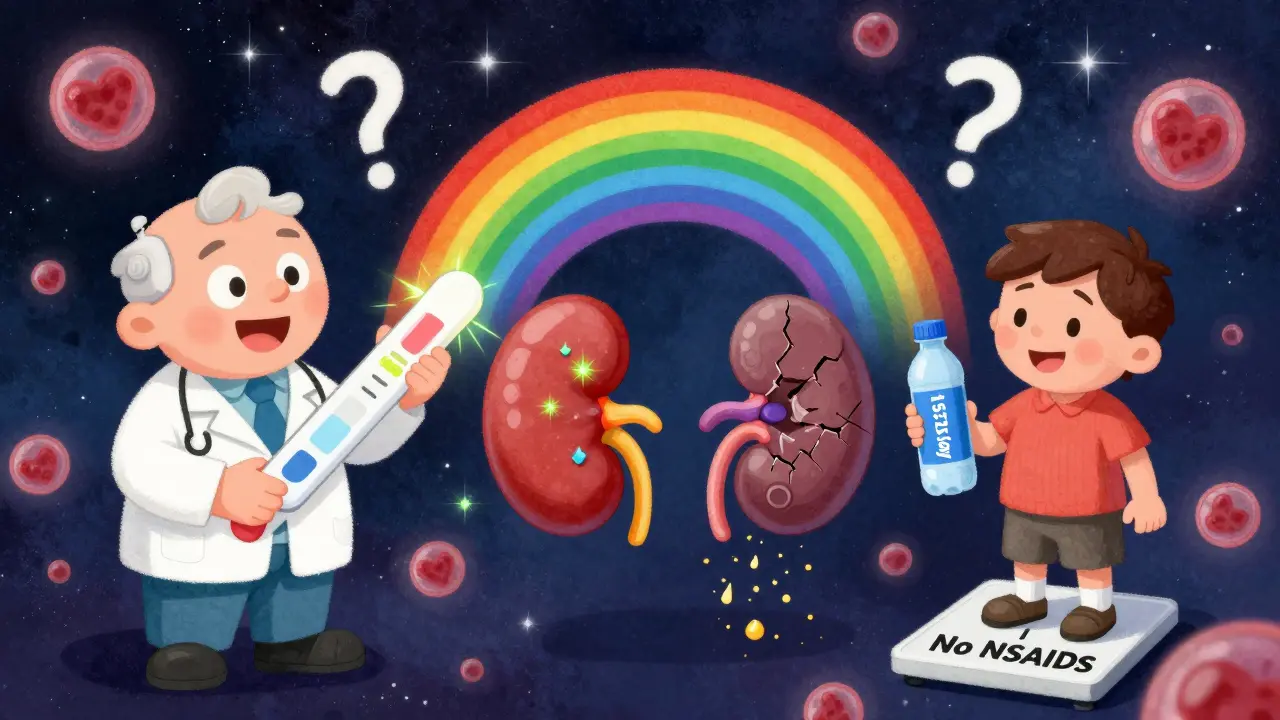
If your eGFR is normal and your ACR is low? Great. Keep doing what you’re doing. Stay active, eat less salt, drink water, and avoid over-the-counter painkillers like ibuprofen every day.
If your eGFR is between 60 and 89 and your ACR is slightly high? You’re in early-stage kidney disease. That’s not a death sentence-it’s a wake-up call. Your doctor might recommend:
- Controlling blood pressure (target under 130/80)
- Managing blood sugar if you’re diabetic
- Starting an ACE inhibitor or ARB medication-these drugs protect kidneys even if your blood pressure is normal
- Reducing protein intake slightly (but not cutting it out)
If your eGFR is below 60? You’ll likely be referred to a nephrologist. They’ll run more tests, check for underlying causes, and help you plan long-term care.
Common Myths About Kidney Tests
There’s a lot of misinformation out there. Here are three big ones:
Myth 1: “I feel fine, so my kidneys must be okay.”
False. Kidney disease is silent until it’s advanced. By the time you feel tired, swollen, or nauseous, you may have lost 70-80% of function.
Myth 2: “Drinking lots of water fixes everything.”
Hydration helps, but it won’t reverse damage. If your kidneys are already failing, drinking more water won’t bring them back. It might even cause problems if you have advanced disease.
Myth 3: “Only older people get kidney disease.”
Not true. Type 2 diabetes is rising fast in younger adults-and it’s the leading cause of kidney failure. People in their 30s and 40s are being diagnosed with CKD more than ever.

What You Can Do Right Now
You don’t need to wait for your next doctor’s visit to protect your kidneys. Here’s what works:
- Check your blood pressure monthly if you’re at risk
- Keep your HbA1c under 7% if you have diabetes
- Avoid NSAIDs (ibuprofen, naproxen) unless prescribed
- Drink water-aim for 1.5 to 2 liters a day
- Limit processed foods, salt, and sugary drinks
- Don’t smoke
Small changes add up. A study from the UK Kidney Association showed that people who controlled their blood pressure and cut salt reduced their risk of kidney failure by nearly 40%.
Final Thought: Don’t Wait for Symptoms
Kidney disease doesn’t shout. It whispers. And if you’re not listening, it won’t wait.
One blood test and one urine test can tell you more than years of feeling “fine.” If you’ve never had your eGFR and ACR checked, ask your doctor today. It takes less than five minutes. And if you’re over 40, diabetic, or hypertensive-it could be the most important thing you do this year.
What does a high creatinine level mean?
A high creatinine level usually means your kidneys aren’t filtering waste as well as they should. But it’s not always a sign of disease. Athletes, people with high muscle mass, or those who eat a lot of meat can have naturally higher levels. Doctors look at creatinine along with eGFR to get the full picture.
Can I check my kidney function at home?
You can’t accurately test eGFR or ACR at home. Some urine dipstick kits are sold online, but they’re unreliable for detecting early kidney damage. The only way to get accurate results is through a lab test ordered by your doctor. Home monitors for blood pressure or blood sugar are useful, but not for kidney function.
Is eGFR the same as GFR?
No. GFR (Glomerular Filtration Rate) is the actual rate your kidneys filter blood, measured with a complex procedure involving injections and timed urine collection. eGFR (estimated GFR) is a calculation based on your creatinine, age, sex, and sometimes race. It’s not perfect, but it’s accurate enough for routine use and much easier to do.
Why do I need both a blood test and a urine test?
Blood tests (like creatinine and eGFR) tell you how well your kidneys are filtering. Urine tests (like ACR) show if there’s damage to the filters themselves. You can have normal eGFR but high ACR-that means early damage. Or you can have low eGFR but normal ACR-that might mean another issue, like reduced blood flow. Together, they give the full story.
Can kidney damage be reversed?
If caught early-especially in stages 1 or 2-yes, some damage can be slowed or even reversed. Controlling blood pressure, managing diabetes, and avoiding kidney-toxic drugs can help your kidneys recover some function. But once you reach stage 3 or higher, the goal shifts to preventing further decline. You can’t grow new kidney cells, but you can protect the ones you have.
Next Steps if You’re Concerned
If you’ve never had kidney tests, make an appointment. Ask for a basic metabolic panel and a urine ACR test. Don’t wait for symptoms. If you already have a diagnosis, stick to your plan. Take your meds. Track your numbers. Eat better. Move more. Kidney disease isn’t a sentence-it’s a condition you can manage. And the sooner you act, the better your future looks.
Marie Mee
December 16, 2025 AT 12:11So you're telling me my kidneys are slowly dying and I didn't even notice? I thought I was just tired from scrolling TikTok all night
Josh Potter
December 16, 2025 AT 23:37Bro I got my bloodwork back last week and my eGFR was 89 and I was like oh cool I'm basically a superhero but then I saw the ACR was 42 and now I'm Googling 'can you die from too much protein powder' at 2am
Philippa Skiadopoulou
December 18, 2025 AT 11:08The CKD-EPI formula's superiority over MDRD is well-documented in nephrology literature. However, race-adjusted eGFR remains contentious. Many institutions are moving toward race-neutral equations to avoid perpetuating health disparities. Cystatin C is underutilized but increasingly recommended in borderline cases.
Jigar shah
December 20, 2025 AT 08:23Interesting breakdown. I’ve seen patients with normal creatinine but elevated ACR-early glomerular damage often precedes functional decline. It’s crucial to emphasize that ACR should be repeated, not interpreted from a single result. Dehydration and UTIs can cause transient spikes. Consistency matters more than a single number.
Anna Giakoumakatou
December 21, 2025 AT 00:15Oh wow. So after spending 40 years eating processed food, drinking soda like it’s oxygen, and popping ibuprofen like M&Ms, I’m supposed to be grateful that my kidneys are whispering before they scream? How poetic. How existential. How… *dramatically underfunded* in public health. I feel seen. And also slightly guilty. Like a child who just found out their pet goldfish died because they forgot to feed it for six months.
But seriously, why is this information tucked inside a 5,000-word blog post instead of being plastered on every pharmacy shelf next to the aspirin? We know sugar kills. We know salt kills. We know NSAIDs kill. Yet we treat kidneys like they’re optional accessories, not the silent, overworked janitors of our entire biological ecosystem.
And don’t even get me started on the myth that ‘drinking water fixes everything.’ That’s like saying ‘if you just smile more, your car won’t break down.’ No. The engine is rusting. The oil is sludge. You don’t fix that with a bottle of Fiji.
I’m not saying we need to panic. I’m saying we need to stop pretending we’re invincible because we don’t feel pain. Pain is the last thing to show up. The first sign is always a number on a page that no one checks because ‘I feel fine.’
And yes, I’m the guy who Googled ‘can you get kidney disease from drinking too much kombucha’ last week. I’m not proud. But I’m alive. And now I’m getting tested.
Kaylee Esdale
December 22, 2025 AT 03:23My grandma had kidney issues and she never complained. She just drank her green tea and walked every morning. Never took meds unless she had to. I’m 32 and I just got my first eGFR test-92, ACR 2.1. Felt like a win. Small habits matter more than big fixes. Water, sleep, less salt. That’s it. No magic pills.
Meghan O'Shaughnessy
December 23, 2025 AT 00:03I’m from India and we’ve got this whole culture of herbal teas and turmeric milk for everything. But I never realized kidney health was even a thing until my cousin, 38, got diagnosed with CKD. Turns out, his dad had it too. No one talked about it. No one tested. We just thought he was ‘tired from work.’ Now we all get checked yearly. It’s not about fear. It’s about family.
Kent Peterson
December 24, 2025 AT 09:44Okay, but who actually believes this stuff? I mean, the CDC recommends this for everyone over 40? That’s a government ploy to get you to visit your doctor more often so they can sell you more pills. I’ve got a 94 eGFR. I’m 42. I lift weights. I eat steak. I don’t need some lab tech in a white coat telling me I’m ‘at risk.’ I’m American. We don’t get sick-we just get stronger.
And don’t even get me started on ‘cystatin C.’ That’s just another expensive test so your insurance company can charge you more. If your creatinine’s fine, you’re fine. End of story.
Also, why is everyone so obsessed with ‘proteinuria’? My pee is yellow. That’s normal. If it turns clear, I’m hydrating. If it turns dark, I’m dehydrated. That’s all I need to know. Science is overcomplicating life.
Linda Caldwell
December 26, 2025 AT 09:10Just got my ACR back-4.7. Not bad, right? I’m 45, vegan, walk 8K steps a day, and I didn’t even know I was at risk. This post saved me from ignoring it. I’m not scared. I’m motivated. One test. One conversation. One chance to do better. You don’t need to be perfect. You just need to care enough to check. Start today. Your future self will thank you.
CAROL MUTISO
December 26, 2025 AT 16:28Interesting how we treat kidneys like they’re invisible until they break. Like they’re the quiet roommate who never complains until the apartment floods. We celebrate our hearts, our lungs, our brains-but kidneys? They’re the basement. No fanfare. No Instagram posts. Just… filtering. All day. Every day. For 70 years. And we wonder why they give up.
Maybe the real problem isn’t the tests. It’s that we’ve been trained to ignore the quiet things. The slow leaks. The whispering systems. We want drama. We want pain. We want a siren. But kidneys? They don’t scream. They just… stop.
So let’s stop waiting for the scream. Let’s start listening to the silence.