Irritable Bowel Syndrome: Gut-Brain Axis and Symptom Relief
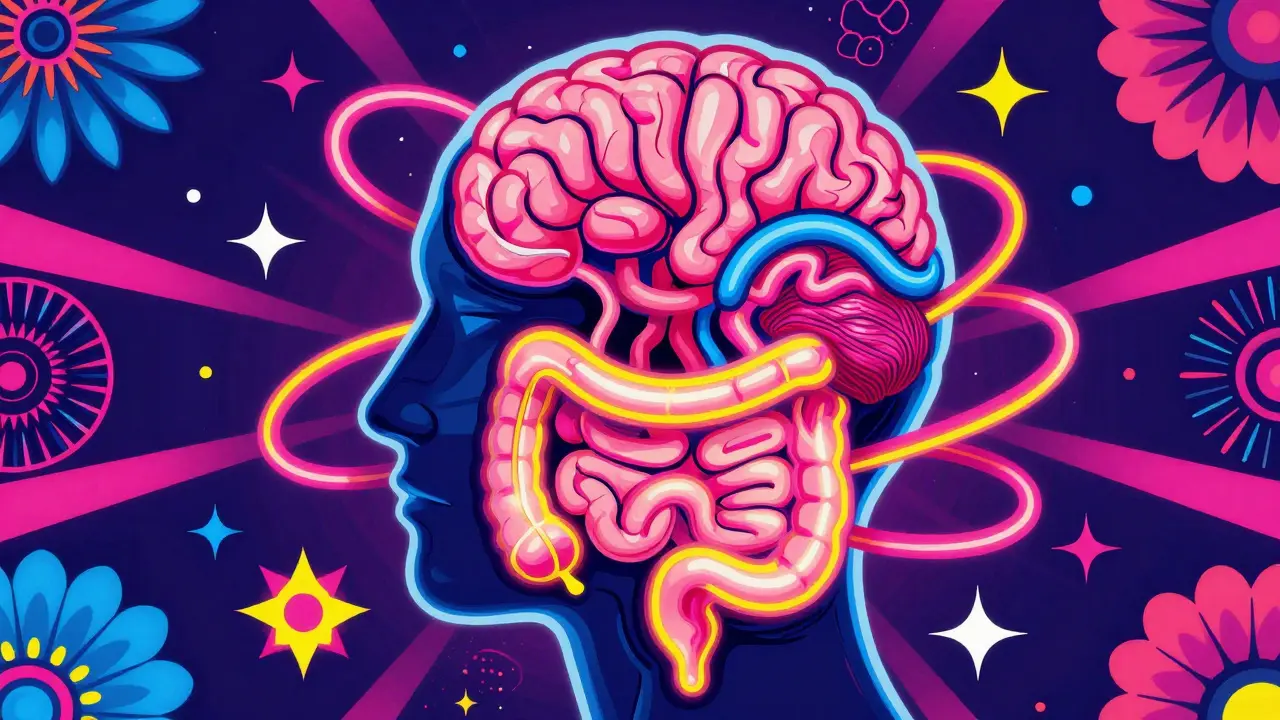
For decades, doctors told us that Irritable Bowel Syndrome is a functional gastrointestinal disorder characterized by chronic abdominal pain and altered bowel habits without visible structural damage. Also known as IBS, it affects between 5% and 10% of the global population. But if you’ve lived with IBS, you know the old explanation didn’t quite fit. The pain wasn’t just in your belly; it felt like it was everywhere. You might have noticed that stress made symptoms worse, or that anxiety seemed to trigger a flare-up before you even ate anything wrong.
The medical community finally caught up to what patients have known for years: IBS is not just a gut problem. It is a disorder of the gut-brain axis is the bidirectional communication network linking the emotional and cognitive centers of the brain with peripheral intestinal functions. This complex system involves the enteric nervous system, the central nervous system, and the hypothalamo-pituitary-adrenal axis. When this communication line gets staticky, your brain misinterprets normal digestive signals as pain, and your gut reacts to stress by speeding up or slowing down motility. Understanding this connection is the key to finding real relief.
How the Gut-Brain Axis Works in IBS
To fix the problem, we first need to understand the machinery. The gut-brain axis operates through three main highways: neural pathways (primarily the vagus nerve), endocrine signaling (hormones), and neuroimmune pathways (immune cell mediators). In a healthy person, these systems work in harmony to regulate digestion, appetite, and mood. In someone with IBS, this harmony is disrupted.
Neuroimaging studies have revealed concrete changes in the brains of IBS patients. Research published in Frontiers in Endocrinology showed that people with diarrhea-predominant IBS (IBS-D) have increased cortical thickness in areas responsible for sensation, while those with constipation-predominant IBS (IBS-C) show decreased thickness in regions linked to emotional regulation. This isn't "all in your head" in the dismissive sense; it’s physical evidence that your brain’s wiring has adapted to chronic gut distress.
Then there’s serotonin. About 95% of the body’s serotonin is produced in the gut, not the brain. Serotonin helps control bowel movements. Studies show that patients with IBS-D have significantly higher levels of mucosal serotonin compared to healthy controls, which pushes food through too fast. Conversely, IBS-C patients often have reduced serotonin availability, leading to sluggish motility. This chemical imbalance explains why standard antidepressants, which affect serotonin levels, sometimes help IBS symptoms-they’re actually rebalancing gut chemistry, not just treating depression.
Why Standard Treatments Often Fail
If you’ve been diagnosed with IBS, you’ve probably tried a revolving door of medications. Loperamide for diarrhea, antispasmodics for cramping, laxatives for constipation. These treat the symptoms, but they ignore the root cause: the faulty communication between your gut and brain.
Data from patient communities highlights this frustration. A survey on MyIBSTeam found that 63% of users reported significant side effects from traditional medications, and 47% stopped taking them within three months. Why? Because suppressing one symptom often worsens another. If you slow down the gut to stop diarrhea, you might get bloating and constipation. If you speed it up, you might trigger urgency and pain.
The American College of Gastroenterology now emphasizes that IBS should be viewed as a disorder of brain-gut-microbiome interactions. This shift in perspective is crucial. It means effective treatment must target the entire system, not just the intestines. Ignoring the brain’s role in amplifying pain signals is like trying to fix a computer crash by only cleaning the keyboard.
Dietary Interventions: The Low-FODMAP Approach
When it comes to diet, the low-FODMAP diet is an elimination diet that restricts fermentable oligosaccharides, disaccharides, monosaccharides, and polyols, which are poorly absorbed carbohydrates that can trigger IBS symptoms. This isn’t just a fad; it’s backed by robust clinical data. Randomized controlled trials show that 50-76% of patients experience significant symptom improvement.
But how does it work? FODMAPs are short-chain carbohydrates that our bodies struggle to absorb. When they sit in the gut, bacteria ferment them rapidly, producing gas and drawing water into the intestine. This causes luminal distension (stretching) and osmotic activity. For a healthy gut, this is manageable. For an IBS gut, which is hypersensitive due to gut-brain axis dysfunction, this stretching triggers severe pain and urgency.
Implementing this diet requires care. It’s not meant to be permanent. The process involves three phases:
- Elimination: Strictly avoid high-FODMAP foods for 4-6 weeks. This includes onions, garlic, wheat, certain fruits, and dairy with lactose.
- Reintroduction: Systematically add back food groups to identify specific triggers. You might tolerate apples but not pears.
- Personalization: Create a long-term diet that avoids only your specific triggers, allowing you to enjoy a varied and nutritious lifestyle.
The challenge? It’s hard work. Sixty-five percent of users find the elimination phase difficult to maintain. Working with a registered dietitian is highly recommended to ensure nutritional adequacy and prevent unnecessary restriction.
Neuromodulation: Calming the Nerves
If diet addresses the fuel, neuromodulation addresses the engine. Since the gut-brain axis involves nerve signaling, techniques that calm the nervous system can dramatically reduce symptoms.
Gut-directed hypnotherapy is a specialized form of therapy that uses guided relaxation and suggestion to alter the brain's perception of gut signals and reduce visceral hypersensitivity. This might sound unconventional, but the data is striking. Randomized controlled trials show response rates of 70-80%, significantly outperforming standard medical care (35-40%). The effects are also sustained, with many patients maintaining relief six months after treatment ends.
Hypnotherapy works by retraining the brain’s salience network-the part that decides which bodily sensations deserve attention. By reducing the "volume" of pain signals sent from the gut, the brain stops interpreting normal digestion as a threat. While access can be limited (only about one certified practitioner per 500,000 people in rural areas), digital platforms are making this more accessible.
Another emerging tool is transcutaneous vagus nerve stimulation (tVNS). This non-invasive technique stimulates the vagus nerve through the ear or neck, helping to regulate inflammation and motility. Pilot studies show a 45-55% improvement in abdominal pain scores. As research continues, devices like these could become standard home-care tools for IBS management.
Pharmacological Options Targeting the Axis
Medications have evolved beyond simple symptom suppressors. Newer drugs specifically target the gut-brain axis mechanisms.
| Drug Class | Example Medication | Target Subtype | Efficacy Rate | Key Considerations |
|---|---|---|---|---|
| 5-HT3 Antagonist | Alosetron | IBS-D (Women) | 50-60% | FDA-approved with REMS due to ischemic colitis risk |
| 5-HT4 Agonist | Prucalopride | IBS-C | 45-55% | Improves constipation; may cause nausea |
| S1P Receptor Modulator | Etrasimod | IBS-D | 52% | Phase III results show significant improvement over placebo |
These medications work by modulating serotonin receptors in the gut. Alosetron blocks serotonin receptors to slow down motility in IBS-D, while prucalopride stimulates them to speed things up in IBS-C. Etrasimod, a newer option, modulates immune cells in the gut lining, reducing inflammation and pain signaling. These aren’t cures, but for many, they provide the stability needed to engage in other therapies like diet and hypnotherapy.
Mental Health and Stress Management
You cannot separate IBS from mental health. Approximately 60-70% of IBS patients experience psychiatric comorbidities, particularly anxiety and depression. This isn’t just because living with chronic pain is stressful; it’s because the same neurotransmitters involved in mood regulation (serotonin, GABA) are also critical for gut function.
Cognitive Behavioral Therapy (CBT) tailored for IBS has shown strong results. It helps patients break the cycle of fear-avoidance behavior-where you avoid eating or social situations due to fear of symptoms, which increases anxiety and worsens symptoms. By changing thought patterns around bodily sensations, CBT reduces the brain’s alarm response.
Simple daily practices also matter. Mindfulness meditation, deep breathing exercises, and regular physical activity all help regulate the hypothalamo-pituitary-adrenal (HPA) axis. Lowering cortisol levels reduces gut inflammation and improves motility. Think of stress management not as a luxury, but as a core component of your treatment plan.
Future Directions: Personalized Medicine
The future of IBS treatment lies in personalization. The NIH’s Microbiome-Gut-Brain Consortium is funding research to develop algorithms based on individual gut-brain profiles. Imagine a test that analyzes your microbiome, neurotransmitter levels, and genetic markers to predict which therapy will work best for you.
Biomarker panels like VisceralSense™ are already emerging, measuring microbial metabolites to predict treatment response with 85% accuracy. This moves us away from trial-and-error prescribing toward precision medicine. As these tools become widely available, patients will spend less time suffering through ineffective treatments and more time finding relief.
The gut-brain axis framework transforms IBS from a mysterious, frustrating condition into a understandable, treatable disorder. By addressing the mind, the gut, and the microbes together, we can finally offer hope for lasting symptom relief.
Is IBS caused by stress?
Stress doesn't cause IBS directly, but it plays a major role in triggering and worsening symptoms. The gut-brain axis links emotional centers in the brain to gut function. High stress activates the HPA axis, releasing hormones that increase gut sensitivity and alter motility. Managing stress is therefore a critical part of symptom control.
How long does the low-FODMAP diet take to work?
Most people notice improvements within 2-4 weeks of strictly following the elimination phase. However, the full process-including reintroduction and personalization-takes 8-12 weeks. It is not a quick fix but a diagnostic tool to identify specific triggers.
Can hypnotherapy really cure IBS?
Hypnotherapy doesn't "cure" IBS in the sense of eliminating the underlying physiology, but it can lead to long-term remission. Studies show 70-80% of patients respond well, with benefits lasting months or years after treatment ends. It works by retraining the brain's perception of pain signals.
What is the difference between IBS-D and IBS-C?
IBS-D stands for diarrhea-predominant IBS, where loose or watery stools occur at least 25% of the time. IBS-C stands for constipation-predominant IBS, where hard or lumpy stools occur at least 25% of the time. Both involve pain and altered motility, but the underlying serotonin dynamics and treatment approaches differ.
Are probiotics effective for IBS?
Some specific strains, like Bifidobacterium infantis 35624, show modest benefit (30-40% improvement) in clinical trials. However, probiotics are not a universal solution. Effects vary greatly by individual and strain. They are generally safe but should be used alongside other evidence-based therapies.