Infant Medication Safety: Drops, Concentrations, and Dosage Guide

Imagine it’s 2 AM. Your baby is crying, feverish, and uncomfortable. You reach for the liquid medication, grab a spoon from the kitchen drawer, and pour in what looks like the right amount. It feels like you’re helping, but that single action might be one of the most dangerous moments in your child’s life. Medication errors are not just minor mistakes; they are leading causes of emergency room visits for infants under one year old. In fact, data from the American Association of Poison Control Centers shows that roughly 50,000 children under five visit emergency departments annually due to medication issues, with babies accounting for nearly a quarter of those cases. The gap between intent and outcome is often measured in milliliters-and sometimes, those tiny differences mean the difference between relief and respiratory depression.
Why Infant Dosing Is So Dangerous
The primary reason infants are at such high risk isn’t just their small size; it’s the complexity of the formulations available. For years, parents faced a confusing array of options. You might have had infant acetaminophen drops that were highly concentrated (80 mg per 1 mL) sitting next to children’s acetaminophen suspension (160 mg per 5 mL). If you used the same measuring device for both, you could easily administer a dose four times stronger than intended. This confusion led to a massive spike in overdose calls.
To combat this, the U.S. Food and Drug Administration (FDA) launched the Safe Use Initiative in 2011. They mandated that all liquid acetaminophen products for infants must contain a standardized concentration of 160 mg per 5 mL. This eliminated the ultra-concentrated drops that contributed to half of all liquid medication overdose cases in infants at the time. While this was a huge win-poison control calls dropped by over 43% between 2011 and 2015-the danger hasn’t disappeared entirely. A 2022 study published in Pediatrics found that 41.2% of caregivers still made at least one dosing error when administering liquid meds. Why? Because we still rely on household tools and guesswork instead of precise medical instruments.
The Tool Matters More Than You Think
If you are using a kitchen teaspoon or a plastic medicine cup that came with the bottle, stop immediately. These tools are inaccurate by design. A standard kitchen teaspoon varies wildly in volume depending on its shape and depth. A 2021 survey by HealthyChildren.org revealed that 43.6% of parents used kitchen spoons despite warnings, and 57.2% of those doses varied by more than 20% from the prescribed amount. That’s a huge margin of error for a baby weighing only 10 pounds.
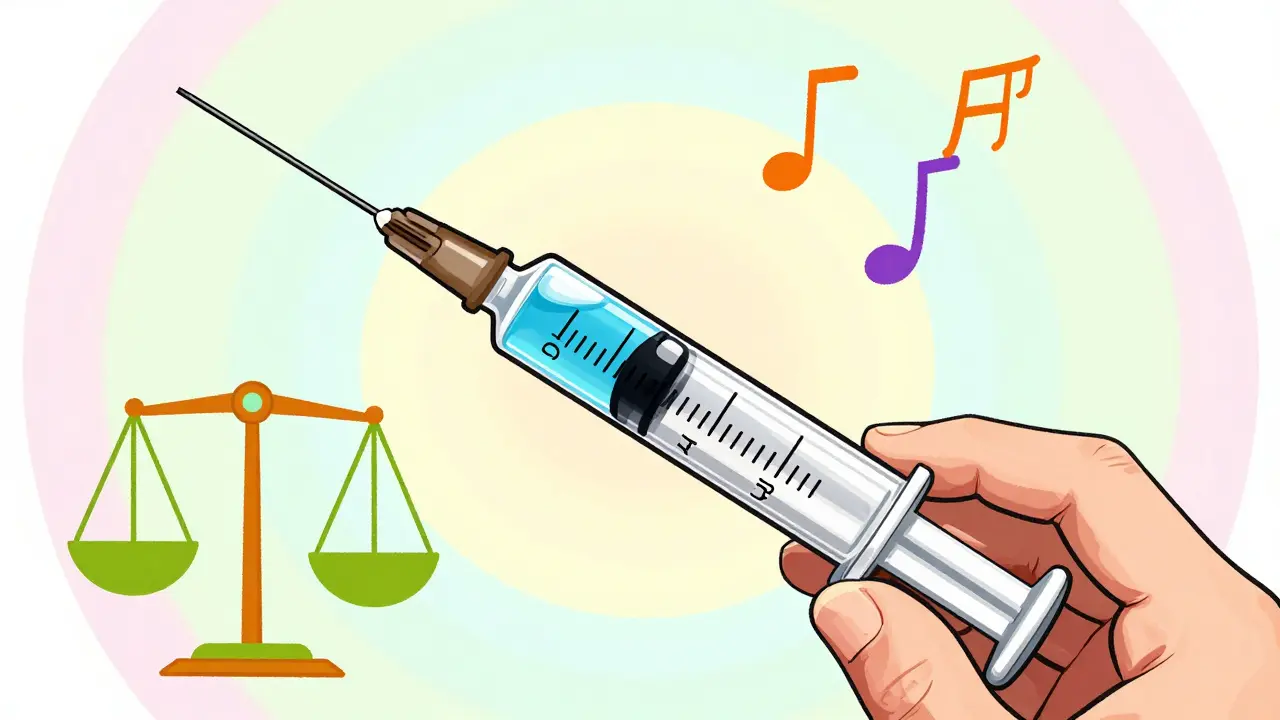
The gold standard for infant medication administration is the oral syringe. Specifically, you need an oral syringe with metric markings (milliliters, or mL) and fine graduations. The American Academy of Pediatrics (AAP) recommends using syringes with 0.1 mL or 0.2 mL marks for infants under six months. Why so precise? Because a study in Hospital Pediatrics showed that smaller measurement increments reduce dosing errors by 67% compared to standard cups. Even better, a randomized controlled trial at Cincinnati Children's Hospital found that oral syringes demonstrated 89.3% accuracy in proper dosing, while medicine cups lagged behind at just 62.1%. Droppers are even worse; a 2018 study found that 73.6% of parents gave incorrect doses using droppers because drop sizes vary based on viscosity and angle.
| Device Type | Accuracy Rate | Common Error Source | Recommendation |
|---|---|---|---|
| Oral Syringe (Metric) | 89.3% | Air bubbles, reading meniscus incorrectly | Highly Recommended |
| Medicine Cup | 62.1% | Parallax error, vague markings | Avoid for infants |
| Kitchen Spoon | <50% | Inconsistent volume, lack of calibration | Never Use |
| Dropper | 26.4% | Inconsistent drop size, unclear count | Avoid unless specified by doctor |
Understanding Concentration and Calculating Dose
Before you put the syringe in your baby’s mouth, you must understand the math. Infant medication dosing is almost always based on weight, not age. Age is a rough guide, but weight is the biological reality. For common pain relievers like acetaminophen (Tylenol), the recommended dose is 10 to 15 mg per kilogram of body weight per dose. You can give this every 4 to 6 hours, but never exceed five doses in 24 hours.
Here is how the calculation works in practice. Let’s say your baby weighs 7 kilograms (about 15.4 lbs).
- Calculate the target dose: 7 kg × 10-15 mg/kg = 70-105 mg of acetaminophen.
- Check the concentration: Look at the bottle. Does it say 160 mg per 5 mL?
- Convert to volume: If the bottle has 160 mg in 5 mL, then 1 mL contains 32 mg. To get 70 mg, you divide 70 by 32, which equals approximately 2.2 mL. To get 105 mg, you divide 105 by 32, which equals approximately 3.3 mL.
The Hidden Risks: Multi-Symptom Colds and Older Caregivers
While fever reducers are common, multi-symptom cold and cough medicines pose a different threat. Between 2004 and 2005, these products were linked to over 7,000 emergency department visits for children under two. The FDA issued a public health advisory in 2008 against their use in kids under two, and reinforced this in 2021, stating they are not recommended for children under six due to risks like convulsions and rapid heart rates. These medications often contain multiple active ingredients, increasing the chance of accidental overdose if combined with other drugs.
Another critical factor is who is administering the medicine. Grandparents and older caregivers face unique challenges. A 2023 study in the Journal of Pediatrics found that caregivers over 65 made 3.2 times more dosing errors than parents under 30. This isn’t about competence; it’s often due to vision changes making small metric labels hard to read, or reliance on outdated knowledge from raising their own children decades ago. If you are relying on grandparents, sit down with them beforehand. Show them the syringe. Walk through the steps together. Don’t assume they remember how to measure mL accurately.

A Five-Step Protocol for Zero Errors
You don’t need to be a pharmacist to be safe, but you do need a system. The CDC’s Medication Safety initiative recommends a five-step verification process that reduces errors by 82% when followed consistently.
- Step 1: Confirm Weight. Ensure you have your child’s current weight in kilograms. Weigh them at the last pediatrician visit and write it down.
- Step 2: Calculate Dose. Use the 10-15 mg/kg formula (or follow the specific instructions from your pediatrician).
- Step 3: Verify Concentration. Read the label. Does it say 160 mg/5 mL? Mark this number on the bottle with a permanent marker if it’s unclear.
- Step 4: Use the Right Tool. Pull out the oral syringe. Draw up the exact amount. Tap out air bubbles.
- Step 5: Double-Check. Have a second adult verify the calculation and the volume in the syringe before administration.
Future Trends and Smart Safety
The industry is moving toward smarter solutions. The FDA approved the first connected oral syringe, the MediSafe SmartSyringe, in early 2023. This device pairs with a smartphone app to verify correct dosing, achieving 98.7% accuracy in clinical trials. Additionally, new labeling guidelines propose color-coding bottles (blue for infants, green for children) and augmented reality features accessible via smartphone cameras. While these technologies aren’t ubiquitous yet, they signal a shift away from relying solely on parental vigilance. Until then, your best defense remains strict adherence to metric measurements and the use of calibrated oral syringes.
Can I use a kitchen teaspoon to measure infant medication?
No, you should never use a kitchen teaspoon. Kitchen spoons are not standardized and can vary significantly in volume. Studies show that using kitchen spoons leads to dosing errors of more than 20% in over half of cases. Always use an oral syringe with metric (mL) markings provided by a pharmacist or purchased separately.
What is the difference between infant and children's acetaminophen concentrations?
Historically, infant acetaminophen was much more concentrated (80 mg/mL) than children's acetaminophen (160 mg/5 mL or 32 mg/mL). However, since the FDA's 2011 mandate, most over-the-counter infant liquid acetaminophen is now standardized to 160 mg/5 mL to prevent confusion. Always check the label to confirm the concentration before dosing.
How do I calculate the correct dose for my baby?
Dosing for infants is based on weight, not age. For acetaminophen, the general guideline is 10-15 mg per kilogram of body weight per dose. First, determine your baby's weight in kg. Multiply that by 10-15 to get the mg dose. Then, look at the medication's concentration (e.g., 160 mg/5 mL) to convert mg into mL. Consult your pediatrician for personalized advice.
Are oral syringes safer than medicine cups?
Yes, significantly. Research indicates that oral syringes offer 89.3% accuracy in dosing, compared to only 62.1% for medicine cups. Medicine cups are prone to parallax errors and vague markings, especially when measuring small volumes required for infants. Oral syringes allow for precise measurement down to 0.1 mL.
Is it safe to give cold and cough medicine to infants?
The FDA advises against using over-the-counter cough and cold medicines for children under six years old. For infants under two, these medications are strongly discouraged due to risks of serious side effects like convulsions and rapid heart rates. Always consult a pediatrician before treating cold symptoms in young children.