How to Prevent and Treat Yeast Infections Caused by Antibiotics
Yeast Infection Risk Calculator
Your Risk Assessment
Your Results
Personalized Prevention Recommendations
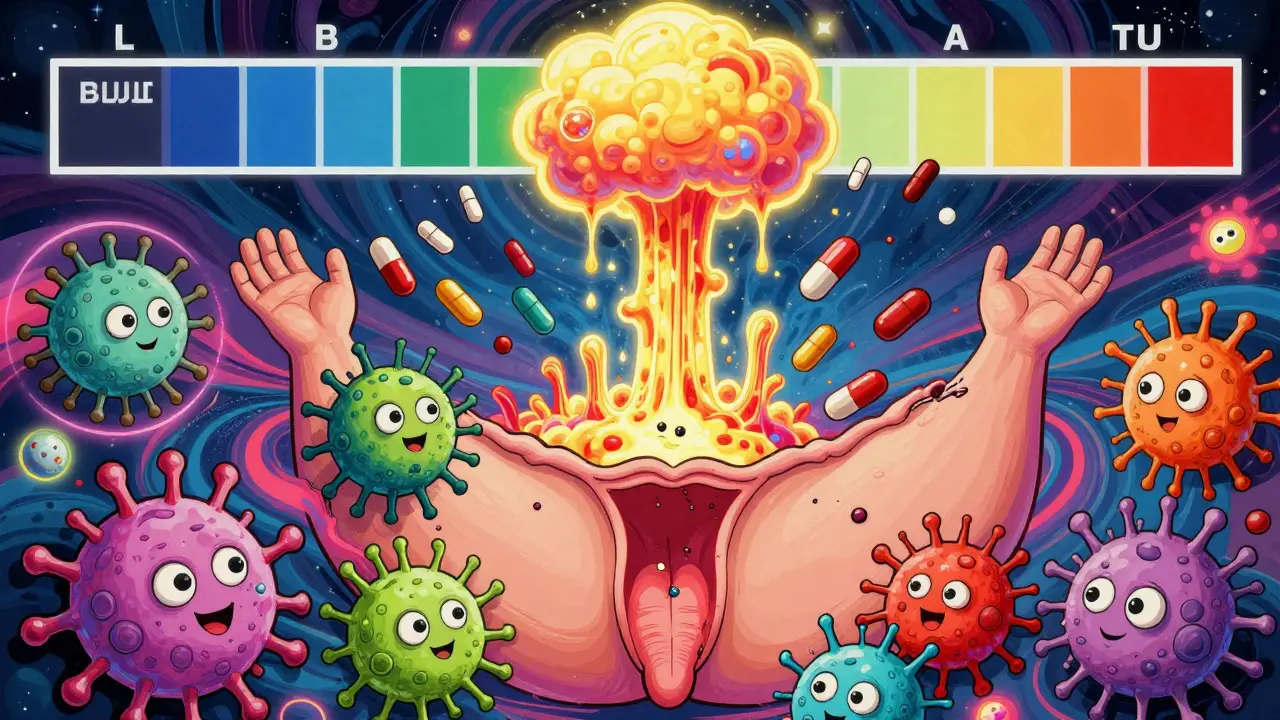
When you take antibiotics to fight a bacterial infection, you might not expect to end up with a yeast infection. But it’s more common than you think. About 30% of people with vaginas develop a yeast infection after a course of antibiotics. This isn’t bad luck-it’s biology. Antibiotics don’t just kill the bad bacteria; they wipe out the good ones too, especially the Lactobacillus that keep your vaginal environment balanced. Without them, Candida yeast takes over, leading to itching, burning, and thick white discharge. The good news? You can prevent it-and treat it-if you know how.
Why Antibiotics Cause Yeast Infections
Your vagina isn’t a sterile environment. It’s home to trillions of bacteria, mostly Lactobacillus species. These friendly microbes produce lactic acid and hydrogen peroxide, keeping the pH low (between 3.8 and 4.5). That acidic environment is like a wall against yeast. Candida albicans, the most common cause of yeast infections, can’t grow well there. When you take broad-spectrum antibiotics like amoxicillin, tetracycline, or ciprofloxacin, they don’t distinguish between harmful and helpful bacteria. Lactobacillus gets wiped out. The pH rises. Suddenly, Candida has free rein. It multiplies fast. Within days, symptoms appear: intense itching, pain during sex or peeing, and discharge that looks like cottage cheese. It’s not just antibiotics. Other things raise your risk too. Uncontrolled diabetes (blood sugar over 180 mg/dL), pregnancy, hormonal birth control, and even some diabetes meds like Jardiance can increase sugar in your vaginal fluid-feeding the yeast. Tight synthetic underwear traps heat and moisture, creating the perfect breeding ground. Douching? It strips away protective bacteria and pushes yeast deeper.How to Prevent Yeast Infections While Taking Antibiotics
Prevention is way easier than treatment. And you don’t have to wait until you’re itching to act. Start an antifungal at the same time as your antibiotics. Over-the-counter creams or suppositories like miconazole (Monistat) or clotrimazole (Gyne-Lotrimin) can be used daily during your antibiotic course. Studies show this cuts infection risk by 60-70%. Use a 7-day treatment, not just a single dose-it’s more effective. Take the right probiotics. Not all probiotics work. Look for strains proven to help: Lactobacillus rhamnosus GR-1 and Lactobacillus reuteri RC-14. These are found in products like Fem-Dophilus. Take 10 billion CFU daily. Timing matters: take them at least 2 hours before or after your antibiotic so the good bacteria survive. Yogurt with live cultures (at least 1 billion CFU per serving) helps too, but it’s not as reliable as targeted supplements. Ditch sugar and refined carbs. Yeast feeds on sugar. Cutting out white bread, pastries, candy, and sugary drinks reduces the glucose available in your vaginal fluid. A 2021 JAMA Dermatology review found that strict low-sugar diets only cut recurrence by 15-20%, so don’t rely on diet alone-but it helps when combined with other steps. Wear cotton underwear. Synthetic fabrics trap heat and moisture. Cotton lets air flow and keeps your vaginal area cooler (32-34°C vs. 36-38°C in synthetics). That small drop in temperature cuts yeast growth by half. Change out of wet swimsuits or workout clothes right away. Avoid douching and scented products. Douching removes 70-90% of your protective bacteria. Scented tampons, sprays, and soaps alter pH by 1.5-2.0 units, making yeast thrive. Stick to plain water and unscented soap for cleaning.What to Do If You Already Have a Yeast Infection
If you’re already dealing with symptoms, don’t reach for more antibiotics. That’ll make it worse. Antibiotics don’t kill yeast-they feed it. For mild, uncomplicated infections, OTC antifungals work well. Clotrimazole cream, miconazole suppositories, or butoconazole (Gynazole-1) clear up 80-90% of cases in 7 days. Follow the full course-even if symptoms disappear early. For recurring or severe infections, you’ll need a prescription. Fluconazole (Diflucan), a single oral pill, is the go-to. Doctors often prescribe a 150mg dose, repeated every 72 hours for three doses if it’s stubborn. It’s 95% effective. But here’s the catch: fluconazole is not safe during pregnancy, especially in the second and third trimesters. The FDA warns it can increase the risk of birth defects by 4.5 times. If you’re pregnant, your doctor will likely recommend boric acid suppositories (600mg nightly for 14 days). They work well against stubborn, non-albicans strains.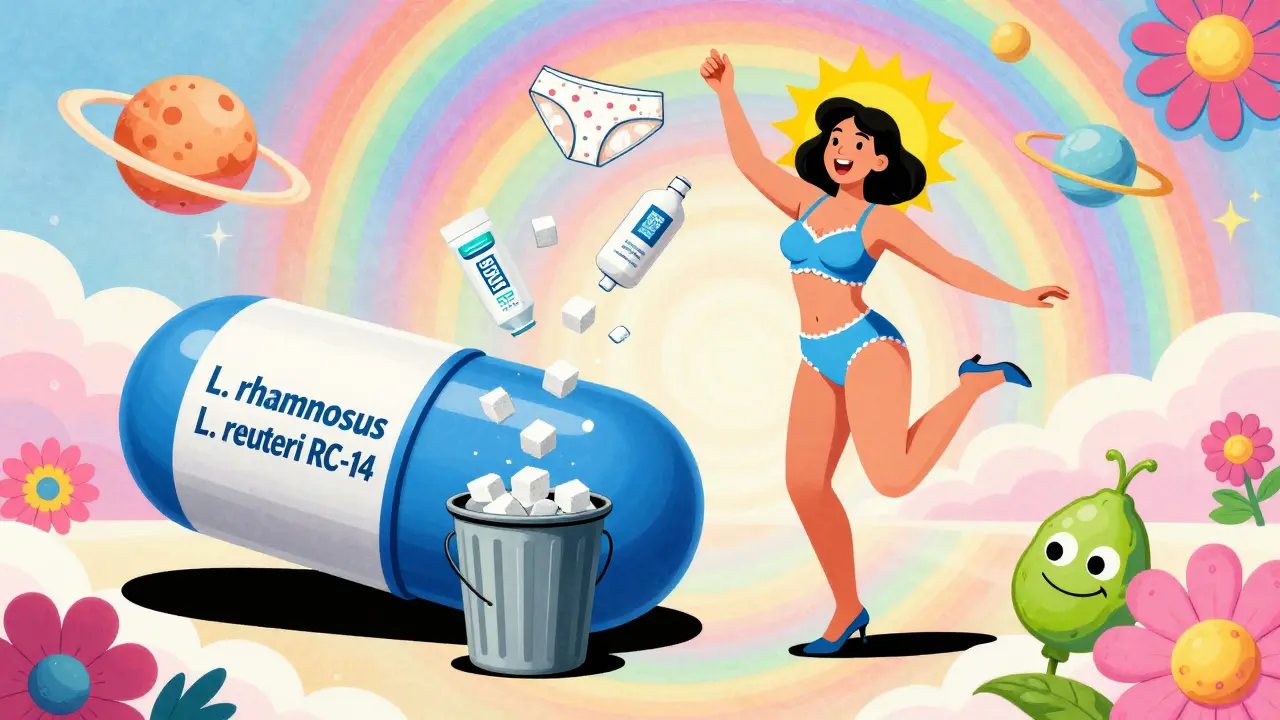
What Doesn’t Work (and Why)
A lot of advice online is misleading. Here’s what to ignore:- Apple cider vinegar baths. No proof they help. They can irritate skin and disrupt pH further.
- Garlic inserts. Some people swear by them, but there’s no solid data. Plus, inserting raw garlic can cause burns.
- Just waiting it out. Yeast infections won’t magically disappear. Without treatment, they can get worse and increase your risk of recurrence.
- Using antibiotics to treat yeast. This is a common mistake. 22% of people try this-and it makes things worse. Yeast is a fungus. Antibiotics target bacteria. They do nothing to yeast.
When to See a Doctor
Not every itch is a yeast infection. In fact, 64% of self-diagnosed cases turn out to be something else-like bacterial vaginosis, trichomoniasis, or even a skin condition. If you’ve never had a yeast infection before, or if symptoms don’t improve after OTC treatment, get checked. A simple swab test can confirm the cause. Also see a doctor if:- You have four or more infections in a year
- You’re pregnant
- Your symptoms are severe (pain, swelling, sores)
- You have diabetes or a weakened immune system

The Bigger Picture: Why This Isn’t Talked About Enough
It’s shocking that a problem affecting over 1.4 billion people globally gets so little attention. Vaginal health research receives just 2.5% of the NIH’s $42.9 billion annual budget. Most doctors don’t proactively warn patients about yeast infections after antibiotics. Only 38% of OB-GYNs routinely discuss prevention, even though 89% of patients want to know. There’s also a gap in regulation. Most vaginal probiotics are sold as supplements, not medicines. A 2021 study found 70% of products don’t even contain the strains listed on the label. You’re paying for hope, not science. Future solutions are coming-like vaginal microbiome transplants and pH-regulating tampons-but they’re stuck in early trials, underfunded and overlooked. Until that changes, prevention is still your best tool.Putting It All Together: Your Action Plan
If you’re about to start antibiotics:- Ask your doctor if you can use a narrow-spectrum antibiotic (like nitrofurantoin for UTIs)-they spare more good bacteria.
- Buy an OTC antifungal (7-day cream or suppository) and start using it on day one of your antibiotic course.
- Take a probiotic with L. rhamnosus GR-1 and L. reuteri RC-14-10 billion CFU daily, 2 hours apart from your antibiotic.
- Avoid sugar, white flour, and scented products.
- Wear cotton underwear and change out of damp clothes fast.
- Don’t douche. Ever.
- Use an OTC antifungal for 7 days.
- If no improvement in 3-4 days, see a doctor.
- If you’re pregnant, skip fluconazole-ask for boric acid suppositories.
- Don’t take more antibiotics.
Frequently Asked Questions
Can antibiotics cause yeast infections in men?
Yes, though it’s less common. Men can develop a yeast infection on the penis, especially after antibiotics, if they have diabetes or engage in unprotected sex with someone who has a yeast infection. Symptoms include redness, itching, and a white discharge under the foreskin. Treatment is the same: antifungal creams like clotrimazole. Good hygiene and avoiding tight clothing help prevent it.
How long after antibiotics can a yeast infection develop?
Symptoms usually appear within 3 to 7 days after starting antibiotics, but they can show up anytime during treatment or even a few days after finishing. That’s why it’s best to start prevention on day one-don’t wait for symptoms.
Is it safe to use antifungals while pregnant?
Topical antifungals like clotrimazole and miconazole are considered safe during pregnancy. Oral fluconazole is not-especially in the second and third trimesters-due to potential risks to the baby. If you’re pregnant and have a yeast infection, stick to creams or suppositories and talk to your doctor about boric acid if it’s persistent.
Do probiotics really work for preventing yeast infections?
Yes-but only the right ones. Strains like L. rhamnosus GR-1 and L. reuteri RC-14 have been shown in clinical trials to reduce yeast infection risk by about 50% when taken during antibiotics. Most store-bought probiotics don’t contain these strains, so check the label. Capsules are more reliable than yogurt, which often has too few live cultures.
Can I take fluconazole while on antibiotics?
Yes, fluconazole can be taken alongside antibiotics. They work on different organisms-antibiotics kill bacteria, fluconazole kills yeast. There’s no harmful interaction. But if you’re pregnant, avoid fluconazole entirely. Always check with your doctor before combining medications.
Meina Taiwo
December 21, 2025 AT 12:31Use miconazole on day one. Works every time. No drama.
Brian Furnell
December 22, 2025 AT 14:29Let’s unpack this: the vaginal microbiome is a dynamic ecosystem-Lactobacillus spp. (especially GR-1 and RC-14) maintain homeostasis via lactic acidogenesis and bacteriocin production. When antibiotics disrupt this, Candida albicans exploits the pH shift (>4.5) and nutrient flux. Prophylactic antifungals + targeted probiotics are evidence-based, not anecdotal. Also, sugar restriction? It’s not magic-it’s metabolic ecology. The 2021 JAMA Dermatology meta-analysis confirms modest but statistically significant recurrence reduction. Don’t ignore the data.
Jackie Be
December 23, 2025 AT 02:28OMG I thought I was the only one who got yeast after antibiotics I was so scared I thought I had an STD or something and then I tried Monistat and it was like a miracle I’m never not using it again when I’m on antibiotics
Orlando Marquez Jr
December 23, 2025 AT 11:02While the clinical guidance presented is methodologically sound, one must acknowledge the epistemological limitations of over-the-counter interventions in the context of systemic microbiome perturbation. The regulatory arbitrage surrounding probiotic supplements-classified as dietary agents rather than pharmaceuticals-creates a significant information asymmetry for the lay consumer. The absence of FDA oversight for strain verification renders many commercial products functionally inert. This represents a structural failure in public health communication.
Ben Warren
December 25, 2025 AT 05:19It’s appalling how little the medical establishment cares about women’s health. The fact that 89% of patients want to know about yeast infection prevention but only 38% of OB-GYNs even mention it? That’s negligence dressed as tradition. And don’t get me started on the NIH budget-$42.9 billion and 2.5% goes to vaginal health? That’s not underfunding-that’s systemic erasure. Meanwhile, Big Pharma pushes antibiotics like candy and profits off the fallout. This isn’t biology-it’s capitalism.
Siobhan K.
December 26, 2025 AT 03:24So I’ve been using Fem-Dophilus for years now-every time I’m on antibiotics. It’s not a cure-all, but I haven’t had a yeast infection since. Also, cotton underwear? Non-negotiable. I’ve literally thrown out all my synthetic thongs. And yes, I know people say ‘just eat yogurt’-but unless it’s got those two specific strains and 10B CFU, it’s basically flavored milk with bacteria dreams.
Sarah Williams
December 27, 2025 AT 18:43You got this. Seriously. A little prep and you’re not at the mercy of your antibiotics. Start the cream, take the probiotic, wear cotton, and breathe. You’re not broken-you’re just balanced differently right now.
Grace Rehman
December 29, 2025 AT 02:13So we’re supposed to trust a $20 supplement that might not even have the bacteria it claims to have… while ignoring the fact that the entire system is built to keep us guessing? How is this not a feature not a bug? The real infection here is the belief that health is something you buy, not something you’re entitled to
Jerry Peterson
December 30, 2025 AT 20:26My sister’s a nurse and she swears by the 7-day clotrimazole course. She says the one-day stuff is just for people who want to feel like they did something without actually doing it. I’ve used it twice now-no issues. Just don’t forget to wash your hands before applying.
Adrian Thompson
December 31, 2025 AT 18:45Did you know the FDA is secretly working with Big Pharma to keep yeast infections common? They want you buying more drugs. That’s why they don’t approve real probiotics as medicine. It’s all about the money. Fluconazole? That’s a gateway drug to dependency. And cotton underwear? That’s a distraction. The real solution is avoiding antibiotics altogether. Eat turmeric. Pray. Don’t go to doctors.
Dan Adkins
January 1, 2026 AT 18:12It is imperative to note that the assertion regarding the efficacy of probiotics is predicated upon a limited sample of clinical trials, many of which are industry-sponsored. Furthermore, the claim that Lactobacillus rhamnosus GR-1 and L. reuteri RC-14 are uniquely efficacious is not universally accepted in the microbiological community. The notion that dietary sugar directly correlates with vaginal candidiasis remains a contested hypothesis, with confounding variables including glycemic load, host immune status, and microbiome resilience. One must exercise epistemic caution.
Jon Paramore
January 2, 2026 AT 14:28Probiotics: yes. But only strains with published RCTs. Fluconazole: fine if not pregnant. Boric acid: underused gold standard for recurrent cases. Cotton: obvious but ignored. Douching: never. Sugar: reduce, don’t obsess. And for god’s sake-get a swab test before assuming it’s yeast. 64% misdiagnosis rate isn’t a statistic, it’s a crisis.
Teya Derksen Friesen
January 2, 2026 AT 20:41Interesting how this piece avoids discussing the role of chronic stress in dysbiosis. Cortisol elevates blood glucose, suppresses local immunity, and alters mucosal pH-factors just as critical as antibiotics. Yet we’re told to just take a pill and wear cotton. The real solution isn’t in the pharmacy-it’s in the therapy room, the yoga mat, and the quiet hour before bed. We treat symptoms, not systems.
John Hay
January 3, 2026 AT 07:24I read this whole thing and I’m still not sure if I should use the cream or the suppository. But I’m going to do both. Better safe than sorry. Also, I’m wearing cotton from now on. No more leggings to bed.
Southern NH Pagan Pride
January 3, 2026 AT 08:06Antibiotics are just the tip of the iceberg. Did you know the government puts fluoride in the water to weaken your immune system so you need more antibiotics? And the yeast? That’s a bio-weapon designed by Big Pharma to keep you buying creams. The real cure is alkaline water and raw garlic wrapped in copper wire. I’ve been doing it for 3 years. No infections. No doctors. No lies.