How to Prepare for Medication Needs during Pilgrimages and Treks

When you’re heading into the mountains for a pilgrimage or a trek, your body faces challenges most people never think about. At 14,000 feet, the air has less than half the oxygen it does at sea level. Simple tasks like walking to your tent can leave you gasping. And if you’re diabetic, asthmatic, or on regular meds, the cold, thin air can mess with your pills in ways you wouldn’t expect. This isn’t just about packing extra ibuprofen. It’s about survival.
Know Your Risk Before You Go
Altitude sickness isn’t rare-it’s common. About 25% to 85% of people who climb above 8,000 feet will feel symptoms like headaches, nausea, dizziness, or shortness of breath. At Everest Base Camp (17,500 feet), nearly half of all trekkers get sick. And pilgrims? They often fly straight into Lhasa at 12,000 feet, skip the gradual climb, and expect to pray, walk, and climb like nothing’s changed. That’s dangerous.Before you book your flight, see your doctor. Not just for a checkup-ask specifically about altitude risks. If you have heart disease, lung problems, or diabetes, you’re at higher risk. Studies show 83% of serious altitude complications can be avoided with a pre-trip medical review. Your doctor can check your fitness, adjust your meds, and tell you if you need preventive drugs like acetazolamide.
Essential Medications to Pack
You can’t rely on local pharmacies in remote areas. In 2013, 89% of health camps along major pilgrimage routes didn’t have acetazolamide, dexamethasone, or nifedipine-the very drugs that save lives. Don’t gamble on that.- Acetazolamide (Diamox): Take 125 mg twice a day, starting one day before ascent and continuing for three days after reaching high altitude. It helps your body adjust by increasing breathing rate. Side effects? More trips to the bathroom and tingling fingers. That’s normal. But if you’re allergic to sulfa drugs (3-6% of people), skip this.
- Dexamethasone: Used for severe cases of High Altitude Cerebral Edema (HACE). Start with 8 mg, then 4 mg every 6 hours. It’s not for prevention-only for emergencies when descent isn’t possible.
- Nifedipine (extended-release): For High Altitude Pulmonary Edema (HAPE). Take 20 mg every 12 hours. This is critical if you’ve had HAPE before or have a history of lung issues.
- Diabetes meds: Insulin loses potency in freezing temps. Store it in an insulated cooler with a cold pack, not in your coat pocket. Glucometers can give false readings below 32°F-errors jump to 18% at 14°F. Bring extra test strips and batteries.
- Antibiotics: Azithromycin (500 mg daily for 3 days) for traveler’s diarrhea. It hits 60% of Everest trekkers. Don’t wait until you’re too weak to walk.
- Pain and inflammation: Ibuprofen (400 mg) works better than acetaminophen for altitude headaches. Keep a few on hand.
- Allergy meds: Diphenhydramine (25-50 mg) for reactions or sleep issues.
- Topicals: Antibiotic ointment, hydrocortisone cream, and blister pads. Blisters are the #1 reason people quit treks.
Storage Matters More Than You Think
Your meds aren’t safe just because they’re in your backpack. Cold kills insulin. Heat ruins antibiotics. Humidity turns pills into mush.Keep everything in waterproof, insulated containers. The ideal temp range is 59-77°F (15-25°C). Use small ziplock bags inside a thermos or insulated lunch box. Don’t leave your meds in the sun during rest stops. If you’re flying, carry them in your hand luggage-checked bags can freeze in cargo holds.
For insulin, consider a portable cooler like the MediCool or Frio wallet. They work without ice and last 45+ hours. One Reddit user lost their insulin at 14,000 feet because they stored it in a pocket. They needed a $4,200 evacuation. Don’t be that person.
Controlled Substances and Legal Rules
If you’re on opioids, benzodiazepines, or strong stimulants, you’re not just packing meds-you’re carrying controlled substances. Many countries, including Nepal and Tibet, have strict rules.Always carry your prescription in the original bottle with your name and doctor’s info. Bring a letter from your doctor explaining why you need it. For some drugs, you need special permits from the U.S. Drug Enforcement Administration (DEA) or the International Narcotics Control Board. About 17% of trekking groups hit this roadblock. Don’t wait until you’re at the airport to find out.
Plan for Emergencies
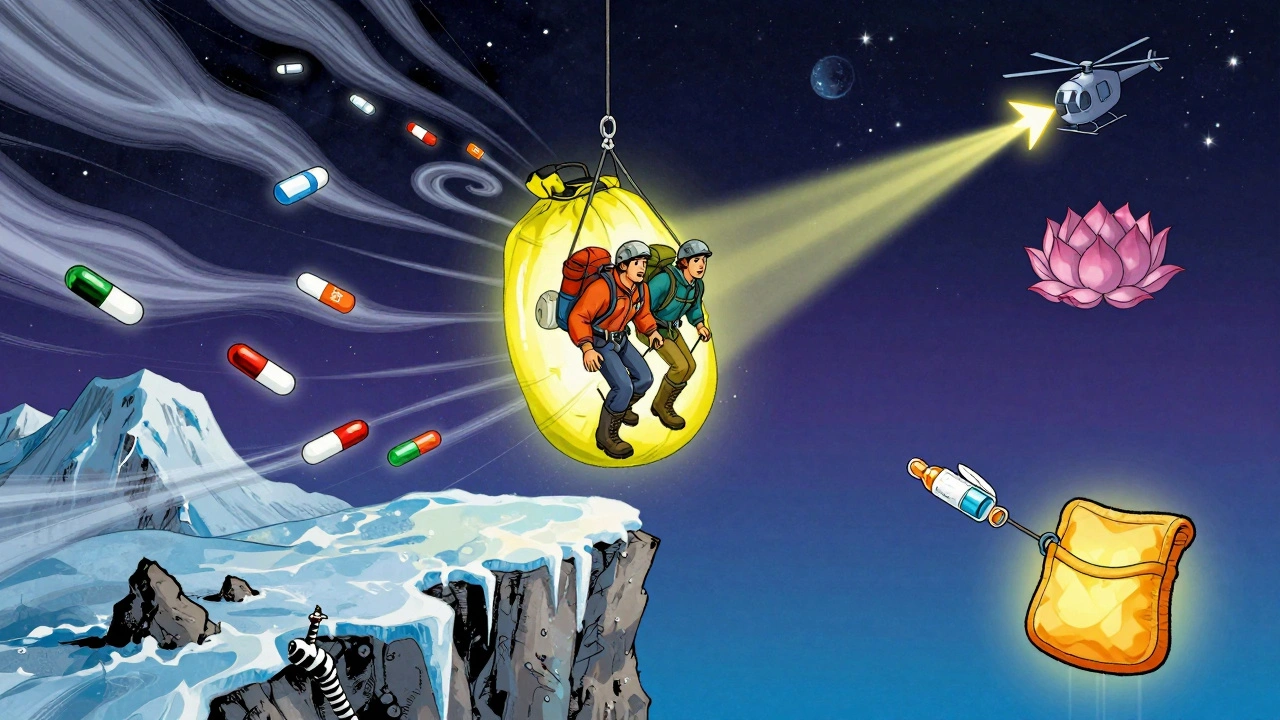
If someone in your group gets HACE or HAPE, the only cure is descent. But what if the trail is icy, dark, or 12 hours away? That’s where a hyperbaric bag (like the Gamow Bag) saves lives. It simulates lower altitude by increasing pressure around the person.Most trekking companies don’t carry them. Only 5% of health camps do. If you’re going on a group trek, ask if they have one. If you’re going solo, consider renting one. They’re heavy-but they’re worth it.
Also, carry a satellite communicator. A Garmin inReach or Zoleo lets you send SOS signals even without cell service. In 2022, 22% of medical evacuations from high-altitude treks happened because people couldn’t call for help.
What Most People Get Wrong
People think: “I’m fit. I’ll be fine.” Or “I’ll just take Diamox and go.” That’s not enough.- Ascent rate matters more than anything. Don’t climb more than 1,000 feet per day above 10,000 feet. If you fly into 12,000 feet, spend two full days resting before going higher.
- Hydrate. Drink 4-5 liters of water a day. Dehydration makes altitude sickness worse.
- Don’t sleep during ascent. Rest, yes. Nap, no. Your body needs constant movement to adapt.
- Don’t wait for symptoms to start before taking meds. If you’re going above 10,000 feet, start acetazolamide the day before.
- Don’t assume your meds will be available. Local pharmacies often don’t stock what you need. Bring everything.
Recent Improvements and What’s Changing
In 2021, Nepal launched a nationwide altitude sickness prevention campaign. They gave out 15,000 free medication kits to trekking agencies-containing acetazolamide, dexamethasone, and educational brochures. Hospitalizations dropped 22% in just one year.By 2027, 95% of trekking companies are expected to require a pre-trip medical consultation. Right now, only 68% do. Insurance companies are pushing this change because they’re tired of paying for evacuations.
Specialized pre-packaged medical kits for different altitudes are now being tested by the Wilderness Medical Society. You’ll soon be able to buy one labeled “10,000-15,000 ft” or “Above 15,000 ft” with exact doses and instructions. Already, 76% of trekkers are buying these kits. It’s becoming the new standard.
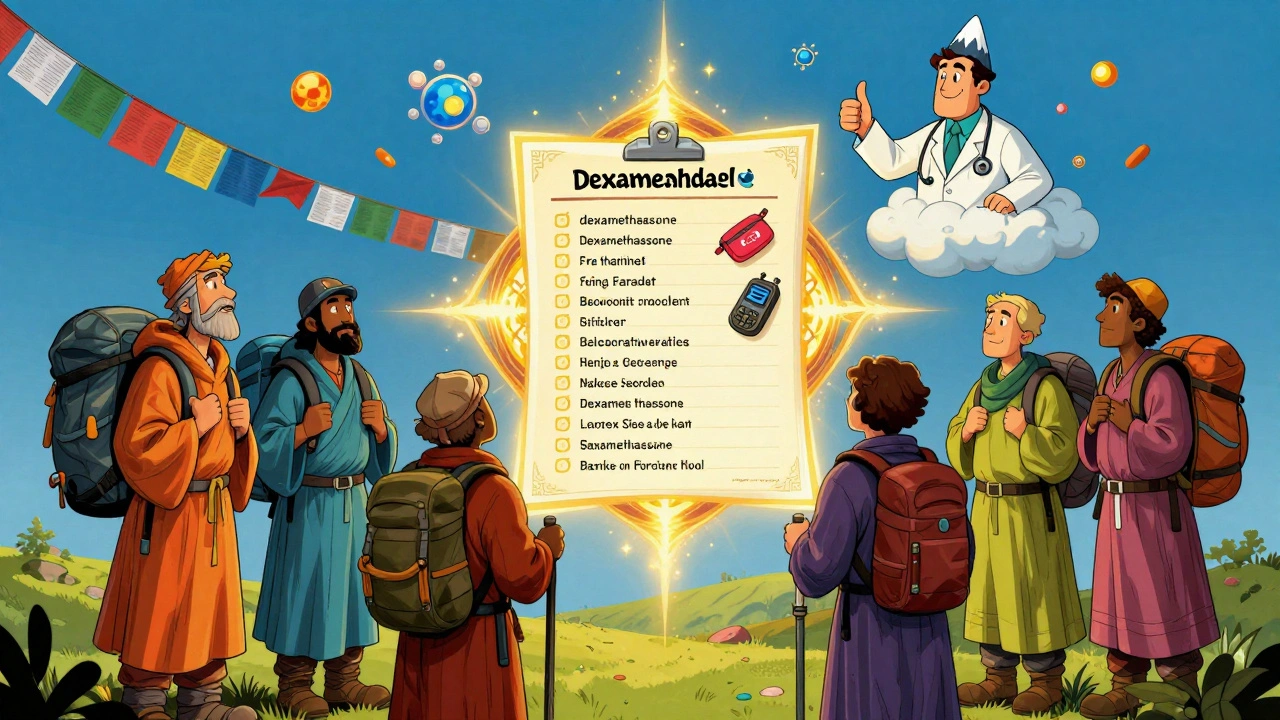
Final Checklist
Before you leave, tick these off:- ✔️ Doctor’s visit (4-6 weeks before)
- ✔️ All meds in original containers with labels
- ✔️ Doctor’s letter for controlled substances
- ✔️ Insulated, waterproof storage for all meds
- ✔️ Acetazolamide, dexamethasone, nifedipine (if recommended)
- ✔️ Antibiotics, ibuprofen, antihistamines
- ✔️ Extra insulin, test strips, batteries (if diabetic)
- ✔️ Hyperbaric bag or satellite communicator
- ✔️ No new meds started right before the trip
- ✔️ Copied list of meds and dosages for group leader
Preparing for a pilgrimage or trek isn’t about being overcautious. It’s about being ready. The mountains don’t care if you’re spiritual, athletic, or determined. They only respond to preparation. Get your meds right, and you’ll not only survive-you’ll make it to the summit, the shrine, the moment you’ve been waiting for.
Chad Handy
December 5, 2025 AT 00:05The way people treat altitude like it’s just a minor inconvenience is terrifying. I’ve seen guys in Patagonia try to summit with nothing but Advil and a prayer. At 16,000 feet, your body doesn’t care how fit you are-it’s just trying not to drown in its own fluids. I had a friend with Type 1 diabetes who lost his insulin to a frozen pocket on Kilimanjaro. He got evacuated by helicopter. The bill was $42,000. He still thinks he was ‘lucky.’ There’s no luck here. Just preparation or death. Stop romanticizing suffering. Pack the meds. Bring the cooler. Don’t be the guy who makes everyone else’s trip a rescue mission.
Augusta Barlow
December 5, 2025 AT 01:56Let’s be real-this whole ‘altitude sickness prevention’ thing is just Big Pharma’s way of selling you Diamox so they can charge $200 for a 30-day supply. You know what the real solution is? Don’t go above 8,000 feet. That’s what our ancestors did. They didn’t have hyperbaric bags or satellite communicators. They just lived at sea level and stayed there. The fact that we’re now told we need a doctor’s letter just to bring our Xanax to Nepal? That’s not safety-that’s control. And don’t get me started on those ‘pre-packaged kits.’ You’re being sold a $150 box of pills so you feel like you’re ‘prepared’ while the real danger is the corporate greed behind it all.
Martyn Stuart
December 6, 2025 AT 19:24Excellent, detailed breakdown-thank you for the clarity on storage protocols. One critical addition: always carry your insulin in a secondary insulated container, even if you’re using a Frio wallet. I’ve seen cases where the outer casing cracked during a drop on rocky trails, and the gel inside froze solid, rendering the insulin inert. Also: never assume your glucometer is accurate after exposure to sub-zero temps. Test it at base camp first, and always cross-check with a second device if possible. And yes-acetazolamide isn’t a magic bullet. It’s a tool. Use it, don’t worship it. Finally: if you’re on beta-blockers for hypertension, consult your cardiologist. They can mask early HAPE symptoms, which is terrifyingly dangerous at altitude.
Shofner Lehto
December 8, 2025 AT 03:26Just came back from a 10-day trek in the Himalayas. I followed every single point here. Took Diamox, used a Frio wallet, carried a Garmin inReach, and brought extra test strips. The only thing I’d add: hydration isn’t just about water. Electrolytes matter. I started taking oral rehydration salts (ORS) with every liter. No headaches. No nausea. Just steady progress. Also: don’t underestimate the power of a good pair of blister pads. I saw three people quit because they ignored a hot spot. I taped mine up at the first sign and kept going. Simple. Effective. Life-changing.
Yasmine Hajar
December 9, 2025 AT 08:12I’m a nurse who’s done three pilgrimages in the Andes and Himalayas. I’ve held hands with people who couldn’t breathe because they thought ‘I’m young, I’ll be fine.’ I’ve watched medics scramble because someone didn’t bring dexamethasone. I’ve seen families cry because they didn’t bring a satellite device. This isn’t just advice-it’s a lifeline. If you’re reading this and you’re nervous? Good. That means you care. Don’t wait until you’re gasping at 14,000 feet to realize you should’ve listened. Pack like your life depends on it-because it does. And if you’re traveling with someone who’s scared? Don’t tell them to ‘toughen up.’ Tell them you’ve got their back. That’s what this is really about: not just surviving the mountain-but coming home together.
Karl Barrett
December 10, 2025 AT 23:39There’s a profound epistemological tension here: the modern medicalization of spiritual ascension. We’re no longer seeking transcendence through suffering-we’re seeking it through pharmacological optimization. The pilgrimage, once a ritual of surrender to nature’s indifference, has been reconfigured into a logistical operation governed by algorithmic risk mitigation. The hyperbaric bag becomes a secular sacrament; the Frio wallet, a reliquary of bodily autonomy. And yet-this is not a critique. It’s an acknowledgment: when the environment becomes hostile, human ingenuity becomes the new liturgy. The real heresy is not bringing the meds-it’s believing that spirit alone can overcome physiology. The mountain doesn’t care about your intentions. It only responds to chemistry. And so, we chemically honor it.
Jake Deeds
December 12, 2025 AT 14:44Wow. Just… wow. I mean, I’m not even going to pretend I’m surprised. Of course someone wrote a 2,000-word manual on how to not die on a mountain. But here’s the thing-I’ve been to Everest Base Camp. I didn’t bring a single pill. I didn’t bring a cooler. I didn’t bring a satellite device. And guess what? I made it. I cried at the summit. I felt God. And I didn’t need a doctor’s note or a $150 kit to do it. People like you turn sacred journeys into insurance claims. You’re not preparing-you’re paralyzing. If you’re that scared, stay home. Let the rest of us breathe the thin air without your checklist breathing down our necks.
val kendra
December 14, 2025 AT 03:08Stop overthinking it. Pack the meds. Bring the cooler. Carry the extra batteries. Use the Frio. Don’t wait until you’re gasping to realize you forgot your insulin. Simple. Done. You don’t need a 10-page essay to survive the mountains-you just need to be smart. I’ve done this five times. I’ve seen people die because they thought they were invincible. You’re not. So pack. And go. No drama. No guilt. Just do it.