How to Prepare for Allergy Testing for Antibiotic Reactions

More than 10% of people in the U.S. say they’re allergic to penicillin. But here’s the twist: less than 1% of them actually are. That’s not a typo. It’s a widespread misunderstanding that’s costing lives, money, and time - and it’s fixable with a simple, safe test.
If you’ve been told you’re allergic to an antibiotic - especially penicillin - and you’ve spent years avoiding it, you might be missing out on better, cheaper, and safer treatments. Antibiotic allergy testing isn’t just about avoiding a rash. It’s about getting the right medicine at the right time. And if you’re considering it, knowing how to prepare is the first step to getting real answers.
Stop Taking These Medications Before Testing
You can’t just walk into an allergist’s office and get tested. Your body needs to be in the right state. The biggest mistake people make? Continuing to take antihistamines.
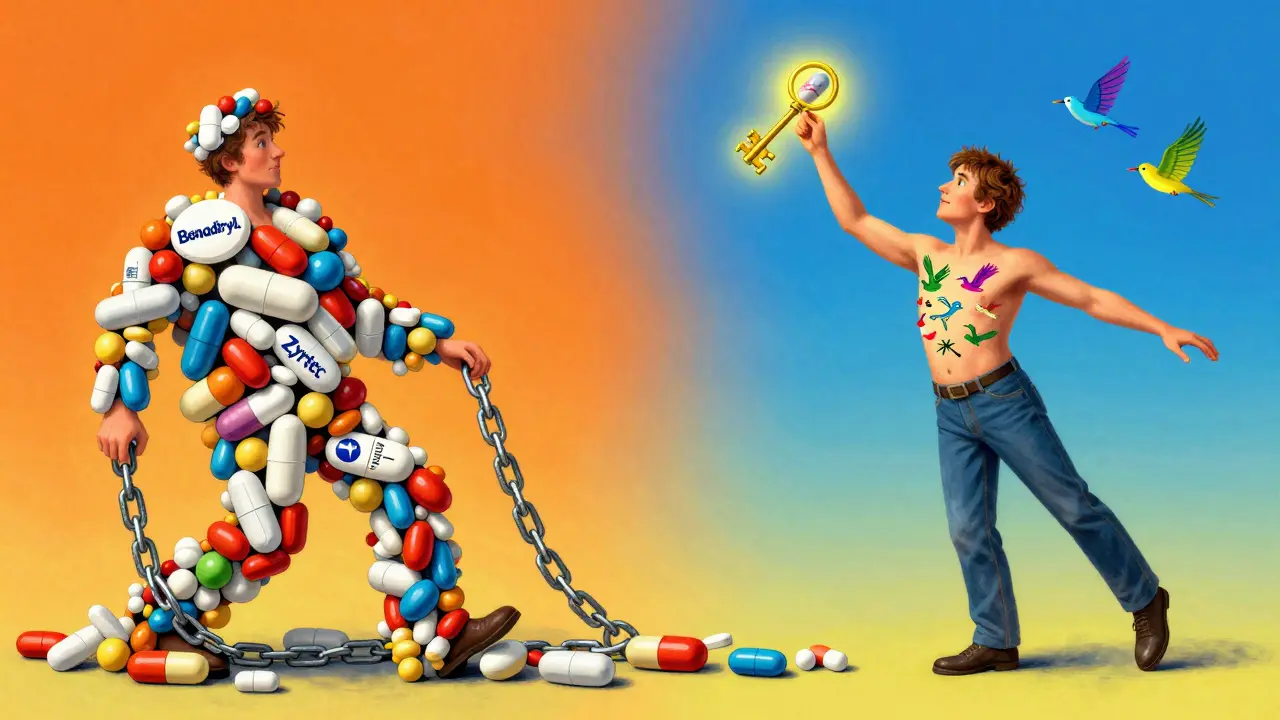
First-generation antihistamines like Benadryl (diphenhydramine) and hydroxyzine must be stopped at least 72 hours before testing. Why? Because they block the very reaction the test is trying to trigger. If you’re still taking them, the test will come back negative even if you’re truly allergic.
Second-generation antihistamines are even trickier. Drugs like Claritin (loratadine), Zyrtec (cetirizine), Xyzal (levocetirizine), and Allegra (fexofenadine) stick around longer. You need to stop these 7 full days before your appointment. That means no weekend allergy pills, no daily relief - nothing.
And don’t forget about tricyclic antidepressants. Medications like doxepin, often prescribed for depression or sleep, have strong antihistamine effects. You’ll need to stop those 14 days out. If you’re unsure whether a medication you’re taking could interfere, write down every pill, patch, or nasal spray you use and bring the list with you. Your allergist will tell you what to pause.
Here’s the good news: you can keep taking your blood pressure meds, diabetes drugs, or thyroid pills. But if you’re on an ACE inhibitor - like lisinopril or enalapril - tell your doctor. These can make an allergic reaction harder to manage if one happens during testing. It’s not a reason to cancel the test, but it does mean extra monitoring.
What Happens During the Test
Antibiotic allergy testing isn’t one thing - it’s a step-by-step process. It’s designed to be safe, but thorough. Most people are surprised by how quick and painless it is.
Step one: the skin prick test. A tiny drop of penicillin reagent is placed on your forearm or back. Then, a small plastic device lightly pricks the skin - no needle, no blood. It feels like a quick scratch. The risk of a serious reaction here is less than 0.01%. You’ll wait 15 minutes. If nothing happens, you move to step two.
Step two: the intradermal test. A tiny amount of penicillin is injected just under the skin with a very fine needle. This creates a small bump, or “bleb.” You’ll watch for redness, swelling, or itching. A reaction larger than 3mm across means you’re likely allergic. If this is negative, you’re cleared to move on.
Step three: the oral challenge. This is where most people get nervous. But here’s the truth: you’re not swallowing a full dose. You start with 10% of a regular pill - maybe just a quarter of a 250mg tablet. You swallow it. Then you sit in the clinic for 30 minutes. If you’re fine, you get the full dose. Then you wait another 60 minutes. That’s it.
During this whole process, your medical team will have epinephrine, albuterol, and diphenhydramine ready. They’re not just being cautious - they’re following strict safety rules. The chance of a severe reaction during the oral challenge? About 0.06%. That’s lower than the risk of being struck by lightning in a given year.
What a Positive or Negative Result Means
A positive skin test? A red, itchy bump bigger than 3mm? That’s a strong sign you’re truly allergic. But here’s what most people don’t know: allergies can fade.
Half of people who had a serious reaction to penicillin as a child - like anaphylaxis - lose their allergy within five years. Eighty percent lose it within ten. That’s why even if you were told you were allergic 10 or 20 years ago, it’s worth retesting.
A negative test? That’s huge. It means you can safely take penicillin again. Not just penicillin - other beta-lactam antibiotics too, like amoxicillin, cephalexin, and ampicillin. These are often the first-choice drugs for infections like strep throat, sinus infections, and even pneumonia. They’re cheaper, more effective, and less likely to cause antibiotic resistance.
Some people get a little redness or itching at the test site 4 to 8 hours later. That’s not a sign of allergy - it’s a normal local reaction. It happens in about 15% of people and can be treated with over-the-counter hydrocortisone cream. Don’t panic. Call your doctor if it spreads or gets worse.
And if you had a rash or stomach upset after taking antibiotics in the past - but never broke out in hives or had trouble breathing - that might not have been an allergy at all. Many reactions are side effects, not immune responses. Testing helps you tell the difference.
Why This Test Changes Everything
Let’s say you’ve been told you’re allergic to penicillin. For every infection, your doctor gives you something like vancomycin, clindamycin, or azithromycin. These are broader-spectrum antibiotics. They kill more types of bacteria - good and bad. That means more side effects, more diarrhea, more yeast infections, and more chance of developing drug-resistant superbugs.
Studies show that people with unconfirmed penicillin allergies get these broader drugs 69% more often. Each of those unnecessary prescriptions costs about $6,000 more per year in healthcare expenses. And it’s not just money. Patients with confirmed penicillin allergies have longer hospital stays - by an average of 1.7 days - and higher rates of complications.
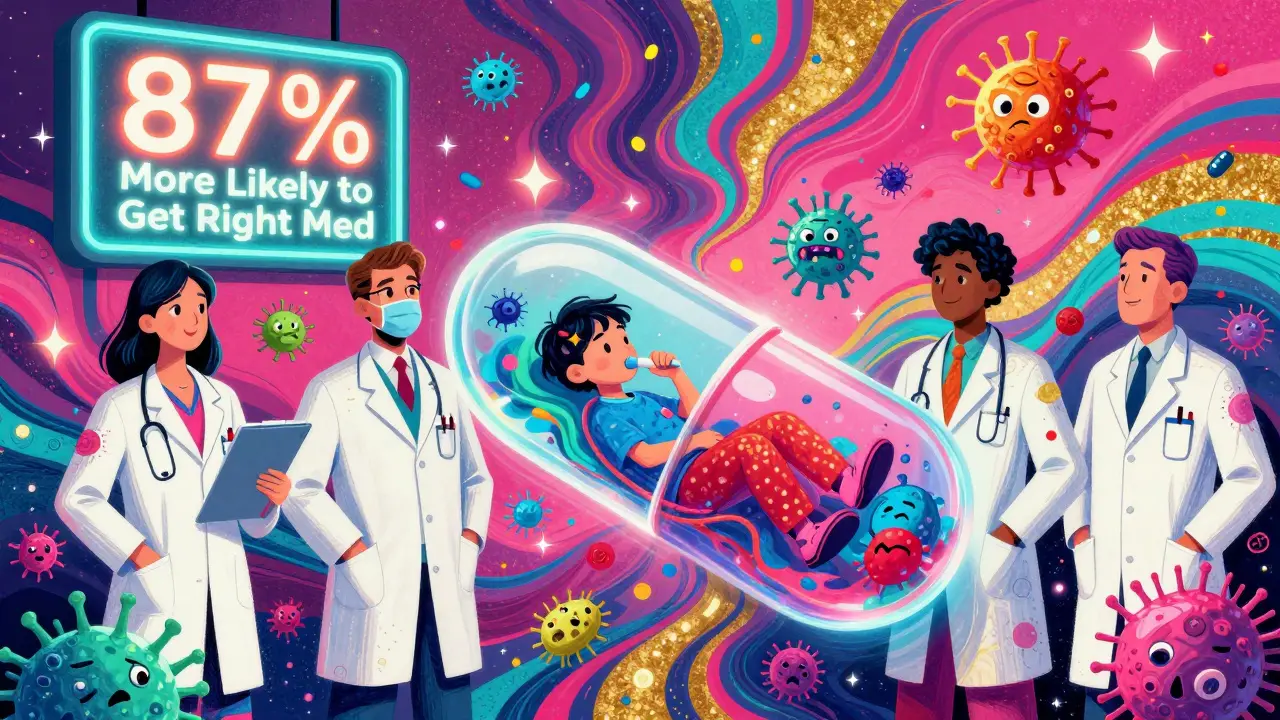
But here’s the payoff: if you test negative and get de-labeled, you’re 87% more likely to get the right antibiotic the first time. One patient in a 2023 study switched from daptomycin - which costs $1,850 per dose - to penicillin - which costs $12. Their annual antibiotic bill dropped from over $67,000 to less than $5,000.
Every dollar spent on testing saves $5.70 in avoided costs. That’s why major medical groups say this is one of the most important steps in antibiotic stewardship. It’s not just about you. It’s about stopping the rise of untreatable infections for everyone.
What to Expect After the Test
Most people leave feeling relieved. A 2023 survey of over 1,200 patients found that 92% said the test was less uncomfortable than they expected. Eighty-eight percent said they’d recommend it to a friend.
Some complaints? The medication restrictions. Stopping antihistamines for a week can be rough if you have allergies. But that’s temporary. And the anxiety? Most people say the fear of the test was worse than the test itself.
After your test, your allergist will give you a letter or form confirming your results. Keep it with your medical records. Tell your primary care doctor. Put it in your phone. If you ever need antibiotics in the future - even at an ER - show them this. It could save your life.
And if you’re still nervous? Talk to someone who’s been through it. On Reddit’s r/Allergies, one user wrote: "The skin prick felt like a mosquito bite. The pill? Just swallowed it like a vitamin." Another said: "I’ve been avoiding penicillin since I was 5. Now I’m 32. I finally know I’m not allergic. Best decision I ever made."
What’s Next for Antibiotic Allergy Testing
Right now, skin testing is the gold standard. But it’s not perfect. It requires a specialist, a clinic, and time. That’s why only 17% of primary care doctors consistently refer patients for testing - especially in rural areas where allergists are hard to find.
The future is changing. The NIH just funded a $2.4 million project to develop a simple blood test that could replace skin testing. It’s not ready yet - current blood tests are unreliable - but it’s coming.
Meanwhile, telemedicine is helping. A pilot study at UCSF showed that 95% of low-risk patients could safely complete their oral challenge at home, with video supervision. That could open testing to millions who live hours from a specialist.
By 2027, 75% of U.S. hospitals plan to have formal "de-labeling" programs. That means they’ll actively screen patients for false penicillin allergies. It’s becoming standard care.
So if you’ve been told you’re allergic to an antibiotic - and you’ve avoided it for years - don’t assume it’s forever. Ask your doctor about testing. The answer might surprise you.
Kenneth Zieden-Weber
March 12, 2026 AT 08:06So let me get this straight - we’re telling people they’re allergic to penicillin based on a rash they got in 1998, then forcing them to take $2,000 antibiotics that turn their gut into a warzone, all because no one bothered to ask, ‘Hey, have you been tested lately?’
It’s like diagnosing someone with a peanut allergy because they sneezed once at a picnic in 2003. We’re not saving lives here - we’re just running a very expensive, very outdated placebo program.
And yet, somehow, the system keeps chugging along. Doctors don’t refer because they’re busy. Patients don’t ask because they’re scared. And the pharmaceutical industry? Oh, they’re just sipping champagne while we all get billed for vancomycin like it’s premium wine.
Meanwhile, the real solution? A 45-minute test that costs less than a Starbucks latte. But nope. We’d rather keep the status quo. Because change is hard. And money is easier.
Someone should make a TikTok about this. Just one. With a guy in a lab coat saying, ‘Your penicillin allergy? Probably fake. Here’s how to prove it.’ It’d go viral. People would be lining up.
Until then, I’ll just keep whispering into the void: ‘Stop taking Zyrtec before your appointment.’
Also - if you’re on doxepin for sleep and you didn’t know it’s basically Benadryl in a tuxedo? Yeah. You’re probably sabotaging your own test. My condolences.
TL;DR: You’re not allergic. You’re just unlucky enough to live in a healthcare system that treats common sense like a conspiracy theory.
Mike Winter
March 13, 2026 AT 21:16It is, indeed, a curious phenomenon - the persistence of diagnostic labels long after their biological relevance has faded.
One might argue that the human mind clings to certainty, even when evidence suggests otherwise. To be told ‘you are allergic’ is to be given an identity - a boundary, a rule. To revoke that, even gently, can feel like a personal erasure.
And yet, the science is unambiguous: IgE-mediated penicillin hypersensitivity diminishes over time. Half, within five years. Eighty percent, within a decade. The body forgets. Why do we refuse to?
I suspect it is not ignorance alone, but a deeper discomfort with uncertainty. We prefer the known risk - even if it is a phantom - to the unknown possibility of safety.
That said, I applaud the efforts to standardize de-labeling. It is not merely a clinical intervention. It is a philosophical one: we are choosing to believe in change, not just in antibodies.
Also - ‘fexofenadine’ is misspelled in the article. Should be ‘fexofenadine’. A small thing. But precision matters, even in healthcare.
Tom Bolt
March 15, 2026 AT 17:33Let me tell you what happened to my cousin.
She was 12. Got a rash after amoxicillin. Mom panicked. Doctor said, ‘Allergy.’ Done. No test. No questions.
Fast forward 18 years. She gets pneumonia. ER doc says, ‘We’ll give you azithromycin.’ She says, ‘I’m allergic to penicillin.’ He says, ‘Okay, that’s fine.’
She spent 5 days in the hospital. Cost $28,000. Got a C. diff infection. Lost her job. Her insurance raised her premium.
Then she got tested.
Negative.
Turns out she never had an allergy. Just a rash. Probably from the virus.
Now? She’s on penicillin for every sinus infection. Saves $12,000 a year. Feels like a superhero.
Stop being scared. Get tested. Your wallet - and your microbiome - will thank you.
Shourya Tanay
March 17, 2026 AT 09:41The clinical implications of misclassified antibiotic hypersensitivity represent a significant burden on antimicrobial stewardship frameworks.
Current epidemiological data indicate that approximately 10% of the U.S. population self-reports penicillin allergy, yet confirmatory testing reveals true IgE-mediated reactivity in less than 1% - a stark discordance suggesting systemic diagnostic inertia.
Moreover, the pharmacokinetic interference of second-generation antihistamines - particularly cetirizine and levocetirizine - with skin test sensitivity warrants explicit patient education protocols, as their prolonged half-lives (up to 10–12 hours) necessitate a 7-day washout period to avoid false-negative outcomes.
Additionally, the concomitant use of tricyclic antidepressants such as doxepin, which possess potent H1 receptor antagonism, further confounds test validity and requires a 14-day discontinuation - a threshold often overlooked in primary care settings.
Emerging research into point-of-care serological assays, particularly those targeting penicillin-specific IgE via mass spectrometry-based epitope mapping, may soon obviate the need for invasive skin testing, thereby democratizing access - particularly in resource-limited and rural environments.
Until then, structured de-labeling programs integrated into electronic health records may be the most scalable intervention we currently possess.
Gene Forte
March 17, 2026 AT 23:25This is one of those rare moments in medicine where a simple, safe, and cheap step can change everything.
You don’t need a miracle drug. You don’t need a new invention. You just need someone to ask, ‘Have you been tested?’
And then - you need the courage to say yes.
Think about it: you’ve spent years avoiding a medicine that could’ve saved you time, money, and pain. All because of a mistake from decades ago.
Getting tested isn’t about fear. It’s about freedom.
Freedom to take the right medicine. Freedom to stop paying more than you should. Freedom to know the truth about your body.
If you’ve been told you’re allergic - don’t just accept it. Question it. Ask. Test. Know.
Your future self will thank you.
Chris Bird
March 18, 2026 AT 06:3310% say they’re allergic. Less than 1% actually are. So 90% of people are lying? Or just dumb?
Or maybe the doctors are just lazy and don’t want to deal with the paperwork.
Either way, this is a scam. A $6,000-per-person scam.
Pharma loves it. Hospitals love it. Doctors love it. Patients? They’re just stuck with side effects and higher bills.
And now we’re supposed to be impressed because they’re going to ‘de-label’ people? Like it’s some kind of gift?
No. It’s a correction. A long-overdue fix to a broken system.
Stop acting like this is genius. It’s just common sense.
David L. Thomas
March 18, 2026 AT 20:21One thing people don’t talk about: the psychological weight of being labeled ‘allergic’ for decades.
It’s not just about the meds. It’s about the identity. ‘I’m the one who can’t take penicillin.’ ‘I’m the one who needs the expensive stuff.’
When you finally get tested and it’s negative? It’s weirdly emotional. Like you’ve been given back a part of yourself you didn’t even know was missing.
I had my test last year. Skin prick? Felt like a mosquito. Oral challenge? Swallowed a pill like it was a gummy vitamin.
Left the clinic with a piece of paper that said: ‘No allergy confirmed.’
Went home and cried.
Turns out, you don’t just test for antibodies. You test for years of fear.
Bridgette Pulliam
March 18, 2026 AT 22:59I read this article because my mom’s been avoiding penicillin since the 70s. She’s 76. Never been tested.
I called her doctor. They said, ‘Oh, we can do that.’
She’s terrified. Says, ‘What if I die?’
I told her: ‘You’ve already lived 50 years thinking you were allergic. What if you were wrong?’
She’s going in next week.
I’m proud of her.
And if you’re reading this and you’ve been avoiding penicillin? Don’t wait until you’re 76. Do it now.
It’s not scary. It’s not expensive. It’s not complicated.
It’s just… necessary.