How to Manage Antibiotic Side Effects Without Stopping Your Course

Antibiotics save lives, but they also come with uncomfortable, sometimes scary side effects. If you’ve ever felt nauseous after taking amoxicillin or had diarrhea after a course of doxycycline, you’re not alone. About 20% of people on antibiotics experience side effects - and nearly one in three stop taking them early because of it. That’s dangerous. Stopping early doesn’t just make your infection come back - it helps create superbugs that don’t respond to treatment anymore. The good news? You don’t have to suffer through it. There are clear, proven ways to manage side effects and finish your course safely.
Most Common Antibiotic Side Effects - And What’s Normal
The biggest issue? Your gut. About 15-30% of people get digestive problems. That means nausea, vomiting, bloating, loss of appetite, and diarrhea. Diarrhea alone affects up to 25% of users. Mild diarrhea - loose stools without blood, fever, or cramps - is common and often harmless. It happens because antibiotics kill off good bacteria along with the bad ones. But if you see blood or mucus in your stool, have severe pain, or the diarrhea lasts more than 48 hours after finishing your antibiotics, call your doctor. That could be C. diff, a serious infection that needs urgent treatment.
Other side effects include yeast infections (especially in women), skin rashes, and sun sensitivity. Tetracycline and doxycycline make your skin burn easier in the sun. Some antibiotics can cause dizziness or headaches. Rare but serious reactions include swelling of the face or throat, trouble breathing, or hives - these mean you’re having an allergic reaction and need emergency care.
How to Take Antibiotics to Reduce Side Effects
When and how you take your antibiotic matters just as much as the dose. Many people take pills on an empty stomach because they assume that’s best - but that’s not always true.
For drugs like amoxicillin, azithromycin, or cephalexin, taking them with a small meal or snack helps cut nausea and stomach upset. A piece of toast, a banana, or a spoonful of Greek yogurt works well. But don’t take them with a big, greasy meal - that can slow absorption and reduce effectiveness.
Some antibiotics need to be taken on an empty stomach. Tetracycline, doxycycline, and minocycline must be taken at least one hour before or two hours after eating. Food, dairy, and antacids block their absorption. If you’re taking doxycycline, swallow it with a full glass of water while sitting upright. Lying down right after can irritate your esophagus. Never take it right before bed - wait at least 30 minutes.
Vancomycin, given through IV, can cause Red Man Syndrome - a flushing, itching, and rash if given too fast. Hospitals now infuse it over two hours to avoid this. You won’t control this one, but knowing what to expect helps you speak up if you feel strange during the infusion.
Protect Your Skin from Sun Damage
If you’re on doxycycline, tetracycline, or ciprofloxacin, your skin becomes more sensitive to UV rays. Even a short walk outside can lead to a bad sunburn. Use sunscreen with SPF 30 or higher that protects against both UVA and UVB. Reapply every two hours if you’re outside. Wear a hat and long sleeves when possible. Avoid tanning beds completely during treatment.

Stop Diarrhea Without Stopping Your Antibiotic
Don’t reach for over-the-counter anti-diarrhea pills like loperamide (Imodium) right away. They can trap toxins in your gut and make things worse. Instead, try probiotics. Clinical trials show that taking Lactobacillus rhamnosus GG or Saccharomyces boulardii reduces antibiotic-associated diarrhea by about 50%. You can find these in refrigerated supplements or in unsweetened yogurt with live cultures. Look for labels that say “live and active cultures.” Avoid sugary yogurts - sugar feeds bad bacteria.
Drink plenty of fluids - water, broth, or oral rehydration solutions. Avoid caffeine, alcohol, and sugary drinks. They worsen dehydration and irritation.
When to Call Your Doctor
Most side effects are mild and go away on their own. But some need immediate attention:
- Bloody or black stool
- Severe abdominal pain or cramping
- Fever over 101°F (38.3°C) during or after treatment
- Uncontrollable vomiting
- Rash, swelling, or trouble breathing
- Severe dizziness, muscle weakness, or joint pain (possible nerve or tendon damage from fluoroquinolones)
If you experience any of these, stop the antibiotic and contact your provider right away. Don’t wait. These could signal a serious reaction or infection.
Why Completing Your Course Matters More Than You Think
Many people think: “I feel better, so I don’t need the rest.” That’s a myth. Stopping early doesn’t make you safer - it makes bacteria stronger. The CDC estimates that incomplete antibiotic courses contribute to 12% of antibiotic resistance cases in the U.S. Each time you don’t finish, you’re helping the toughest bacteria survive and multiply. These become superbugs that are harder - and sometimes impossible - to treat.
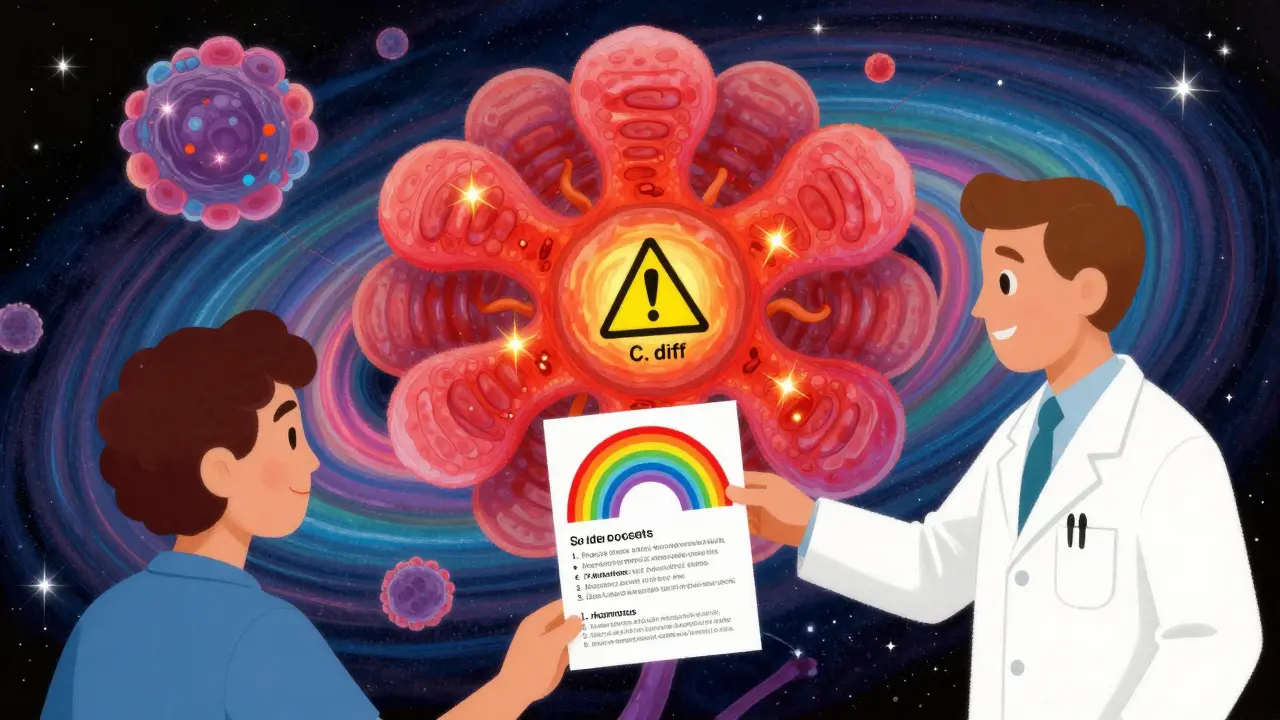
Studies show that patients who get clear advice about side effects are 35% less likely to quit early. When your doctor says, “You might get diarrhea, and here’s how to handle it,” you’re more likely to stick with it. A 2021 study found that patients given a printed side effect guide were 42% more likely to finish their course. That’s why pharmacists now play a key role - they’re trained to explain what to expect and how to cope.
What Your Pharmacist Can Do for You
Don’t skip the pharmacist’s advice. They’re not just the person who hands you the bottle. They can:
- Tell you exactly when to take each pill - with or without food
- Recommend safe probiotics for your specific antibiotic
- Warn you about drug interactions
- Give you a printed checklist of side effects and red flags
A 2022 study found that pharmacist-led counseling reduced early discontinuation by 28%. That’s huge. If your doctor didn’t explain side effects, ask your pharmacist. It’s part of their job.
What’s New in Antibiotic Care
The field is changing fast. In 2023, the FDA approved the first probiotic strain - Lactobacillus reuteri NCIMB 30242 - specifically for preventing antibiotic diarrhea. The CDC launched a free digital tool called the “Antibiotic Side Effect Navigator” that gives personalized tips based on your antibiotic, age, and health history. And research is moving toward personalized antibiotics. A 2023 study showed that testing your gut microbiome before prescribing reduced side effects by 37%. By 2026, AI tools could match you with the best antibiotic for your body and infection, cutting side effects by up to 45%.
Final Tip: Keep a Simple Side Effect Log
For the first few days of your antibiotic, jot down:
- What you ate with your pill
- When you took it
- Any symptoms you felt
- How you felt the next day
This helps you spot patterns. Maybe you only get nauseous when you take it after coffee. Or maybe the diarrhea starts after you skip a dose. This info helps your doctor adjust your plan if needed - and it gives you control.
Antibiotics aren’t perfect, but they’re still one of the most powerful tools we have. You don’t have to choose between feeling bad and getting better. With the right strategies, you can finish your course, protect your health, and help stop the spread of antibiotic resistance.
Can I stop taking antibiotics if I feel better?
No. Feeling better doesn’t mean the infection is gone. Stopping early leaves behind the toughest bacteria, which can multiply and become resistant. This is one of the main reasons antibiotics stop working over time. Always finish the full course unless your doctor tells you otherwise.
Does yogurt help with antibiotic side effects?
Yes - but only if it has live, active cultures. Look for unsweetened yogurt labeled with "Lactobacillus" or "Bifidobacterium." Avoid sugary yogurts, as sugar can feed harmful bacteria. Probiotic supplements with Lactobacillus rhamnosus GG or Saccharomyces boulardii are even more effective and are backed by clinical trials.
Can antibiotics cause long-term gut problems?
In most cases, no. Your gut microbiome usually recovers within weeks after finishing antibiotics. But repeated or long-term use can lead to lasting changes. If you’ve had multiple courses or developed C. diff, talk to your doctor about gut health recovery strategies, including targeted probiotics or, in rare cases, fecal microbiota transplantation.
Why do some antibiotics need to be taken on an empty stomach?
Drugs like tetracycline and doxycycline bind to calcium, iron, and other minerals found in food and dairy. This prevents them from being absorbed into your bloodstream, making them less effective. Taking them on an empty stomach ensures they work properly. Always check the label or ask your pharmacist.
Is it safe to take probiotics while on antibiotics?
Yes. Taking probiotics during antibiotic treatment can reduce diarrhea and help maintain healthy gut bacteria. Take them at least two hours apart from your antibiotic to avoid the antibiotic killing the probiotic bacteria. Start them on day one and continue for a week after finishing your course.
What should I do if I miss a dose of my antibiotic?
If you miss a dose by a few hours, take it as soon as you remember. If it’s close to your next dose, skip the missed one and go back to your regular schedule. Don’t double up - that can increase side effects. Always check the specific instructions for your antibiotic, as some have stricter timing rules.
Peyton Feuer
January 5, 2026 AT 07:09Dee Humprey
January 6, 2026 AT 00:37Akshaya Gandra _ Student - EastCaryMS
January 6, 2026 AT 12:51Jennifer Glass
January 7, 2026 AT 13:40Rory Corrigan
January 7, 2026 AT 15:11Joseph Snow
January 8, 2026 AT 13:24John Wilmerding
January 8, 2026 AT 17:43Michael Rudge
January 9, 2026 AT 13:52Terri Gladden
January 11, 2026 AT 04:34