How the Microbiome Affects Drug Side Effects and Personalized Medicine
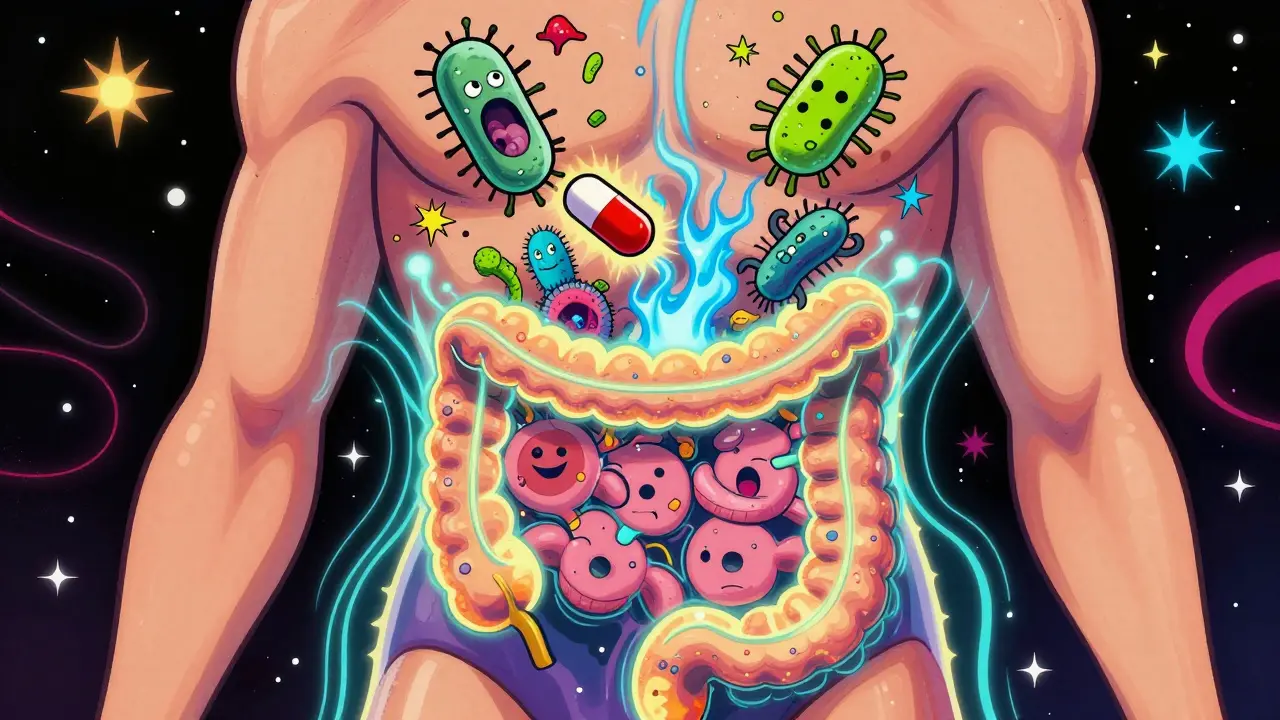
When you take a pill, you assume it’s just your body processing it. But what if trillions of tiny organisms living in your gut are changing that pill before it even reaches your bloodstream? That’s not science fiction-it’s happening right now, and it’s explaining why some people have terrible side effects from medications that work fine for others.
The Hidden Players in Your Drug Response
Your gut is home to over 100 trillion bacteria, viruses, and fungi-collectively called the microbiome. For decades, doctors thought drug metabolism happened only in the liver and kidneys. But research since 2019 has flipped that idea on its head. A landmark study from Yale University found that gut bacteria transform up to 80% of the toxic metabolites circulating in some patients’ bloodstreams. That means the side effects you feel might not be from the drug itself-but from what your gut bugs turned it into. This isn’t rare. Around 63 commonly prescribed drugs, from chemotherapy agents to heart medications, are directly affected by gut microbes. Some bacteria break down drugs too fast, making them useless. Others turn safe compounds into poisons. It’s why two people taking the same dose of the same drug can have completely different outcomes-one feels fine, the other ends up in the ER.How Gut Bacteria Change Drugs
Bacteria don’t just sit there. They have their own enzymes, and those enzymes can chemically alter drugs in ways your body never could. Here are the main ways they do it:- Hydrolysis: Bacteria like Escherichia coli produce beta-glucuronidase, an enzyme that reactivates the toxic form of irinotecan (a chemo drug). This turns a harmless compound into SN-38, which burns holes in the gut lining. That’s why 30-40% of patients on irinotecan get severe diarrhea-because their gut bacteria are turning the drug into poison.
- Reduction: The bacterium Eggerthella lenta inactivates digoxin, a heart medication, by reducing its structure. Patients with high levels of this bug can have up to 30% less drug in their system, putting them at risk of heart failure-even if they’re taking the right dose.
- Activation: The old antibiotic prontosil only works because gut bacteria split it into sulfanilamide, the real active ingredient. Without those bacteria, the drug is useless. In mice, antibiotic treatment dropped its effectiveness from 90% to 12%.
- Dealkylation and Dehalogenation: These reactions alter antidepressants, antiseizure meds like clonazepam, and even statins. Germ-free mice showed 40-60% higher levels of clonazepam in their blood, meaning their brains were exposed to more of the drug than intended.
Why This Matters for Patients
Imagine being on chemotherapy and getting sick every time because your gut bugs are turning your treatment into a toxin. Or taking a blood thinner and having no idea why your levels keep spiking-despite sticking to the exact dose. These aren’t hypotheticals. They’re real, documented cases. The CDC estimates that adverse drug reactions send 1.3 million people to U.S. emergency rooms every year. A growing chunk of those cases can now be traced back to microbiome differences. For cancer patients, irinotecan-induced diarrhea isn’t just uncomfortable-it’s life-threatening. It forces doctors to lower doses, reducing the chance of beating the cancer. But if you could test for beta-glucuronidase activity before treatment, you could give a gut-protecting inhibitor and avoid the side effect entirely. In one trial, a beta-glucuronidase inhibitor cut diarrhea severity by 60-70%. That’s not a minor improvement. It’s the difference between staying on treatment and having to quit.
The Antibiotic Problem
Antibiotics don’t just kill bad bacteria-they wipe out the good ones too. And when they do, they can wreck your drug response. A 2014 study showed that people on long-term antibiotics had 35% lower levels of lovastatin in their blood. The statin wasn’t working as well because the bacteria that helped metabolize it were gone. That means someone could be taking their cholesterol pill daily, but without the right gut bugs, it’s barely doing anything. Even worse, antibiotics can make some drugs more toxic. In rat studies, giving antibiotics before nitrazepam (a sedative) reduced birth defects by 78%. That’s because the bacteria that turned the drug into a teratogen were wiped out. But if you’re not pregnant, you might still get more sedation than expected because your metabolism changed. This creates a vicious cycle: drugs alter the microbiome, and the altered microbiome changes how drugs work. It’s not a one-way street-it’s a feedback loop.How Doctors Are Starting to Fight Back
The field is moving fast. Major pharmaceutical companies like Pfizer and Merck now screen for microbiome effects in Phase I clinical trials. That adds about $2.5 million to development costs-but saves an average of $500 million in post-market liability from bad reactions. Here’s what’s already being used:- Metagenomic sequencing: A stool test costs $300-$500 and can identify which drug-metabolizing genes are present in your gut. Accuracy for known enzymes is over 95%.
- Beta-glucuronidase inhibitors: These are in Phase II trials (NCT04216417). They’re designed to block the enzyme that reactivates SN-38 in the gut, preventing diarrhea without affecting chemotherapy’s cancer-killing power.
- Fecal microbiota transplants (FMT): Costing $3,000-$6,000, FMT is being tested to replace “bad” microbiomes with ones that metabolize drugs safely. Early results in chemo patients show promise.
- Personalized probiotics: In Phase I trials (NCT05102805), scientists are engineering probiotics to either block or enhance specific drug transformations. One version might be designed to stop digoxin inactivation in people with too much Eggerthella lenta.
What This Means for You
You don’t need a lab test to start thinking about your microbiome and meds. Here’s what you can do right now:- If you’re on long-term antibiotics, talk to your doctor about how it might affect your other medications.
- Keep track of side effects. Did your nausea start after a course of antibiotics? Did your pain meds stop working after a gut infection? Write it down.
- Ask if your drug is on the list of known microbiome-sensitive medications. The list includes irinotecan, digoxin, levodopa, paracetamol, and more.
- Don’t assume “more is better.” If you’re taking a drug and feeling worse, it might not be the dose-it might be your gut.
The Future: Personalized Dosing Based on Your Gut
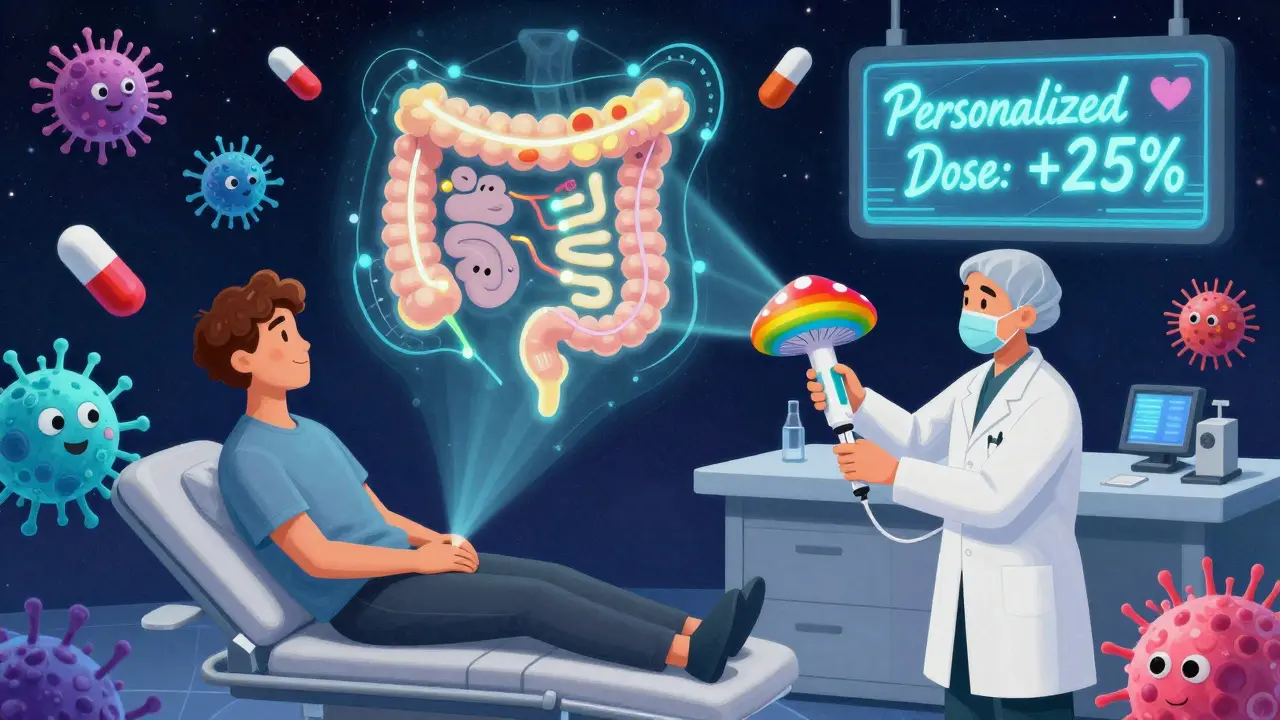
By 2030, we’ll likely see dosing algorithms that factor in your microbiome profile. Imagine getting a blood test and a stool test together, and your doctor says: “Your gut bacteria break down this drug 40% faster than average. We’re increasing your dose by 25%.” Or: “You have high beta-glucuronidase activity. We’re adding a protective agent to your regimen.” The NIH has already invested $14.7 million between 2023 and 2025 to turn this science into real tools. The goal? Reduce adverse drug reactions by 25-35% in the next five years. This isn’t just about making drugs safer. It’s about making them work better-for the right person, at the right dose, at the right time. The future of medicine isn’t just personalized. It’s microbial.Can probiotics help with drug side effects?
Not necessarily. Most over-the-counter probiotics don’t contain the specific strains that affect drug metabolism. While some experimental probiotics are being designed to block harmful bacterial enzymes, regular store-bought ones haven’t been proven to help with drug reactions. Always talk to your doctor before using probiotics with medications.
Are gut bacteria the only reason for drug side effects?
No. Genetics, liver function, kidney health, age, and other medications still play major roles. But the microbiome is now recognized as a key player-especially when side effects seem unexplained. It’s not the whole story, but it’s a missing piece many doctors didn’t know about until recently.
Can I test my own microbiome for drug metabolism?
Yes, through specialized labs that offer metagenomic sequencing for drug-metabolizing genes. These tests are not yet routine in clinics but are available commercially for $300-$500. Results are best interpreted with a doctor familiar with microbiome-drug interactions. Don’t rely on consumer gut health tests-they don’t screen for the relevant enzymes.
Does diet affect how gut bacteria metabolize drugs?
Yes. Fiber, fat, and protein intake can shift the balance of bacterial species. High-fiber diets promote bacteria that may slow drug breakdown, while high-fat diets can increase others that activate toxins. But diet alone can’t reliably control drug metabolism-it’s too complex. It’s a factor, not a fix.
Is this research only for cancer patients?
No. While oncology leads the way because of the high stakes, over 117 drugs across cardiology, neurology, psychiatry, and diabetes are affected. Even common drugs like acetaminophen and clonazepam show microbiome-dependent metabolism. Anyone on long-term medication should be aware of this connection.
Sarah Mailloux
January 16, 2026 AT 10:30Amy Ehinger
January 17, 2026 AT 04:18Crystel Ann
January 17, 2026 AT 08:04Haley Graves
January 17, 2026 AT 19:52ellen adamina
January 18, 2026 AT 10:32Gloria Montero Puertas
January 19, 2026 AT 18:09Tom Doan
January 20, 2026 AT 23:08Sohan Jindal
January 22, 2026 AT 19:58Frank Geurts
January 24, 2026 AT 00:28Mike Berrange
January 25, 2026 AT 19:04Jami Reynolds
January 26, 2026 AT 00:51RUTH DE OLIVEIRA ALVES
January 26, 2026 AT 18:42Nat Young
January 28, 2026 AT 10:48