Hemorrhoids: Internal vs. External Types and Treatment Options

You’re sitting at your desk, trying to focus on a spreadsheet, but every shift in your posture sends a sharp twinge of discomfort through your backside. Or maybe you just finished using the restroom and noticed a splash of bright red blood in the bowl. Panic sets in immediately. Is it something serious? Do you need surgery? The truth is, you are likely dealing with hemorrhoids, a condition so common that roughly 75% of people will experience symptoms at some point in their lives. But not all hemorrhoids are created equal. Knowing whether you have internal or external types changes everything about how you treat them.
What Are Hemorrhoids Really?
Before we talk about pain and pills, let’s clear up a misconception. Hemorrhoids aren’t always a disease. Everyone has hemorrhoidal tissue. These are vascular cushions-clusters of veins and connective tissue located in the lower rectum and around the anus. Their job is actually quite useful: they help seal the anal canal to keep stool and gas from leaking out unexpectedly. Think of them like the gasket on a jar lid; they provide a tight seal. Problems arise when these cushions swell due to increased pressure, becoming inflamed, enlarged, and symptomatic. This swelling can happen inside the rectum (internal) or under the skin around the anus (external). The distinction matters because the nerve endings in these two areas are completely different, which dictates why one might bleed without hurting, while the other causes intense pain without much bleeding.
Internal Hemorrhoids: The Silent Bleeders
Internal hemorrhoids develop above the dentate line, inside the rectal lining. Because this area lacks sensitive pain receptors, you often won’t feel them unless they prolapse (push out). The most common sign is painless, bright red bleeding during bowel movements. You might see streaks on toilet paper or drops in the toilet bowl. If left untreated, they can progress through four grades:
- Grade I: Swollen but stay inside. No prolapse.
- Grade II: Push out during straining but go back in on their own.
- Grade III: Push out and must be pushed back in manually by hand.
- Grade IV: Permanently prolapsed and cannot be pushed back in.
If you notice bleeding, don’t assume it’s just hemorrhoids. While common, rectal bleeding can signal colorectal cancer or inflammatory bowel disease. Always get persistent bleeding checked by a doctor to rule out serious conditions.
External Hemorrhoids: The Painful Lumps
In contrast, external hemorrhoids form below the dentate line, under the skin surrounding the anus. This area is packed with pain-sensitive nerve endings. Consequently, even mild swelling here hurts. Symptoms include itching, irritation, and visible lumps near the anal opening. Sitting down can become uncomfortable, especially if the hemorrhoids are swollen.
A particularly nasty variant is the thrombosed external hemorrhoid. This happens when a blood clot forms inside the vein. It appears suddenly as a firm, purple or blue lump that is exquisitely tender to the touch. The pain is often severe enough to disrupt sleep and daily activities. Unlike internal hemorrhoids, thrombosed ones rarely resolve quickly on their own and may require medical intervention for relief.
| Feature | Internal Hemorrhoids | External Hemorrhoids |
|---|---|---|
| Location | Inside rectum (above dentate line) | Under skin around anus (below dentate line) |
| Pain Level | Usually painless (unless prolapsed) | Painful, itchy, sensitive to touch |
| Main Symptom | Bright red bleeding | Lumps, itching, pain, swelling |
| Visibility | Invisible unless prolapsed | Visible externally |
| Complications | Anemia from chronic bleeding | Thrombosis (blood clots) |
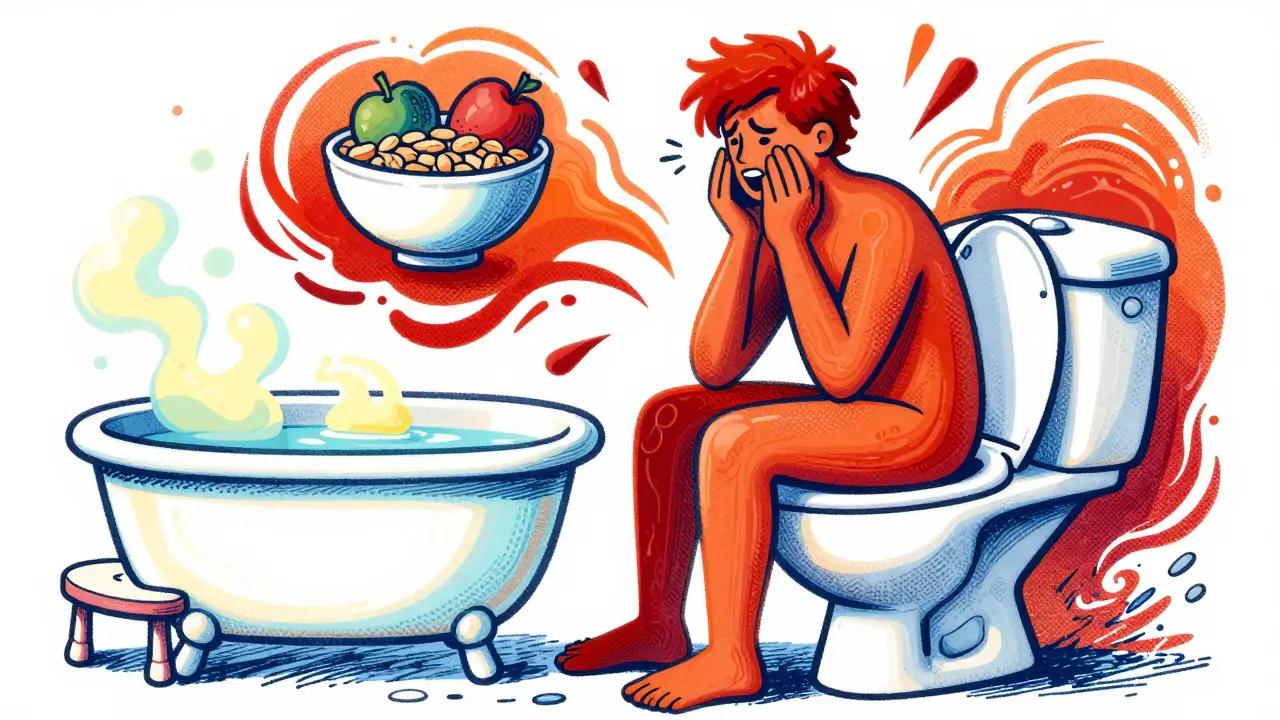
Why Do They Happen? Common Triggers
Hemorrhoids result from excessive pressure on the lower rectum. In Perth, where we enjoy a relaxed lifestyle, we might overlook subtle habits that contribute to this pressure. Chronic constipation is a major culprit. Straining to pass hard stools forces blood into the hemorrhoidal veins, causing them to bulge. Similarly, chronic diarrhea can irritate the area through frequent wiping and inflammation.
Sitting too long on the toilet is another silent killer. Many of us scroll through our phones while on the pot, staying seated for 10-15 minutes instead of the recommended five. Gravity pulls blood down, pooling in the veins. Pregnancy also increases risk significantly due to hormonal changes relaxing vein walls and the weight of the uterus pressing on pelvic veins. Obesity and heavy lifting further add to the abdominal pressure, pushing against those delicate vessels.
Treatment Options: From Home Care to Surgery
The good news is that most hemorrhoids respond well to conservative treatment. For mild cases, lifestyle changes are your first line of defense.
Home Remedies and Lifestyle Changes
Increase your fiber intake to 25-30 grams daily. Foods like oats, beans, fruits, and vegetables soften stools, reducing the need to strain. Hydration is equally critical; aim for eight to ten glasses of water a day. Fiber without water can actually worsen constipation. To soothe immediate irritation, try warm sitz baths. Soak your bottom in warm water for 15-20 minutes, two to three times a day. This improves blood flow and relaxes the sphincter muscle. Over-the-counter creams containing hydrocortisone can reduce itching, while witch hazel pads offer cooling relief for swelling.
Minimally Invasive Procedures
If home care fails, doctors may suggest office-based procedures for internal hemorrhoids. Rubber band ligation is highly effective for Grades I-III. A tiny rubber band is placed around the base of the hemorrhoid, cutting off blood supply until it shrivels and falls off within a week. Other options include sclerotherapy (injecting a chemical solution to shrink tissue) and infrared coagulation (using heat to scar and shrink the vein).
Surgical Interventions
For severe Grade IV internal hemorrhoids or recurrent external thrombosis, surgery might be necessary. Traditional hemorrhoidectomy removes the excess tissue entirely. It has a high success rate (95%) but comes with a painful recovery period lasting two to four weeks. Stapled hemorrhoidopexy is an alternative that repositions prolapsed tissue rather than removing it, offering less post-operative pain but a slightly higher recurrence rate.

Prevention: Stopping Them Before They Start
Recurrence rates drop from 50% to under 10% if you stick to preventive measures. Don’t wait until you’re in pain to change habits. Use a small footstool while on the toilet to raise your knees above your hips; this mimics a squatting position, straightening the rectum and reducing pressure by up to 30%. Avoid straining-if nothing happens after five minutes, get up and try later. Regular exercise helps maintain bowel regularity and healthy weight, both of which protect your veins.
Frequently Asked Questions
Can hemorrhoids cause dizziness?
Yes, if you experience significant or chronic bleeding, you may develop anemia, leading to fatigue and dizziness. If you feel lightheaded along with rectal bleeding, seek medical attention promptly to check your iron levels.
How long does a thrombosed hemorrhoid last?
Pain usually peaks within 48 hours and then gradually subsides over 7-10 days. However, the lump may remain for several weeks. If pain is severe, a doctor can drain the clot within the first 72 hours for immediate relief.
Is bleeding always a sign of hemorrhoids?
No. While hemorrhoids are a common cause, rectal bleeding can also indicate anal fissures, polyps, diverticulitis, or colorectal cancer. Never self-diagnose persistent bleeding; always consult a healthcare provider for proper evaluation.
Do pregnant women get hemorrhoids more often?
Yes, 25-35% of pregnant women develop hemorrhoids. Hormonal changes relax vein walls, and the growing uterus puts pressure on pelvic veins. Pelvic floor exercises and sleeping on your left side can help reduce pressure.
When should I see a doctor?
See a doctor if you have severe pain, persistent bleeding, no improvement after a week of home treatment, or if you notice changes in bowel habits. Early consultation prevents complications like anemia or strangulated hemorrhoids.
John Park
August 29, 2026 AT 23:03Its fascinating how we ignore the gasket metaphor until it leaks. We are all just vessels waiting for pressure to break us, yet society demands we sit still while our insides revolt against gravity and bad habits. The duality of pain vs silence in internal/external types mirrors the human condition; some suffer loudly, others bleed quietly into the void.
Also why is Perth mentioned? Is there a specific cultural stoicism regarding backside issues down under? Or is this just another case of localized medical advice being presented as universal truth without accounting for global dietary differences? Its sloppy analysis really.
Emmanuel Umana
August 31, 2026 AT 02:04The body speaks through discomfort. Ignoring these signals is a failure of self-knowledge. In Nigeria, we often treat such ailments with herbal remedies first, respecting the natural order before seeking invasive cuts. Prevention is indeed better than cure, as they say. The footstool tip is practical wisdom disguised as medical advice.
Lilian Binda
September 1, 2026 AT 23:40Why do people always wait till its too late?? You need to eat your fruits and stop sitting on your phone for hours like zombies. Its basic hygiene and common sense not rocket science!! If you cant manage your own bowels dont expect doctors to fix your laziness. Africans have been dealing with this naturally for centuries without all these fancy creams and surgeries. Wake up!!
Colin Finch
September 2, 2026 AT 10:21Oh, the sheer agony of the thrombosed variant! It’s truly a harrowing experience, isn’t it? I remember when mine flared up last winter, I could barely stand upright, let alone sit down at my desk. The description of the 'firm, purple lump' brings back memories of pure misery. But thank heavens for warm baths and witch hazel pads-they were absolute lifesavers during that dark period. Truly, prevention is key, but when disaster strikes, comfort is king!
Kathleen McGrath
September 4, 2026 AT 07:11This is such helpful info! I didn't realize the difference between internal and external was so distinct regarding pain levels. It makes total sense now why one bleeds silently and the other hurts so much. Thanks for breaking it down simply. The footstool trick is going straight onto my list of things to try today. Stay strong everyone, we can beat this together!
Lemuel Gomez
September 5, 2026 AT 18:12I... I completely agree with the point about hydration... fiber without water is basically cement in the gut... I learned that the hard way after increasing my oat intake too quickly... it was quite the unpleasant week...
Also... the rubber band ligation sounds terrifying... but apparently effective... I might ask my GP about it if the creams stop working... thanks for the clear comparison table... it helped me understand my symptoms better...
Fabian Saldana
September 6, 2026 AT 04:17Absolutely essential reading for every professional! Taking proactive steps towards health is the hallmark of success. Do not let discomfort hinder your productivity. Implement these lifestyle changes immediately-hydration, posture, and regular breaks. Your future self will thank you for prioritizing well-being over convenience. Let us strive for excellence in all bodily functions!
Betty Childers
September 6, 2026 AT 17:56Hey, no judgment here! 😅 It's super common and nothing to be ashamed of. The part about checking persistent bleeding with a doc is huge though, don't skip that just because it feels awkward. Better safe than sorry. Hope everyone finds relief soon! 🌿
Maneesh kv
September 7, 2026 AT 20:44OMG YES!!! 🤯🤯 The phone on toilet thing is SO REAL!! 😂😂 My mom used to yell at me for this but she was right!! Also the foot stool hack changed my life fr 🚽✨ No more straining!! Why did nobody tell me sooner??? 😭😭 Keep sharing tips like this fam 💪💪🔥🔥