Healthy Snacking: High-Protein, Low-Calorie Ideas for Weight Management
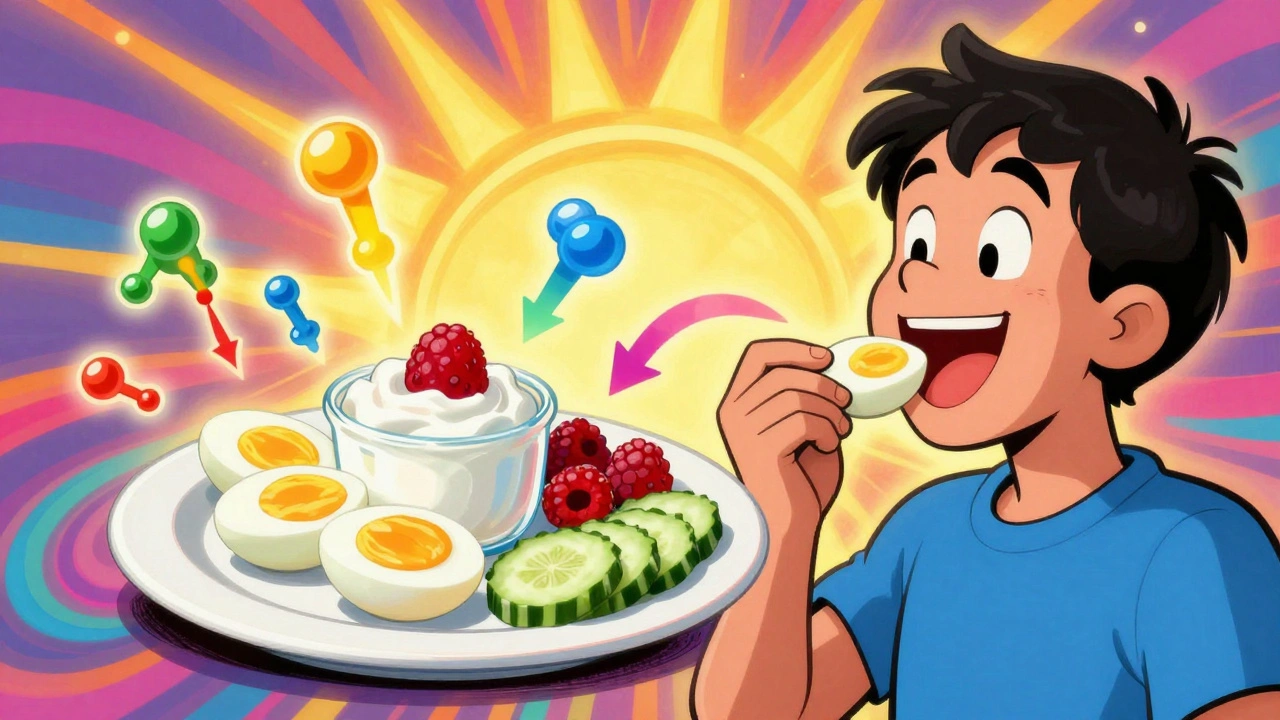
Want to stop mid-afternoon cravings without blowing your calorie budget? You’re not alone. Most people trying to manage their weight hit the same wall: hunger strikes between meals, and the go-to snacks-crackers, granola bars, fruit-are either too sugary or don’t keep you full. The fix isn’t eating less. It’s eating smarter. High-protein, low-calorie snacks are the quiet hero of sustainable weight loss. They don’t just fill you up-they reset your hunger signals, stabilize blood sugar, and help preserve muscle as you lose fat.
Why Protein Is the Secret Weapon
Not all calories are created equal. A 150-calorie apple will leave you hungry in an hour. A 150-calorie snack with 15g of protein? You’ll feel satisfied for hours. That’s because protein triggers the release of satiety hormones like PYY and GLP-1, which tell your brain, “We’re done eating.” Studies show protein snacks reduce next-meal intake by 12-15% compared to carb-heavy options. It’s not magic-it’s biology.
Plus, protein has a high thermic effect. Your body burns 20-30% of its calories just digesting it. That’s three times more than carbs or fat. So when you eat a hard-boiled egg, you’re not just getting nutrients-you’re burning extra energy in the process.
The sweet spot? Aim for 10-20g of protein per snack under 200 calories. More than 30g doesn’t add more fullness-it just adds unnecessary calories. And skip anything with more than 5g of added sugar. Those sugar alcohols in some protein bars? They can cause bloating and crashes. Stick to whole, recognizable ingredients.
Top 7 High-Protein, Low-Calorie Snacks (Real Food, No Hype)
- Hard-boiled eggs - 2 eggs = 12g protein, 156 calories. They’re portable, require zero prep if you boil a batch on Sunday, and are the most logged high-protein snack on MyFitnessPal. Sprinkle with black pepper and sea salt for flavor without calories.
- Plain Greek yogurt (unsweetened) - 100g (about 1/3 cup) = 10g protein, 59 calories. Top with 1/4 cup fresh berries (20 calories, 3g fiber) for a snack that’s sweet, creamy, and blood-sugar friendly. Avoid flavored versions-they’re sugar bombs in disguise.
- Cottage cheese with cucumber slices - 1/2 cup = 14g protein, 90 calories. Add 1/2 cup sliced cucumber (8 calories) and a dash of everything bagel seasoning. The crunch and saltiness make it feel like a treat, not a chore. Reddit users call this the most satisfying snack under 150 calories.
- Edamame (steamed, lightly salted) - 1 cup = 17g protein, 189 calories. Packed with fiber (8g), it’s one of the few plant-based snacks that hits both protein and satiety targets. Buy frozen, steam in 3 minutes, and keep a bag in your freezer.
- Roasted chickpeas - 1/2 cup = 7g protein, 6g fiber, 135 calories. Toss canned chickpeas with olive oil, paprika, and garlic powder, then roast at 200°C for 25 minutes. Crunchy, savory, and way better than chips. Store in an airtight jar for up to 5 days.
- Low-fat cheese sticks or mini mozzarella balls - 1 stick = 7g protein, 80 calories. Pair with a few whole-grain crackers (30 calories) for a balanced bite. Look for options with no added preservatives. Cheese is a complete protein-meaning it has all nine essential amino acids your body can’t make.
- Hard-boiled egg muffins - Made with eggs, spinach, and a dash of cheese, each muffin = 8g protein, 75 calories. Bake a batch on Sunday and grab one on the way out the door. BBC Good Food users rate these 4.3/5 for taste and satiety.
Plant-Based vs. Animal-Based: What Works Better?
Some people swear by plant proteins. Others stick to eggs and dairy. The truth? Both work-but they serve different needs.
Animal-based proteins like eggs, Greek yogurt, and cottage cheese are “complete.” That means they contain all nine essential amino acids your body needs to build and repair muscle. They also score a perfect 1.0 on the Protein Digestibility Corrected Amino Acid Score (PDCAAS). For muscle preservation during weight loss, that matters.
Plant-based options like edamame, chickpeas, and tofu are great too-but they’re often incomplete. Pair them smartly: hummus (chickpeas) with whole-wheat pita, or peanut butter on whole-grain toast. Together, they form a complete protein profile. Bonus: plants bring fiber, which boosts fullness even more. A snack with both protein and fiber (like edamame) increases satiety by 30% more than protein alone.
Don’t force yourself into one camp. Rotate. Use animal proteins for quick, high-quality hits. Use plants for fiber and variety. Your gut-and your appetite-will thank you.
What to Avoid (Even If It Says “High Protein”)
Not every bar, shake, or chip labeled “high-protein” is healthy. Many are just sugar and chemicals in disguise.
- Protein bars with sugar alcohols - Quest, Atkins, and similar bars often use maltitol or erythritol. These can cause bloating, gas, or even diarrhea in sensitive people. Check the ingredient list. If you see “maltitol,” “sorbitol,” or “isomalt,” skip it.
- Protein bars with dates or honey as first ingredients - RXBARs get praised for clean ingredients, but one bar has 13g of sugar-all from dates. That’s more than a candy bar. It’s still better than processed sugar, but if you’re watching sugar intake, it’s not ideal.
- Jerky with added sugar and sodium - A single ounce of beef jerky can have 500-700mg of sodium-25% of your daily limit. Look for brands with less than 300mg sodium per serving and no added sugar.
- Protein bagels or protein bread - These are often dense, gummy, and full of additives. One “protein bagel” can be 300+ calories with only 15g protein. You’re better off with a boiled egg and a slice of whole-grain toast.
Stick to whole foods whenever possible. If you do buy packaged snacks, read labels like a detective. Protein content? Good. Added sugar? Under 5g? Good. Ingredients you can pronounce? Even better.
How to Make This Easy (No Time? No Problem)
The biggest reason people quit healthy snacking? It feels like work.
Here’s the fix: prep in 15 minutes once a week.
- Boil a dozen eggs on Sunday. Peel and store in the fridge with salt and pepper packets in small containers.
- Portion out cottage cheese into 4 small jars. Add a tablespoon of berries to each.
- Roast a big batch of chickpeas. Store in a jar.
- Buy pre-shelled edamame. Microwave for 2 minutes and sprinkle with sea salt.
Keep a stash in your bag, desk drawer, or car. When hunger hits, you won’t reach for the vending machine-you’ll reach for something that actually helps you.
Start small. If 20g of protein feels like a lot, begin with 10g. One cheese stick and a hard-boiled egg. Build up over time. Your body will adapt.
When and How Often to Snack
You don’t need to snack every 2 hours. Snack when you’re genuinely hungry-not because it’s 3 p.m. and you “should.”
Best times:
- Between breakfast and lunch if you’re active or skipping carbs
- After a workout (within 45 minutes) to help muscle recovery
- Before bed if you’re active or over 40-protein overnight helps prevent muscle breakdown
Dr. Gabrielle Lyon, a leading expert in muscle health, says: “Protein distribution matters more than total daily intake.” Spreading your protein across meals and snacks-aiming for 20-30g per eating occasion-is what keeps your muscles strong and your metabolism firing.
Don’t snack if you’re not hungry. But if you are? Make it count.
Real Results, Real Stories
People aren’t just logging these snacks-they’re losing weight and keeping it off.
One user on Reddit, 38, female, lost 14kg over 6 months by swapping her afternoon cookie for cottage cheese and berries. “I didn’t feel deprived,” she wrote. “I felt full. I slept better. I stopped craving sugar.”
Another, a 42-year-old construction worker, started eating 2 boiled eggs and a handful of edamame after his morning shift. “I used to eat a whole bag of chips by noon. Now I’m not hungry until lunch. My waistline shrunk. My energy stayed steady.”
These aren’t outliers. They’re people who figured out that weight management isn’t about restriction-it’s about choosing foods that work with your body, not against it.
Final Thought: Snacking Is a Tool, Not a Trap
High-protein, low-calorie snacks aren’t about being perfect. They’re about being strategic. They’re your backup plan when hunger strikes, your insurance policy against overeating at dinner, and your secret weapon for keeping muscle while losing fat.
You don’t need expensive supplements. You don’t need to follow a rigid diet. Just keep simple, whole-food options on hand. Eat when you’re hungry. Stop when you’re satisfied. And let protein do the heavy lifting-for your appetite, your metabolism, and your long-term health.
Audrey Crothers
December 13, 2025 AT 09:27OMG YES THIS!! I swapped my afternoon candy bar for cottage cheese and berries and I swear I haven’t felt this full in years 😭 No more 4 p.m. crash, no more sugar cravings-I’m literally sleeping better. Thank you for this life hack!!
Stacy Foster
December 14, 2025 AT 11:01Protein snacks? Please. Big Pharma and the dairy lobby pushed this whole ‘protein = fullness’ lie to sell you overpriced yogurt and egg substitutes. Your body doesn’t need 20g of protein at 3 p.m.-it needs to detox from processed food culture. Read the WHO reports they don’t want you to see.
Robert Webb
December 15, 2025 AT 17:00I really appreciate how practical this is. I used to think I needed fancy protein powders or expensive bars, but honestly, the hard-boiled eggs and edamame have been game-changers for me. I prep them on Sundays, keep them in my work bag, and when hunger hits, I just grab one. No stress, no guilt. Also, the bit about avoiding sugar alcohols? Huge. I used to blame myself for bloating-turns out it was the Quest bars. Who knew?
And for anyone worried about plant proteins being ‘incomplete’-pairing them with whole grains is such an easy fix. Hummus with whole wheat pita? Done. It’s not rocket science. It’s just smart eating.
Also, the 15-minute prep tip? Genius. I didn’t realize how much time I was wasting scrolling for snacks until I started doing this. Now I feel like I’m in control. Not perfect, but definitely better.
Rob Purvis
December 17, 2025 AT 15:10Just wanted to add-roasted chickpeas are the MVP. I roast them with smoked paprika, garlic powder, and a tiny bit of olive oil-then I store them in a mason jar. They stay crunchy for days! And the fiber? It’s a game-changer for digestion. I used to get constipated all the time-now I’m regular without any supplements. Also, 135 calories? That’s less than half a banana, but it keeps me full for 3 hours. No joke.
And yes-skip the protein bread. I tried one last week. It tasted like chewy cardboard with a protein powder aftertaste. A slice of whole grain toast with peanut butter? Better taste, better nutrition, way cheaper.
Laura Weemering
December 17, 2025 AT 16:24It’s fascinating how the protein-centric paradigm has been weaponized to pathologize natural hunger cycles. The body’s homeostatic mechanisms are being pathologized under the guise of ‘weight management.’ Who benefits? The processed food industry, yes-but also the fitness-industrial complex that profits from your insecurity.
Moreover, the PDCAAS metric? It’s a 1990s relic. Amino acid scoring doesn’t account for microbiome interactions, epigenetic modulation, or circadian protein utilization. And yet, here we are-quantifying satiety like it’s a spreadsheet.
I’m not anti-protein. I’m anti-reductionism.
Levi Cooper
December 17, 2025 AT 21:34Look, I get it. But in America, we’ve got real problems. We don’t need to be eating ‘edamame’ and ‘cottage cheese’ like some fancy yoga mom. Real food is meat and potatoes. This whole ‘low-calorie snack’ nonsense is just another way to make people feel guilty for eating. If you’re hungry, eat. Don’t count grams. Eat a burger. Be free.
Nathan Fatal
December 19, 2025 AT 14:21I’ve been doing this for over a year now. The shift from sugary snacks to high-protein ones didn’t just help me lose weight-it changed my entire relationship with food. I used to binge because I was always hungry. Now I eat, I feel satisfied, and I don’t think about food for hours. It’s not about willpower. It’s about chemistry.
And yes, the thermic effect of protein is real. I’ve tracked my calories for years. Eating 150 calories of eggs burns more net calories than 150 calories of granola. That’s not theory-that’s science you can measure.
Also, the prepping tip? Life-changing. I boil eggs every Sunday, portion out cheese sticks, and keep roasted chickpeas in my drawer at work. When I’m tired, stressed, or rushing-I grab something that doesn’t make me feel like garbage afterward. That’s not dieting. That’s self-respect.
wendy b
December 20, 2025 AT 12:35uhhh i think you’re overcomplicating this. just eat the eggs. and maybe the yogurt. but like… stop with the PDCAAS and the ‘thermic effect’ nonsense. i’m not a biochemist. i just want to not be hungry at 3pm. and i did. with cheese and eggs. thanks.
Donna Anderson
December 21, 2025 AT 16:16YESSSSSS!! I started with ONE hard-boiled egg a day and now I’m hooked. My husband even asked if I’ve been doing yoga because I’m so calm. It’s the snacks. No sugar crashes. No brain fog. I even told my mom and now she’s eating cottage cheese with berries for breakfast. We’re all winning. 💪✨