Grapefruit Juice and Medications: What You Need to Know Before You Drink
Why Grapefruit Juice Can Be Dangerous with Your Medications
It’s a healthy drink. Bright, tangy, full of vitamin C - grapefruit juice seems like a smart start to the day. But if you’re taking certain medications, that glass could be putting your life at risk. This isn’t a myth or a warning from an old-fashioned doctor. It’s science. And it’s been proven for over 30 years.
In 1989, researchers in Canada noticed something strange. Patients taking the blood pressure drug felodipine had way higher drug levels in their blood than expected - all because they drank grapefruit juice. That discovery led to the identification of a dangerous, long-lasting interaction between grapefruit and more than 85 medications. Some of these interactions can cause kidney failure, heart rhythm problems, muscle breakdown, or even death.
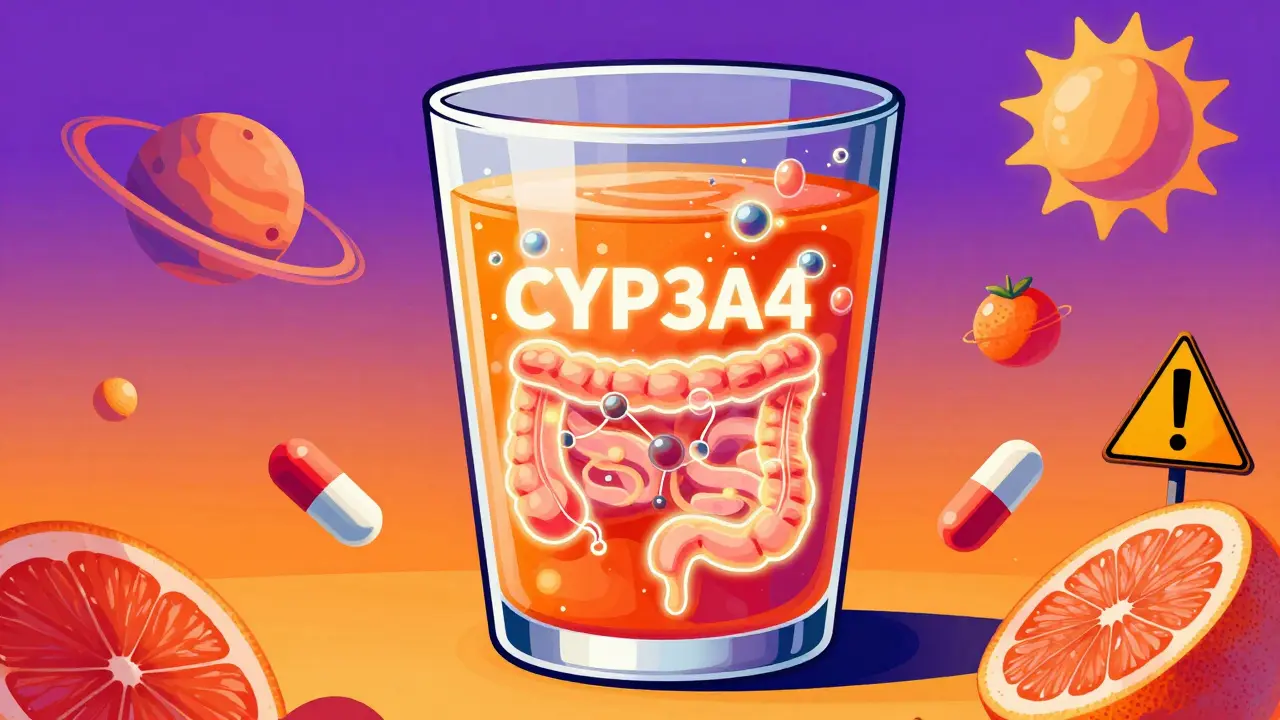
The problem isn’t the sugar or the acidity. It’s a group of natural chemicals in grapefruit called furanocoumarins. These compounds shut down an enzyme in your gut called CYP3A4. This enzyme normally breaks down about half of all oral medications before they enter your bloodstream. When it’s blocked, your body absorbs way more of the drug than intended. And once it’s turned off, it takes days to come back online.
How Long Does the Effect Last?
Most drug interactions happen when you take the medicine and the food at the same time. Grapefruit juice is different. One glass - even if you drank it 12 hours before your pill - can still cause a problem. The enzyme inhibition lasts 24 to 72 hours. That means if you have a glass of grapefruit juice on Monday morning, you’re still at risk on Wednesday afternoon.
Studies show that 200 milliliters (about 6.7 ounces) of fresh grapefruit juice can block up to 47% of CYP3A4 activity within four hours. The effect peaks at 24 hours and doesn’t fully recover until three days later. That’s why the FDA and other health agencies say: avoid grapefruit entirely while taking these medications. Not just around the time you take your pill. Not just on days you feel fine. All the time.
Which Medications Are Most at Risk?
Not every drug interacts with grapefruit. But some of the most commonly prescribed ones do. Here’s a breakdown of the most dangerous combinations:
Statins (Cholesterol Drugs)
- Simvastatin (Zocor): Grapefruit juice can triple blood levels. This raises the risk of rhabdomyolysis - a condition where muscle tissue breaks down and can cause kidney failure. One study found the risk jumped from 0.04 to 0.44 per 100 people per year with just daily grapefruit juice.
- Atorvastatin (Lipitor): Moderate interaction. Blood levels increase by about 30%. Still risky, especially with high doses or in older adults.
- Pravastatin (Pravachol) and Rosuvastatin (Crestor): No significant interaction. These are safer alternatives if you love grapefruit.
Calcium Channel Blockers (Blood Pressure Medications)
- Felodipine (Plendil): Blood levels can increase up to five times. Can cause severe low blood pressure, dizziness, or heart rhythm issues.
- Nifedipine (Procardia): About 3.3 times higher levels. Risk of sudden drops in blood pressure.
- Amlodipine (Norvasc): Minimal interaction. Safe to consume with grapefruit.
Other High-Risk Medications
- Cyclosporine (Neoral): Used after organ transplants. Grapefruit can raise levels by 50-60%, leading to kidney damage.
- Amiodarone (Cordarone): An antiarrhythmic. Grapefruit increases levels by 30-40%, raising the risk of dangerous heart rhythms.
- Some anti-anxiety and sleep drugs: Like triazolam and buspirone. Can cause extreme drowsiness or breathing problems.
Medications That Are Generally Safe
- Trazodone (Desyrel) and Zolpidem (Ambien): Clinical studies show little to no interaction.
- Fluvastatin (Lescol): Not metabolized by CYP3A4. Safe.
- Levothyroxine (Synthroid): No known interaction.
Not All Citrus Is the Same
Just because grapefruit is dangerous doesn’t mean all citrus fruits are. Here’s what you need to know:
- Seville oranges (used in marmalade): Contain the same furanocoumarins. Avoid them too.
- Pomelos: A close relative of grapefruit. Same risk.
- Sweet oranges (like navel or Valencia): No furanocoumarins. Safe.
- Lemons and limes: No significant interaction. Safe in normal amounts.
Even orange juice from concentrate? Usually fine - unless it’s made from Seville oranges. Always check the label.
Why Some People Are More at Risk
Not everyone who drinks grapefruit juice and takes a statin will have a bad reaction. But some people are much more vulnerable. Why?
It comes down to genetics. Some people naturally have more CYP3A4 enzymes in their gut. When grapefruit blocks those enzymes, the drug levels spike higher than in people with lower baseline enzyme activity. This difference can be as big as an 8-fold increase in drug concentration - from zero effect to life-threatening toxicity.
Age matters too. People over 65 are more likely to be on multiple medications and more likely to drink grapefruit juice. According to USDA data, older adults make up 40% of grapefruit consumers. They’re also more sensitive to side effects like low blood pressure or muscle damage.
And here’s the catch: there’s no simple test to know if you’re in the high-risk group. That’s why experts say the only safe approach is to avoid grapefruit entirely if you’re on a medication that interacts with it.
What Should You Do?
Here’s a practical plan to stay safe:
- Check your meds. Look at the patient information leaflet that comes with your prescription. If it says "avoid grapefruit" or "do not consume grapefruit products," take it seriously.
- Ask your pharmacist. When you pick up a new prescription, ask: "Does this interact with grapefruit?" Pharmacists are trained to catch this - and 89% of them routinely screen for it.
- Keep a medication list. Include every pill, supplement, and over-the-counter drug. Bring it to every doctor visit.
- Switch if needed. If you love grapefruit and are on simvastatin, ask your doctor about switching to pravastatin or rosuvastatin. Same for cyclosporine - tacrolimus is a safer alternative.
- Don’t assume "a little" is safe. Even one glass a week can be risky. The effect lasts days.
What About Supplements and Herbal Products?
Yes, some supplements can interact too. St. John’s wort, for example, affects CYP3A4 - but in the opposite way. It speeds up drug breakdown, making medications less effective. Other herbal products like goldenseal or black pepper extract can also interfere. Always tell your doctor what you’re taking - even "natural" stuff.
What’s Being Done to Fix This?
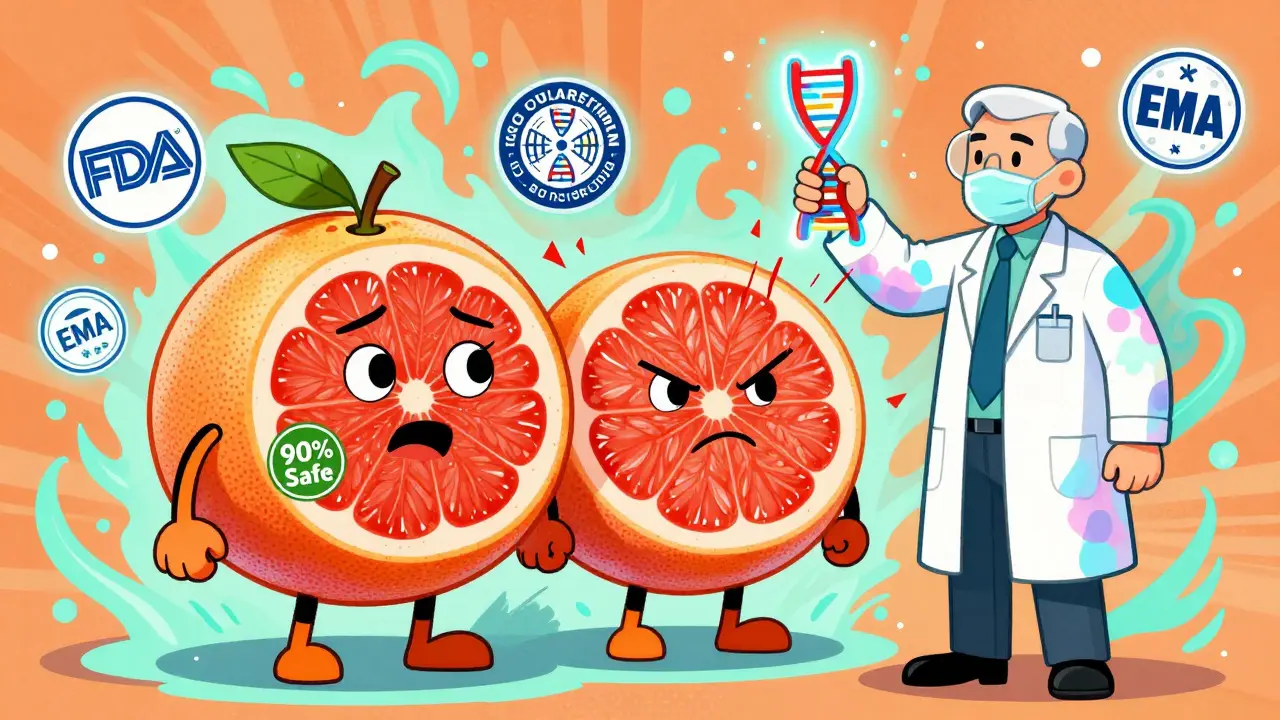
Regulators are catching up. Since 2014, the FDA has required drugmakers to test new oral medications for grapefruit interactions. In 2021, the European Medicines Agency made it mandatory for all new drugs metabolized by CYP3A4.
And there’s hope on the horizon. In October 2023, the USDA announced that CRISPR-edited grapefruit with 90% less furanocoumarin had completed early safety trials. If this works, we might one day have a safe version of the fruit. But that’s years away. For now, the advice stays the same: if your medication warns you, skip it.
Bottom Line: Don’t Guess. Ask.
Grapefruit juice isn’t evil. Medications aren’t evil. But when they meet in your body, the results can be deadly. The science is clear. The warnings are real. And the risk isn’t worth it.
If you’re on a medication for high blood pressure, high cholesterol, heart rhythm, or after a transplant - don’t risk it. Talk to your doctor. Check your labels. Ask your pharmacist. And if you’re not sure? Skip the grapefruit. Your body will thank you.
Bob Hynes
February 3, 2026 AT 06:02Ellie Norris
February 4, 2026 AT 07:46larry keenan
February 4, 2026 AT 15:00Nick Flake
February 5, 2026 AT 22:18Akhona Myeki
February 7, 2026 AT 15:54Chinmoy Kumar
February 9, 2026 AT 15:22Brett MacDonald
February 11, 2026 AT 11:24Marc Durocher
February 12, 2026 AT 04:20Sandeep Kumar
February 13, 2026 AT 02:53Becky M.
February 13, 2026 AT 11:01