Generic Drug Patents Explained: Exclusivity Periods Across Countries
Why does a life-saving medication cost $500 in one country but $10 in another, even when the active ingredient is identical? The answer often lies not in manufacturing costs, but in patent exclusivity periods. These legal timelines dictate exactly when generic competitors can enter the market, creating a complex global landscape that balances innovation incentives with patient access. Understanding these rules is crucial for anyone navigating pharmaceutical pricing, policy, or supply chains.
The Core Conflict: Innovation vs. Access
Patent exclusivity serves as a temporary monopoly granted to originator pharmaceutical companies. This protection allows them to recoup massive research and development (R&D) investments before generic manufacturers can produce cheaper alternatives. According to the Tufts Center for the Study of Drug Development, bringing a single new drug to market costs approximately US$2.3 billion. Without this period of exclusive sales, many argue that the financial risk would stifle innovation. However, critics point out that once a drug is approved, the marginal cost of production drops significantly. The tension between protecting intellectual property and ensuring affordable access defines the entire debate around generic entry.
United States: The Hatch-Waxman Framework
The U.S. system is built on the Hatch-Waxman Act of 1984, formally known as the Drug Price Competition and Patent Term Restoration Act. This legislation created a dual path: it streamlined the approval process for generics while restoring some patent time lost during FDA review. Standard patents last 20 years from filing, but because drug development takes over a decade, innovators typically only enjoy 6-10 years of effective market protection after launch. To compensate, the U.S. offers Patent Term Extension (PTE), which can add up to 5 years, provided the total post-approval life does not exceed 14 years.
Beyond standard patents, the U.S. employs several layers of regulatory exclusivity:
- New Chemical Entity (NCE): 5 years of data exclusivity for drugs with novel active ingredients.
- Orphan Drug Exclusivity: 7 years for treatments targeting rare diseases (affecting fewer than 200,000 people in the U.S.).
- Pediatric Exclusivity: An additional 6 months added to any existing protection if clinical trials in children are completed.
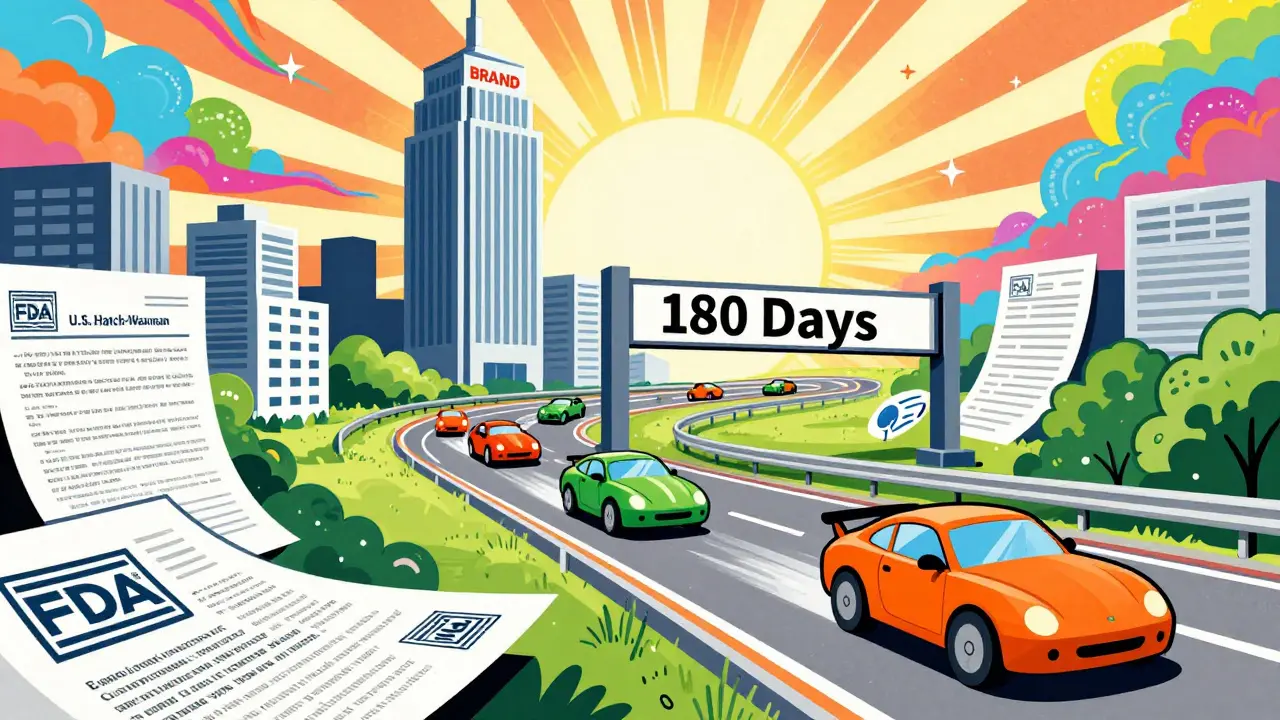
- First-to-File Generic Exclusivity: A critical 180-day window where the first generic challenger who successfully invalidates a patent gets sole generic rights.
This 180-day rule creates a high-stakes race among generic manufacturers. It also leads to controversial "pay-for-delay" settlements, where brand-name companies pay generics to stay off the market, effectively extending monopolies beyond the intended period. The Federal Trade Commission has scrutinized these practices, arguing they harm consumers by keeping prices artificially high.
European Union: The 8+2+1 Model
The European Union operates under a different philosophy, focusing heavily on data protection rather than just patent law. The EU framework is often summarized as the 8+2+1 model. Here’s how it breaks down:
- 8 Years: Data exclusivity. During this time, generic applicants cannot reference the originator’s clinical data to get approval.
- 2 Years: Market exclusivity. Generics can be approved but cannot be marketed/sold.
- +1 Year: An optional extension for significant clinical benefits demonstrated within the first 8 years.
Additionally, the EU uses Supplementary Protection Certificates (SPCs) to restore up to 5 years of patent life, similar to the U.S. PTE. However, there is a hard cap: the combined period of patent and SPC protection cannot exceed 15 years from the date of marketing authorization. For orphan drugs, the EU grants 10 years of exclusivity, extendable by 2 years if pediatric studies are conducted. Unlike the U.S., the EU lacks a direct equivalent to the Paragraph IV patent challenge mechanism, leading to different patterns of generic entry and less aggressive litigation strategies.
Other Major Markets: Canada, Japan, and Emerging Economies
While the U.S. and EU set much of the global tone, other regions have their own distinct rules. Canada aligns closely with Europe, offering 8 years of data protection plus 2 years of market exclusivity. Japan provides 8 years of data exclusivity and 4 years of market exclusivity for new chemical entities. The Japanese Pharmaceuticals and Medical Devices Agency (PMDA) recently announced plans to streamline its patent linkage system to accelerate generic availability, reflecting a growing global pressure to lower drug costs.
Emerging markets are increasingly adopting stricter standards. China extended its data exclusivity from 6 to 12 years in 2020 to encourage domestic innovation. Brazil implemented 10 years of data protection through provisional measures. These shifts signal a move toward harmonizing global IP standards, though experts warn that longer exclusivity periods in developing nations can severely delay access to essential medicines like HIV treatments.
| Region | Data Exclusivity | Market Exclusivity | Patent Extension Mechanism | Orphan Drug Protection |
|---|---|---|---|---|
| United States | 5 years (NCE) | Varies by type | PTE (up to 5 years, max 14 post-approval) | 7 years |
| European Union | 8 years | 2 years (+1 optional) | SPC (up to 5 years, max 15 total) | 10 years (+2 optional) |
| Canada | 8 years | 2 years | Yes (similar to EU) | 8 years |
| Japan | 8 years | 4 years | Yes | Varies |
| China | 12 years | N/A | Yes | Not specified |
The Impact of Patent Thickets and Evergreening
A major complication in all these systems is "evergreening." Originator companies don’t just rely on the core patent for the molecule. They file dozens of secondary patents covering formulations, delivery methods, dosage forms, and manufacturing processes. A 2022 analysis found that top pharmaceutical companies maintain an average of 137 patents per drug product. This creates a "patent thicket" that generic manufacturers must navigate. In the U.S., the Orange Book lists all these patents, and generic challengers must certify against each one. This complexity increases legal costs, with comprehensive patent challenge strategies costing $2-5 million per product. It also leads to delays; 42% of failed generic entries are due to underestimating patent linkage complexity.
Global Disparities and Future Trends
The effectiveness of these systems varies wildly by income level. A WHO analysis showed that originator drugs reach generic status in high-income countries after a median of 12.7 years, compared to 19.3 years in low-income countries. This gap is largely driven by data exclusivity provisions in trade agreements, which block generic competition even after patents expire. As we move into 2026, legislative pressures are mounting. The U.S. has seen proposals like the Preserve Access to Affordable Generics and Biosimilars Act to curb pay-for-delay tactics. The EU is considering reducing data exclusivity to 5 years for some drugs. Meanwhile, industry giants continue to lobby for robust protections, citing the high failure rates of clinical trials. The balance remains precarious, with every policy shift directly impacting drug prices and availability worldwide.
How long do drug patents last globally?
Standard drug patents last 20 years from the filing date in most countries, including the U.S., EU, and Japan, as mandated by TRIPS agreements. However, because drug development takes 10-15 years, the actual time a company can exclusively sell the drug after market approval is typically only 6-10 years. Supplementary protections like PTE in the U.S. or SPC in the EU can add up to 5 more years, but strict caps apply to prevent excessive monopolies.
What is the difference between patent protection and data exclusivity?
Patent protection prevents others from making, using, or selling the invention based on intellectual property rights. Data exclusivity is a regulatory barrier that prevents generic manufacturers from relying on the originator's clinical trial data to gain approval, even if no valid patent exists. Data exclusivity often lasts longer than the core patent and is a key tool used by pharma companies to delay generic competition.
Why are generic drugs cheaper than brand-name drugs?
Generic drugs contain the same active ingredient and have the same therapeutic effect as brand-name drugs. They are cheaper because generic manufacturers do not bear the initial R&D costs, which can exceed $2.3 billion per drug. Once patent exclusivity expires, multiple generic producers compete in the market, driving prices down by 80-90% within the first year of entry.
What is the Hatch-Waxman Act?
The Hatch-Waxman Act is a landmark U.S. law from 1984 that balanced the interests of brand-name and generic drug manufacturers. It streamlined the FDA approval process for generics while allowing brand-name companies to extend their patent terms to compensate for time lost during regulatory review. It also introduced the 180-day exclusivity period for the first generic applicant to successfully challenge a patent.
How does the EU's 8+2+1 model work?
The EU model provides 8 years of data exclusivity, during which generics cannot use the originator's data for approval. This is followed by 2 years of market exclusivity, where generics can be approved but not sold. If the drug demonstrates significant clinical benefit within the first 8 years, an additional 1 year of market protection is added. This structure aims to protect innovation while ensuring predictable timelines for generic entry.