Generic Drug Labeling Requirements: What FDA Mandates for ANDAs
Imagine a scenario where a life-saving medication gets a critical safety update. The brand-name version reflects this change immediately on its label. Now, imagine you are prescribed the generic version of that same drug. Does your pill bottle carry that same warning? Under current U.S. Food and Drug Administration (FDA) rules, the answer is often "not yet." This regulatory gap affects nearly 90% of all prescriptions filled in the United States.
The FDA mandates strict identity between generic drugs and their brand-name counterparts, known as Reference Listed Drugs (RLDs). However, this requirement creates complex challenges for manufacturers who must navigate an intricate web of regulations to ensure patient safety without violating federal law. Understanding these rules isn't just about compliance-it's about keeping millions of patients safe from outdated medical information.
The Core Rule: Identical Labeling with Specific Exceptions
The foundation of generic drug regulation rests on Section 505(j)(2)(A)(v) of the Federal Food, Drug, and Cosmetic Act. When a company wants to bring a generic drug to market, they submit an Abbreviated New Drug Application (ANDA) to demonstrate that their product is bioequivalent to the original brand-name drug. Part of proving this equivalence involves showing that the labeling matches the RLD exactly.
This means every section-from dosage instructions to adverse reactions-must mirror the reference product. Why does the FDA enforce such rigid uniformity? It prevents confusion among healthcare providers and ensures that switching between brand and generic versions doesn't alter how a medication is used or understood. But "identical" doesn't mean "carbon copy." There are specific exceptions carved out by 21 CFR 314.94(a)(8).
- Manufacturer Information: Generic makers can list their own name, address, and National Drug Code (NDC) number instead of the brand manufacturer's details.
- Formatting Adjustments: Minor changes allowed if required by manufacturing processes or packaging constraints.
- Patent Expiration Dates: Updates related to patent status can differ.
Beyond these narrow allowances, generic labels cannot deviate. If the RLD adds a new warning about liver toxicity, the generic label must include it too-but only after the FDA approves that change for the brand product first.
Physician Labeling Rule (PLR): The Standardized Format
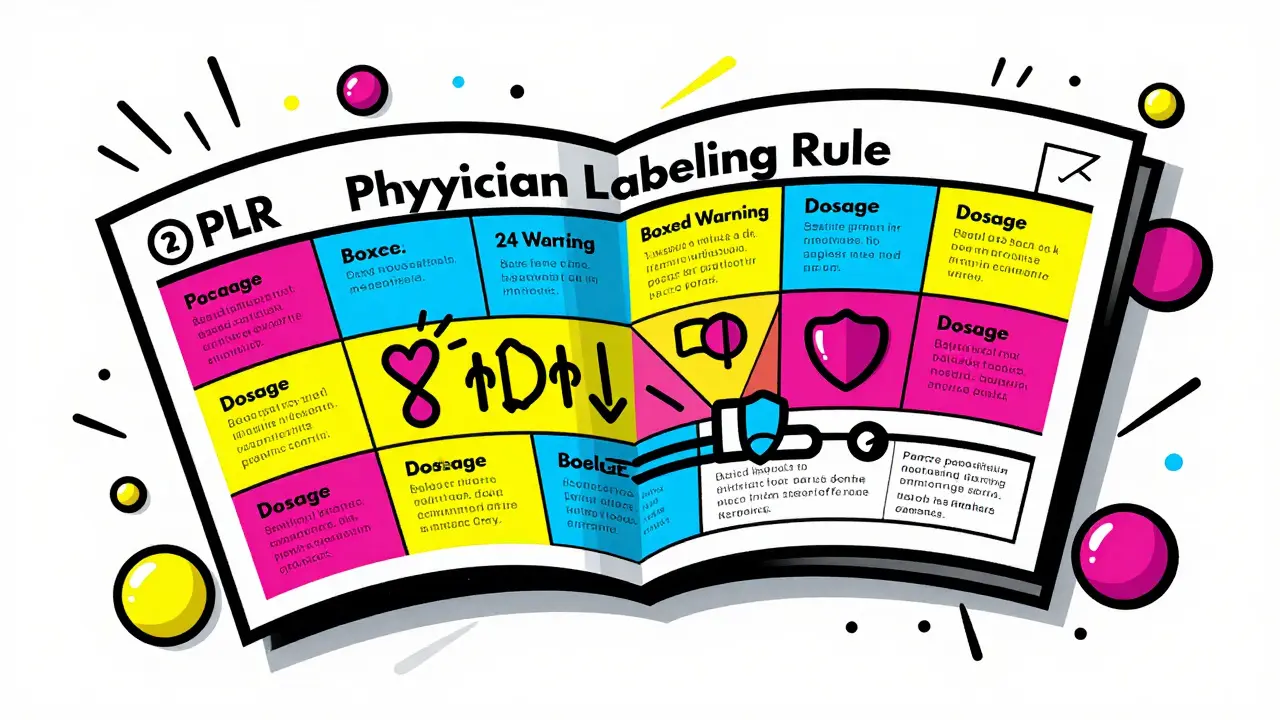
In 2006, the FDA implemented the Physician Labeling Rule (PLR), which revolutionized how prescription drug information is presented. Instead of free-form text, all prescription drugs-including generics-must follow a standardized structure containing 24 specific sections. Think of it like a template that doctors rely on to find critical information quickly.
| Section Name | Purpose |
|---|---|
| Boxed Warning | Highlights serious risks requiring immediate attention |
| Recent Major Changes | Summarizes updates made within the last 24 months |
| Indications and Usage | Describes approved conditions the drug treats |
| Dosage and Administration | Provides precise dosing guidelines |
| Use in Specific Populations | Covers pregnancy, pediatric, geriatric considerations |
When a brand-name drug converts its label to PLR format, generic manufacturers must do the same. This synchronization ensures consistency across therapeutic classes. For example, if Pfizer updates Lipitor’s label to include new cardiovascular risk data under PLR guidelines, every statin generic following that RLD must adopt identical wording and structure.
Tracking Changes: How Manufacturers Stay Compliant
Here’s where things get tricky. Generic manufacturers don’t create their own safety data-they inherit it from the RLD. So how do they know when to update their labels? They monitor two primary sources:
- Drugs@FDA Database: The official repository housing approved labeling documents for over 2,850 reference listed drugs. Updated weekly, usually every Tuesday.
- The Orange Book: Officially titled "Approved Drug Products with Therapeutic Equivalence Evaluations," this resource lists patents and exclusivity periods alongside approval statuses.
Audits reveal inconsistencies. In October 2024, an internal FDA audit found that 17% of RLD entries had temporary mismatches between Drugs@FDA and the Orange Book during transition periods. That’s why savvy regulatory affairs teams cross-check both platforms before making any label changes.
Most large generic companies dedicate 3-5 full-time staff members per 50 products solely to tracking these updates. Smaller firms struggle more, spending roughly $147,500 annually per product on compliance efforts compared to $89,200 for larger players benefiting from economies of scale.
Supplement Categories: Timing Is Everything
Not all labeling changes happen at once. The FDA categorizes supplements based on urgency and complexity. Here’s what each type means for generic manufacturers:
| Category | Description | Timeline |
|---|---|---|
| Prior Approval Supplement (PAS) | Major changes requiring pre-approval | Up to 10 months review time |
| Changes Being Effected (CBE) | Safety-related updates needing notification | Implement within 30 days |
| CBE-30 | Immediate implementation with post-notification | Start using right away; notify within 30 days |
If the RLD submits a PAS adding a black box warning, generics can’t touch their labels until the FDA signs off-which could take up to ten months. Meanwhile, CBE-30 allows faster action but still requires waiting for the brand’s move first. This delay has real-world consequences.
Consider the 2022 valsartan recall linked to NDMA contamination. Brand manufacturers updated warnings promptly via CBE supplements. Generics couldn’t follow suit until those changes were formally approved for the RLD-a lag lasting six to twelve months according to a March 2024 study published in JAMA Internal Medicine. During that window, patients potentially received medications with incomplete safety disclosures.
The MODERN Labeling Act: Fixing Broken Systems
What happens when the brand-name drug disappears entirely? Around 1,200 reference products have been withdrawn since 2010, leaving behind thousands of orphaned generics stuck with stale labels. Enter the MODERN Labeling Act, passed in 2020 to empower generic makers to update labels independently when no active RLD exists.
Under this framework, manufacturers can propose revised labeling based on current scientific evidence rather than relying on defunct references. Draft guidance released in January 2025 outlines procedures for submitting these independent updates. While promising, implementation remains challenging. As Dr. Janet Woodcock noted before Congress in February 2025, approximately 3,500 generic products still face uncertainty due to withdrawn RLDs.
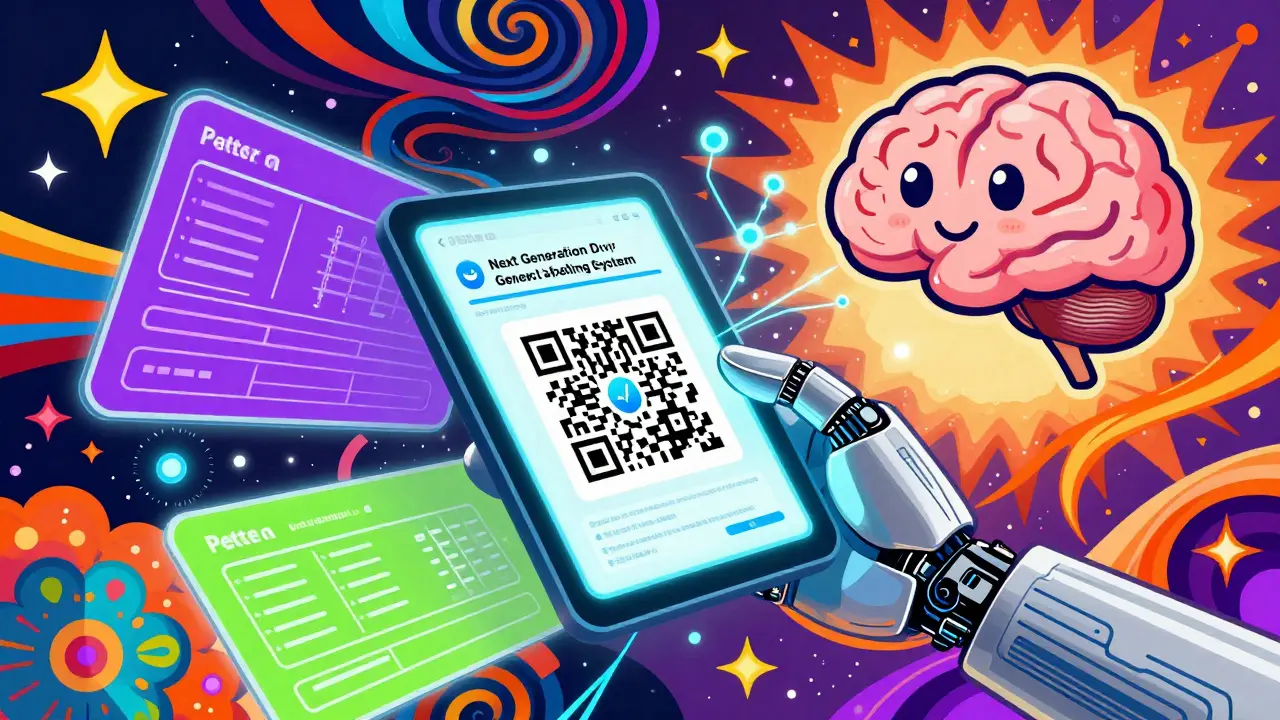
Looking ahead, the FDA plans to launch the Next Generation Generic Drug Labeling System in Q3 2025. Beta testing begins April 15, involving fifteen major manufacturers. This AI-driven platform aims to automate change detection and send instant notifications, reducing manual monitoring burdens significantly.
Real-World Challenges Faced by Industry Professionals
Talk to anyone working in pharmaceutical regulatory affairs, and frustration surfaces quickly. A December 2024 poll among LinkedIn professionals revealed that 68% of respondents struggled to track RLD changes across multiple therapeutic areas. Pharmacists echo similar sentiments online.
On Reddit’s r/pharmacy forum, users frequently complain about encountering outdated generic labels despite knowing recent brand updates exist. One pharmacist shared, “I’ve seen cases where we’re counseling patients based on old info because the generic hasn’t caught up yet.” These anecdotes highlight systemic issues beyond individual error.
Even tech solutions aren’t foolproof. CDER’s electronic notification system alerts subscribers to relevant labeling changes, yet discrepancies persist. Some companies report receiving duplicate emails or missing critical updates altogether. Verification through multiple channels becomes essential-but also expensive.
Cost Implications and Market Dynamics
Labeling compliance represents 18-22% of total ANDA maintenance costs. For small manufacturers juggling limited resources, this percentage translates into significant financial strain. Larger entities like Teva Pharmaceuticals, Viatris, and Sandoz maintain dedicated departments staffed by 50-120 specialists each. Their market dominance stems partly from superior infrastructure supporting regulatory agility.
Globally, generic drugs account for 92.6% of prescriptions dispensed in the U.S., generating $647 billion in annual savings for the healthcare system. Yet ensuring accurate labeling demands substantial investment. Analysts project cumulative spending will reach $2.8 billion by 2029 as oversight intensifies. Companies failing to adapt risk enforcement actions-the FDA issued 47 warning letters citing labeling violations between January 2023 and December 2024 alone.
Future Outlook: Toward Smarter Compliance
The landscape continues evolving. Proposed rule changes aim to allow generic manufacturers greater autonomy in updating safety information under certain conditions. Though pending as of early 2025, such reforms would address longstanding criticisms regarding delayed communication of emerging risks.
Meanwhile, digital transformation accelerates. QR codes linking directly to PDF versions of current labeling documents now appear on many medication guides. HTTPS protocols secure access, enhancing reliability. Soon, automated systems may eliminate much of today’s guesswork.
For now, though, vigilance remains paramount. Whether you’re a regulator, manufacturer, or clinician, understanding FDA mandates around generic drug labeling empowers better decision-making-and ultimately protects public health.
Why must generic drug labels match brand-name labels?
The FDA requires identical labeling to prevent confusion among healthcare providers and ensure consistent usage patterns regardless of whether patients receive brand or generic versions. Differences outside permitted exceptions could lead to misuse or misunderstandings about dosage, contraindications, or side effects.
How long does it take for generic labels to reflect brand updates?
Timelines vary depending on supplement category. Prior Approval Supplements can take up to 10 months, while Changes Being Effected (CBE) require implementation within 30 days. CBE-30 allows immediate use followed by notification within 30 days. Delays occur primarily because generics must wait for FDA approval of brand changes first.
What is the Physician Labeling Rule (PLR)?
Implemented in 2006, the PLR standardizes prescription drug labeling into 24 defined sections including boxed warnings, indications, dosage, and population-specific uses. Both brand and generic drugs must comply, ensuring uniform presentation of critical information for physicians.
Can generic manufacturers update labels independently?
Generally no, unless the Reference Listed Drug (RLD) has been withdrawn. The MODERN Labeling Act permits independent updates in such cases, allowing manufacturers to revise labels based on contemporary scientific evidence rather than outdated references.
Where can I check for latest generic drug labeling changes?
Two main resources serve this purpose: Drugs@FDA database provides weekly updates on approved labeling documents, while the Orange Book tracks patents and equivalency evaluations. Cross-referencing both helps mitigate inconsistencies sometimes observed during transitions.
What penalties exist for non-compliance with labeling rules?
Non-compliance triggers enforcement actions ranging from warning letters to product seizures. Between January 2023 and December 2024, the FDA issued 47 warning letters specifically targeting labeling discrepancies, underscoring zero tolerance for deviations from mandated standards.
How much does labeling compliance cost manufacturers?
Regulatory compliance accounts for 18-22% of total ANDA maintenance expenses. Small manufacturers spend approximately $147,500 annually per product, whereas larger firms benefit from economies of scale, averaging $89,200 per item.
Will future technologies improve labeling accuracy?
Yes, the FDA plans to introduce the Next Generation Generic Drug Labeling System in Q3 2025 featuring AI-powered change detection and automatic notifications. Beta testing starts April 15, 2025, aiming to streamline processes and reduce human error inherent in current manual methods.
Are there differences in OTC generic labeling requirements?
Over-the-counter (OTC) generics follow distinct pathways governed by monographs rather than ANDAs. Recent delays in implementing the ACNU Final Rule until March 21, 2025, impact certain OTC categories, introducing additional complexities for nonprescription formulations.
Who monitors adherence to generic labeling mandates?
The Division of Labeling Review (DLR) within CDER oversees compliance, reviewing roughly 1,200 ANDA submissions yearly. Labeling issues constituted 37% of complete response letters issued in fiscal year 2024, highlighting ongoing scrutiny focused on maintaining high-quality standards.
Brett Webster
June 15, 2026 AT 08:14The distinction between CBE-30 and Prior Approval Supplements is where most regulatory teams trip up. It's not just about reading the Orange Book; it's about understanding the lag time inherent in the FDA's review process for major changes. If you're managing a portfolio of high-risk generics, you need automated alerts set up for Drugs@FDA updates because manual checking is simply too slow to catch those 17% mismatches mentioned in the audit. The cost difference between small and large manufacturers is stark, but the risk of a warning letter is universal.
Miranda River
June 16, 2026 AT 13:09oh my god this is so boring lol but also terrifying like why do we have to wait for the brand name company to even bother updating their label before we can save lives?? its like waiting for permission to breathe or something. i mean sure maybe the ai thing will help but until then im just gonna assume every generic pill is lying to me about side effects because thats basically what this says right? #pharmafail
Lee Coates
June 16, 2026 AT 18:43Typical American bureaucracy at its finest :P We spend billions on healthcare yet we can't get a simple label update synchronized properly. Meanwhile other countries have streamlined systems that don't rely on this archaic 'reference listed drug' concept. But sure let's keep pretending our system is perfect while patients suffer from outdated info. Makes you proud doesn't it?
shreya sinha
June 17, 2026 AT 02:10It is truly disheartening to observe how the pharmaceutical industry prioritizes procedural compliance over actual patient safety, creating a bureaucratic labyrinth that serves only to protect corporate interests rather than public health. The fact that generic manufacturers are legally bound to mirror potentially stale information from reference listed drugs demonstrates a fundamental failure in ethical responsibility, where the rigid adherence to Section 505(j)(2)(A)(v) effectively silences necessary medical updates and leaves vulnerable populations exposed to preventable harm due to these arbitrary regulatory delays that seem designed more for legal protection than clinical efficacy.
Aditya Singh
June 17, 2026 AT 16:40This is a critical insight into the bioequivalence framework! From an Indian pharma perspective, we often deal with similar challenges in export markets where regulatory harmonization is key. The reliance on the RLD creates a bottleneck that affects global supply chains. Implementing AI-driven detection as mentioned in the Next Generation Generic Drug Labeling System could be a game-changer for efficiency. We need to leverage technology to bridge this gap between data generation and label implementation, ensuring that therapeutic equivalence isn't just chemical but informational as well.
Brandon Brodsky
June 17, 2026 AT 19:35Sure, let's just blame the 'system' instead of acknowledging that generic companies are cheap and lazy. They don't want to pay for independent studies so they hide behind the RLD requirement. It's not a regulatory gap, it's a business model. And don't get me started on the MODERN Act being 'promising'-it's been years since 2020 and we still have orphaned generics. Typical government overreach solving problems they created.
Sherry Wheeler
June 18, 2026 AT 20:54Oh wow, this really puts things into perspective! It's amazing how much thought goes into these labels, isn't it? I feel like we should celebrate the progress made with the Physician Labeling Rule, even if there are bumps in the road. Every step forward counts, and knowing that there's a standardized format gives me some peace of mind. Let's keep pushing for better communication and trust that the experts are working hard to keep us safe!
Talilla Bailey
June 19, 2026 AT 06:09Let us remain focused on the solutions presented here rather than dwelling on the frustrations. The implementation of the Next Generation Generic Drug Labeling System represents a significant leap forward in regulatory science. We must collaborate across sectors to ensure these tools are utilized effectively. Maintaining professional boundaries while advocating for improved compliance protocols is essential. Let's channel our energy into supporting these technological advancements.
Ganesh Honikol
June 20, 2026 AT 20:52I would like to add that the grammatical precision required in these documents cannot be overstated when considering the legal implications of labeling errors. The long-winded nature of regulatory submissions often obscures the core message, yet it is crucial for maintaining clarity in complex therapeutic areas. Emoticons have no place in formal regulatory correspondence, but perhaps a smiley face :) could brighten the day of a tired reviewer. The integration of AI might help streamline this verbose process significantly.
Cici arya Arya
June 21, 2026 AT 12:16So basically if my doctor prescribes a generic I might die because the label is old? That sounds like a personal attack on my intelligence to assume I can't read the internet myself. Why does this matter to me personally anyway? I just take the pill and hope for the best. Your post is way too long and I don't care about the orange book stuff.