Future Anti-Counterfeit Technologies: How Innovation Is Stopping Fake Drugs
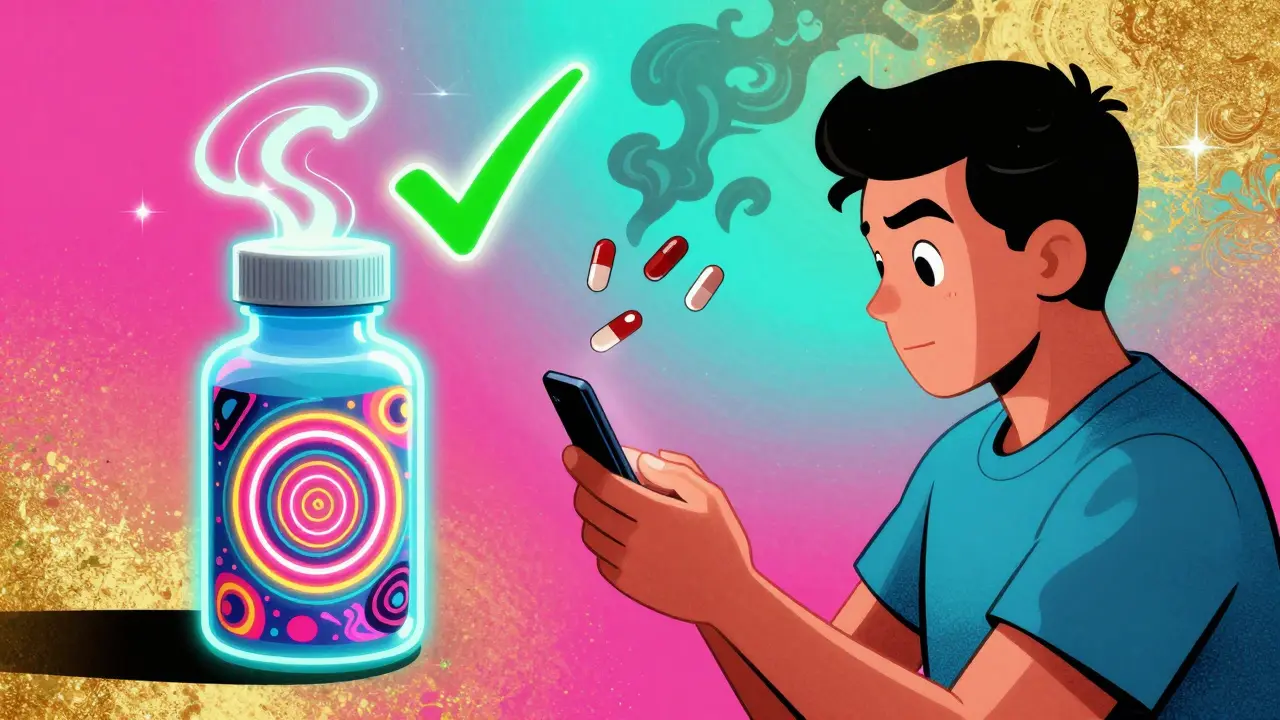
Every year, millions of people around the world take pills that look real but aren’t. These aren’t just cheap knockoffs-they’re dangerous. Fake drugs contain the wrong dose, toxic chemicals, or no active ingredient at all. In low- and middle-income countries, 1 in 10 medical products is falsified or substandard, according to the World Health Organization. The stakes are life or death. And as counterfeiters get smarter, the pharmaceutical industry is fighting back with technologies that were science fiction just five years ago.
What’s at Stake: The Real Danger of Fake Drugs
Counterfeit medications don’t just hurt profits-they kill. A fake antibiotic might leave an infection untreated. A counterfeit insulin could send a diabetic into a coma. In 2025, a major U.S. drugmaker recalled $147 million worth of product after fraudsters copied QR codes on packaging. Patients didn’t know the difference. The company had trusted a simple barcode system with no encryption. It was easy to replicate. That’s the problem with old-school security: if it’s visible, it can be copied.Serialization: The Foundation of Modern Anti-Counterfeiting
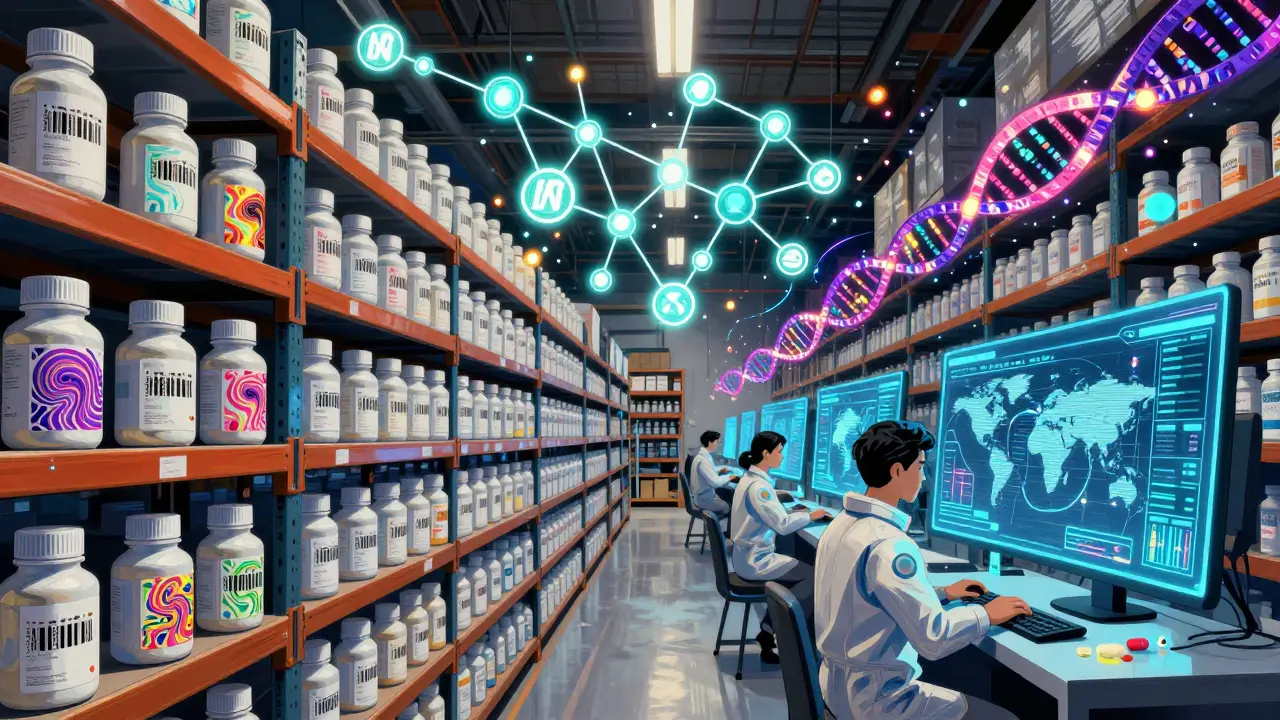
The most widespread solution today is mass serialization. Every pill bottle, box, and vial now carries a unique digital code-like a fingerprint for medicine. This isn’t just a barcode. It’s a serial number tied to a global database that tracks the product from factory to pharmacy. The U.S. Drug Supply Chain Security Act (DSCSA) and the EU’s Falsified Medicines Directive (FMD) now require this by law. By November 2025, every prescription drug in the U.S. must be traceable at the unit level.Companies that adopted serialization saw recalls handled 60% faster. Instead of guessing which batches are contaminated, they pull only the exact units that moved through a compromised link. ERP and WMS systems now integrate directly with serialization platforms. But it’s not cheap. One European distributor spent €2.3 million and 14 months just to upgrade its warehouse systems. Smaller manufacturers still lag-only 43% have fully implemented it.
NFC: The Smartphone That Verifies Your Medicine
The biggest leap forward? Near Field Communication (NFC). Imagine tapping your phone against a medicine bottle-and instantly seeing a green checkmark that says “Authentic.” No apps. No scanning. Just tap.NFC chips are tiny, embedded in the packaging. They store encrypted data that can’t be copied. When you tap, your phone talks to a secure server, checks the serial number against the official record, and confirms legitimacy in under two seconds. According to ForgeStop’s 2025 testing at CPHI Frankfurt, NFC verification is 37% faster than barcode scanners and reduces false positives by 92%.
Latin American pharmacies using NFC saw counterfeit incidents drop by 98% in six months. Pharmacists now verify over 1,200 products daily. Patients feel safer. Staff save time. And because NFC works on 89% of smartphones shipped in 2025 (Android 8.0+ or iOS 11+), nearly everyone can use it.
Blockchain: The Unbreakable Ledger
Blockchain isn’t just for cryptocurrency. In pharma, it’s becoming the backbone of supply chain transparency. Each drug gets a digital identity. Every time it changes hands-manufacturer, wholesaler, hospital, pharmacy-that event is recorded on a shared, tamper-proof ledger. Temperature spikes? Recorded. Delivery delays? Logged. Unauthorized access? Flagged.Think of it like a digital passport for medicine. Companies like De Beers used blockchain to track diamonds. Now, drugmakers are adapting the same tech. The EU’s upcoming Digital Product Passport rules (starting 2027) will require this. But it’s complex. Gartner says full blockchain integration takes 18-24 months. Training staff, connecting legacy systems, syncing data across continents-it’s a marathon. Still, for global brands, it’s worth it. Once set up, it’s nearly impossible to alter the record.
DNA and Forensic Markers: The Unreplicable Secret
Some companies are going beyond digital. They’re embedding biological markers. DNA-based authentication works by adding a unique, synthetic DNA sequence to the drug’s coating or packaging. Only specialized lab equipment can read it. Counterfeiters can’t replicate it. It’s like a fingerprint at the molecular level.The catch? Cost. Each DNA tag adds $0.15-$0.25 per unit. Standard serialization? Just $0.02-$0.05. That’s why DNA is used for high-value drugs-cancer treatments, rare disease meds-not everyday painkillers. But where it’s used, it’s nearly foolproof. In trials, no fake product with DNA markers has ever passed verification.
Why QR Codes Are Failing (and What’s Replacing Them)
QR codes were once the go-to solution. Cheap. Easy. Visible. But they’re broken.ForgeStop’s 2025 audit found that 78% of pharmaceutical QR codes are vulnerable. Why? They’re just images. Anyone with a printer and a phone can copy them. The fake ones look identical. The system has no way to tell if the code is linked to a real product. That’s how the $147 million recall happened. The company didn’t realize their QR code wasn’t encrypted. It was just a picture.
Modern alternatives like cryptographically secured NFC and blockchain-backed codes fix this. They don’t just display data-they prove it’s real. No encryption? No trust.
AI and Smart Packaging: The Next Wave
Artificial intelligence is now scanning packaging for tiny flaws. Cameras on production lines analyze labels, seals, and ink patterns at 1,000 units per minute. AI systems trained on millions of real and fake packages can spot a counterfeit with 99.2% accuracy in controlled labs. Real-world conditions are harder-lighting, dirt, wrinkles-but accuracy jumped from 89.7% in 2024 to 94.3% in mid-2025.Smart packaging is also evolving. Caps with built-in IoT sensors now monitor temperature and humidity. If a shipment of insulin was exposed to heat, the system flags it before it reaches the patient. And new materials are being developed that are both recyclable and embedded with traceable markers. Sustainability and security are no longer separate goals.
Regulation, Tariffs, and the Global Patchwork
The fight against fake drugs isn’t just technical-it’s political. In April 2025, new U.S. tariffs on pharmaceutical imports from China and India raised costs by 12-18%. Supply chains slowed by 3-6 weeks. That’s a nightmare for companies trying to roll out new tech.Regulations vary wildly. North America leads with 38.7% market share thanks to DSCSA. Europe follows at 32.4% with FMD. Asia-Pacific is growing fastest, with Brazil and Nigeria launching mandatory serialization in early 2025. But in many countries, enforcement is weak. Counterfeiters exploit those gaps.
Experts agree: no single technology wins. The future is layered. Overt features like tamper-evident seals. Covert ones like UV inks. Forensic markers like DNA. Digital verification via NFC. And blockchain for audit trails. The most secure drugs will have all of them.
What’s Next: The 2027 Vision
By 2027, 83% of top pharmaceutical companies plan to use multi-layered security. That means:- Your medicine bottle has a tamper-proof seal you can see.
- It has a hidden UV pattern only a pharmacy scanner can detect.
- You tap your phone to verify authenticity in seconds.
- Behind the scenes, blockchain logs every step it took to get to you.
And it’s not just about stopping fakes anymore. It’s about building trust. Patients want to know their medicine is safe. Pharmacists want to protect their reputation. Regulators want accountability. Technology is finally giving them all that.
Challenges That Still Remain
Despite progress, roadblocks exist. Smaller manufacturers can’t afford the $2 million+ upgrades. Training staff on blockchain or NFC takes months. Documentation from some vendors is in Chinese with no English support. And counterfeiters are using AI to generate fake labels faster than ever.But the tide is turning. The market for anti-counterfeit packaging is projected to hit $345.93 billion by 2030. Every dollar spent now saves lives-and billions in recalls later. The question isn’t whether to adopt these technologies. It’s how fast you can.
caroline hernandez
February 3, 2026 AT 18:12Serialization is the bare minimum now-anyone still relying on QR codes is playing Russian roulette with patient safety. NFC is the new baseline, and blockchain isn’t optional anymore if you’re operating globally. The EU’s Digital Product Passport is going to force everyone’s hand by 2027, and honestly? It’s about time. We’ve had the tech for years; what’s been holding us back is legacy infrastructure and vendor lock-in. Time to upgrade or get out of the game.
Sherman Lee
February 4, 2026 AT 00:51They’re all lying. 🤨 NFC? Blockchain? DNA tags? Nah. This is all a ploy to push more $$$ into Big Pharma’s pockets while you pay 3x more for insulin. They don’t care if you live or die-they care if you scan a chip. Next thing you know, your phone will need a subscription to verify your aspirin. 😏 They’re not stopping fakes-they’re creating dependency. Wake up.
Coy Huffman
February 5, 2026 AT 18:16so like… if i tap my phone on my pill bottle and it says ‘authentic’… does that mean it’s actually good for me? or just that the code wasn’t copied? 🤔 i mean, what if the real stuff is still bad? like, what if the company just messed up the batch but the packaging is legit? maybe we’re just trusting the system too much. also, i spelled ‘authentic’ wrong just now. oops.
Demetria Morris
February 6, 2026 AT 14:09It’s disgusting that people still think a QR code is enough. This isn’t a marketing gimmick-it’s a matter of life and death. And yet, so many pharmacies in rural areas still don’t even have scanners. How many people have died because someone didn’t want to spend $500 on a reader? We’re not just failing technically-we’re failing morally.
Geri Rogers
February 8, 2026 AT 08:05Y’all are underestimating how powerful NFC + AI is. 🚀 I work in a clinic in Ohio, and since we started using NFC verification, our error rate dropped to near zero. Patients are actually asking for it now-they feel safer. And the best part? No app needed. Just tap. It’s magic. 💙 Stop arguing about cost-this isn’t a luxury, it’s a standard. If you’re not on board, you’re putting lives at risk. Period.
Samuel Bradway
February 9, 2026 AT 02:12kinda wild how we’re using tech meant for smartphones and credit cards to save lives now. i never thought i’d be tapping my phone to check if my blood pressure med is real. but honestly? it’s kind of comforting. kinda like when you check the battery on your car before a road trip. small thing, big peace of mind.
Jamillah Rodriguez
February 9, 2026 AT 13:38So let me get this straight… we’re spending billions to stop people from copying a barcode… but the real problem is that people can’t afford the medicine in the first place? 😴 Like… I’m not mad, I’m just… tired. Can we fix the price first? Then the fakes will stop being a thing because no one will buy them. Also, my cat just knocked over my pill bottle. I tapped my phone. It said ‘authentic.’ I cried. Not because I’m relieved… because I’m sad.
Susheel Sharma
February 10, 2026 AT 23:05Interesting. But let’s be brutally honest: 92% reduction in false positives with NFC? That’s statistically impressive, yet the cost per unit remains prohibitive for LMICs. The real innovation isn’t in the tech-it’s in the policy architecture. Without equitable funding, these solutions become luxury features for the Global North. The WHO’s 1 in 10 statistic? It’s not a bug-it’s a feature of the current system. You can’t encrypt poverty.