First Generic vs Authorized Generic: How Timing of Market Entry Changes Everything
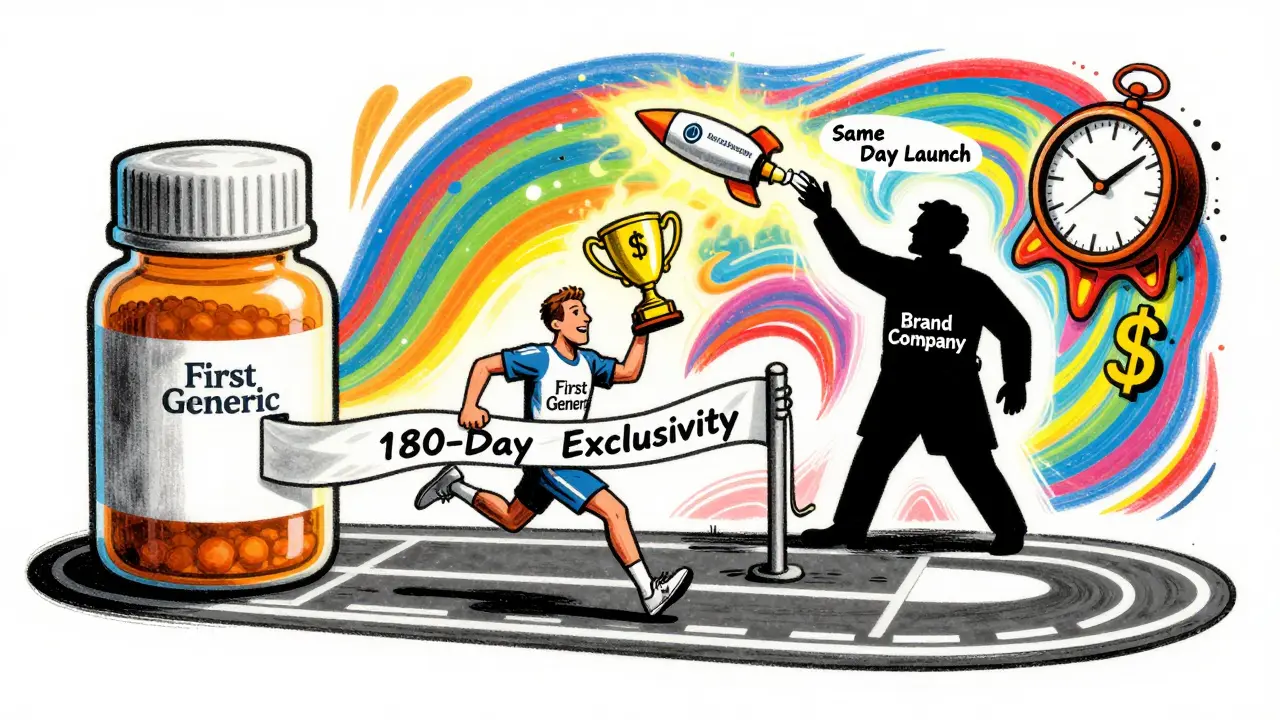
When a brand-name drug loses its patent, the race to sell the first generic version begins. But here’s the twist: the company that made the original drug might be the one selling the first generic too - and that changes everything.
What’s the difference between first generic and authorized generic?
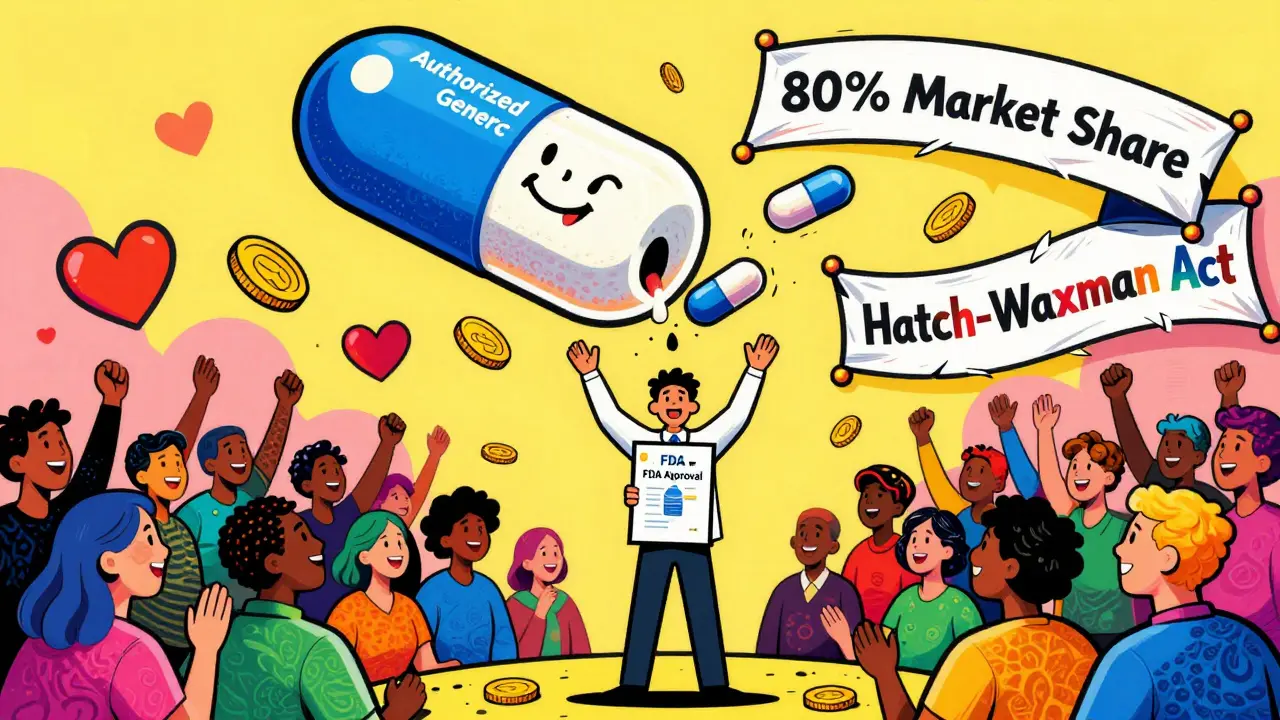
A first generic is the first company to successfully challenge a patent and get FDA approval to sell a generic version of a brand-name drug. This company gets 180 days of exclusive rights to sell that generic, no other generics allowed. That’s the whole point of the Hatch-Waxman Act is a 1984 law designed to balance innovation and access by letting generic companies challenge patents in exchange for a temporary monopoly. During those 180 days, the first generic usually captures 80% or more of the market. Prices drop sharply - often 80-90% below the brand-name price.
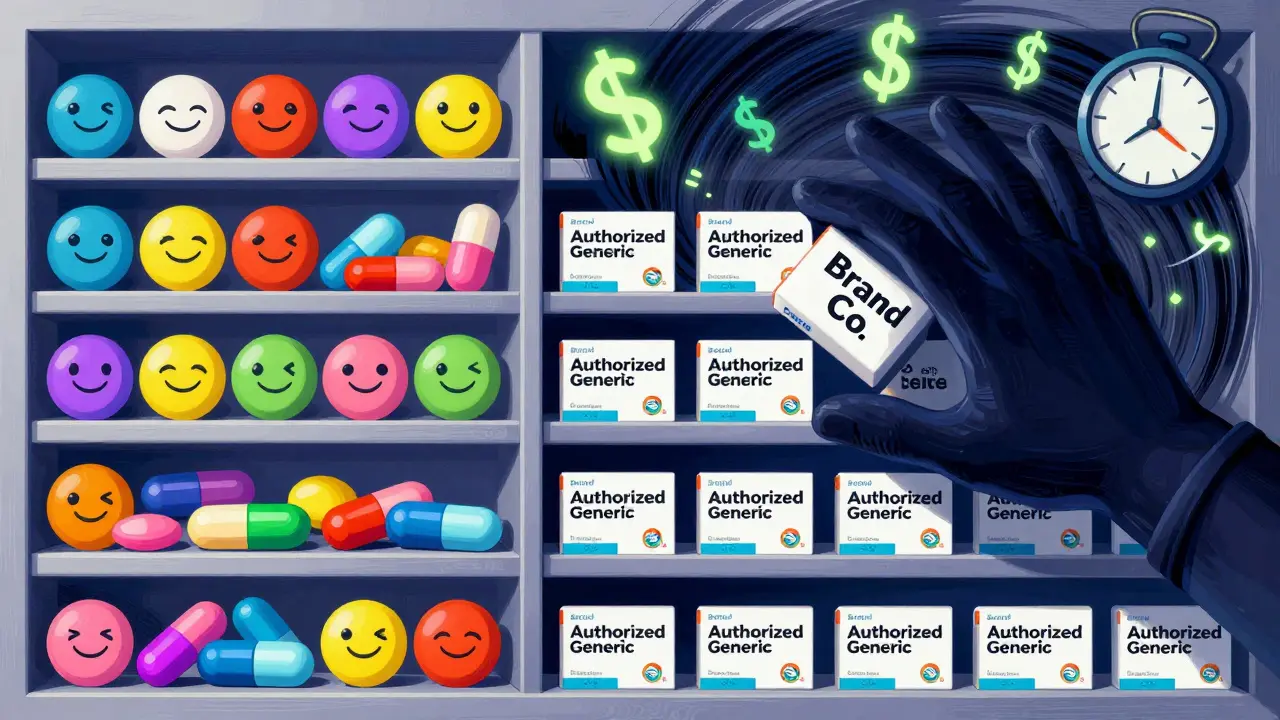
An authorized generic is a version of the brand-name drug made by the original manufacturer or licensed to another company, sold under a generic label without needing its own FDA approval. It’s chemically identical to the brand, often made in the same factory, with the same packaging - just a different label. The brand company doesn’t need to file an ANDA (Abbreviated New Drug Application). They just slap a generic label on their own product and launch.
That’s the key difference: first generics go through a full 10-month (or longer) FDA review process. Authorized generics? They can launch in days.
Why timing matters more than you think
The 180-day exclusivity period was meant to reward the first generic company for taking the legal and financial risk of challenging a patent. But here’s what happens in practice:
Brand companies watch the calendar like a chess master. They wait until the FDA approves the first generic - then, sometimes on the exact same day, they launch their own authorized generic. It’s not a coincidence. It’s strategy.
According to research from Health Affairs is a journal that analyzed 2010-2019 data and found 73% of authorized generics launched within 90 days of the first generic’s approval, with 41% launching on the same day, this timing is deliberate. The brand company doesn’t wait for exclusivity to expire. They strike while the iron’s hot.
Take Lyrica (pregabalin). Teva was the first to launch a generic in July 2019. Within weeks, Pfizer - the original maker - launched its own authorized generic under the Greenstone label. Teva’s market share dropped from 80% to under 50%. Pfizer’s authorized version grabbed about 30% of sales. The price didn’t fall as hard as it should have. Instead of dropping 85%, prices fell only 65-70%. That’s billions in lost savings for the healthcare system.
How this breaks the system
The Hatch-Waxman Act was built on a simple idea: if you’re brave enough to fight a patent, you get to be the only one selling the generic for six months. That’s the reward. But authorized generics turn that reward into a trap.
First generic companies spend $5-10 million and 2-3 years preparing for this moment. They hire lawyers, run bioequivalence studies, build manufacturing lines. They bet everything on that 180-day window. Then, when they finally launch, the brand company hits them with a product that’s identical - and they have all the distribution, relationships, and shelf space already locked in.
It’s like a runner winning a race, only to find out the person who came in second was running on a motorized bike. The first generic still wins the race - but they don’t get the prize.
Clarivate data shows that when an authorized generic enters during the exclusivity period, the first generic’s market share drops from 80% to 45-60%. Revenue? It can fall by half. Some smaller generic companies have gone out of business after this kind of blow.
Which drugs are most affected?
This isn’t happening with obscure generics. It’s happening with the biggest sellers.
- Cardiovascular drugs - 32% of cases (think blood pressure, cholesterol meds)
- Central nervous system drugs - 24% (antidepressants, epilepsy, pain meds like Lyrica)
- Metabolic disorders - 18% (diabetes drugs like Jardiance)
Drugs like Eliquis (apixaban), Jardiance (empagliflozin), and Neurontin (gabapentin) are all battlegrounds. In 2023, over 60% of the top 50 brand-name drugs by revenue had authorized generic launches within 30 days of first generic approval.
Why these? Because they’re high-volume, high-revenue. The brand companies make billions on them. They’re not going to let a generic company take it all.
The FDA’s role - and its blind spots
The FDA approves about 80 first generics a year now, thanks to the Generic Drug User Fee Amendments (GDUFA). But approval doesn’t mean fair play.
First generics face long waits. The average review time is 10 months, but in 2010, it was over 3 years. Even now, less than 10% of generic applications get approved on the first try. Meanwhile, authorized generics skip the whole process. They’re already approved - the brand’s own NDA covers them.
This creates a two-tier system. One path is slow, expensive, and risky. The other? Fast, cheap, and controlled by the original manufacturer.
The FDA doesn’t stop authorized generics. In fact, they’re listed as approved products. But they’re not competing in the same way. They’re not the result of patent challenges. They’re a brand strategy.
What’s changing? The Inflation Reduction Act and beyond
In 2022, Congress passed the Inflation Reduction Act. For the first time, it explicitly said that authorized generics are not considered true generic competitors when the government negotiates Medicare drug prices. That’s huge. It means Medicare can negotiate lower prices for brand-name drugs without being fooled by authorized generics.
It’s a signal: the government sees what’s happening. Authorized generics aren’t helping drive down prices - they’re masking them.
But enforcement is still weak. The FTC sued Actavis in 2013 over pay-for-delay deals that sometimes coordinated with authorized generic launches. But since then, there’s been little follow-up. Brand companies keep doing it - because they can.
What does this mean for patients and pharmacies?
Patients think they’re getting a cheap generic. They are - but not always the kind that drives prices down.
Pharmacies get paid the same for an authorized generic as they do for a traditional generic. But the cost to the system? Higher. Because prices didn’t drop as far.
Imagine you’re buying a $100 drug. A true generic brings it down to $15. But with an authorized generic, it’s $35. That’s still cheaper than $100 - but $20 more than it should be. Multiply that by millions of prescriptions, and you’re talking billions in extra costs every year.
And the worst part? Patients don’t know the difference. The pill looks the same. The label says "generic." No one tells them it’s the brand company selling it.
The future: More authorized generics, fewer first generic wins
Evaluate Pharma predicts authorized generics will make up 25-30% of all generic prescriptions by 2027. That’s up from 18% in 2022.
Generic companies are adapting. Some are now building "dual-path" strategies: filing ANDAs while also negotiating licensing deals with brand companies to get early access to authorized versions. Others are avoiding high-risk patents altogether and focusing on less lucrative, less contested drugs.
But the system is still rigged. The 180-day exclusivity window has shrunk to 45-60 days in many categories. Why? Because the brand company already has its authorized version ready to launch.
Until Congress or the FDA changes the rules - or until the courts step in - this pattern will keep happening. First generics still win the race. But the finish line keeps moving.
Are authorized generics the same as regular generics?
Yes, chemically and physically - they’re identical. The active ingredient, dosage, and manufacturing process are the same. The difference is who makes them. Regular generics are made by independent companies that filed an ANDA. Authorized generics are made by the brand company or its licensee, using the brand’s existing approval. So they’re the same pill, but a different business strategy.
Why do brand companies make authorized generics?
To protect their revenue. When a patent expires, the brand company loses control of the market. By launching their own authorized generic, they keep a big slice of the sales. They avoid the price collapse that happens when multiple generics enter. It’s a way to extend profitability without violating patent law.
Do authorized generics lower drug prices?
They lower prices - but not as much as true generic competition. Studies show that when an authorized generic enters at the same time as the first generic, prices drop only 65-75%, not the 80-90% seen when multiple independent generics compete. That’s because the brand company still controls the market share, keeping prices higher than they would be with true competition.
Can a generic company avoid being undercut by an authorized generic?
It’s hard. Some companies now file ANDAs on drugs with multiple patents, hoping to extend exclusivity. Others partner with brand companies to license the authorized version before launch. But these moves are risky and expensive. Most small and mid-sized generics still get caught off guard. The only real protection? Regulatory reform - which hasn’t come yet.
Is this practice legal?
Yes. Authorized generics are fully legal under FDA rules. The problem isn’t legality - it’s fairness. The Hatch-Waxman Act was designed to encourage real competition. Authorized generics exploit a loophole in that system. The FTC has challenged related practices like "pay-for-delay," but authorized generics themselves haven’t been ruled illegal. They’re a legal, but controversial, business tactic.
What’s next?
The game has changed. First generics aren’t just competing against other companies anymore. They’re competing against the very brand they tried to replace. And until the rules change, the brand company will always have the advantage.
Prateek Nalwaya
February 18, 2026 AT 15:58Dennis Santarinala
February 19, 2026 AT 14:10Tony Shuman
February 21, 2026 AT 03:41Haley DeWitt
February 21, 2026 AT 19:05John Haberstroh
February 21, 2026 AT 23:03Logan Hawker
February 22, 2026 AT 23:26James Lloyd
February 24, 2026 AT 04:16Digital Raju Yadav
February 24, 2026 AT 13:46Geoff Forbes
February 25, 2026 AT 18:59Philip Blankenship
February 27, 2026 AT 04:19Kancharla Pavan
February 27, 2026 AT 23:34PRITAM BIJAPUR
March 1, 2026 AT 05:59