FDA Safety Alerts: What You Need to Know About Generic Drug Warnings
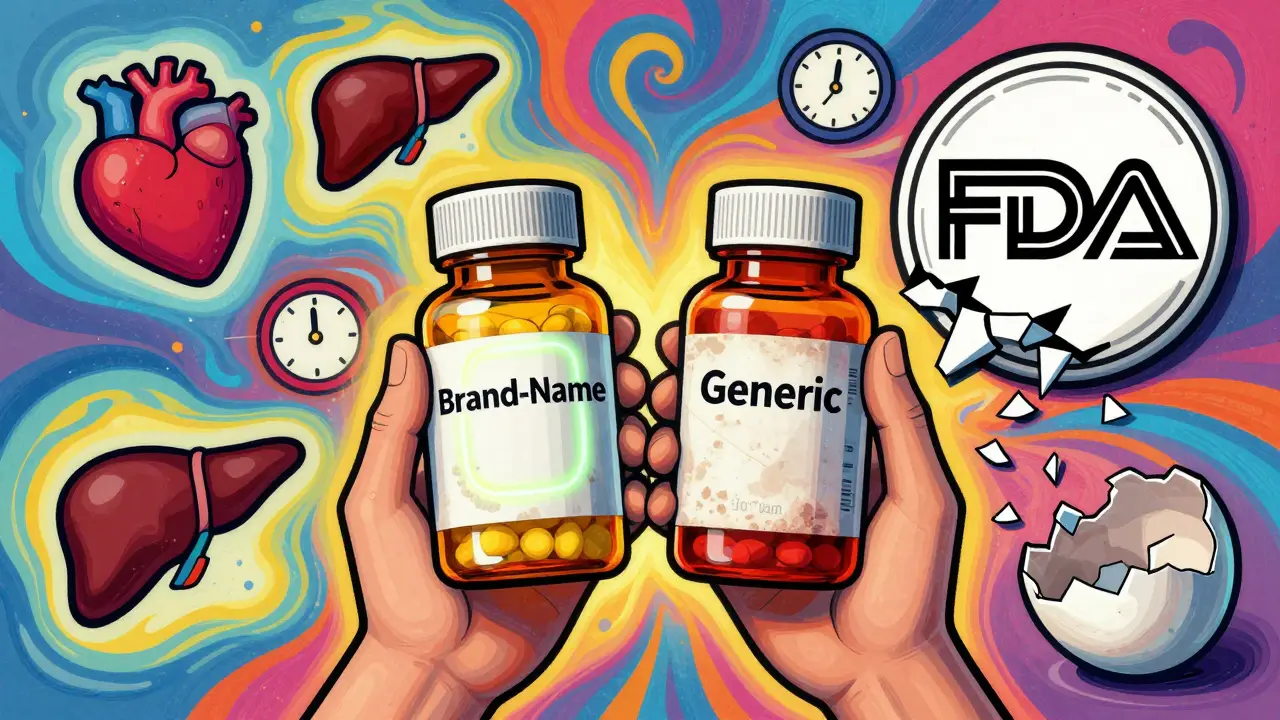
When you pick up a generic drug at the pharmacy, you expect it to work just like the brand-name version. And for the most part, it does. But what happens when a safety issue pops up? Who tells you about it? And why might the warning on your generic pill be outdated-even when the brand-name version has been updated?
How FDA Safety Alerts Work for Generic Drugs
The U.S. Food and Drug Administration (FDA) tracks drug safety through its MedWatch program, which collects reports of side effects, manufacturing flaws, and other problems from doctors, pharmacists, and patients. These reports feed into the FDA Adverse Event Reporting System (FAERS), where analysts look for patterns. If a serious risk emerges-like liver damage from a cholesterol drug or sudden heart rhythm changes-the FDA issues a safety alert. For brand-name drugs, the manufacturer can update the warning label on its own using something called the Changes Being Effected (CBE-0) process. This lets them add new safety info without waiting months for FDA approval. But for generic drugs, that’s not allowed. Under the Hatch-Waxman Act of 1984, generic manufacturers must mirror the exact same labeling as the original brand-name drug. If the brand updates its warning, the generic maker has to wait for the FDA to formally change the reference label before they can update theirs. That delay can take anywhere from 9 to 12 months-or longer. This creates a dangerous gap. Millions of Americans take generics because they’re cheaper. Many insurance plans require them. But if a new risk is discovered, patients on the generic version might not know about it until long after the brand-name users have been warned.Why Generic Labels Can Be Out of Date
It’s not that generic drugs are less safe. The FDA requires them to contain the same active ingredient, strength, dosage form, and bioequivalence as the brand-name drug. They’re tested to make sure they work the same way in your body. But they can differ in things like color, shape, fillers (called excipients), or how the pill breaks down over time. Those differences matter. For example, a generic version of a heart medication might use a different inactive ingredient that causes a rare allergic reaction in some people. If the brand-name drug doesn’t contain that ingredient, the brand’s label won’t mention the risk. But the generic’s label should. And right now, it often doesn’t-because the manufacturer can’t update it alone. In 2021, FDA staff started proactively checking whether first-time generic versions of complex drugs-like extended-release injectables or transdermal patches-had different physical appearances or release patterns compared to the brand. That’s because even small changes in how a drug is absorbed can affect safety. But even when they spot a problem, they’re still stuck waiting for the brand to update its label first.The Debate: Safety vs. Market Competition
In 2013, the FDA proposed letting generic manufacturers use the CBE-0 process to update their own labels. That would mean if a new safety signal appears, the generic maker could warn patients immediately-just like the brand-name company can. Twenty-seven consumer health groups backed the change. They argued that if 90% of prescriptions are filled with generics, then patients deserve the same timely warnings. “People shouldn’t get less safety just because they’re taking a cheaper drug,” said one advocacy group statement submitted to the American Association for Justice in 2022. But the Generic Pharmaceutical Association (GPhA) pushed back. Their argument? If generic makers are forced to change labels independently, they’ll face a flood of lawsuits. Right now, if a brand-name drug’s label is outdated and someone gets hurt, the brand can be sued. But if generics can change their labels, they become legally responsible for every warning-even ones based on new science they didn’t generate. There’s also concern that this could raise costs. If every generic maker has to hire legal teams and safety analysts just to handle labeling changes, the price advantage of generics could shrink. And that could hurt access to affordable medicine. As of late 2024, the FDA has not made a final decision. The proposal is still under review. Meanwhile, patients are caught in the middle.
What You Can Do to Stay Safe
You don’t have to wait for a label update to know about a safety risk. Here’s how to protect yourself:- Check the FDA’s Drug Safety Communications page regularly. The agency posts all alerts-brand and generic-here. Search by drug name or browse by month.
- Sign up for MedWatch alerts. You can get email notifications when new safety information is released.
- Ask your pharmacist. Pharmacists see hundreds of prescriptions a day. They often know when a new warning is coming, even before it’s published.
- Report side effects. If you experience something unusual after taking a generic drug, report it to MedWatch. Your report could help trigger a safety review.
- Don’t assume your label is current. Even if your bottle says “Updated 2023,” the FDA may have issued a new alert in 2024. Always verify online.
What About Complex Generics?
Not all generics are the same. Some are simple tablets. Others are complex-like inhalers, eye drops, or injectables with special delivery systems. These are harder to copy exactly. Even tiny differences in how the drug is released can change how it works in your body. The FDA has started paying closer attention to these. For example, a generic version of an insulin pen might use a slightly different stabilizer. That might seem minor-but in patients with diabetes, even small changes can affect blood sugar control. In 2020, the FDA monitored the first generic version of Rexulti, an antipsychotic, and found no safety issues in the first year. But they didn’t just rely on reports-they proactively screened data for early warning signs. That’s the kind of vigilance we need more of, especially as complex generics grow in number.
Why This Matters Beyond the Label
This isn’t just about paperwork. It’s about trust. Patients rely on labels to make informed decisions. If you’re told your drug is safe for pregnancy, but the warning was never updated after new studies showed risks, that’s not just a regulatory glitch-it’s a health risk. And it’s not just patients. Doctors are often unaware of the labeling gap. They assume if a drug is FDA-approved, the warning is current. That’s not always true for generics. The system was built for a time when generics were simple copies. Today, they’re sophisticated products used by millions. The rules haven’t kept up.What’s Next?
The FDA is under pressure from both sides. Consumer advocates want faster warnings. Industry groups want legal clarity. The agency is caught in the middle. One possible compromise? Allow generic manufacturers to propose label changes based on new data, but require FDA review within 60 days. That would speed things up without putting full legal liability on generics. Or, the FDA could create a separate, parallel warning system for generics-something like a “Generic Drug Safety Notice” that appears on their website and is sent to prescribers, even if the physical label hasn’t changed yet. Until then, the safest thing you can do is stay informed. Don’t wait for the label to tell you something’s wrong. Be the one asking questions.Are generic drugs as safe as brand-name drugs?
Yes, FDA-approved generic drugs are required to be identical in active ingredient, strength, dosage form, and performance to their brand-name counterparts. They go through the same rigorous testing to ensure they work the same way in your body. However, they may differ in inactive ingredients, shape, or release mechanisms, which can occasionally affect safety in rare cases-especially with complex drugs like inhalers or injectables.
Why don’t generic drug labels get updated as quickly as brand-name labels?
Under current FDA rules, generic manufacturers cannot change their labels independently. They must wait for the brand-name drug’s manufacturer to update its label first, then wait for the FDA to approve the change. This process can take 9 to 12 months or longer, even when new safety data emerges.
Can I trust the safety information on my generic drug’s label?
Not always. The label on your generic drug may not reflect the most recent safety updates. The FDA’s official website and MedWatch alerts are more reliable sources. Always check the FDA’s Drug Safety Communications page or sign up for email alerts to stay current.
What should I do if I experience a side effect from a generic drug?
Report it to the FDA’s MedWatch program. You can file a report online or by phone. Your report helps the FDA identify patterns and decide whether to issue a safety alert. Also, talk to your doctor and pharmacist-they can help determine if the reaction is linked to the drug or something else.
Is the FDA planning to change how generic drug warnings work?
Yes. Since 2013, the FDA has proposed allowing generic manufacturers to update their labels using the same process as brand-name companies. But as of 2024, no final rule has been issued. The proposal is still under review, with strong support from patient advocates and resistance from generic drug makers concerned about legal liability.
Gregory Parschauer
January 14, 2026 AT 00:32This is a goddamn scandal. Generic drug manufacturers are getting away with murder by hiding behind outdated labels while people die. The FDA’s been dragging its feet since 2013-2013!-and still nothing? It’s not about lawsuits, it’s about lives. If your pill kills someone because you refused to update a warning, you’re not a pharmaceutical company-you’re a negligent corporation with a profit motive wrapped in a white coat. Wake up, regulators. People aren’t data points.
sam abas
January 15, 2026 AT 04:18ok so i read this whole thing and honestly the real issue here is that people think generics are identical when theyre not. the active ingredient is the same but the excipients? totally different. so if you have a rare allergy to cornstarch or lactose or whatever filler the generic uses, you’re SOL because the brand name didn’t use it so it’s not on the label. also the dissolution rate can be off by like 10% which for something like warfarin or levothyroxine? big f*cking deal. but the FDA’s too scared to let generics update labels because then they’d be liable. so instead we just let people get hurt. classic.
Angel Tiestos lopez
January 16, 2026 AT 21:46bro this is wild 🤯 we pay for cheaper meds but get slower safety info? that’s like buying a used car with the same engine but no airbag warning sticker. the system was built in 1984-before smartphones, before social media, before we knew how complex generics could be. now we got people on generic insulin pens that behave differently and no one’s telling them? 😭 we need a ‘Generic Drug Alert’ banner on every pharmacy website. maybe even a push notification. i’m not asking for much-just don’t let me die because i chose to save $40.
Anny Kaettano
January 18, 2026 AT 02:37I work in a community pharmacy, and I see this every single day. Patients come in, confused because their new generic pill looks different-and they’ve heard rumors online about side effects. But the label hasn’t changed. I have to spend 10 minutes explaining that the FDA hasn’t updated it yet, even though the brand-name warning was posted 8 months ago. We’re not just talking about paperwork-we’re talking about trust. When someone’s anxious about their heart medication, they need to know the label reflects reality. We need to empower generics to act. Not wait. Not ask permission. Act.
laura Drever
January 18, 2026 AT 09:22Randall Little
January 19, 2026 AT 07:20Let’s be honest: the entire argument against letting generics update labels is a smokescreen. The GPhA’s fear of lawsuits? Please. They’ve got liability insurance thicker than a 200-page FDA guidance document. The real issue? If generics can update labels independently, they’ll start adding their own warnings-and suddenly, you’ll have 12 different versions of the same drug with conflicting safety info. That’s not patient safety-that’s regulatory chaos. The solution isn’t to let generics run wild. It’s to create a single, real-time, FDA-maintained digital warning system that overrides outdated labels. No lawsuits. No confusion. Just truth.
Lethabo Phalafala
January 20, 2026 AT 12:00I’m from South Africa, and here we don’t even have the luxury of brand-name drugs for most people. Generics are everything. When my sister started taking a generic seizure med, she had a reaction we didn’t expect. We found out later the brand had issued a warning-two months before. Two months! I cried. Not because she was hurt-but because we were treated like we didn’t deserve the same information. This isn’t about money. It’s about dignity. If you’re poor, you shouldn’t be forced to gamble with your life. Update the damn label. Or at least send an email. Or a text. Something.
Robin Williams
January 22, 2026 AT 00:06Think about this: the FDA lets you change your pill’s color, shape, and filler-but not the warning? That’s like letting a chef swap out the salt for sea moss but not changing the allergen label. The active ingredient is the same, sure-but the whole experience is different. And in medicine, experience = outcome. We’ve been treating generics like they’re just copies, but they’re not. They’re variations. And variations need their own safety protocols. The law is stuck in 1984. We’re in 2024. Wake up.
Scottie Baker
January 23, 2026 AT 10:19