Familial Hypercholesterolemia: How Early Detection and Aggressive Treatment Save Lives
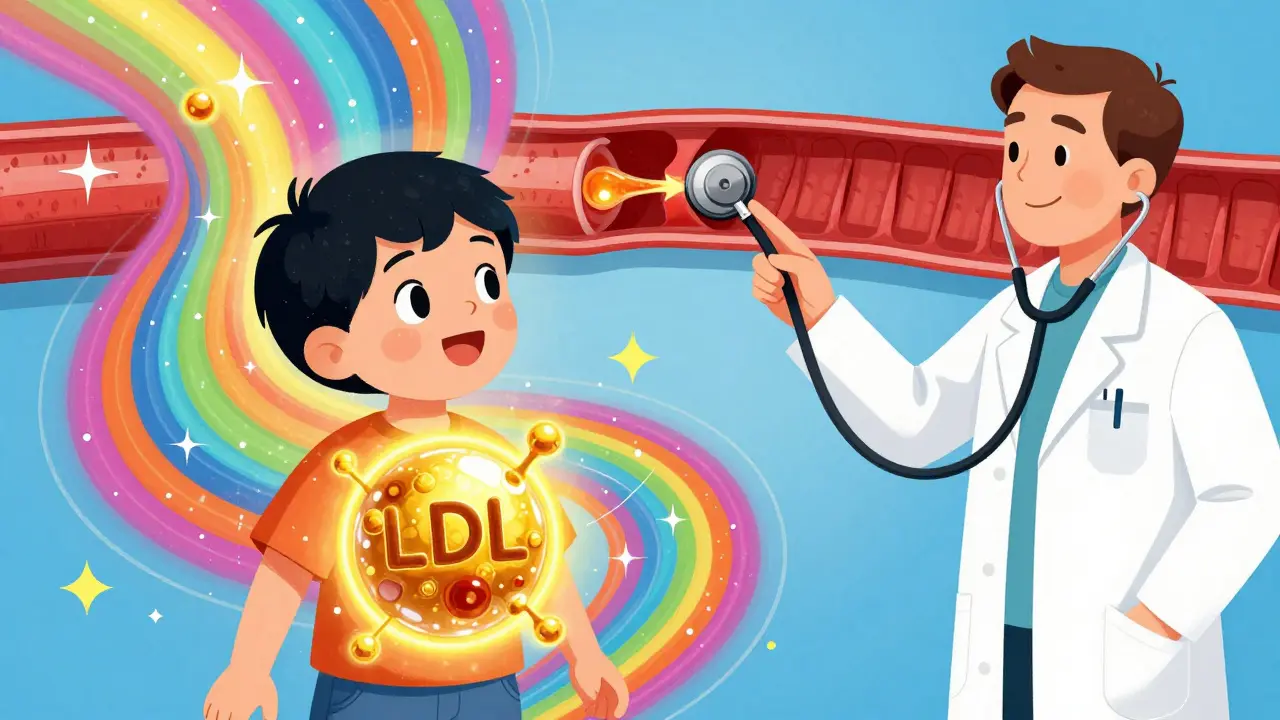
Imagine being told you have a ticking time bomb in your arteries - one that’s been ticking since birth - and no one ever told you. That’s the reality for most people with familial hypercholesterolemia (FH). It’s not rare. It’s not mysterious. And yet, over 90% of people with this condition don’t even know they have it. In Australia, as in most countries, FH slips through the cracks because it doesn’t cause symptoms until it’s too late. But here’s the truth: if you catch it early and treat it hard, you can live just as long as anyone else. This isn’t theory. It’s proven. And it’s happening right now in places like the Netherlands and Norway.
What Exactly Is Familial Hypercholesterolemia?
Familial hypercholesterolemia (FH) is a genetic disorder that floods your bloodstream with bad cholesterol - LDL - from the moment you’re born. It’s passed down from just one parent. If one of your parents has FH, you have a 50% chance of inheriting it. That’s not a small risk. That’s a family-wide health emergency.
People with FH don’t just have high cholesterol. They have dangerously high cholesterol. In adults, LDL levels typically top 190 mg/dL. In kids, it’s 160 mg/dL or higher. For those with the more severe homozygous form (HoFH), LDL can soar past 400 mg/dL. That’s not just ‘a bit high.’ That’s a recipe for heart attacks in your 20s, 30s, or 40s.
Unlike regular high cholesterol, which builds slowly from poor diet and inactivity, FH is genetic. It doesn’t care if you eat salad or run marathons. Your body is wired to make too much LDL and can’t clear it properly. That’s why lifestyle changes alone won’t cut it. You need medicine - and you need it early.
Why Most People Never Get Diagnosed
Here’s the ugly part: FH doesn’t show up on a routine checkup. You won’t feel it. You won’t see it. Unless you have the rare homozygous form, you won’t notice yellowish lumps on your tendons (called xanthomas) or a gray ring around your cornea (corneal arcus). Most people only find out after a heart attack, stroke, or sudden death in the family.
In the U.S., only 6-10% of FH cases are diagnosed. In Australia, the numbers are likely similar. That means over 1.3 million Americans with FH are walking around unaware. And for every undiagnosed person, there’s a 50% chance their child, sibling, or parent also has it - and is also undiagnosed.
Doctors aren’t always to blame. Many aren’t trained to look for it. Pediatricians don’t routinely screen kids. GPs don’t ask about family history beyond ‘did your dad have a heart attack?’ And genetic testing? Too expensive. Too complicated. Too rare.
The Two Best Ways to Find It: Universal Screening and Cascade Screening
There are two proven, science-backed ways to find FH before it kills someone:
- Universal screening - Test all kids between ages 9 and 11 for cholesterol levels. No exceptions. No ‘if they look overweight.’ Just test everyone. The American Academy of Pediatrics and the American Heart Association agree: this is the most effective way to catch FH early.
- Cascade screening - Once one person is diagnosed, test their parents, siblings, and children. Then test the siblings of those people. And so on. Because FH is autosomal dominant, half of each generation carries it. This isn’t guesswork. It’s genetics.
Cascade screening is shockingly efficient. In the Netherlands, where it’s been standard since the 1990s, over 18,000 cases have been found. In the U.S., less than 30% of diagnosed families even attempt it. And yet, for every person you find, you prevent multiple future heart attacks - in their kids, their siblings, their cousins.
And here’s the kicker: it’s cheaper than you think. Studies show cascade screening costs just $13,500 per quality-adjusted life year gained. In the U.S., anything under $50,000 per QALY is considered cost-effective. FH screening is half that. Yet most health systems ignore it.

What Happens If You Don’t Treat It?
Untreated heterozygous FH (HeFH) cuts life expectancy by 20-30 years. Men die before 50. Women before 60. The European Atherosclerosis Society calls this ‘preventable tragedy.’
By age 40, half of untreated men with FH have already had a heart attack. By 50, it’s nearly two-thirds. And if both parents have FH? That’s homozygous FH - a medical emergency. Without aggressive treatment, many don’t survive childhood.
But here’s the flip side: if you start treatment early - even by age 2 - you can prevent nearly all of that damage. A 2014 NIH study showed people with FH who began statins as children had life expectancies close to normal. Not just better. Normal.
The Treatment: Aggressive, Early, and Lifelong
Statin therapy is the foundation. High-dose statins like atorvastatin or rosuvastatin are the first line. But most FH patients need more. That’s where ezetimibe comes in - a pill that blocks cholesterol absorption. Then there’s PCSK9 inhibitors like evolocumab or the newer inclisiran, which is injected just twice a year.
These aren’t optional. They’re essential. The European Society of Cardiology recommends getting LDL below 100 mg/dL in adults - and below 135 mg/dL in kids. That’s not ‘good enough.’ That’s the minimum. Most people with FH need to lower their LDL by over 50% from baseline. That usually means combining three drugs.
And yes, you’ll need to take them for life. No breaks. No ‘I’ll stop after the holiday.’ FH doesn’t take vacations. Your arteries don’t either.
The good news? Inclisiran - approved in 2021 - is changing the game. One injection every six months. No daily pills. No forgotten doses. For someone who’s been on 3 pills a day since age 10, this is life-changing.
Why This Isn’t Happening Everywhere
Why isn’t every kid in Australia screened at age 10? Why don’t GPs ask about family history? Why do so many families go years without testing?
Three big reasons:
- Lack of awareness - Most doctors weren’t taught about FH in med school. Many still think high cholesterol is just about diet.
- Access to specialists - There’s one lipid specialist for every 1.5 million people in the U.S. In Australia, it’s not much better. Who do you call when your GP doesn’t know what to do?
- Insurance and cost - Genetic testing can cost $1,000 or more. Many insurers won’t cover it unless you’ve already had a heart attack. That’s backwards.
Meanwhile, countries like the Netherlands, Norway, and the UK have national FH registries. They track cases. They fund cascade screening. They train GPs. They screen kids. And their diagnosis rates? 20-30%. In the U.S.? 6-10%.
The Future Is Here - And It’s AI
Machine learning is starting to change how we find FH. A 2023 study in the Journal of the American Heart Association showed an AI model could scan electronic health records and flag potential FH cases with 92% accuracy. It looked at age, sex, LDL levels, family history, and even prescription patterns.
That’s huge. Instead of waiting for someone to have a heart attack, your doctor’s computer could pop up a warning: ‘Patient has LDL of 210, father had heart attack at 42. Recommend FH screening.’
It’s not science fiction. It’s already being tested in clinics. And it’s cheaper than running blood tests on 200 kids to find one with FH. The AI cuts that number in half.
What You Can Do Right Now
If you’re reading this, you might be worried - maybe about yourself, maybe about a family member. Here’s what to do:
- If you’re a parent: Ask your child’s pediatrician for a lipid panel at age 9 or 10. Don’t wait for symptoms. Don’t assume ‘they’re healthy.’
- If you’ve had a heart attack before 55 (men) or 60 (women): Get tested for FH. And then test your kids.
- If a close relative has FH: You have a 50% chance of having it too. Get your LDL checked. Now.
- If you’re on statins and your LDL is still above 130: Talk to your doctor about adding ezetimibe or a PCSK9 inhibitor. You might need more than one drug.
You don’t need a genetic test to start treatment. If your LDL is high and your family history is strong, start the meds. You can always confirm with DNA testing later.
Final Thought: This Is Preventable
Familial hypercholesterolemia isn’t a death sentence. It’s a solvable problem. We know how to find it. We know how to treat it. We know how to stop it from killing generations.
The only thing missing is action. Systematic action. From doctors. From families. From governments.
One child screened. One family tested. One life saved. That’s how this ends - not with a heart attack in the ER, but with a quiet, healthy life, full of decades you never thought you’d get.
Can you outgrow familial hypercholesterolemia?
No. FH is a lifelong genetic condition. You’re born with it, and you’ll have it for life. The good news is that with early and consistent treatment, you can prevent complications and live a normal lifespan. It’s not about curing it - it’s about managing it.
Is FH the same as regular high cholesterol?
No. Regular high cholesterol is usually caused by diet, lack of exercise, or obesity. It can improve with lifestyle changes. FH is genetic. Your body produces too much LDL and can’t remove it - no matter how healthy you eat or how much you exercise. That’s why it requires strong medication from childhood.
Can a child be tested for FH before age 9?
Yes, if there’s a strong family history - like a parent or grandparent with early heart disease or known FH. Some experts recommend testing as early as age 2 if one parent has FH, and at birth if both parents have it. Early treatment can prevent irreversible artery damage.
Does FH only affect people of European descent?
No. While FH is more common in certain groups - like Afrikaners (1 in 70), French Canadians, and Ashkenazi Jews - it occurs in all populations. People of African, Asian, and Indigenous descent also have FH. It’s just underdiagnosed in these groups because screening programs focus mostly on high-prevalence populations.
What if my doctor says I don’t need treatment because I feel fine?
That’s a red flag. FH doesn’t cause symptoms until it’s too late. Feeling fine doesn’t mean your arteries are fine. If your LDL is over 190 mg/dL (or 160 mg/dL in a child) and you have a family history of early heart disease, you need treatment - even if you feel perfect. Your future self will thank you.
Are there side effects from taking statins for life?
Most people tolerate statins well long-term. Muscle pain is the most common side effect, but it’s rare and often manageable by switching statins or adding coenzyme Q10. The risk of heart attack from untreated FH is far greater than the risk of side effects from statins. For many, the benefit is life-saving.
Can I just take supplements instead of medication?
No. Supplements like red yeast rice, plant sterols, or omega-3s may lower cholesterol a little - but not enough for FH. You need drugs that reduce LDL by 50% or more. Supplements alone won’t prevent heart attacks in FH. Medication is non-negotiable.
How do I know if I have FH if my parents didn’t know they had it?
Look at your family history: Did any close relatives have heart disease before age 55 (men) or 60 (women)? Did anyone have very high cholesterol? Have you had a heart attack or stroke at a young age? If yes - get tested. You might be the first one in your family to know. And that knowledge could save your children.
Sarah B
February 7, 2026 AT 13:20Mark Harris
February 9, 2026 AT 06:11Marcus Jackson
February 9, 2026 AT 21:36Natasha Bhala
February 11, 2026 AT 08:18Paula Sa
February 12, 2026 AT 01:25Heather Burrows
February 12, 2026 AT 21:20Ritu Singh
February 14, 2026 AT 16:17Mayank Dobhal
February 15, 2026 AT 00:28Gouris Patnaik
February 15, 2026 AT 12:34Jesse Lord
February 17, 2026 AT 03:13Catherine Wybourne
February 18, 2026 AT 05:38Mary Carroll Allen
February 18, 2026 AT 09:36Eric Knobelspiesse
February 19, 2026 AT 03:06Savannah Edwards
February 20, 2026 AT 18:12Tola Adedipe
February 21, 2026 AT 03:02