Esophageal Cancer Risk from Chronic GERD: Key Red Flags You Can't Ignore
Chronic GERD isn’t just annoying heartburn. If you’ve had it for five years or more, especially with other risk factors, you’re staring at a real path to esophageal cancer. It’s not common, but it’s deadly - and it often shows up too late because people ignore the early signals. The truth? Your body is trying to warn you. The question is, are you listening?
How GERD Turns Into Cancer
Every time stomach acid backs up into your esophagus, it’s like pouring bleach on a sensitive surface. Your esophagus isn’t built to handle that. Over time, the lining changes - it starts looking more like stomach tissue. That’s called Barrett’s esophagus. It’s not cancer. But it’s the only known precursor to esophageal adenocarcinoma, the most common type of esophageal cancer in the U.S.
According to a 2023 NIH study, people with long-term GERD have a 3.2 times higher risk of developing this cancer. That’s not a small number. And the longer you’ve had acid reflux - even if it’s mild - the higher the risk. Five years of daily heartburn? That’s the red zone. Ten years? You’re in the danger zone.
Who’s Most at Risk?
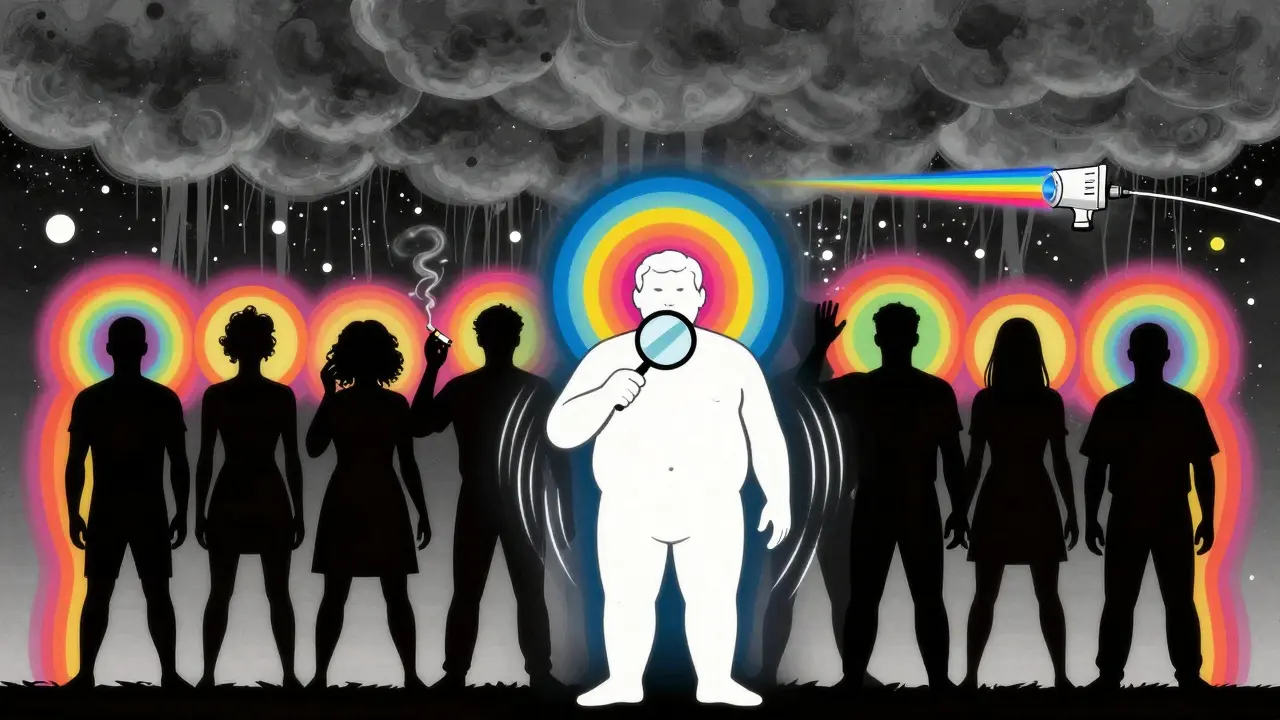
Not everyone with GERD gets Barrett’s esophagus. Only about 10-15% do. But certain people are far more likely to cross that line. The biggest risk factors aren’t just one thing - they stack up.
- Men: Men are 3 to 4 times more likely than women to develop this cancer.
- Age 50+: 90% of cases happen in people over 55. If you’re over 50 and still getting heartburn, it’s not "just part of aging."
- White, non-Hispanic: White Americans have three times the rate of adenocarcinoma compared to Black Americans.
- Obesity: A BMI over 30 doubles or triples your risk. Extra belly fat pushes stomach contents upward.
- Smoking: Even if you quit years ago, past smoking still raises your risk by 2-3 times.
- Family history: If a close relative had esophageal cancer, your risk jumps.
Here’s the kicker: If you’re a white male over 50 with GERD for 10+ years, and you’re overweight or smoked - you’re in the highest-risk group. And yet, only 13% of people in this group get screened. That’s a gap we can’t afford.
The Red Flags No One Talks About
Most people think heartburn is the only sign. It’s not. By the time cancer is obvious, it’s often too late. These are the real warning signs - the ones doctors look for:
- Dysphagia: Difficulty swallowing. Starts with solids, then moves to liquids. This happens in 80% of cases at diagnosis.
- Unexplained weight loss: Losing 10 pounds or more in six months without trying? That’s a major red flag.
- Food getting stuck: Feeling like food is lodged in your chest or throat? That’s not normal.
- Chronic hoarseness or cough: If you’ve been hoarse for more than two weeks with no cold or allergies, get it checked.
- Heartburn that won’t quit: If you’ve had it more than twice a week for five years or more - especially after age 50 - you need an endoscopy.
The American Cancer Society says 75% of esophageal cancers are caught at advanced stages. Why? Because people assume heartburn is harmless. It’s not. And these symptoms don’t always come with pain. Sometimes, it’s just a quiet change - a voice that doesn’t clear up, a weight loss that makes no sense.
What You Can Do - And What You Shouldn’t Ignore
Here’s the good news: You can stop this before it starts.
Quitting smoking cuts your risk by 50% within 10 years. Losing 5-10% of your body weight cuts GERD symptoms by 40%. Limit alcohol to one drink a day for women, two for men - that lowers risk by 25-30%. And if you’re on PPIs (like omeprazole), taking them consistently for five years or more reduces cancer risk by 70% in people with Barrett’s esophagus.
But medication alone isn’t enough. If you’re high-risk - white male over 50, chronic GERD, obesity, smoking history - you need an endoscopy. Not a CT scan. Not an X-ray. An endoscopy. A camera that looks directly at your esophagus. It’s the only way to spot Barrett’s before it turns cancerous.
And yes, it’s uncomfortable. But it’s better than a cancer diagnosis five years from now.
Why Screening Isn’t Just for "Sick" People
Most guidelines say: get screened if you’re a white man over 50 with chronic GERD and two other risk factors. That’s not just "if you’re worried." That’s a clear, data-backed trigger.
There’s even a new tool called BE MAPPED - a risk calculator that uses age, sex, BMI, smoking, GERD duration, family history, and race to give you a personalized risk score. It’s 85% accurate. If you’re in the high-risk group, don’t wait for symptoms. Get checked.
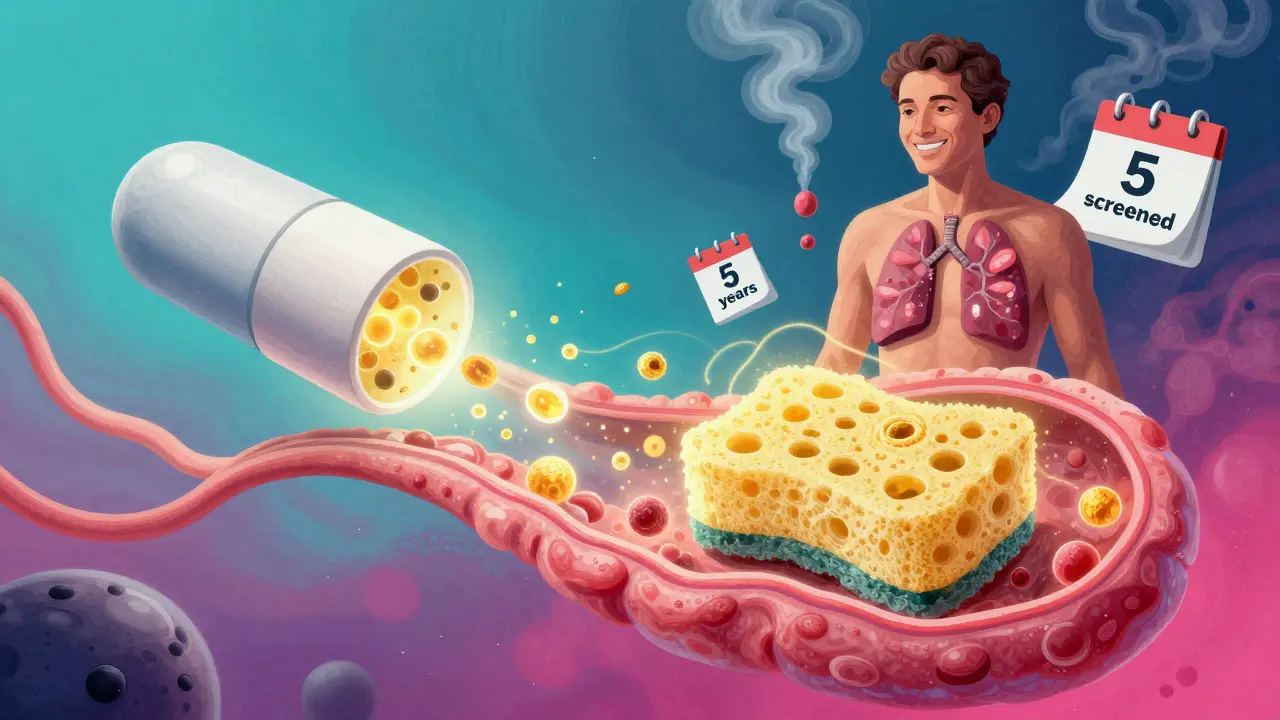
And the future is getting even better. A new test called Cytosponge - a pill with a tiny sponge inside - can collect cells from your esophagus without a scope. In trials, it caught 80% of Barrett’s cases. It’s not everywhere yet, but it’s coming. And for people who avoid endoscopy, it could be a game-changer.
The Numbers Don’t Lie
Since 1975, esophageal adenocarcinoma has increased by 850%. Why? Because obesity and GERD have exploded. In 1980, 15% of Americans were obese. Today, it’s 42%. That’s not a coincidence.
Survival rates are brutal. The overall 5-year survival for esophageal cancer is only 21%. But if caught early - before it spreads - survival jumps to 50-60%. That’s the difference between a death sentence and a second chance.
And here’s something you won’t hear often: people with GERD have a lower risk of colorectal, liver, and pancreatic cancers. Why? Because they’re seeing doctors more often. They’re getting screened. That’s the hidden benefit of managing GERD - it keeps you in the healthcare system. Use that.
What to Do Next
Don’t wait for a symptom to become an emergency.
- If you’ve had GERD for five years or more - especially if you’re over 50 - talk to your doctor about an endoscopy.
- If you smoke, quit. Now. The clock starts ticking the day you stop.
- If you’re overweight, aim to lose 5-10% of your body weight. Even a few pounds can cut reflux.
- Don’t ignore hoarseness, trouble swallowing, or unexplained weight loss. These aren’t "just aging."
- Take your PPIs as prescribed. Don’t stop because you "feel better." The damage is still happening under the surface.
Esophageal cancer doesn’t come out of nowhere. It’s built over years - slowly, quietly. But it’s preventable. You just have to act before your body screams.
Can GERD cause esophageal cancer even if I take medication?
Yes. Medication like PPIs reduces acid and lowers risk - but doesn’t eliminate it. If you’ve had GERD for 5+ years, especially with other risk factors, you still need screening. Medication controls symptoms, but it doesn’t reverse cellular changes already made.
Is Barrett’s esophagus the same as cancer?
No. Barrett’s esophagus is a precancerous condition - meaning the cells have changed, but they’re not cancer yet. Only about 0.2-0.5% of people with Barrett’s develop cancer each year. But it’s the only known pathway to esophageal adenocarcinoma, so it must be monitored.
Do I need an endoscopy if I have GERD but no symptoms?
If you’re in a high-risk group (white male over 50, long-term GERD, obesity, smoking), yes - even if you feel fine. Many people with Barrett’s have no symptoms. The damage happens silently. Screening finds it before it turns deadly.
Can losing weight reverse Barrett’s esophagus?
Losing weight doesn’t reverse Barrett’s, but it dramatically reduces acid reflux, which slows or stops further damage. Weight loss of 5-10% cuts GERD symptoms by 40%, lowering the chance of progression to cancer.
Is esophageal cancer hereditary?
Family history increases risk, but it’s not purely genetic. If a close relative had esophageal cancer, your risk is higher - likely due to shared lifestyle factors like diet, weight, or smoking habits. Still, if you have a family history, you should be screened earlier and more often.
Aisling Maguire
February 28, 2026 AT 16:14Also, PPIs aren’t a magic pill - they help but don’t fix the damage. Get screened if you’re over 50 and have had reflux for years. Seriously.
Brandon Vasquez
March 1, 2026 AT 07:33For anyone reading this and thinking "I’m fine" - you’re not. Silent damage is the worst kind.
Vikas Meshram
March 2, 2026 AT 08:42And yes I’m a doctor. Read the papers.
Angel Wolfe
March 4, 2026 AT 06:32Why do you think they’re pushing PPIs? Because they’re profitable. Why do they say Barrett’s is precancerous? Because they need you scared.
My uncle had GERD for 30 years and never got an endoscopy. He’s 82 and still hiking. They’re lying to you.
Sophia Rafiq
March 4, 2026 AT 08:26It’s not cancer. But it’s like your body’s trying to upgrade from Windows 95 to Linux and accidentally installed a virus.
Screening = system restore point. Do it.
Martin Halpin
March 6, 2026 AT 01:34I’ve been drinking apple cider vinegar and doing cold plunges for 5 years. My reflux is gone. No endoscopy needed.
Also - why are they only screening white men? Because Black people don’t get cancer? That’s racist. And I’m not even white. I’m Irish. And I’m calling it out.
Eimear Gilroy
March 6, 2026 AT 03:17Is that enough? Or should I still get checked? I don’t want to overreact but I also don’t want to die.
Ajay Krishna
March 7, 2026 AT 19:41People think it’s a "Western problem" but obesity and processed food are rising here too.
Even if you’re in a country without easy access to endoscopy - start with lifestyle. Weight loss. Quit smoking. Eat smaller meals. Sleep upright.
It’s not glamorous. But it works. And it’s better than waiting for the scream.
Charity Hanson
March 8, 2026 AT 14:52Then I lost 12 lbs without trying. My voice got raspy. I thought it was allergies.
Turns out - Barrett’s. Early stage.
They caught it. I’m alive.
Don’t wait for the pain. Listen to the quiet.