Diabetic Eye Screening: How Often Do You Need Exams and Does Telehealth Work?

Imagine waking up one morning to find a dark spot in your vision or a blur that won't go away. For many people living with diabetes, this isn't just a bad dream-it's the reality of undetected retinal damage. The scary part? Over 90% of vision loss caused by diabetes is entirely preventable if caught early. Yet, a staggering number of people skip their annual checks because they feel "fine" or simply can't make the trip to a specialist. Whether you've had diabetes for twenty years or were just diagnosed last week, knowing exactly when to get your eyes checked can be the difference between seeing your grandchildren grow up and losing your independence.
The core problem is that diabetic eye screening often happens too late. Many patients believe that if their blood sugar is stable, their eyes are safe. In reality, damage can happen silently in the background without any warning signs until the vision loss is permanent. To stop this, we need to move away from guessing and follow a strict, evidence-based schedule tailored to your specific health profile.
How Often Should You Actually Get a Screening?
There is no one-size-fits-all answer because your risk depends on your diabetes type and how the disease is progressing. However, the medical community follows a clear set of rules to ensure nothing is missed. If you have Type 1 Diabetes, you should get your first comprehensive exam within five years of your diagnosis. If you have Type 2 Diabetes, you need an exam the moment you are diagnosed, as the disease may have been present undetected for years.
Once you're in the system, your frequency depends on what the doctor sees in your retina. For most people with no signs of disease or only very mild changes, an annual exam is the standard. In some lucky cases-where blood sugar (HbA1c) is consistently below 7% and previous exams were perfectly clear-your doctor might suggest moving to every one to two years. But don't assume this applies to you; some populations, particularly African American patients, have been shown to develop proliferative retinopathy significantly faster even with identical blood sugar control.
If the doctor finds something, the clock speeds up. Here is a quick breakdown of the re-examination intervals based on the severity of the condition:
| Condition Severity | Recommended Exam Frequency |
|---|---|
| No Retinopathy / Mild NPDR | Every 6 to 12 months (Annual) |
| Moderate NPDR | Every 3 to 6 months |
| Severe NPDR | Every 3 months |
| Proliferative DR / Macular Edema | Within 1 month |
What Exactly Is Teleophthalmology and Does It Work?
Teleophthalmology is basically the use of technology to move your eye exam from a specialized clinic to your regular doctor's office or even your home. Instead of you traveling 50 miles to see a specialist, a high-resolution camera takes photos of your retina, and those images are sent digitally to a remote expert for grading. For people in rural areas or those who struggle with transportation, this is a game-changer. In some large-scale projects, there has been a 98.5% agreement between these remote graders and in-person specialists.
Beyond just photos, we are seeing the rise of AI. Systems like LumineticsCore (formerly IDx-DR) are FDA-authorized to detect more than mild diabetic retinopathy without a doctor even being in the room. These AI tools have a high level of accuracy, showing roughly 87% sensitivity in detecting disease. This means you can get a screening during a routine primary care visit, removing the hurdle of scheduling a separate appointment with an ophthalmologist.
However, it's not a perfect replacement. A digital photo cannot replace a comprehensive dilated exam. Why? Because photos mostly look at the retina. They might miss other complications like glaucoma or cataracts that a full physical exam would catch. Think of teleophthalmology as a highly efficient "filter" that catches most issues early and tells you when you absolutely need to see a specialist for a deeper dive.
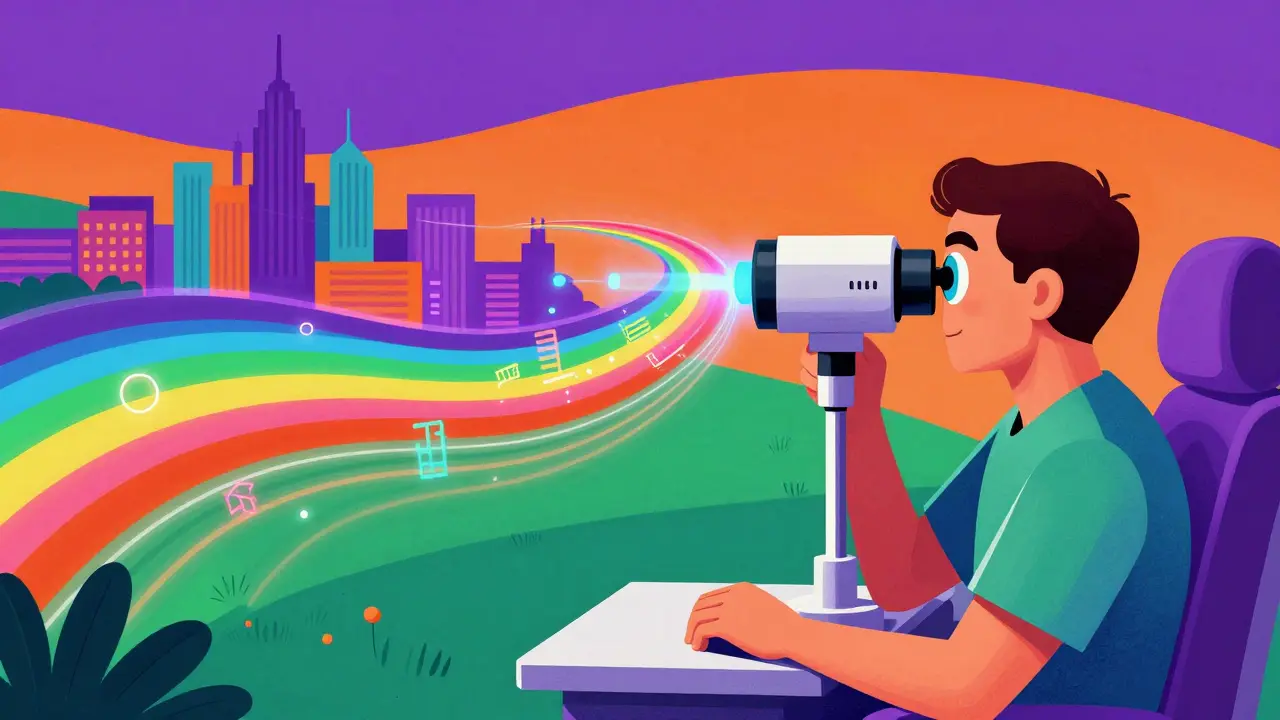
The Struggle With Dilated Exams: Why People Skip Them
Let's be honest: nobody likes the dilation drops. The blinding light, the blurred vision for hours afterward, and the inability to drive yourself home make it a hassle. Many patients report that the discomfort of pupil dilation is a major reason they avoid the clinic. When you combine that with the fact that some people have to drive hours to reach a specialist, it's no wonder only about 60% of patients actually follow the annual guidelines.
This is where the shift toward non-invasive options and telemedicine becomes critical. When a clinic implements a tele-screening program, completion rates often jump by over 30%. It turns a daunting half-day ordeal into a quick 15-minute addition to a regular checkup. If you're dreading the drops, ask your provider if they offer retinal photography or AI-assisted screening as a preliminary step.
Navigating Your Eye Care: Practical Tips for Patients
Managing your vision requires a team effort between your primary doctor, your endocrinologist, and your eye specialist. If you aren't sure where you stand, start by asking for a copy of your last eye exam report. Look for terms like "NPDR" (Non-Proliferative Diabetic Retinopathy) or "DME" (Diabetic Macular Edema). If you see those, you aren't just on an "annual" schedule anymore-you need more frequent checks.
To make sure you don't slip through the cracks, use a few simple strategies:
- Set an Annual Trigger: Link your eye exam to a date you never forget, like your birthday or the anniversary of your diagnosis.
- Request Reminders: Ask your clinic to send you SMS alerts. Systems that send reminders at 21, 14, and 7 days before an appointment have been shown to reduce missed exams by nearly 30%.
- Verify Insurance: While most insurers cover traditional exams, some are still lagging on teleophthalmology. Check if your provider covers remote retinal imaging so you aren't surprised by a bill.
Remember, a normal blood sugar reading today does not erase the damage that might have happened last year. The only way to know if your retina is healthy is to actually let a professional look at it.
Can I skip my eye exam if my blood sugar is perfect?
No. While good glycemic control reduces risk, it doesn't eliminate it. Damage to the blood vessels in the eye can occur even with stable HbA1c levels, and some people are genetically more prone to retinopathy. Annual screenings are the only way to detect these changes before they cause permanent vision loss.
Is an AI eye scan as good as a doctor's exam?
For detecting diabetic retinopathy and macular edema, FDA-cleared AI systems are highly accurate. However, they are screening tools, not diagnostic replacements. They cannot detect other eye diseases like glaucoma or cataracts, so you still need a comprehensive exam with an ophthalmologist periodically.
What is the difference between NPDR and PDR?
NPDR (Non-Proliferative Diabetic Retinopathy) is the early stage where blood vessels leak or close. PDR (Proliferative Diabetic Retinopathy) is more advanced; new, fragile blood vessels grow on the surface of the retina and can leak blood into the eye, leading to rapid vision loss. PDR requires much more frequent monitoring and urgent treatment.
How does teleophthalmology actually work?
A specialized camera takes high-resolution images of your fundus (the back of the eye). These images are uploaded to a secure server where a board-certified ophthalmologist reviews them and sends a report back to your primary care provider. You don't have to travel to the specialist's office for this initial screen.
Why do I need my pupils dilated for a full exam?
Dilating the pupil acts like opening a window. It gives the doctor a wide, clear view of the entire retina, including the far edges, which is where some early signs of disease can hide. Without dilation, the doctor's view is limited to a small central area.
Carol Yang
April 26, 2026 AT 16:40Honestly, the AI screening sounds like such a lifesaver for people who hate those drops.
Gauri Parab
April 28, 2026 AT 04:26Imagine actually thinking a piece of software can replace a qualified ophthalmologist just because it's "convenient". The blind faith in these AI metrics is honestly embarrassing.
Most people reading this probably don't even understand the difference between sensitivity and specificity, but sure, let's just let a camera decide if we're going blind. It's the ultimate lazy-person's guide to healthcare. I've seen the "high-resolution" images from these tele-screens and they're often mediocre at best compared to a proper slit-lamp exam. Only someone completely detached from clinical reality would think this is a total win. Truly a peak example of prioritizing efficiency over actual medical excellence.
Nikita Shabanov
April 28, 2026 AT 08:35It is important to clarify that tele-screening is a triage tool. It identifies high-risk patients who need immediate intervention, while allowing stable patients to maintain their routine without unnecessary travel. However, please remember that these images are only a snapshot in time and don't replace the comprehensive nature of a dilated exam.
suresh kumar
April 28, 2026 AT 23:47Man, those dilation drops are a total nightmare! I felt like a confused owl for three hours after my last visit. Just a wild, blurry mess of a day!
Nila Sawyer
April 30, 2026 AT 09:06I am just so incredibly thrilled to see how technology is making healthcare more accessible for everyone regardless of where they live! 🌟 It is just so heartwarming to know that someone in a remote village can now get their eyes screened without spending a whole day traveling to a big city center! 💖 We should all be celebrating these leaps in medical innovation because they literally save sight and change lives in the most beautiful way possible! Keep pushing for these updates, everyone! ✨🌈
Michael Deane
April 30, 2026 AT 09:09The US is the only place where we actually innovate this stuff and lead the world in medical tech and then we have to deal with these ridiculous insurance companies that won't cover a simple AI scan! It's a joke that we have the best tech on the planet but you gotta jump through ten hoops and fill out a mountain of paperwork just to get a retinal photo taken at your own doctor's office instead of driving across three state lines to see some specialist who's gonna charge you a fortune anyway!
Jon Moss
May 2, 2026 AT 02:26I can totally relate to the fear of those dark spots. It's a heavy thing to carry.
Michael Chukwuma
May 2, 2026 AT 05:41I really appreciate the tip about linking the exam to a birthday. I always forget mine, so that's a great way to stay on track.
Karyn Tindall
May 2, 2026 AT 20:10The thought of losing my independence because I was too scared of some eye drops is absolutely horrifying! I cannot even fathom the tragedy of not seeing my family's faces just because of a skipped appointment!
Elle Torres Sanz
May 4, 2026 AT 09:08It's great to see a balanced view here. We should definitely encourage people to use the tools available, whether it's AI or traditional exams, as long as they are getting checked. Accessibility is a huge part of the battle.
sachin singh
May 4, 2026 AT 21:21The information regarding the specific intervals for NPDR and PDR is highly beneficial. It provides a clear framework for patients to understand the urgency of their condition.