COPD Exacerbations: Triggers, Symptoms, and Emergency Treatment
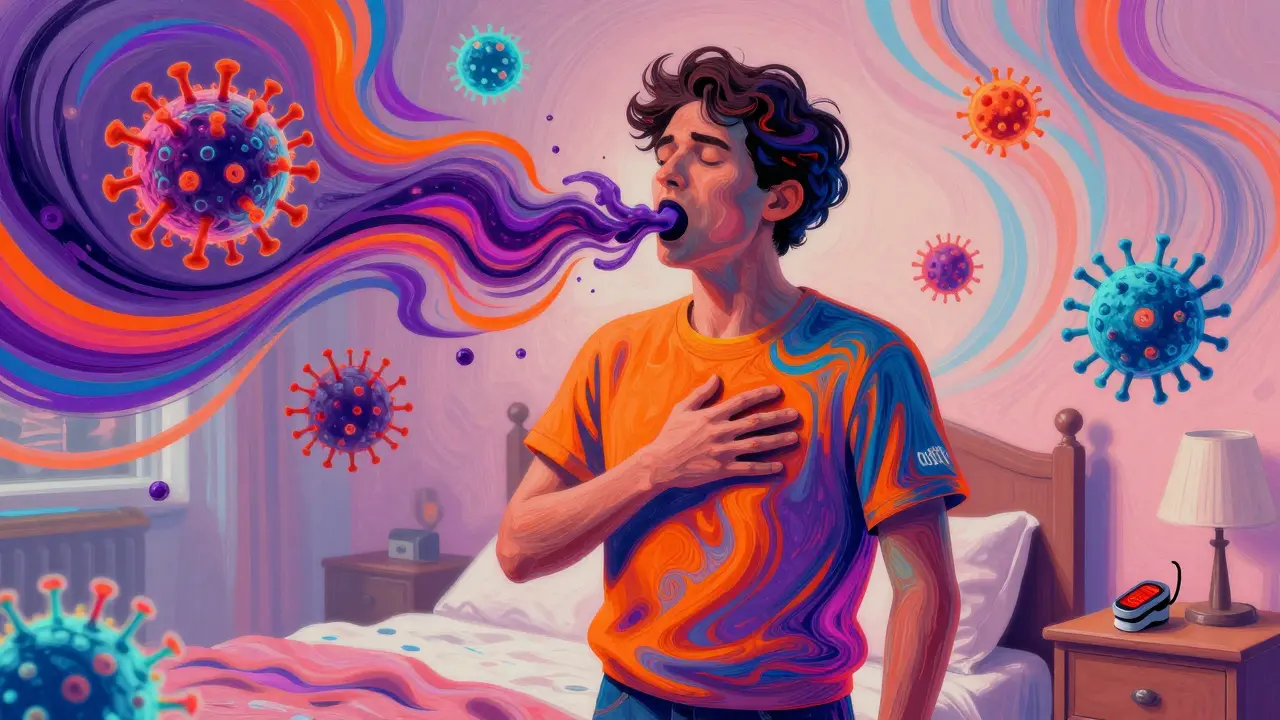
When your breathing gets worse than usual - not just a little, but enough to make you panic - it’s not a bad day. It’s a COPD exacerbation. And if you or someone you care about has COPD, this isn’t something you can ignore. These flare-ups don’t just make life harder; they can permanently damage your lungs, send you to the hospital, or worse. Every year in the U.S. alone, over 10 million healthcare visits are tied to these sudden worsening episodes. The good news? Knowing what to look for and how to react can save your lungs - and maybe your life.
What Exactly Is a COPD Exacerbation?
A COPD exacerbation is when your normal symptoms - like shortness of breath, coughing, and phlegm - suddenly get much worse. It’s not just having a rough morning. It’s when you can’t catch your breath walking to the bathroom, your cough won’t stop, and the mucus changes color or thickens. These episodes usually last 7 to 14 days, but sometimes longer. And here’s the scary part: even after you feel better, your lungs may never fully recover. Each flare-up leaves behind some permanent damage, making it harder to breathe the next time.
Think of it like this: your airways are already narrowed from COPD. During an exacerbation, they swell even more, get clogged with mucus, and tighten up. That’s why you feel like you’re breathing through a straw. The inflammation doesn’t just stay in your lungs - it spreads through your body. Studies show levels of inflammatory markers like CRP and fibrinogen spike during these events, which can also raise your risk of heart problems.
Common Triggers: What’s Making It Worse?
Not all flare-ups happen for the same reason. But most of them - about 75% - come from infections. That’s the big one. Viruses and bacteria are the main culprits.
- Viral infections cause about 25% of exacerbations. Rhinovirus (the common cold), flu, coronavirus, and RSV are the usual suspects.
- Bacterial infections are behind another 25%. Haemophilus influenzae, Moraxella catarrhalis, and Streptococcus pneumoniae are the most common bacteria found in mucus during flare-ups.
- Combined infections - where both viruses and bacteria are present - make up another 25%. That’s why antibiotics and antiviral support are often used together.
But infections aren’t the only trigger. Environmental factors play a huge role too:
- Air pollution - smog, smoke, or even heavy dust can set off a flare-up.
- Cold air - especially in winter - tightens airways and makes breathing harder.
- Strong smells - perfumes, cleaning products, paint fumes, and even incense can trigger symptoms.
- Smoking - even secondhand smoke - is one of the worst things you can do. It doesn’t just worsen symptoms; it speeds up lung damage.
Here’s something surprising: during the pandemic, doctors thought COVID-19 would cause deadly COPD flare-ups. But studies showed that people on regular inhaled COPD meds - like steroids and bronchodilators - had less severe outcomes. Those medications seem to offer some protection, though we’re still learning why.
Key Symptoms: How to Spot a Flare-Up Early
You can’t treat what you don’t notice. That’s why knowing your baseline is everything. On a good day, what’s normal for you? How much do you cough? What color is your mucus? How far can you walk before you’re out of breath?
When a flare-up starts, these signs usually show up together and last more than two days:
- More coughing - worse than your usual daily cough.
- Changes in mucus - more of it, thicker, or a color change (yellow, green, or even streaked with blood).
- Bigger shortness of breath - even doing simple things like dressing or making tea becomes hard.
- Wheezing or chest tightness - that whistling or squeezing feeling in your chest.
- More fatigue - you feel drained, even after resting.
- Fever or chills - this often means infection is involved.
- Difficulty sleeping - because you can’t breathe well lying down.
If your oxygen level drops below 90% (measured by a pulse oximeter), that’s a red flag. Low oxygen isn’t just uncomfortable - it’s dangerous. Your heart and brain need oxygen to work. Without it, you’re at risk of organ damage or cardiac arrest.
Emergency Treatment: What Happens in the ER?
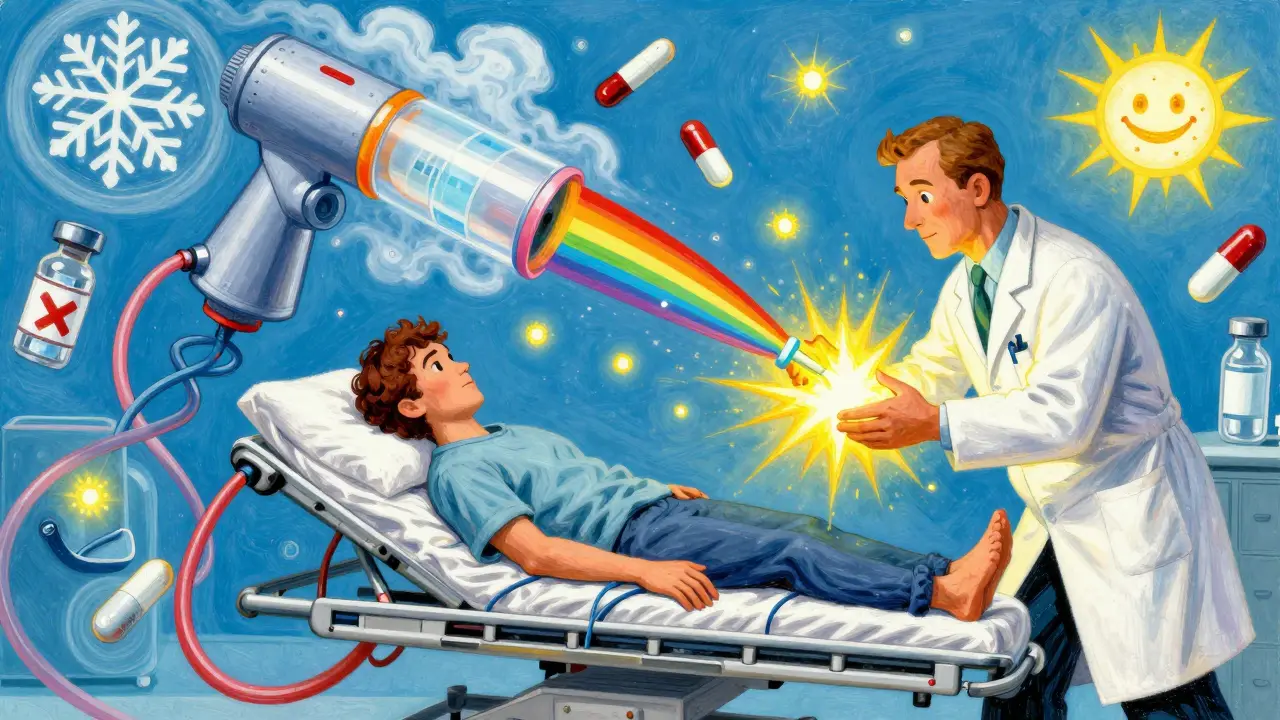
If you’re struggling to breathe, your lips or fingernails are turning blue, or you’re too dizzy to stand - go to the ER immediately. Don’t wait. Don’t call your doctor first. This is an emergency.
In the hospital, treatment focuses on three things:
- Restoring oxygen - You’ll get supplemental oxygen through a nasal tube or mask. Too much oxygen can be harmful in COPD, so it’s carefully controlled.
- Opening airways - Bronchodilators like albuterol or ipratropium are given through a nebulizer to relax your airways. Sometimes, steroids like prednisone are added to reduce swelling.
- Fighting infection - If infection is suspected (and it usually is), antibiotics are started right away. Common ones include amoxicillin, doxycycline, or azithromycin, depending on your history and local resistance patterns.
If things are really bad - if you’re not responding to treatment or your oxygen stays low - you might need to be put on a ventilator. This isn’t common, but it happens in about 10-15% of severe cases. Hospital stays average 5-7 days, and recovery can take weeks.
What Happens After the ER?
Leaving the hospital doesn’t mean you’re out of the woods. Many people go home with a new treatment plan. Your doctor might:
- Change your maintenance inhalers - maybe add a long-acting steroid or switch to a triple-combination device.
- Prescribe a short course of oral steroids - usually 5-7 days.
- Start you on long-term antibiotics if you’ve had frequent infections.
- Refer you to pulmonary rehab - a program that teaches breathing techniques, exercise, and how to avoid triggers.
And here’s the hard truth: after each exacerbation, lung function doesn’t fully bounce back. Studies show that even after 8 weeks, many patients still have lower lung capacity than before the flare-up. That’s why prevention is more important than treatment.
Prevention: Your Best Defense
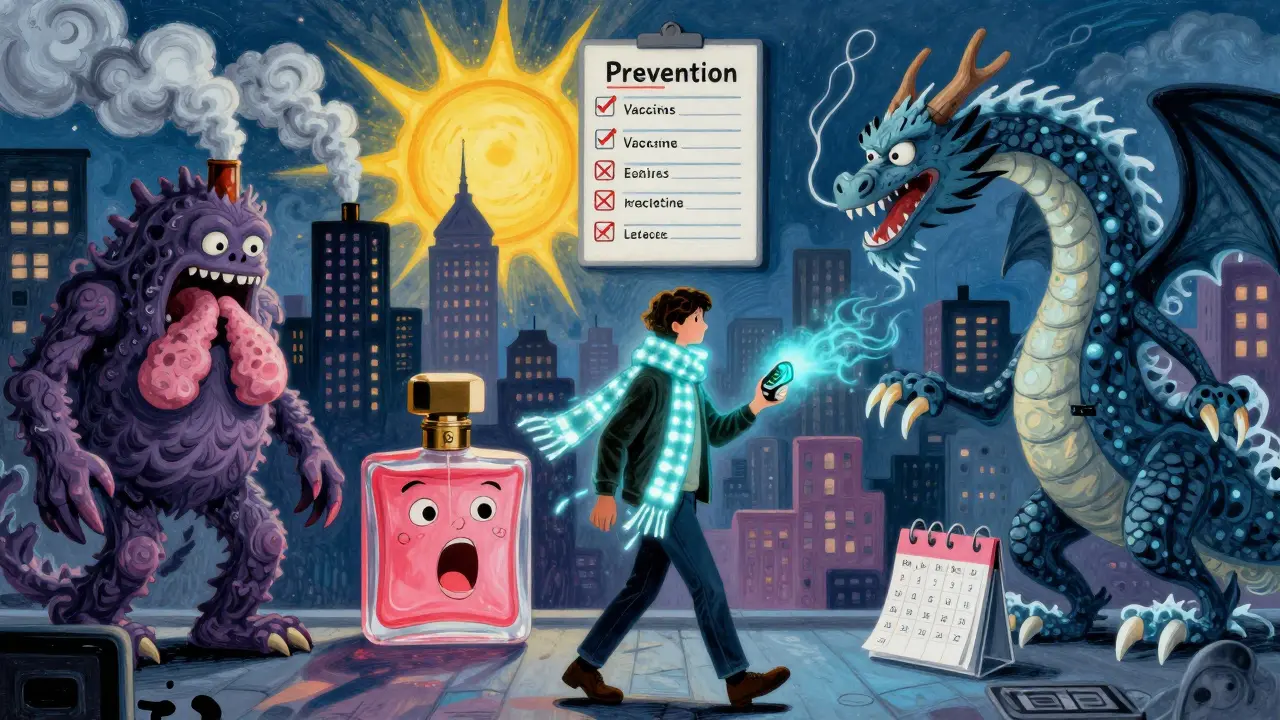
You can’t stop every cold or every smoggy day. But you can stack the odds in your favor.
- Get vaccinated - Every year: flu shot. Every 5 years: pneumococcal vaccine (Pneumovax 23 or Prevnar 20). These cut infection-related flare-ups by up to 50%.
- Take your meds - Consistency matters. Skipping your inhalers for a few days increases your risk of a flare-up by 3 times.
- Avoid triggers - Wear a scarf over your nose and mouth in cold weather. Use fragrance-free cleaners. Keep your home clean and dry to avoid mold. Don’t let anyone smoke around you.
- Monitor daily - Keep a simple log: “Today’s breathing: 7/10. Mucus: yellow, thick. Cough: 10 times.” This helps you spot trends before they become emergencies.
- Have a plan - Work with your doctor to create a COPD Action Plan. It should say: “If I have X symptom, I do Y. If I have Z symptom, I go to ER.”
One of the most effective tools? A pulse oximeter. Buy one. Check your oxygen daily. If it drops below 92% for more than a few hours - call your doctor. If it drops below 90% - go to the ER.
Why This Matters More Than You Think
COPD is the fourth leading cause of death in the U.S. And most of those deaths aren’t from slow decline - they’re from sudden flare-ups. Each one chips away at your lungs. Each one increases your risk of heart attack, stroke, or sudden cardiac death. The inflammation doesn’t stay in your chest - it spreads.
But here’s the hopeful part: if you act fast, you can break the cycle. Recognizing symptoms early, following your treatment plan, and avoiding triggers can keep you out of the hospital and off the ventilator. It’s not about being perfect. It’s about being aware. It’s about knowing your body well enough to say, “This isn’t normal.”
How do I know if my COPD symptoms are a flare-up or just a bad day?
A bad day might mean you’re a little more tired or cough a bit more. A flare-up lasts more than two days and includes clear changes: worse shortness of breath, thicker or colored mucus, fever, or needing more rescue inhaler puffs than usual. If you’re using your inhaler more than twice your normal amount in 24 hours, that’s a red flag.
Can COPD flare-ups be prevented entirely?
Not entirely - infections happen, and pollution is everywhere. But you can reduce them by 50% or more. Vaccines, consistent inhaler use, avoiding smoke and cold air, and using a pulse oximeter to catch early drops in oxygen make a huge difference. People who follow their action plan have 40% fewer hospital visits.
Do I need antibiotics every time I have a flare-up?
No. Antibiotics only work if bacteria are involved - which is true in about 25-50% of cases. Your doctor will look at your mucus color, fever, and recent illness history. Green or yellow mucus doesn’t always mean infection. But if you’re also feverish or very short of breath, antibiotics are usually started. Never take leftover antibiotics - always get a new prescription.
Is it safe to use oxygen at home during a flare-up?
Yes - but only as prescribed. Too much oxygen can suppress your drive to breathe in advanced COPD. That’s why home oxygen is carefully dosed. If you’re using oxygen at home and your symptoms worsen, don’t increase the flow yourself. Call your doctor. If you’re not on oxygen and suddenly can’t breathe, go to the ER - don’t try to use someone else’s oxygen tank.
What’s the long-term impact of frequent COPD exacerbations?
Each flare-up can permanently reduce your lung function. Over time, this leads to more frequent hospitalizations, less ability to walk or do daily tasks, and higher risk of heart disease. People who have three or more exacerbations a year often see their COPD stage worsen within a year. Prevention isn’t optional - it’s essential to staying independent.
Siri Elena
March 4, 2026 AT 06:38Oh wow, another medical pamphlet disguised as a Reddit post. Let me grab my stethoscope and monocle. Seriously though, if you’re reading this and still not using a pulse oximeter, you’re basically playing Russian roulette with your lungs. I’ve seen patients come in with O2 levels at 82% and say, ‘I thought it was just allergies.’ Honey, your lungs are not a suggestion box.
Divya Mallick
March 6, 2026 AT 05:22This is why India’s air quality crisis is a silent genocide. PM2.5 levels in Delhi are 12x WHO limits and yet we’re still told to ‘just breathe through a scarf’? No. We need systemic change. This isn’t about inhalers-it’s about policy, corporate accountability, and dismantling the fossil fuel lobby that kills our grandparents while they’re waiting for a ventilator. Stop medicalizing environmental crime.
Callum Duffy
March 6, 2026 AT 15:28A well-structured and clinically sound overview. I appreciate the emphasis on longitudinal lung function decline post-exacerbation. The data on inflammatory markers like CRP and fibrinogen is particularly compelling. While individual adherence remains a challenge, the evidence strongly supports structured action plans and pulmonary rehabilitation as cost-effective interventions. A commendable synthesis of current guidelines.
Chris Beckman
March 6, 2026 AT 17:58Mike Dubes
March 7, 2026 AT 20:05Just wanted to say-this saved my life last year. I started tracking my mucus color and oxygen levels after reading something like this. One morning, my SpO2 was 89% and I didn’t feel great, so I called my pulmonologist. They got me on steroids before I ended up in the ER. You don’t need to be a doctor to be proactive. Small habits = big wins. Keep it up.
Helen Brown
March 9, 2026 AT 16:52Did you know the government is using COPD exacerbations to track your location through your oxygen device? They’re building a database of lung function to predict who’s ‘too weak to work’ and cut benefits. The mask mandate was just the beginning. If you’re on oxygen, ask your provider if they’re sharing data with DHS. Don’t trust the system.
marjorie arsenault
March 10, 2026 AT 10:44You’re not alone. I’ve been living with COPD for 12 years. I used to think I just had to accept it. Then I started pulmonary rehab. Not glamorous. No miracles. But I can walk to my mailbox now without stopping. You don’t have to be perfect. Just show up. Your lungs will thank you.
Deborah Dennis
March 11, 2026 AT 21:10So… let me get this straight. You’re telling me I need to buy a pulse oximeter, get three vaccines, avoid ALL smells, track my mucus color, and then-wait for it-go to the ER if my O2 drops below 90? What if I can’t afford that? What if I live in a rural area? What if I’m 78 and live alone? This isn’t advice. It’s a guilt trip wrapped in a medical textbook.
Shivam Pawa
March 12, 2026 AT 10:22Agreed with the emphasis on infection control. In India, we see 70% of exacerbations linked to biomass smoke in households. Yet public health campaigns ignore this. Also, the term 'mucus color' is misleading. Yellow doesn't equal bacterial. It's about quantity, viscosity, and systemic signs like fever. We need better patient education tools.
Raman Kapri
March 12, 2026 AT 22:37While the statistics cited appear plausible, the underlying assumption-that COPD exacerbations are primarily preventable through individual compliance-ignores socioeconomic determinants. Access to inhalers, oxygen devices, and pulmonary rehab is not universal. Framing this as a personal responsibility narrative is not only inaccurate, it is ethically irresponsible.
Megan Nayak
March 14, 2026 AT 16:12They say 'each exacerbation damages your lungs permanently.' But what if the damage isn't the disease? What if the real damage is the fear? The surveillance. The endless checklists. The pulse oximeter that turns your bedroom into a hospital ward. Are we treating lungs-or manufacturing compliance? I used to breathe. Now I measure. And I wonder: who benefits?
Tildi Fletes
March 16, 2026 AT 04:59It is critical to emphasize that systemic corticosteroids, while effective in reducing airway inflammation during acute exacerbations, should be prescribed with caution in patients with concomitant metabolic disorders, such as uncontrolled diabetes or osteoporosis. The risk-benefit ratio must be individually assessed. Furthermore, the use of long-term macrolide antibiotics for prophylaxis remains off-label in many jurisdictions and requires careful monitoring for cardiac QT prolongation.
Alex Brad
March 16, 2026 AT 16:27