Continuous Glucose Monitors: How CGMs Work and Who Benefits
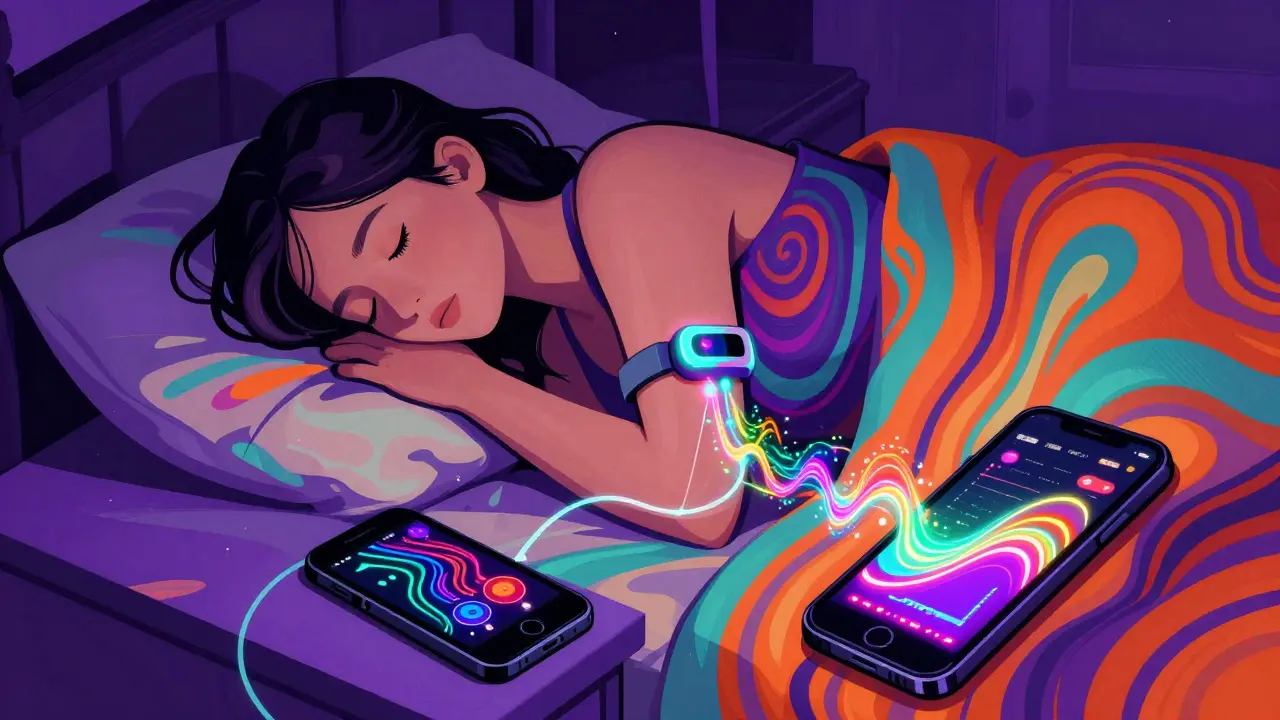
Imagine waking up to an alarm on your phone telling you your blood sugar is dropping while you sleep. For millions of people with diabetes, this isn't a sci-fi scenario-it’s their nightly routine thanks to Continuous Glucose Monitors (CGMs), which are small wearable devices that track glucose levels in real-time. If you’ve ever pricked your finger dozens of times a day just to get a single snapshot of your health, the idea of continuous monitoring feels like magic. But how exactly do these devices work, and are they right for you?
How Continuous Glucose Monitors Actually Work
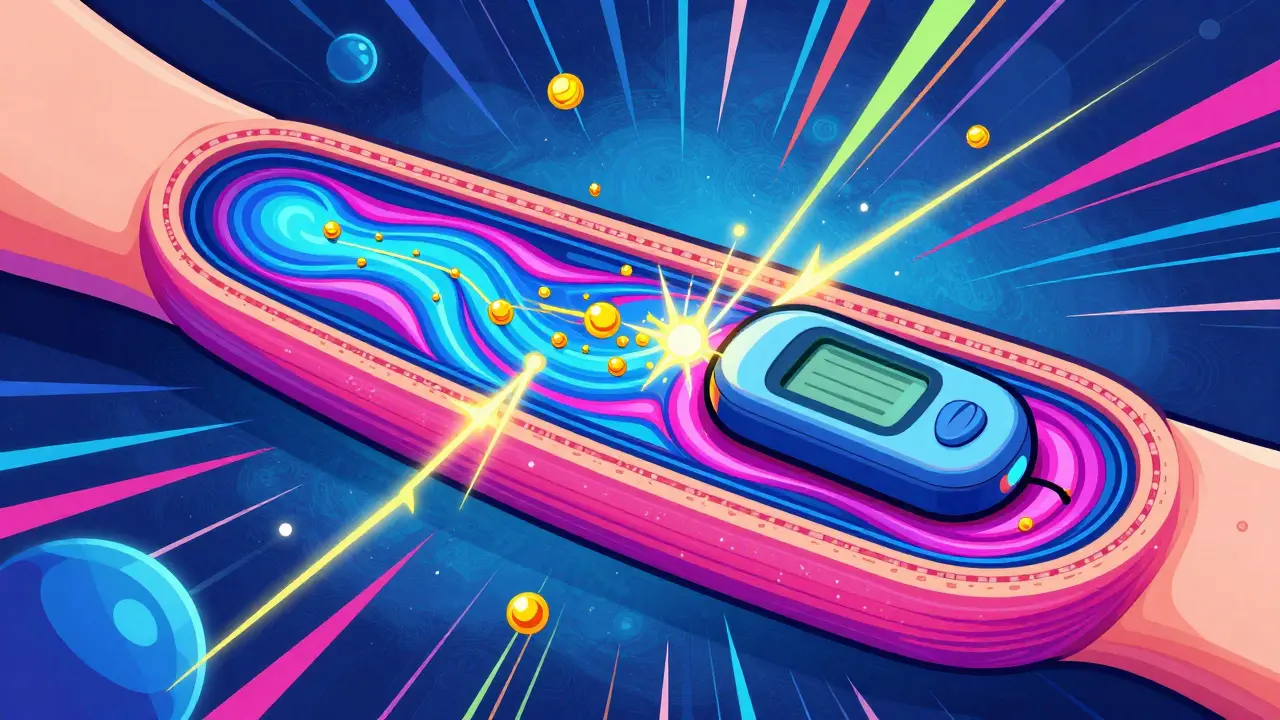
A Continuous Glucose Monitor is a medical device that measures glucose concentration in interstitial fluid-the liquid between your cells-rather than directly in your blood. This distinction matters because it changes how you interpret the data. The system consists of three main parts: a tiny sensor filament (about the size of a few eyelashes) inserted under the skin, a transmitter that sends data wirelessly, and a receiver like your smartphone or a dedicated display unit.
The sensor contains an enzyme called glucose oxidase, which reacts with glucose in your body fluids to create a small electrical current. The stronger the current, the higher your glucose level. Modern devices like the Dexcom G7 and Abbott FreeStyle Libre 3 measure this data every 1 to 5 minutes, sending updates via Bluetooth or near-field communication to your phone.
Here is the catch: there is a physiological lag. It takes 5 to 20 minutes for glucose to move from your bloodstream into your interstitial fluid. This means if you just ate a sugary snack or took insulin, your CGM reading might not reflect your true blood sugar immediately. During rapid changes, always verify with a traditional fingerstick test. Understanding this delay is crucial for safety, especially during exercise or illness.
Who Actually Benefits from Using a CGM?
While CGMs were originally designed for people with Type 1 diabetes, the user base has expanded significantly. According to the American Diabetes Association, CGMs are strongly recommended for anyone on intensive insulin therapy. But who else should consider them?
- Type 1 Diabetics: They benefit most from automated alerts for low blood sugar (hypoglycemia), which can be life-threatening during sleep. Studies show a 31% reduction in severe hypoglycemia events among users.
- Type 2 Diabetics on Insulin: Those managing their condition with multiple daily injections use CGMs to fine-tune dosages and prevent dangerous lows.
- Pregnant Women with Gestational Diabetes: Tight glucose control is critical for fetal health, and CGMs provide the detailed data needed to make dietary adjustments quickly.
- Non-Diabetic Fitness Enthusiasts: A growing niche uses CGMs to optimize performance by seeing how different foods affect their energy levels. However, insurance rarely covers this use case.
If you have stable Type 2 diabetes managed only with diet or oral medications, a CGM might be overkill. Talk to your doctor about whether the data will actually change your treatment plan.
Dexcom vs. FreeStyle Libre: Choosing the Right Device
The market is dominated by two major players, each with distinct advantages. Choosing between them depends on your lifestyle, budget, and tech preferences.
| Feature | Dexcom G7 | FreeStyle Libre 3 |
|---|---|---|
| Sensor Lifespan | 10 days | 14 days |
| Data Frequency | Every 5 minutes | Every minute |
| Alerts | Automatic customizable alarms | Optional automatic alarms |
| Warm-up Time | 30 minutes | 60 minutes |
| Approximate Cost (US, no insurance) | $399/month | $110/month (for 3 sensors) |
The Dexcom G7 is known for its robust alert system and integration with many insulin pumps. It’s ideal if you want hands-free monitoring and don’t mind changing the sensor more frequently. The FreeStyle Libre 3 offers a longer wear time and lower out-of-pocket cost for many users. It also boasts a slightly better accuracy metric (MARD of 7.9% vs. 9.1% for Dexcom). However, Libre requires you to scan the sensor manually unless you enable optional alerts, which some users find less convenient.
Real-World Challenges and User Feedback
No technology is perfect. While 78% of users report high satisfaction, common complaints include skin irritation and false alarms. Adhesive issues are particularly prevalent in humid climates or during heavy sweating. Many users resort to third-party adhesives like Skin Tac or Opsite Flexifix to keep sensors in place.
Another challenge is "alert fatigue." If your device buzzes constantly for minor fluctuations, you might start ignoring it. Customize your thresholds carefully. Set alerts for clinically significant highs and lows rather than every slight deviation. Also, be aware that certain medications, like acetaminophen (Tylenol), can interfere with some CGM readings. Always check the manufacturer’s safety notices.

Getting Started: Tips for New Users
Starting with a CGM involves a learning curve. Here is how to make the transition smoother:
- Master the Insertion: Practice inserting the sensor on yourself or ask a healthcare provider to demonstrate. Proper technique reduces failure rates, which sit at around 12% for first-time users.
- Understand Trend Arrows: The number on your screen is less important than the arrow next to it. A flat arrow means stability; a double-down arrow means you need carbs now. Focus on the direction, not just the value.
- Verify When Necessary: Trust but verify. If you feel symptoms of low blood sugar but your CGM reads normal, do a fingerstick. Your body knows best.
- Rotate Sites: Don’t insert sensors in the exact same spot repeatedly. Rotate between the abdomen, upper arm, and back to prevent scar tissue buildup, which can affect accuracy.
Most users become proficient within 3 to 5 days. Use the companion apps like Dexcom Clarity or LibreView to review historical data with your doctor. These reports highlight patterns you might miss day-to-day, such as consistent nighttime lows after dinner.
The Future of Glucose Monitoring
We are moving toward a future where glucose monitoring becomes seamless. Current developments include implantable sensors like the Eversense E3, which lasts up to 180 days and eliminates frequent skin insertions. Researchers are also working on non-invasive optical sensors and multi-analyte patches that measure ketones and lactate alongside glucose.
Integration with artificial pancreas systems is already here. Hybrid closed-loop systems automatically adjust insulin delivery based on CGM data, reducing the mental load of diabetes management. As costs decrease and insurance coverage expands, CGMs will likely become standard care for a broader range of patients, transforming diabetes from a reactive disease to a proactively managed condition.
Do I need a prescription for a CGM?
In most countries, including the US and UK, yes. CGMs are classified as Class II medical devices requiring a prescription. However, regulations are evolving, and some regions may allow over-the-counter purchase for wellness purposes, though insurance won't cover it.
Can I shower with my CGM sensor?
Yes, all modern CGMs like Dexcom G7 and FreeStyle Libre 3 are waterproof for short periods. You can shower, swim, and bathe without removing the sensor. Just avoid prolonged submersion or high-pressure water jets directly on the adhesive site.
Why does my CGM reading differ from my fingerstick?
This is due to the physiological lag between blood glucose and interstitial fluid glucose. During stable periods, they align closely. During rapid rises or falls (after eating or exercising), the CGM lags by 5-20 minutes. Always trust your symptoms and fingerstick results when values are changing quickly.
Does Medicare cover CGMs?
Medicare covers therapeutic CGMs (like Dexcom and Medtronic) for patients using insulin. Coverage for flash monitors (like FreeStyle Libre) has expanded recently but varies by region and specific patient criteria. Check with your local Medicare Advantage plan for details.
Are CGMs accurate enough to replace fingersticks entirely?
For most daily decisions, yes. Modern CGMs have high accuracy (MARD < 10%). However, you still need fingersticks for calibration (if required by your model) and verification during rapid glucose changes, illness, or if symptoms don't match the CGM reading.
Sonam Norbu
June 24, 2026 AT 10:26Stop relying on foreign tech for basic health monitoring. We need domestic solutions that don't send our data to servers in who knows where. This is a national security risk disguised as wellness.
Koushiki Behera
June 25, 2026 AT 18:38The way these devices connect us to our own bodies is truly profound 🌿 It’s like having a silent guardian watching over your well-being. I think it fosters a deeper mindfulness about what we consume and how it affects our energy ✨
KESHAV KUMAR
June 27, 2026 AT 15:28Oh look, another gadget to make you paranoid about eating a cookie. Real men just eat the damn cake and deal with the consequences later. But sure, let's track every single spike like it's the stock market 📉😂
Amy Bogdahn
June 29, 2026 AT 03:27You’re all missing the point. If you can’t manage your blood sugar without a machine telling you what to do, you’ve already lost control of your life. It’s pathetic.
Ashley Jacelyn
June 30, 2026 AT 21:38I know this might seem overwhelming at first, but many people find real comfort in knowing their body’s signals are being monitored. It’s okay to ask for help from technology when managing chronic conditions 💙
Alex Johnston
July 1, 2026 AT 07:58They want you hooked on the data so they can sell you more 'wellness' scams later. The interstitial fluid lag? Convenient excuse for why the numbers never match up perfectly. Wake up sheeple :/
Sam Dudgeon
July 2, 2026 AT 04:47i mean if you cant handle a little needle under your skin then maybe you shouldnt be alive honestly. also does it track your thoughts too or just the sugar because i feel like my mind is full of garbage anyway lol
Charlotte Stuart
July 4, 2026 AT 04:32It is rather quaint how the masses flock to these superficial technological crutches. True discipline requires internal fortitude, not a Bluetooth-enabled sticker on one’s arm. The pretension of using medical-grade devices for mere 'fitness optimization' is utterly repugnant to those of us who understand actual physiological rigor.
Hafiz Omeiza
July 6, 2026 AT 03:54While the technology is undeniably advanced, one must consider the ethical implications of continuous surveillance of one's biological functions. Are we becoming slaves to the algorithm? The MARD accuracy is impressive, yes, but at what cost to our autonomy? We must remain vigilant against the commodification of human health data.
Kimberly Maten-ao
July 7, 2026 AT 02:00Does anyone else notice the Dexcom alerts are way too sensitive compared to the Libre?