Cholesterol-Lowering Medications: Statins vs. Alternative Options
High cholesterol doesn’t always show symptoms, but it’s one of the biggest silent risks for heart attacks and strokes. If your doctor says your LDL (the "bad" cholesterol) is too high, they’ll likely start you on a statin. And for good reason: statins have been saving lives for over 35 years. But what if you can’t tolerate them? What if your cholesterol still won’t budge? That’s where alternatives come in - and not all of them are created equal.
How Statins Actually Work
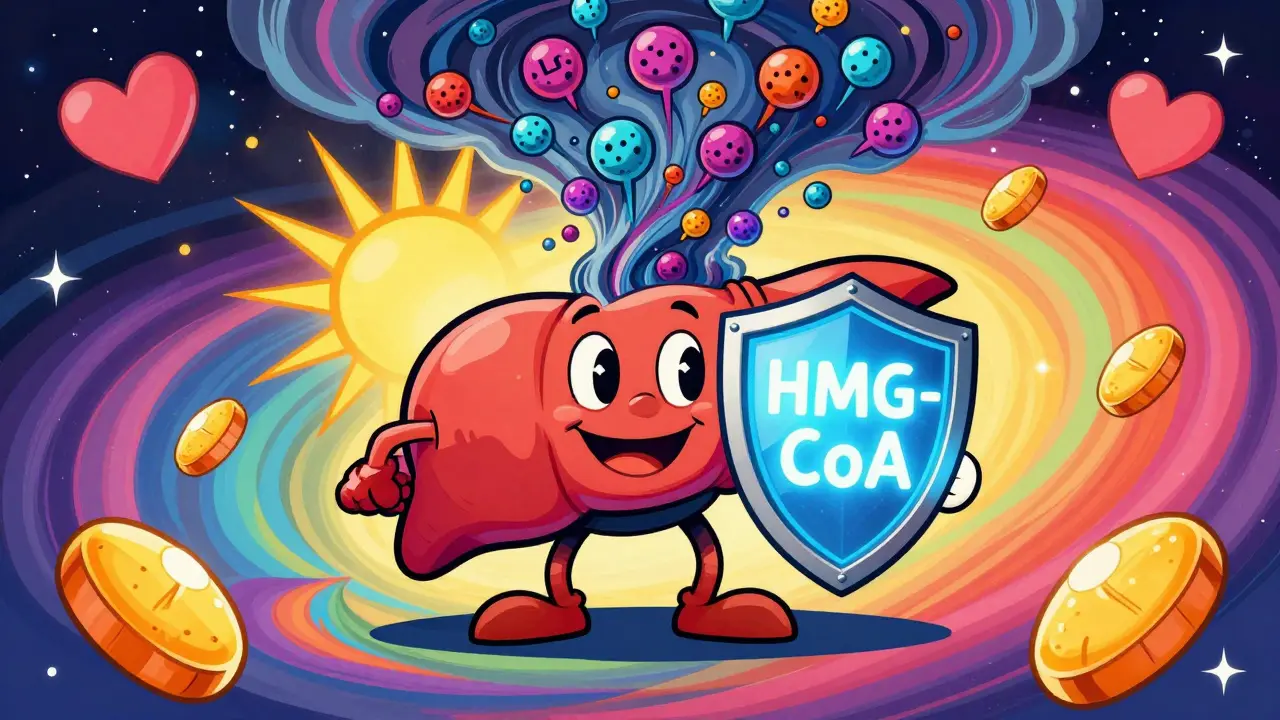
Statins aren’t just another pill. They work by blocking an enzyme in your liver called HMG-CoA reductase. This enzyme is what your body uses to make cholesterol. When you slow it down, your liver starts pulling more LDL cholesterol out of your blood to use for its own needs. The result? Your LDL drops - often dramatically.
Atorvastatin (Lipitor) and rosuvastatin (Crestor) are the two most powerful and widely used statins. At high doses, they can cut LDL by more than 50%. Even low doses bring down numbers by 30% or more. The effect isn’t instant - it takes 4 to 12 weeks to see the full drop. But once it kicks in, the benefits are real. Studies tracking over 39,000 people showed that every 1 mmol/L (39 mg/dL) drop in LDL reduces heart attack risk by about 20%.
Statins also have a side benefit: they stabilize plaque in your arteries. That means less chance of a clot breaking off and causing a heart attack or stroke. That’s why the American Heart Association and the European Society of Cardiology both list statins as the first-line treatment for most people with high cholesterol or existing heart disease.
Why People Stop Taking Statins
Despite their effectiveness, about 25% of people stop taking statins within the first year. The main reason? Muscle pain. Not everyone gets it, but for those who do, it’s real. Some feel soreness like they’ve overworked at the gym. Others get cramps or weakness. In rare cases, it can lead to a serious condition called rhabdomyolysis, where muscle tissue breaks down.
Here’s the catch: many people blame statins for muscle pain when something else is to blame - aging, low vitamin D, thyroid issues, or even just being out of shape. Studies show that in placebo-controlled trials, about 70% of people who think they have statin side effects feel better when they’re given a sugar pill instead. That doesn’t mean the pain isn’t real - it just means the cause isn’t always the drug.
Still, if you’re one of the 5-10% who truly can’t tolerate statins, you need other options. And you have them.
Ezetimibe: The Quiet Helper
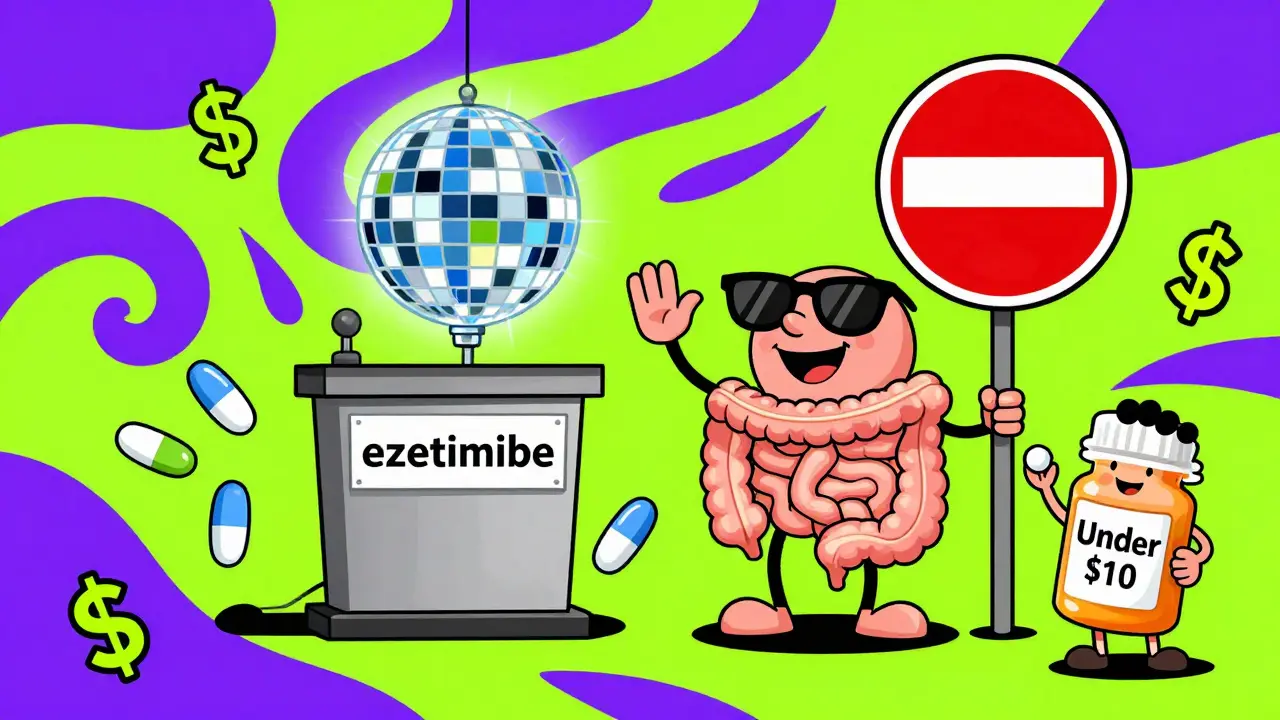
Ezetimibe (brand name Zetia) works differently than statins. Instead of stopping your liver from making cholesterol, it blocks your gut from absorbing it. Think of it like a bouncer at the door of your intestines - it keeps dietary cholesterol from getting into your bloodstream.
Alone, ezetimibe lowers LDL by about 15-22%. That’s not as strong as a statin, but it’s not useless. When you combine it with a low-dose statin, the drop jumps to 21-27%. Many people use it as a partner to statins, not a replacement. One patient on MyHeart.net said, "Zetia alone got my LDL from 190 to 160, but adding it to my low-dose simvastatin brought it down to 110. No muscle pain, no issues."
It’s taken as a daily pill, just like statins. No injections. No special training. And it’s cheap - generic ezetimibe costs less than $10 a month in most places. It’s also safer for people with liver problems, since it doesn’t rely on liver enzymes to break down. The National Institute for Clinical Excellence (NICE) recommends it for people who can’t take statins, or for those who need extra help lowering LDL.
PCSK9 Inhibitors: The High-Tech Option
PCSK9 inhibitors like alirocumab (Praluent) and evolocumab (Repatha) are the newest class of cholesterol drugs. They’re injectable, given every two or four weeks. They work by disabling a protein called PCSK9, which normally tells your liver to destroy LDL receptors. Block PCSK9, and your liver keeps more receptors - meaning it pulls more LDL out of your blood.
These drugs can slash LDL by up to 60%. That’s more than most statins can do. In people with existing heart disease, they reduce the risk of heart attack, stroke, or death from heart problems by 20%. And unlike statins, they don’t raise the risk of hemorrhagic stroke - a rare but serious side effect of statins in some patients.
But there’s a big downside: cost. A year’s supply can run $5,850. Insurance often denies coverage unless you’ve tried and failed on at least two statins, plus ezetimibe. One Reddit user wrote, "Repatha lowered my LDL from 220 to 60 in 3 months - but my insurance denied it three times before approving it."
They’re not for everyone. But for someone with familial hypercholesterolemia, or a history of heart attack despite being on max statin therapy, they can be life-changing.
Bempedoic Acid: The New Kid on the Block
Approved in 2020, bempedoic acid (Nexletol) is another oral option. It works in the liver - like statins - but uses a different enzyme (ACL). That means it’s less likely to cause muscle pain because it doesn’t reach your muscles the same way statins do.
As a standalone pill, it lowers LDL by about 17%. When combined with ezetimibe, the drop jumps to nearly 35%. It’s a good middle ground: more effective than ezetimibe alone, less invasive than injections, and safer for muscle-sensitive patients.
It’s not cheap - around $500 a month without insurance - but it’s far less than PCSK9 inhibitors. And unlike statins, it doesn’t need liver enzyme monitoring. The FDA approved it specifically for people who can’t take statins or need extra help.
Inclisiran: The Twice-a-Year Shot
If you hate taking pills or giving yourself shots every two weeks, inclisiran (Leqvio) might be your best bet. Approved in 2021, it’s a small RNA therapy that silences the PCSK9 gene. That means your body makes less of the protein - so your liver keeps removing LDL.
You get two shots a year. That’s it. After the first two doses (given three months apart), you’re done until the next year. It lowers LDL by 40-50% when used with a statin. In trials, people stuck with it - adherence was over 90%.
It’s not a miracle. It’s expensive. And it’s not yet widely available everywhere. But for someone who’s tired of daily pills and monthly injections, it’s a game-changer.
What About Supplements?
You’ve probably seen ads for red yeast rice, plant sterols, or fish oil as "natural" ways to lower cholesterol. Red yeast rice contains a compound similar to statins - but it’s unregulated. One batch might have a safe dose. Another might have too much, causing muscle damage without warning.
Plant sterols can lower LDL by 5-10%, but you’d need to eat fortified foods every day - like special margarines or juices - to get enough. Fish oil helps with triglycerides, not LDL. And niacin? It can lower LDL a bit, but causes flushing, liver damage, and doesn’t reduce heart attacks in modern trials.
Harvard Health put it bluntly: "Statins lower harmful LDL cholesterol better than dietary supplements." Don’t waste your time or money on supplements that sound good but don’t deliver.
Choosing the Right Path
There’s no one-size-fits-all. Here’s how to think about it:
- If you can tolerate statins - stick with them. They’re the most proven, cheapest, and most effective.
- If you have muscle pain, try switching to a different statin. Pravastatin or rosuvastatin are less likely to cause issues than simvastatin or atorvastatin.
- If you still can’t take statins, start with ezetimibe. It’s safe, cheap, and helps.
- If your LDL is still too high after ezetimibe, add bempedoic acid.
- If you have very high LDL (like familial hypercholesterolemia) or heart disease, and you’re still not at goal, PCSK9 inhibitors or inclisiran may be your next step.
Your doctor will look at your overall risk - age, blood pressure, diabetes, family history, smoking - not just your cholesterol number. That’s why treatment isn’t just about the pill. It’s about the whole picture.
What’s Next?
The future of cholesterol treatment is getting smarter. Oral PCSK9 inhibitors are in late-stage trials - meaning you might soon get the power of injections without the needle. Gene-editing therapies are also being tested to permanently turn off PCSK9. But for now, the tools we have are powerful.
High cholesterol isn’t a life sentence. Whether you’re on a statin, a combo, or something newer - there’s a path that works for you. The key is not giving up after the first setback. Talk to your doctor. Test different options. And don’t let cost or fear stop you from protecting your heart.
Are statins safe for long-term use?
Yes. Statins have been used safely for over 35 years. Large studies tracking people for 10-20 years show they reduce heart attacks and deaths without increasing cancer or other major risks. The FDA removed routine liver enzyme checks in 2012 because the risk of liver damage is extremely low. The biggest concern remains muscle symptoms, which are rare and often manageable by switching statins or lowering the dose.
Can I stop taking cholesterol medication if my levels improve?
Usually not. High cholesterol is often a lifelong condition. Medication doesn’t cure it - it controls it. Stopping the drug usually means your LDL rises again within weeks. Some people with very mild cholesterol and major lifestyle changes (weight loss, exercise, no sugar) may be able to reduce or stop meds under close supervision. But most people need to stay on treatment to keep their heart protected.
Do statins cause diabetes?
They slightly increase the risk - about 1 in 250 people taking a statin long-term may develop type 2 diabetes. But this risk is far smaller than the benefit. For people with existing risk factors (overweight, prediabetes, high blood pressure), the heart protection from statins outweighs the small chance of developing diabetes. Your doctor will monitor your blood sugar if you’re at risk.
Why do some people need two cholesterol drugs?
Because cholesterol is controlled by multiple pathways. Statins reduce production in the liver. Ezetimibe blocks absorption in the gut. PCSK9 inhibitors help the liver remove more LDL from the blood. Using two or three together hits the problem from different angles. For people with very high risk - like those with a history of heart attack - hitting LDL below 70 mg/dL is often the goal. One drug alone usually can’t get there.
Are PCSK9 inhibitors worth the cost?
For most people, no - they’re too expensive. But if you have genetic high cholesterol, a history of heart attack, or can’t take statins, and your LDL is still above 100 mg/dL despite other treatments, then yes. The 20% reduction in heart events and death makes them cost-effective for high-risk patients. Insurance often requires prior authorization, so work with your doctor to get the paperwork right.
How do I know if my cholesterol medicine is working?
Your doctor will order a lipid panel 4-12 weeks after starting or changing your medication. That’s when the full effect shows. You won’t feel different - no energy boost, no side effects. The only way to know is through a blood test. Don’t rely on how you feel. Track your numbers. And ask for your LDL target - most people need it below 70 mg/dL if they have heart disease.
Natalie Koeber
December 16, 2025 AT 09:01statins are just a pharma scam to keep you hooked. they’ve been hiding the real cause of heart disease: sugar. and don’t even get me started on how they banished butter but sell you processed ‘heart-healthy’ margarine that’s basically plastic. i’ve been taking red yeast rice for 3 years-my ldl’s at 85, and my doc won’t even look me in the eye anymore. #bigpharma
Wade Mercer
December 16, 2025 AT 23:13I’ve been on rosuvastatin for eight years. No muscle pain. No issues. I don’t understand why people treat cholesterol like it’s a moral failing. It’s biology. Take the pill. Get your numbers down. Don’t turn a medical condition into a lifestyle blog.
Edward Stevens
December 18, 2025 AT 06:49So let me get this straight: you’re telling me the $5,850/year injection is ‘life-changing’… but only if you’ve already tried the $10 pill and the $500 pill? Sounds like the pharmaceutical version of ‘pay to play.’ I’m just glad my insurance has more backbone than my doctor’s patience.
Daniel Thompson
December 19, 2025 AT 07:16As a cardiologist with 22 years of clinical experience, I must emphasize that the data supporting statins is not merely robust-it is definitive. The reduction in cardiovascular mortality is dose-dependent and consistent across demographic strata. The notion that ‘natural alternatives’ hold comparable efficacy is not only misleading, it is dangerous. Ezetimibe is an excellent adjunct, but never a substitute for evidence-based pharmacotherapy. Please consult your provider before discontinuing any prescribed agent.
Alexis Wright
December 19, 2025 AT 10:36Let’s be real. Statins are the opioid of cardiology. They work, sure, but they’re also a Band-Aid on a bullet wound. We’re treating cholesterol like it’s the enemy, when the real enemy is our entire fucking food system-processed carbs, seed oils, corporate greed. And now we’re layering on $6,000 injections like we’re in some sci-fi dystopia where your health is a subscription service. We’re not curing disease. We’re monetizing panic. And the worst part? We’ve all been trained to believe that the only solution is another pill.
Daniel Wevik
December 21, 2025 AT 04:27For patients with ASCVD or familial hypercholesterolemia, achieving LDL-C <70 mg/dL is a Class I recommendation per AHA/ACC guidelines. Combination therapy-statin plus ezetimibe or bempedoic acid-is often necessary to reach targets. PCSK9 inhibitors and inclisiran offer significant additional risk reduction in high-risk populations. Adherence remains the greatest challenge, not drug efficacy. Always optimize lifestyle first, but never delay pharmacologic intervention when indicated.
Rich Robertson
December 23, 2025 AT 01:13I’m from rural Kansas. My dad had a heart attack at 56. He took Lipitor for 15 years. Never missed a dose. Lived to 82. Meanwhile, my cousin swears by coconut oil and apple cider vinegar. He’s on his third stent by 48. There’s no magic potion here. Medicine isn’t about trends. It’s about what works when your body’s on fire. Statins saved my dad’s life. The rest is noise.
Thomas Anderson
December 24, 2025 AT 03:09My mom couldn’t take statins-bad muscle pain. We tried ezetimibe. It dropped her LDL from 180 to 140. Not perfect, but better than nothing. Then we added bempedoic acid. Now she’s at 95. No pain. No injections. Just two pills. If you’re struggling with statins, don’t give up. There’s another option. Talk to your doc.
Dwayne hiers
December 24, 2025 AT 08:56PCSK9 inhibitors reduce cardiovascular events by 15–20% in high-risk populations, with hazard ratios of 0.83–0.85 in FOURIER and ODYSSEY OUTCOMES trials. Inclisiran demonstrates non-inferiority to monthly injections with biannual dosing, achieving >50% LDL-C reduction at 18 months. The pharmacokinetic profile of inclisiran is favorable due to siRNA-mediated gene silencing, with hepatic uptake via N-acetylgalactosamine conjugation. Cost-effectiveness models support use in secondary prevention when LDL-C remains >70 mg/dL despite maximally tolerated statin and ezetimibe.
Jonny Moran
December 25, 2025 AT 00:06If you’re scared of statins, I get it. I was too. But don’t let fear make you choose something unproven. Try a low dose first. Talk to your doctor. Maybe it’s not the pill-it’s the dose. Or maybe it’s a different statin. Don’t quit before you’ve really tried. Your heart doesn’t care about your Instagram health guru. It just wants you to stay alive.
Sarthak Jain
December 26, 2025 AT 05:24i read this whole thing and my brain is full. i have high cholestrol but i hate pills. can i just eat more oats and walk? i mean, really? all these drugs? is it really that bad? my uncle took statin for 10 years and he still got a heart attack. so… what now?
Tim Bartik
December 27, 2025 AT 16:27Statins are just a tool. The real enemy? The government. They let Big Pharma poison us with chemicals and then sell us the antidote. I’ve been on a keto diet for 2 years. My LDL is 130. My triglycerides? 68. My HDL? 82. I don’t need some lab-made pill from a lab in New Jersey telling me what my liver should do. I eat bacon. I lift weights. I breathe fresh air. That’s my medicine. Not some corporate injection.