Adolescents and Psychiatric Medications: How to Monitor for Suicidal Ideation

Adolescent Medication Risk Monitor
Risk Assessment Tool
This tool helps identify potential warning signs of suicidal ideation in teens taking psychiatric medications. Based on clinical guidelines from FDA and CDC, please answer the following questions about your teen's recent behavior and mood.
Note: This is not a diagnostic tool. If you're concerned about immediate safety, call 988 immediately or go to the nearest emergency room.
Risk Assessment Results
Please answer all questions to receive results.
Low Risk
Your teen shows minimal warning signs. Continue monitoring and follow your healthcare provider's schedule.
Recommended actions:
- Continue regular medication follow-ups
- Maintain open communication
- Keep observation journal
Medium Risk
Your teen shows some warning signs. This requires closer monitoring and potentially adjusting the care plan.
Recommended actions:
- Contact your healthcare provider within 48 hours
- Consider more frequent check-ins
- Document specific behaviors in detail
- Review medication schedule with doctor
High Risk
Your teen shows multiple warning signs. Immediate action is required.
Critical actions:
- Call 988 immediately (U.S. Suicide & Crisis Lifeline)
- Take your teen to the nearest emergency room
- Contact your prescriber right away
- Ensure your teen is never left alone
Do not wait for a crisis - act now.
When a teenager starts taking psychiatric medication, the goal is clear: reduce anxiety, stabilize mood, or quiet the voices that won’t stop. But for many families, a quiet fear lingers - could this treatment make things worse? The answer isn’t simple. Psychiatric medications can save lives, but they also carry a known risk: increased suicidal thinking, especially in the first few weeks. This isn’t speculation. It’s a documented effect, backed by federal warnings and decades of clinical data. The key isn’t avoiding medication - it’s knowing how to watch for warning signs and act fast.
Why Teens Are at Higher Risk
It’s not that teens are more sensitive to drugs than adults. It’s that their brains are still changing. The prefrontal cortex, the part that controls impulses and weighs consequences, isn’t fully wired until the mid-20s. Meanwhile, emotional centers like the amygdala are firing at full speed. When medication shifts neurotransmitter levels - serotonin, norepinephrine, dopamine - it can create a temporary imbalance. For some teens, this means a surge in energy before their mood lifts. They may feel more capable of acting on dark thoughts they’ve had for months. This isn’t the medication causing suicidal thoughts. It’s removing the emotional paralysis that once kept them stuck in hopelessness. The U.S. Food and Drug Administration (FDA) put a black box warning on all antidepressants in 2004 after studies showed a small but real increase in suicidal ideation in teens during the first 1-2 months of treatment. That warning was updated in 2007 to include young adults up to age 24. It’s the strongest warning the FDA gives - not because these drugs are dangerous, but because the risk is real enough to demand attention.What Monitoring Actually Looks Like
Monitoring isn’t a one-time check-in. It’s a rhythm. The first 4 weeks are the most critical. Most guidelines - from California to New York - agree: teens starting medication should be seen by their prescriber within 1 week, then again at 2 weeks, then 4 weeks. After that, monthly visits are standard unless things change. During each visit, clinicians don’t just ask, “Are you feeling better?” They ask specific questions:- “Have you had thoughts about not wanting to live?”
- “Do you feel like you’re a burden to others?”
- “Have you thought about how you might end your life?”
It’s Not Just Antidepressants
Many people think the black box warning only applies to antidepressants like fluoxetine or sertraline. That’s wrong. The same risks exist with antipsychotics, mood stabilizers, even ADHD meds. A 2023 review from MedPsych Health found that suicidal ideation can emerge with any psychiatric drug that alters brain chemistry - especially when started, stopped, or changed in dose. For example, a teen on risperidone for aggression might develop restlessness and insomnia. That can trigger racing thoughts and self-loathing. A teen on lithium for bipolar disorder might feel emotionally numb - and that numbness can feel like a death sentence. The common thread? Any medication that changes how a teen feels - even if it’s meant to help - can temporarily unmask underlying pain.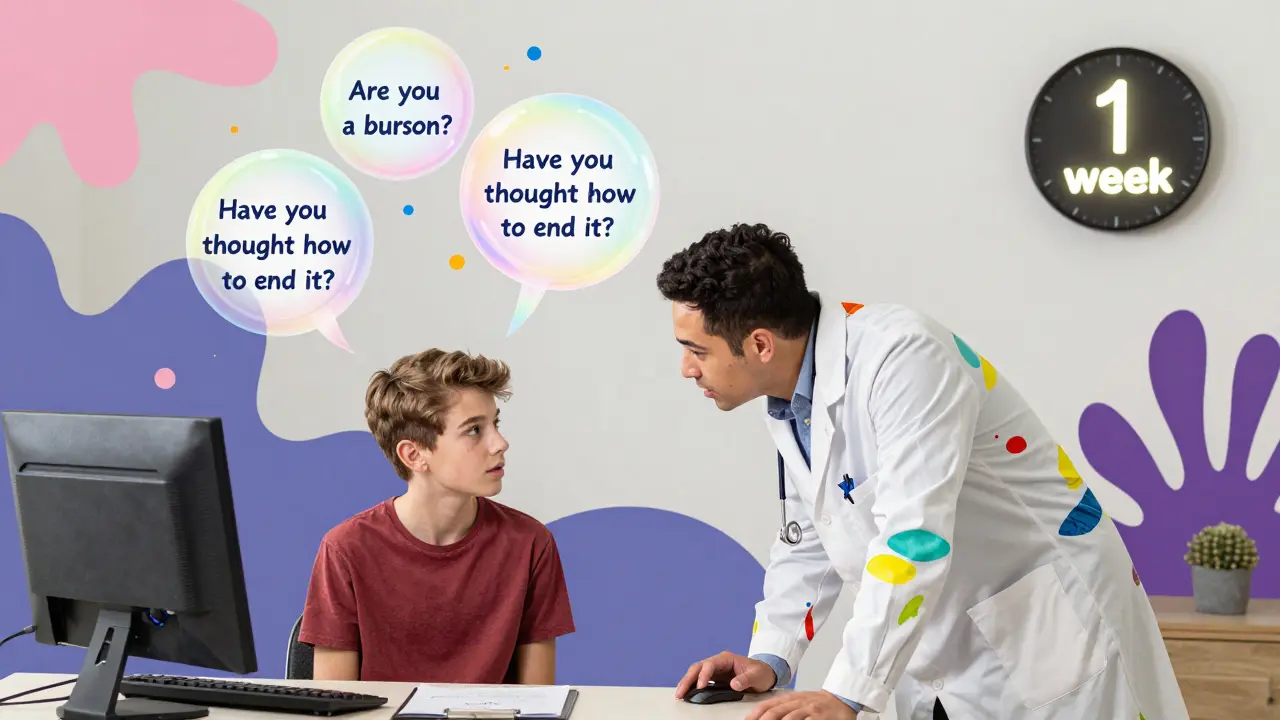
When Medication Is Stopped
One of the most overlooked dangers is discontinuation. When a teen stops taking medication - whether because side effects are too much, or because parents think it’s “working” - suicidal thoughts can spike. This isn’t a relapse of the original illness. It’s withdrawal. The brain has adapted to the drug. When it’s removed, neurotransmitter levels drop sharply. That drop can feel like falling into a black hole. California’s 2022 guidelines say: “During the discontinuation phase, patients may need to be seen more frequently than during the maintenance phase.” That means weekly visits, sometimes twice a week. The same goes for tapering. Slowing the dose reduction helps the brain adjust. Rushing it - even with good intentions - can be deadly.Who’s Responsible?
This isn’t just the psychiatrist’s job. Monitoring requires a team. Parents, school counselors, pediatricians, and even coaches all play a role. But coordination is often broken. A 2022 survey found that 68% of clinicians working in school settings had no clear way to communicate with outpatient psychiatrists about suicidal ideation that surfaced during school hours. A teen might say, “I can’t take this anymore,” to their counselor - but if that message never reaches the prescriber, nothing changes. That’s why documentation matters. Every state with clear guidelines requires written records: “Date of assessment,” “Patient’s exact words,” “Family’s response,” “Next follow-up date.” If it’s not written down, it didn’t happen.The Hidden Barriers
Even with all the guidelines, many teens aren’t getting the monitoring they need. Why?- Insurance limits: Many insurers only cover 15-minute follow-ups. That’s not enough to assess suicidal risk.
- Training gaps: Only 34% of child psychiatry residents received 8+ hours of training in suicidal ideation monitoring, as recommended by the American Academy of Child and Adolescent Psychiatry.
- Consent confusion: 42% of psychiatry fellows reported they weren’t trained to get truly informed consent - meaning parents didn’t fully understand the suicide risk before agreeing to the medication.
- Stigma: Families still fear that talking about suicide will plant the idea. It won’t. Silence does.
What Families Can Do
You don’t need to be a doctor to help. Here’s what works:- Ask directly: “Have you thought about hurting yourself?” Say it calmly. Don’t panic. Just ask.
- Watch for changes: Sudden calm after deep depression? That’s a red flag. Withdrawal from friends? Increased irritability? Sleep changes? All signs.
- Keep a log: Note mood, sleep, energy, and any comments about death or hopelessness. Bring it to appointments.
- Don’t rush discontinuation: If you think the medication isn’t working, talk to the doctor. Don’t stop it cold.
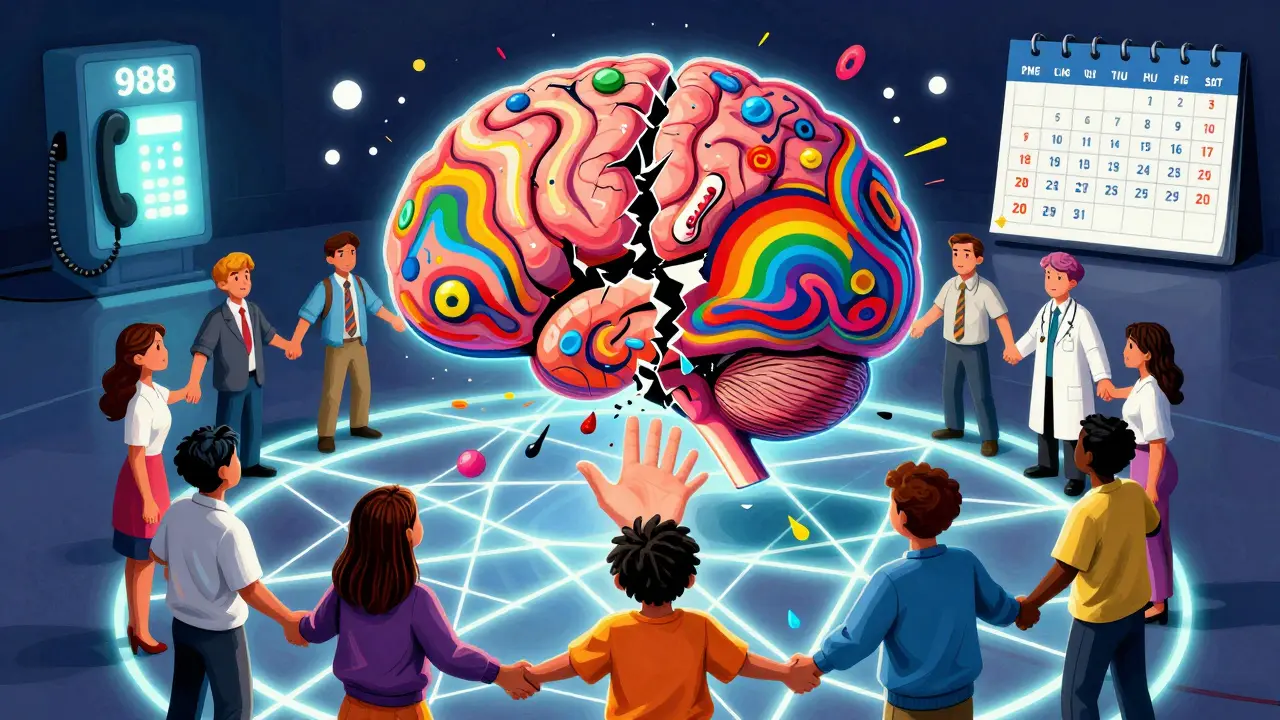
- Know the emergency plan: If your teen says they have a plan to die - call 988 (the Suicide & Crisis Lifeline), go to the ER, or call the prescriber immediately.
The Future Is Changing
The field is waking up. In 2022, the National Institute of Mental Health funded 17 research projects totaling $28.7 million to find biological markers that predict which teens are most at risk for medication-induced suicidal ideation. That means one day, a blood test or brain scan might tell a doctor, “This teen needs extra monitoring.” Meanwhile, more clinics are using digital tools - apps that ask teens daily questions about mood and thoughts. But only 19% of these tools are designed specifically to track medication-related risk. Most still treat suicide risk like a general mental health issue, not a side effect of treatment. The truth? We’re still learning. But one thing is certain: monitoring for suicidal ideation isn’t optional. It’s part of the treatment. Every teen on psychiatric medication deserves a plan - not just a prescription.Can psychiatric medications cause suicidal thoughts in teens?
Yes, in some cases. While these medications are meant to improve mood and reduce symptoms, research shows a small but real increase in suicidal thinking during the first few weeks of treatment, especially in teens and young adults up to age 24. This risk is highest when starting a new medication, changing the dose, or stopping it abruptly. It doesn’t mean the medication is unsafe - it means close monitoring is essential.
How often should a teen be monitored for suicidal ideation while on medication?
In the first month, visits should happen every 1-2 weeks. After that, monthly check-ins are standard unless symptoms change. If suicidal thoughts appear, or if the dose is being changed or stopped, weekly or even more frequent visits are recommended. California and New York guidelines specifically require increased frequency during the early and discontinuation phases.
Is this risk only with antidepressants?
No. Although the FDA black box warning applies to antidepressants, research shows suicidal ideation can emerge with any psychiatric medication - including antipsychotics, mood stabilizers, and even stimulants for ADHD. Any drug that changes brain chemistry can temporarily destabilize emotional regulation in teens, especially during dose changes or withdrawal.
What should parents do if their teen says they want to die?
Take it seriously. Don’t argue, dismiss, or promise secrecy. Say, “I’m here with you.” Call 988 (the Suicide & Crisis Lifeline) immediately, go to the nearest emergency room, or contact the prescribing clinician right away. If the teen has a specific plan or means, do not leave them alone. Safety comes before privacy.
Why is it dangerous to stop psychiatric medication suddenly?
Stopping abruptly can cause a sharp drop in neurotransmitter levels, leading to withdrawal symptoms like extreme anxiety, irritability, insomnia, and - critically - a spike in suicidal thoughts. This isn’t a relapse of the original illness. It’s the brain struggling to readjust. Always taper under medical supervision, with increased monitoring during the process.
Are there tools to help monitor suicidal ideation at home?
Yes. Some clinics use digital tools that ask teens daily questions about mood, sleep, and thoughts of death. Parents can also keep a simple journal: note changes in behavior, sleep, appetite, and any statements about hopelessness. Bring this to appointments. It gives clinicians real data, not just guesses.
Dennis Santarinala
February 17, 2026 AT 06:21Just wanted to say this is one of the clearest, most practical guides I’ve read on this topic. Seriously - the part about asking direct questions? That’s gold. So many parents tiptoe around it like it’s taboo, but the data says the opposite: asking saves lives. I’ve shared this with my kid’s therapist and our PTA. Thanks for writing it.
James Lloyd
February 18, 2026 AT 00:45Let’s be precise: the FDA black box warning applies to SSRIs and SNRIs in under-24s - not all psychiatric meds. Antipsychotics like risperidone carry different risk profiles, mostly tied to metabolic and extrapyramidal side effects. The 2023 MedPsych review you cited? It conflates correlation with causation. Many teens on antipsychotics have comorbid depression - it’s not the drug causing ideation, it’s the underlying illness. We need better epidemiology, not fearmongering.
Carrie Schluckbier
February 18, 2026 AT 18:55They’re not telling you the whole story. Did you know the pharmaceutical lobby pushed the FDA to expand the black box warning to age 24? It was a PR move to make SSRIs look more dangerous so they could sell ‘natural alternatives’ - which, surprise, are unregulated and often laced with unlisted stimulants. I’ve seen kids on ‘herbal mood balancers’ end up in ERs. This isn’t about safety - it’s about profit. The real risk? Not monitoring - but trusting a system that profits off your kid’s panic.
John Haberstroh
February 20, 2026 AT 01:02Love how you framed this - not as ‘meds are bad’ but ‘monitoring is essential.’ That’s the nuance we need. I work in adolescent psych and can tell you: the most dangerous patients aren’t the ones on meds - they’re the ones we forget to check on. One kid I saw stopped his ADHD med because ‘he felt fine.’ Two weeks later, he showed up at school with a knife and a note that said ‘I’m not worth the trouble.’ We missed the withdrawal signs because we assumed ‘fine’ meant ‘cured.’ This piece should be mandatory reading for every parent, teacher, and coach.
Haley DeWitt
February 20, 2026 AT 06:04Thank you for this. 🙏 I’m a mom of a 16yo on sertraline. We’ve been doing weekly check-ins, keeping a mood log, and I text my kid’s therapist every Friday. It’s exhausting - but worth it. My son said last week: ‘I didn’t think anyone would actually care if I talked about it.’ That broke my heart. We’re not perfect, but we’re trying. You’re doing important work.
Oliver Calvert
February 22, 2026 AT 00:22Steph Carr
February 22, 2026 AT 20:57Oh honey. You’re being so serious. Like, I get it. But have you considered maybe teens aren’t fragile little porcelain dolls? Maybe they’re just… humans? With messy brains? The whole ‘suicidal ideation as side effect’ narrative feels like we’re infantilizing an entire generation. I was on antidepressants at 17. I felt worse before I felt better. I didn’t need a checklist. I needed someone to say, ‘This sucks. I’m here.’ Not a 12-point protocol. Just… presence.
Kancharla Pavan
February 24, 2026 AT 10:57Look, I’m not against medication - I’m against lazy parenting. You don’t just hand a kid a pill and say ‘good luck.’ You monitor. You track. You talk. But 90% of Indian families? They give the pill, check off ‘treatment done,’ and move on. No logs. No questions. No follow-up. And then they blame the system when something goes wrong. This isn’t a Western problem - it’s a cultural one. We need accountability, not just guidelines. A child’s life isn’t a clinical trial.
guy greenfeld
February 26, 2026 AT 07:00What if the real danger isn’t the medication - but the narrative? We’ve turned adolescence into a medical condition. Every mood swing, every silent hour, every late-night scroll - now it’s ‘potential suicidal ideation.’ We’re pathologizing normal development. The brain isn’t broken - it’s becoming. And we’re medicating it into submission. The FDA warning? It’s not about safety. It’s about liability. We’re scared of the dark, so we flood the room with fluorescent lights - and call it healing.
Logan Hawker
February 27, 2026 AT 12:41Let’s not pretend this is rocket science. The literature is unequivocal: SSRIs increase suicidal ideation in adolescents by 1.6-2.1x in the first 8 weeks (JAMA Psychiatry, 2021). The black box warning is under-enforced. Clinicians skip the 1-week follow-up because ‘the kid seems fine.’ But ‘fine’ is a behavioral mask. We need mandatory telehealth check-ins at day 7 and day 14 - not optional. And insurance must cover 30-minute assessments, not 15-minute billing codes. This isn’t advocacy - it’s basic clinical hygiene.
Adam Short
February 28, 2026 AT 22:21PRITAM BIJAPUR
March 1, 2026 AT 16:05As someone who’s been on mood stabilizers since 18, I want to say: THIS. IS. CRUCIAL. I remember when I stopped my lithium cold turkey because ‘I felt normal.’ Within 72 hours, I was convinced my parents were spies and I had to escape. I called 988 at 3 a.m. - and they asked me: ‘What meds did you stop?’ I didn’t even know. That’s the problem. We need a national database - like a medication passport - that links the teen, the drug, the dose, and the prescriber. No more ‘I forgot.’ No more ‘I didn’t know.’ Just data. And yes - emojis. 🚨💙
Tony Shuman
March 3, 2026 AT 08:40Everyone’s acting like this is a new crisis. Newsflash: kids have always thought about dying. We just didn’t talk about it. Now we’re medicating them and then panicking when they don’t magically feel better. I’ve seen teens on 4 meds. They’re zombified. No joy. No curiosity. Just numb. Maybe the real solution isn’t more monitoring - but less intervention. Let them feel. Let them struggle. We’re not fixing broken kids. We’re silencing them.
Digital Raju Yadav
March 4, 2026 AT 12:23Western medicine is a scam. You give a child a chemical to fix a problem caused by screens, junk food, and broken families - then you blame the chemical. India doesn’t have this issue because we don’t over-medicate. We have yoga. We have chai. We have grandparents. You think a blood test will save a kid? Try a hug. Try listening. Try not treating a teenager like a lab rat. Your system is broken - not their brain.
Brenda K. Wolfgram Moore
March 5, 2026 AT 05:06This is so important. I’m a school nurse. I’ve had three students this semester say, ‘I don’t want to live anymore’ - all on new meds. One was on bupropion. One on risperidone. One on Adderall. We caught them because we had a log. We asked the right questions. We didn’t wait. This isn’t fear. It’s responsibility. Thank you for giving us the language to speak up.